For years the U.S. pet story was mostly about dogs. The numbers now point at cats. The American Pet Products Association (APPA) counted 53 million cat-owning households in 2025, 39% of all U.S. households and 5% more than a year earlier, following what APPA called a record-setting 2024 in which cat ownership rose 23%. Dogs still lead at 71 million households, but cats grew faster in 2025.
The more telling shift is inside the home: more households keep two, three or more cats, and they buy food and litter differently. Here is what APPA’s surveys and the companies that sell cat food and litter report, and what the trend means for gear.
Trend Signal
68/100 Strong momentum
- Emerging
- Rising
- Mainstream
- Peaking
- Cooling
Cat households up 5% as cat food outgrows dog food at General Mills
APPA counted 53 million cat-owning U.S. households in 2025, up 5% after a 23% jump in 2024, and General Mills reported double-digit cat food net sales growth in each of its last three fiscal 2026 quarters.
Our editorial reading of the cited data, not a forecast. How it is scored
By the numbers
How fast cat ownership is growing
APPA’s cat report, published September 14, 2026, put U.S. cat ownership at 53 million households in 2025, up 5% year over year, after a 23% surge in 2024. Dog ownership grew too, by 4% to 71 million households, or 53% of households. This is not cats replacing dogs; it is cats adding faster from a smaller base.
The overall pet market is growing more slowly than the cat count. APPA estimates U.S. pet industry spending at $158 billion in 2025, up 3.7%, with 95 million households owning at least one pet.
Cat households grew 5% in 2025 against 4% for dogs, on top of a 23% jump in 2024.
Who the new cat owners are
APPA’s report points to two groups. Gen Z now makes up 22% of cat owners, up 10% year over year, and ownership of three or more cats rose 14% among Gen Z owners. Men account for 43% of U.S. cat owners, and Gen Z male cat ownership rose 27% year over year.
Those buyers shop in different places. Nearly half of Gen Z cat owners buy cat food at supermarkets, and purchases of mixers and toppers among male cat owners are up 214% since 2018, according to APPA. We read that as cat products moving into grocery aisles and food add-ons, not only pet specialty stores.
Cat owners are also adopting gear once associated with dogs. APPA’s 2025 Dog & Cat report found 32% of cat owners owned a leash, up 52% from 2018, and 22% owned a harness, up 69%.
Multi-cat homes drive food and litter demand
The fastest growth is not first cats but extra cats. Households with two cats rose 7% year over year and 16% since 2018; households with three or more rose 7% year over year and 45% since 2018. Among male owners, ownership of three or more cats is up 117% since 2018. APPA’s 2025 report showed single-cat households falling from 64% of cat homes in 2018 to 58% in 2024.
More cats per home multiplies the consumables. Cat owners spent an average of $337.53 on food in 2025, up 9% year over year. Litter makers see it as well: Church & Dwight named Arm & Hammer cat litter among four brands that drove 5.1% organic sales growth in its consumer domestic business in the quarter ended June 30, 2026, and launched a clumping litter with Microban antimicrobial product protection that quarter.
General Mills tells the same story from the food side. Its North America Pet segment reported double-digit cat food net sales growth in each of the last three quarters of fiscal 2026, while dog food moved from a low-single-digit decline to a mid-single-digit decline and then a low-single-digit gain. Those net sales include the Whitebridge Pet Brands acquisition, which added 6 points to the segment’s full-year growth, and the fourth quarter included a 53rd week that added 7 points to the segment, so not all of the cat gain is new demand.
| General Mills fiscal 2026 quarter | Cat food net sales | Dog food net sales |
|---|---|---|
| Q2 (reported Dec. 17, 2025) | Up double digits | Down low-single digits |
| Q3 (reported Mar. 18, 2026) | Up double digits | Down mid-single digits |
| Q4 (reported July 1, 2026) | Up double digits | Up low-single digits |
What multi-cat homes change about gear

The gear that changes most with a second or third cat is the gear cats share: litter, feeding stations and water. Shared boxes take more waste between cleanings, and odor control is the pitch behind launches such as Arm & Hammer’s Dual Defense clumping litter.
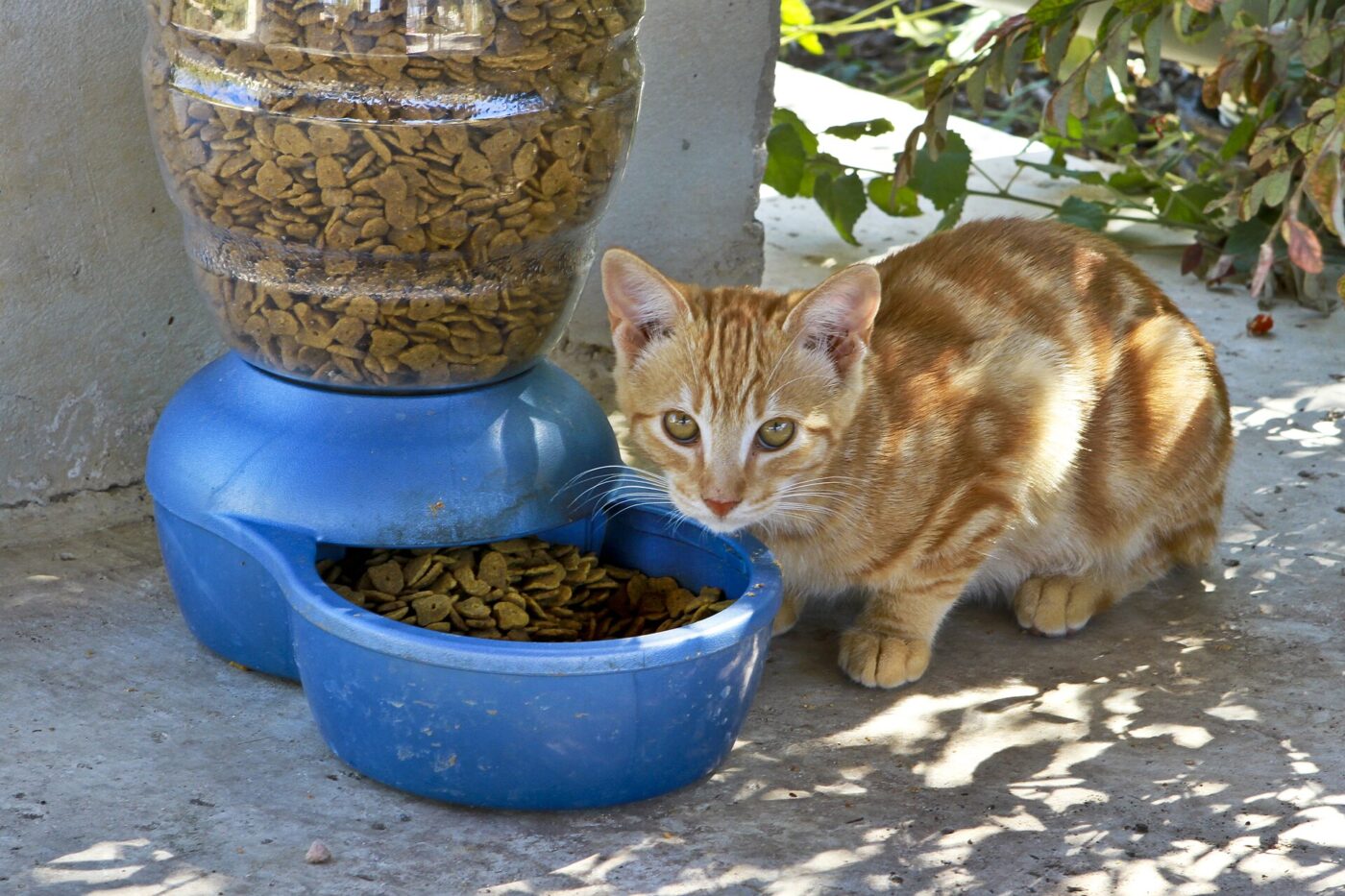
Feeding is the other pressure point. When cats eat different foods, or one eats another’s share, microchip-activated feeders that open only for a registered cat are one answer, and timed feeders help with portions. The topper trend APPA measures also means more owners are mixing wet add-ons with dry food, which calls for separate bowls and storage.
Counter-signals, and what to buy now
Cat growth sits inside a cautious pet economy. APPA found 22% of pet owners spent less on their pets in 2025, and General Mills’ pet segment posted a 3% organic net sales decline for fiscal 2026 despite cat food strength. The drop in household growth from 23% in 2024 to 5% in 2025 also suggests the surge is settling into steadier gains.
For growing cat households, the practical read is to solve the costs that scale with each cat first. Buy litter in larger containers and multi-cat formulas, sort out feeding conflicts before they turn into food waste, and add toppers only if they fit the budget, since APPA’s data show average cat food spending rose 9% in 2025.
What to watch next
- APPA’s next State of the Industry report, for whether cat household growth holds near 5% or slows further.
- General Mills’ quarterly pet results, for whether cat food keeps growing double digits on an organic basis.
- Church & Dwight and other litter makers’ earnings, for whether cat litter stays among the named growth drivers.
Where to start
Paid links: we earn a commission if you buy through the buttons below, at no extra cost to you. As an Amazon Associate I earn from qualifying purchases.
Gear for homes adding a second or third cat
| Product type | Good fit for | Where to look |
|---|---|---|
| Multi-cat clumping litter | Fits multi-cat litter routines | See listings on AmazonOpens Amazon search results, not one listing: check the model on the product page. |
| Microchip-activated cat feeder | Fits cats on different diets | See listings on AmazonOpens Amazon search results, not one listing: check the model on the product page. |
| Cat food topper | Fits topper and mixed feeding | See listings on AmazonOpens Amazon search results, not one listing: check the model on the product page. |
Product types that fit the trend described above, not tested models. Check the exact listing before you buy. How we pick them.
Multi-cat clumping litter
Where to look: Amazon
Litter use scales with every cat you add. A multi-cat clumping formula in a larger container is the simplest way to keep up.
- Formulated for heavier use
- Larger containers lower trips
- Heavy to carry
- Scent can put off some cats
Microchip-activated cat feeder
Where to look: Amazon
When one cat eats another’s food, a feeder that reads a microchip or tag keeps each cat on its own diet without separate rooms.
- Opens only for a registered cat
- Stops food stealing
- Costs more than a bowl
- Some cats need time to adjust
Cat food topper
Where to look: Amazon
APPA says purchases of mixers and toppers among male cat owners are up 214% since 2018. Check the label to see whether it can be fed alone or only on top of other food.
- Small add-on to dry food
- Easy to try in single packs
- Raises cost per meal
- Not always a complete diet
More: Pets trends and how the Trend Signal is scored.
Sources
- Gen Z and Cat Dads Are Leading Cat Ownership’s Cultural Boom — American Pet Products Association
- America’s Dog Owners Are Becoming Smarter Spenders — American Pet Products Association
- U.S. Pet Industry Reaches $158 Billion in 2025 — American Pet Products Association
- APPA Releases 2025 Dog & Cat Report — American Pet Products Association
- General Mills Reports Fiscal 2026 Second-quarter Results — General Mills
- General Mills Reports Fiscal 2026 Third-quarter Results — General Mills
- General Mills Reports Fiscal 2026 Fourth-quarter Adjusted Results — General Mills
- Church & Dwight second quarter 2026 results, Exhibit 99.1 — Church & Dwight via SEC
Questions readers ask
How many U.S. households have cats in 2026?
APPA’s September 2026 cat report counted 53 million U.S. households with a cat in 2025, 39% of all households, up 5% from the year before.
Is cat ownership growing faster than dog ownership?
In 2025, yes, from a smaller base. Cat households rose 5% to 53 million while dog households rose 4% to 71 million, according to APPA.
Who is driving the growth in cat ownership?
APPA points to Gen Z, now 22% of cat owners and up 10% year over year, and to men, who make up 43% of cat owners. Gen Z male cat ownership rose 27% year over year.
Are multi-cat households becoming more common?
Yes. APPA reports households with three or more cats up 7% year over year and 45% since 2018, and two-cat households up 16% since 2018.