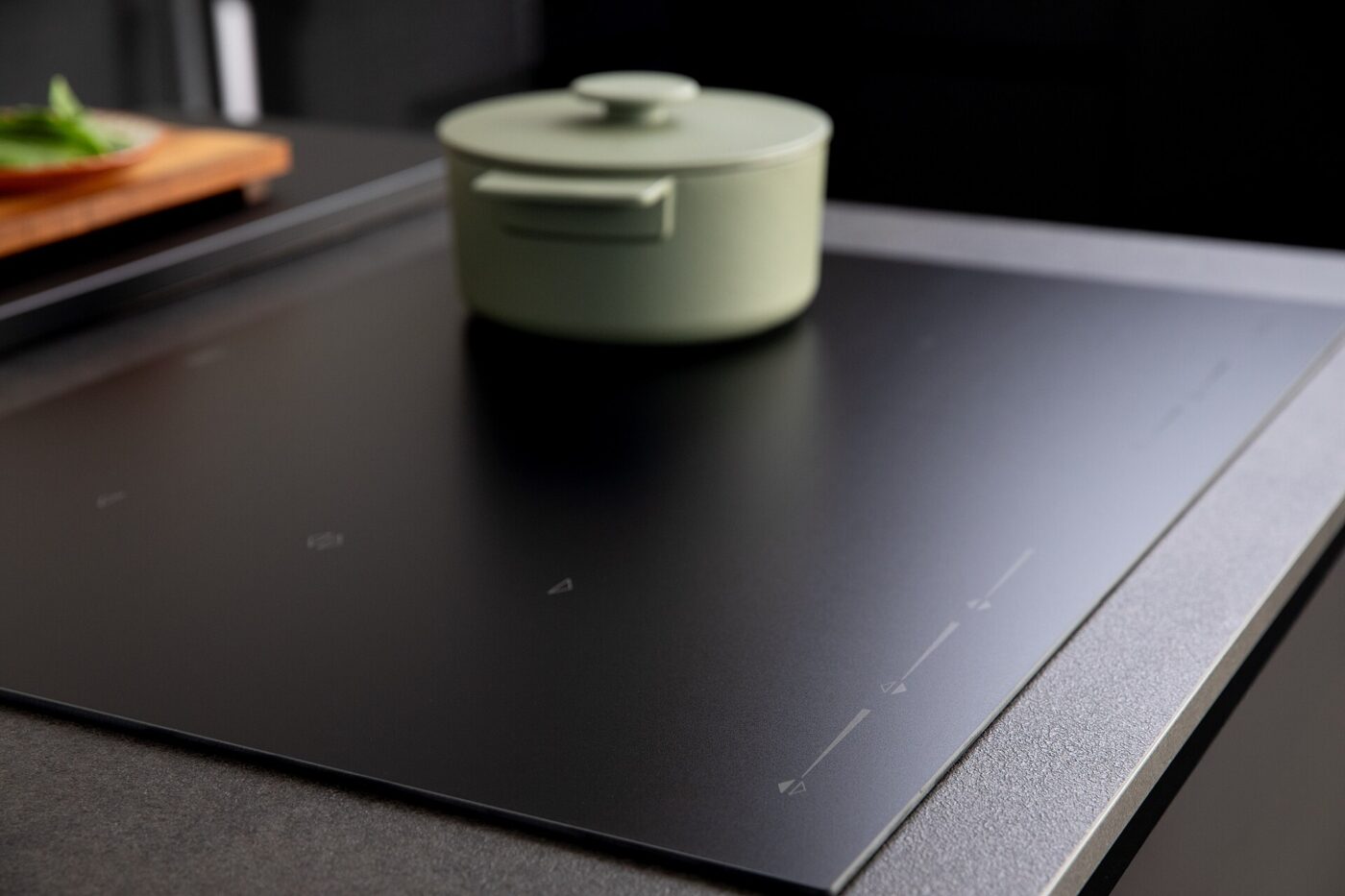
Amazon’s autocomplete finishes cookware for induction ten different ways, and the second completion is magnetic cookware for induction cooktop. That is the right instinct and half the answer. A magnet decides whether a pan can be heated by an induction element. The diameter of its base decides whether the element turns on at all, and that number is published by the cooktop maker, not the pan maker.
Nothing here was cooked on or tried out. We picked the products named because they publish full dimensions a buyer can check, and we checked each against the CPSC recall file ourselves. If a figure is not in a document you can open, it is not here.
Trend Signal
67/100 Strong momentum
- Emerging
- Rising
- Mainstream
- Peaking
- Cooling
Demand climbing while the number that settles it sits in the manual nobody opens
Amazon finishes cookware for induction ten ways, and the cooktop makers disagree about the smallest pan they will acknowledge: GE lists per-element minimums from 4 1/2 to 7 inches on one 30-inch cooktop, Duxtop lists 5 inches, and Bosch publishes no number at all.
Our editorial reading of the cited data, not a forecast. How it is scored
By the numbers
- 7 inLargest per-element minimum pan diameter GE lists on its 30-inch induction cooktopGE Appliances
- 12.7 cmCooking surface diameter Made In publishes for its 8-inch stainless frying panMade In
- 8.1 inCooking surface Stargazer publishes for its 10.5-inch cast iron skilletStargazer
- 2CPSC recall records mentioning induction at all, full file through September 24, 2026CPSC
The magnet is the easy test. The diameter is the one that fails

Every maker we read gives the same first instruction. Bosch states that cookware for induction must have a ferromagnetic base, meaning a magnet is attracted to it, and lists thin steel, glass, clay, copper and aluminum as unsuitable. Duxtop puts it as a rule of thumb: if a magnet sticks to the bottom, it will work. ENERGY STAR gives US shoppers the same test and notes that compatible pans often carry an induction logo on the box.
The second instruction catches people. Bosch continues that the base “must also match the size of the cooking zone,” and that undetected cookware should be moved to the zone with the next smallest diameter. Duxtop is blunter: a flat bottom with a minimum diameter of 5 inches, and too little ferrous material returns an E0 error. Furrion lists an acceptable range of 4 3/4 to 10 7/8 inches and names a base under 4 3/4 inches as improper cookware outright.
GE describes what failure looks like: if a pan is removed for more than 25 seconds, or never detected, that element’s indicator flashes and shuts off. The Department of Energy treats the same constraint as a cost, writing in its February 2024 direct final rule on cooking products that installing an induction cooking top “requires additional costs for wiring upgrades and purchasing ferromagnetic pots.” A federal agency budgeted for your pans.
Check the magnet, then check the base against the minimum your cooktop prints for that element.
What the cooktop makers publish, and where one publishes nothing
GE gives the most useful version: a separate minimum for every element, printed as a diagram in the owner’s manual. On its 30-inch induction cooktop the four elements are 5, 4 1/2, 7 and 5 inches. On the 36-inch they are 5, 7, 4 1/2, 5 and 5 1/4 inches. The manual adds that larger cookware may be used but heat occurs only above the element, and that an undersized pan makes the controller hunt for it with a clicking sound.
Bosch publishes no numeric minimum in the documents we read. Its manual gives the rule qualitatively, and its NIT8060UC spec sheet lists zone sizes of 6, 9, 11 and 6 inches, leaving the buyer to match pan to zone. Bosch also rules out a common workaround on built-ins: “Do not use adapter plates between the cooktop and the cookware.” If you arrived from the small-appliance side, where a stainless disc is the standard fix — see mini induction cooktops and moka pots — Bosch says not to bring it to a built-in.
| Cooktop | Minimum pan base published | Where it appears |
|---|---|---|
| GE 30-inch induction | 5 in, 4 1/2 in, 7 in, 5 in, one per element | Owner manual 49-2001135 Rev. 7 |
| GE 36-inch induction | 5 in, 7 in, 4 1/2 in, 5 in, 5 1/4 in | Same manual |
| Bosch 800 Series 30-inch | None published; zones at 6, 9 and 11 in | Manual 9001444932 and spec sheet |
| Duxtop 9600LS portable | 5 in, flat bottom | User manual, Section 3 |
| Furrion 21-inch two-burner | 4 3/4 in, ceiling of 10 7/8 in | User manual CCD-0005718 |
A 10-inch pan is not 10 inches where it counts
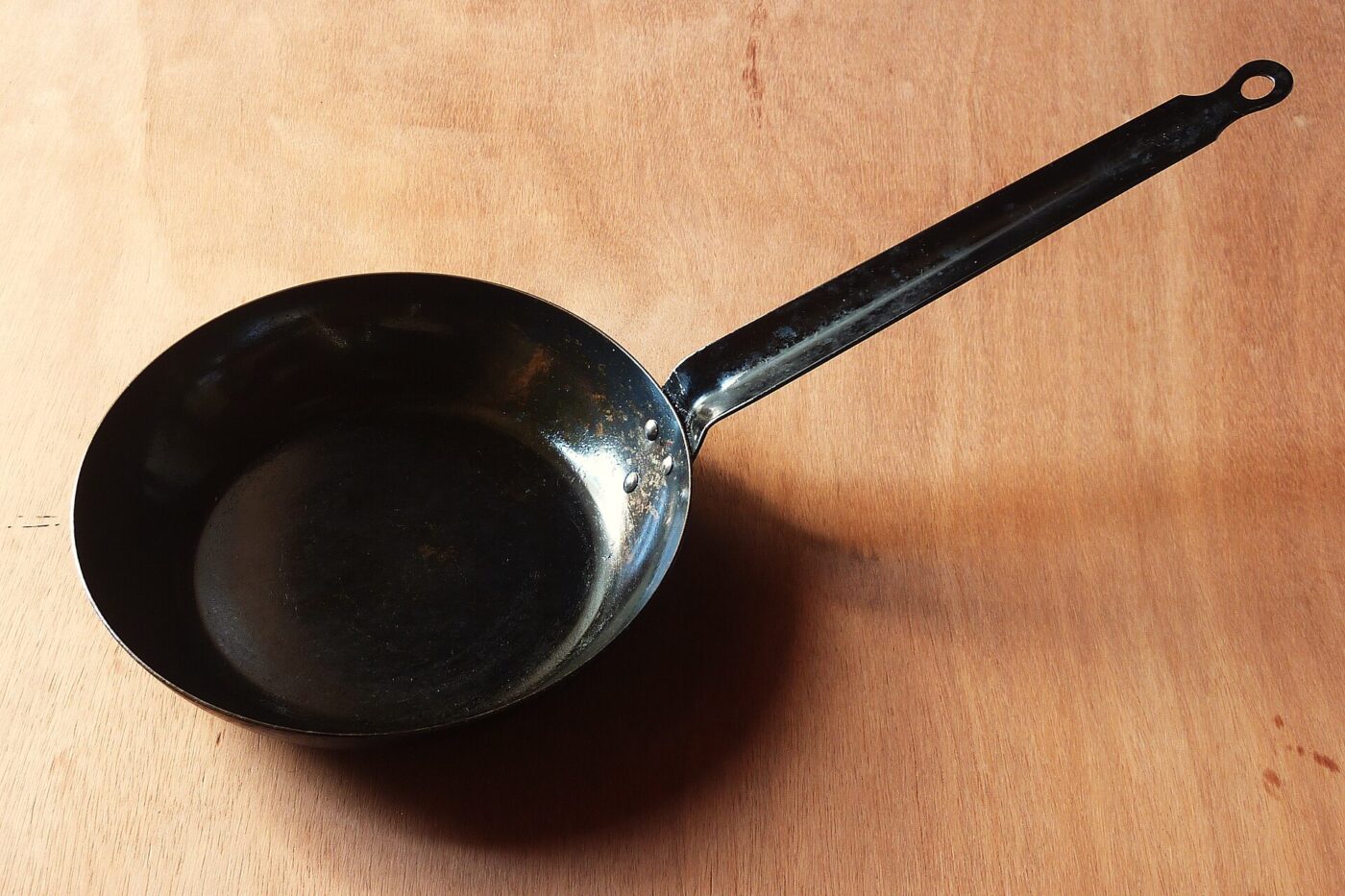
Bosch states the trap in one line: “For frying pans, cookware manufacturers usually state the top diameter of the cookware. The diameter of the pan base is usually smaller.” Pans are named for the rim. Cooktops are specified by the base. On the same pan those can be three inches apart.
Made In publishes both, which makes it a usable yardstick. Converted, its 8-, 10- and 12-inch stainless frying pans have cooking surfaces of about 5.0, 7.5 and 9.5 inches. The 8-inch lands exactly on Duxtop’s 5-inch floor and well under the 7-inch minimum GE prints for one element on its 30-inch cooktop: a pan that works on one burner and not another. Cast iron behaves the same way, and Stargazer adds a caution — it smooths the bottoms of its cookware to avoid damaging glass tops, and still advises lifting rather than sliding.
| Pan as sold | Published outside diameter | Published cooking surface |
|---|---|---|
| Made In 8-inch stainless frying pan | 21.6 cm | 12.7 cm, about 5.0 in |
| Made In 10-inch stainless frying pan | 26.7 cm | 19.1 cm, about 7.5 in |
| Made In 12-inch stainless frying pan | 31.8 cm | 24.1 cm, about 9.5 in |
| Stargazer 10.5-inch cast iron skillet | 10.5 in at the rim | 8.1 in |
Shop the base or cooking surface figure. If a maker will not publish one, you are guessing.
What the recall file says about pots and pans
We downloaded the complete CPSC recall dataset on October 1, 2026 — 10,027 records from June 8, 1973 to September 24, 2026 — and searched it ourselves. Two records in the whole file mention induction: a 2007 Thermador ceramic cooktop notice, and a 2020 GreenPan Dutch oven recall where the word appears only in the marking on the base. Nothing has been recalled over how it behaves on an induction element.
What cookware does get recalled is mechanical. Searching for pots and pans recalled because a handle, a handle latch or a rivet cover came off, we count seven notices covering about 255,000 US units. The largest is not a handle failure: Macy’s recalled about 121,000 Martha Stewart stainless frying pans in December 2015, and H-E-B about 41,000 pieces in January 2016, both because the discs covering the rivets could pop off and strike someone. The next largest is a handle: about 60,655 MSR camping pots, recalled February 2024.
A clean induction record is not a promise. It says which products were found to fail, not which will not, and the file is searchable by product name at saferproducts.gov. The useful read is narrower: in cookware the failure mode is the handle and the rivet, so the induction question is about fit and the warranty question is about hardware.
Buying a set without buying it twice
Measure first. Put a ruler across the flat part of the base of the pans you own, not the rim, and compare it with the minimum your cooktop prints for each element. On a GE 30-inch cooktop that is four separate targets. If your smallest pan clears the lowest minimum and your everyday skillet the largest, you may not need to replace anything.
If you are replacing, prefer a maker that publishes a base or cooking surface figure and ignore set sizes. Stainless clad with a ferromagnetic outer layer and enameled cast iron both pass the magnet test as a class, per Bosch’s own list of recommended materials, but neither guarantees a wide enough base. Budget for pans alongside the appliance: prices in this aisle have moved with trade policy, covered in kitchenware prices and tariff refunds, and coating chemistry is a separate question in the state PFAS cookware bans. If the cooktop is still undecided, battery induction ranges on 120 volts covers the version that needs no new wiring, and adaptive kitchen tools is the place to start if weight and grip matter more than diameter.
What to watch next
- Whether more cookware makers publish a base or cooking surface diameter, not only the rim size
- Whether Bosch adds a numeric minimum pan diameter to its US manuals, as GE already prints per element
- Whether CPSC records a first recall tied to induction compatibility; search saferproducts.gov by name
Where to start
Paid links: we earn a commission if you buy through the buttons below, at no extra cost to you. As an Amazon Associate I earn from qualifying purchases.
Induction cookware types and the published number to check on each
| Product type | Good fit for | Where to look |
|---|---|---|
| Induction-ready stainless clad cookware set | Fits a full four-element cooktop | See listings on AmazonOpens Amazon search results, not one listing: check the model on the product page. |
| Enameled cast iron skillet | Fits the largest element | See listings on AmazonOpens Amazon search results, not one listing: check the model on the product page. |
| Small induction saucepan | Fits the smallest element | See listings on AmazonOpens Amazon search results, not one listing: check the model on the product page. |
Product types that fit the trend described above, not tested models. Check the exact listing before you buy. How we pick them.
Induction-ready stainless clad cookware set
Where to look: Amazon
Bosch lists stainless in a sandwich design as its recommended material. Compare the cooking surface or base figure, never the rim.
- Base sizes often published
- Ferromagnetic outer layer is standard
- Base is narrower than the pan name
- Sets include sizes you will not use
Enameled cast iron skillet
Where to look: Amazon
The reliable answer to a 7-inch minimum. Stargazer publishes an 8.1-inch cooking surface on its 10.5-inch skillet.
- Ferromagnetic throughout
- Wide flat base clears high minimums
- Heavy on glass
- Rough bases scratch; lift, do not slide
Small induction saucepan
Where to look: Amazon
Buy this against one element, not in general. GE prints 4 1/2 inches on one zone of its 30-inch cooktop and 7 inches on another.
- Matches a 4 1/2 to 5 inch zone
- Light to lift on and off
- May fall below a larger element minimum
- Small bases make more coil noise
More: Home and Kitchen trends and how the Trend Signal is scored.
Sources
- Induction cooktop owner manual 49-2001135 Rev. 7 — GE Appliances
- Induction cooktop use and care manual 9001444932 — Bosch
- Duxtop 9600LS user manual — Secura
- Stainless frying pan dimensions, 8-inch — Made In
- Stainless frying pan dimensions, 10-inch — Made In
- Stainless frying pan dimensions, 12-inch — Made In
- 10.5-inch cast iron skillet specifications — Stargazer
- Recall database, full JSON export — CPSC
- Consumer conventional cooking products, direct final rule, 89 FR 11434 — DOE via GovInfo
- Electric cooking products buying guidance — ENERGY STAR
Questions readers ask
Does a magnet sticking to the pan guarantee it will work?
No. That settles the material only. Bosch states the base must be ferromagnetic and must also match the size of the cooking zone, and Duxtop sets a 5-inch minimum bottom diameter on top of the magnet test.
Why does my pan work on one burner and not another?
Because the minimums differ by element. GE’s manual for its 30-inch induction cooktop lists minimums of 5, 4 1/2, 7 and 5 inches across the four elements, so a 5-inch base clears three of them and not the fourth.
Can I use an adapter plate under a non-magnetic pan?
On a built-in, Bosch says no: its manual instructs owners not to use adapter plates between the cooktop and the cookware. Plates are a portable-cooktop accessory. Check your own manual first.
Has cookware been recalled over induction compatibility?
Not in the CPSC file. We pulled the full database on October 1, 2026 and found two records mentioning induction, neither a compatibility failure. The cookware recalls we counted involve handles, latches and rivet covers detaching.