Kitchen shopping in 2026 does not follow one price story. Pots and pans went through a sharp run-up and are now cooling. Countertop appliances barely moved. Plates, bowls and forks, which were getting cheaper in mid-2025, are now among the fastest-rising items in the home aisle.
Layered on top is a legal reversal. On February 20, 2026, the Supreme Court held in Learning Resources, Inc. v. Trump that the International Emergency Economic Powers Act does not authorize the President to impose tariffs, and companies that paid those duties have started collecting refunds. What follows traces Bureau of Labor Statistics data across three readings and what appliance makers say they are doing with the money.
Trend Signal
52/100 Steady momentum
- Emerging
- Rising
- Mainstream
- Peaking
- Cooling
Kitchen goods inflation is fading, except in the dish aisle
BLS data show nonelectric cookware prices up 14.3% in the 12 months to February 2026 but 4.6% in the 12 months to August 2026, while dishes and flatware accelerated to 9.8%; appliance makers are booking IEEPA tariff refunds after the February 20, 2026 Supreme Court ruling.
Our editorial reading of the cited data, not a forecast. How it is scored
By the numbers
- 9.8%US CPI for dishes and flatware, 12 months to August 2026, after -6.6% a year earlierBureau of Labor Statistics
- 14.3%US CPI for nonelectric cookware and tableware, 12 months to February 2026Bureau of Labor Statistics
- 1.3%US CPI for other appliances, incl. small kitchen appliances, 12 months to August 2026Bureau of Labor Statistics
- $247.1MIEEPA tariff refund claims SharkNinja filed with CBP in Q3 2026, which CBP acceptedSharkNinja
Where kitchen prices stand in August 2026
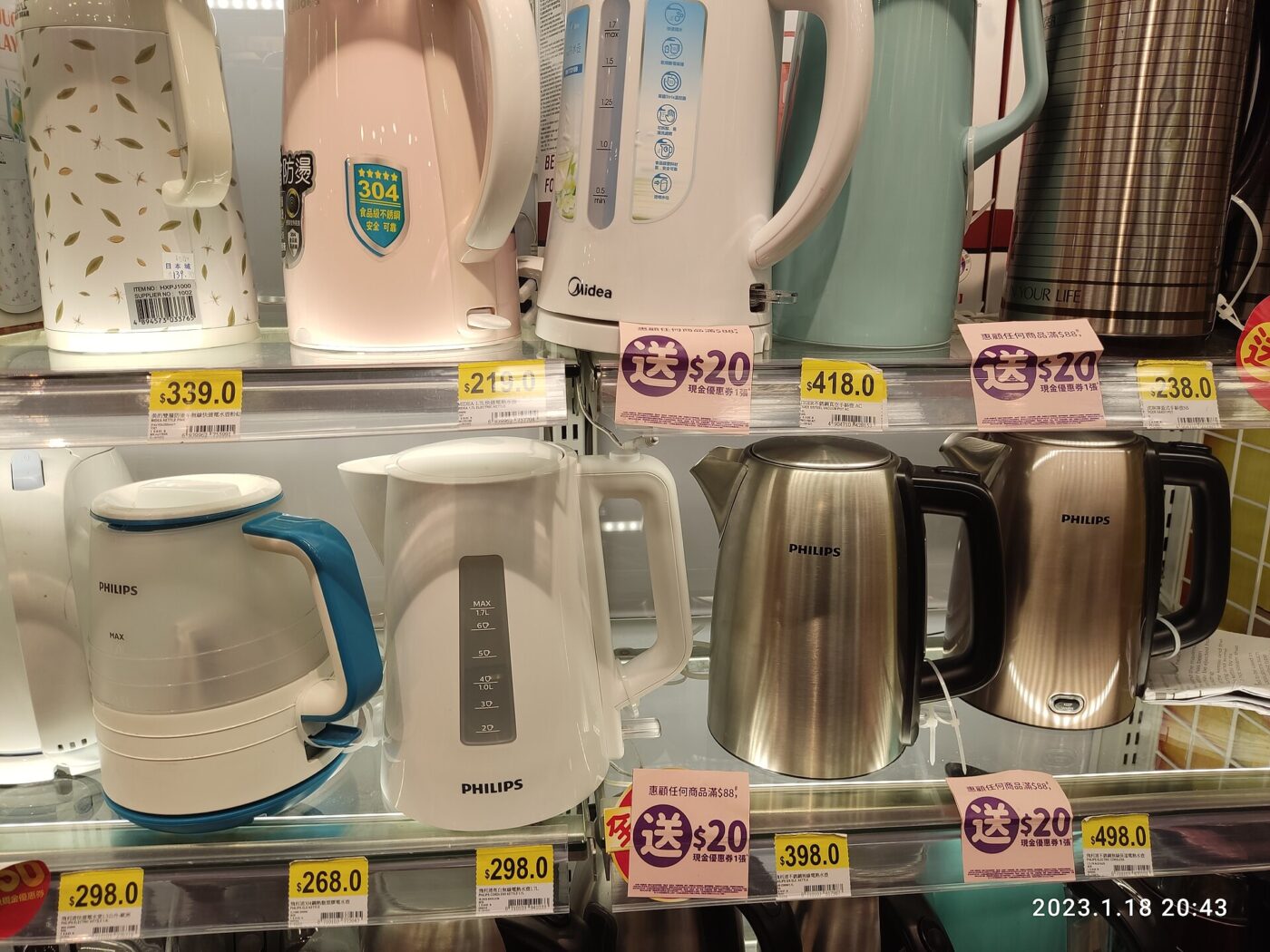
The Consumer Price Index splits the kitchen into several small categories. Dishes and flatware cover non-disposable dishes, serving pieces, glassware and flatware. Nonelectric cookware and tableware covers pots and pans, including tea kettles and casserole dishes, plus nonelectric kitchenware such as knives and utensils. The other appliances group holds small electric kitchen appliances such as toasters, mixers, blenders, coffee makers and toaster ovens, along with vacuum cleaners, steam mops, fans and heaters. Each carries a small weight in the index, which makes monthly moves jumpy, so the 12-month changes below are the more useful read.
Across the three readings the pattern is clear. Cookware inflation was far higher in February 2026 than in either August reading. Small appliances rose modestly and cooled again. Dishes swung from falling prices to the steepest increase in the group. Major appliances, such as refrigerators, laundry equipment and ranges, were 1.9% cheaper in August 2026 than a year earlier.
| CPI category | 12 mo. to Aug 2025 | 12 mo. to Feb 2026 | 12 mo. to Aug 2026 |
|---|---|---|---|
| Dishes and flatware | -6.6% | 7.2% | 9.8% |
| Nonelectric cookware and tableware | 5.6% | 14.3% | 4.6% |
| Other appliances (small appliances, floor care) | 0.9% | 3.9% | 1.3% |
| Major appliances | -1.1% | 1.3% | -1.9% |
| Housekeeping supplies | 1.0% | 2.6% | 2.1% |
| Other linens | 2.3% | 2.8% | 1.0% |
Cookware inflation ran hottest in early 2026; by August the pressure had moved to dishes.
How tariffs moved through the kitchen aisle
Hamilton Beach Brands, which sells small electric household and housewares appliances, gives the clearest account of the 2025 disruption. Its full-year 2025 revenue fell 7.3% to $606.9 million, which it attributed to lower US consumer volumes in the second and third quarters “as retailers paused buying in order to assess inventory levels and price increases flowing from the new tariffs.” It absorbed a one-time incremental tariff cost of $5.3 million and made what it called select price adjustments.
Volume came back in 2026. Hamilton Beach’s second-quarter revenue rose 11.6% to $142.6 million as it recovered sales lost when retailers paused orders a year earlier. SharkNinja, the maker of Shark and Ninja appliances, grew second-quarter net sales 22.2% to $1,765.5 million, but its gross margin slipped 30 basis points, which it attributed primarily to tariff-related cost pressure in the US market, unfavorable currency moves and increased retailer activations.
The ruling and the refunds

The Supreme Court’s February 20, 2026 decision held that the International Emergency Economic Powers Act does not authorize the President to impose tariffs. Companies that paid tariffs under that law are now recovering them through US Customs and Border Protection.
Where the money lands matters for shoppers. Hamilton Beach reported a second-quarter gross margin of 54.3% including the one-time benefits and said it would have been 26.1% without them. SharkNinja raised its adjusted profit outlook and tied about $30 million of that increase to the expected net refund. The refunds are flowing to the companies that paid the duties. SharkNinja and Hamilton Beach say they plan to reinvest part of the money in areas such as marketing, retail activation and technology, and none of the releases cited here ties the refunds to lower list prices.
The one exception on record here is De’Longhi, which said its household price-mix contribution was slightly negative in the second quarter after “selective list price repositioning aimed at maximizing market support.” The company did not say which products or markets were repriced; we read the phrase as targeted price cuts, not a broad reduction. The refunds disclosed so far:
- SharkNinja: refund claims of about $247.1 million submitted to CBP in the third quarter of 2026 and accepted.
- Hamilton Beach Brands: $36.5 million in refunds received for tariffs paid over the prior year.
- YETI: a $45.6 million net benefit from IEEPA tariff refunds in the second quarter of 2026.
- De’Longhi: a net positive impact of about 15 million euros from refunded duties in the second quarter of 2026.
Tariffs have not gone away
Refunds cover duties already paid. They do not make imports duty-free. SharkNinja’s updated 2026 outlook assumes minimum tariff rates of 10% for Indonesia, Malaysia and Cambodia and 12.5% for China, Vietnam and Thailand for the rest of the year. YETI’s outlook assumes US tariff rates return to approximately 20% in the second half of 2026. Hamilton Beach lists a foreign trade zone, sourcing diversification and pricing actions as its ongoing tariff mitigation.
That leaves the price trail pointing sideways rather than down. We read the August data this way: the first tariff wave is already in cookware prices, small-appliance prices have barely moved over two years, and dishes are still catching up.
When to buy what
For countertop appliances, the data give little reason to wait for a tariff dividend. The category rose 1.3% in the year to August 2026, and manufacturers are keeping refunds as margin, so the discount you find on a given day will likely matter more than the court ruling.
For dishes and flatware, the index is moving the other way, and the current trend offers no reason to expect a set you need to get cheaper by waiting. For cookware, the steepest increases appear to be behind it: the 12-month rate fell from 14.3% in February to 4.6% in August, which weakens the case for delaying a replacement you need.
What to watch next
- The next monthly BLS CPI releases, for whether dishes and flatware inflation keeps climbing past 9.8%
- Third-quarter results from SharkNinja, Hamilton Beach and YETI, for any shift from booking refunds as margin to cutting list prices
- Changes to the tariff rates companies assume in their 2026 outlooks, currently about 10% to 20%
Where to start
Paid links: we earn a commission if you buy through the buttons below, at no extra cost to you. As an Amazon Associate I earn from qualifying purchases.
Kitchen basics compared on what to check before buying
| Product type | Good fit for | Where to look |
|---|---|---|
| Stoneware dinnerware set | Fits replacing everyday plates | See listings on AmazonOpens Amazon search results, not one listing: check the model on the product page. |
| 18/10 stainless steel flatware set | Fits a full table refresh | See listings on AmazonOpens Amazon search results, not one listing: check the model on the product page. |
| Stainless steel cookware set | Fits a one-time cookware upgrade | See listings on AmazonOpens Amazon search results, not one listing: check the model on the product page. |
Product types that fit the trend described above, not tested models. Check the exact listing before you buy. How we pick them.
Stoneware dinnerware set
Where to look: Amazon
The category with the steepest increase in the August 2026 CPI. Compare the per-setting price with open-stock pieces before buying a full set.
- Sold in complete place settings
- Easy to add matching pieces
- Heavy to stack and store
- Glaze quality varies by maker
18/10 stainless steel flatware set
Where to look: Amazon
Flatware sits in the same CPI category as dishes. The steel grade is the spec that separates sets that look alike online.
- Grade is printed on most listings
- Sold in several setting counts
- 18/0 sets look similar in photos
- Weight varies widely
Stainless steel cookware set
Where to look: Amazon
Cookware inflation cooled to 4.6% by August 2026 after 14.3% in February. A clad stainless set bought once avoids the replacement cycle of coated pans.
- No coating to replace
- Works on most cooktops
- Piece counts include lids
- Higher upfront cost
More: Home and Kitchen trends and how the Trend Signal is scored.
Sources
- Consumer Price Index News Release, August 2026 — Bureau of Labor Statistics
- Consumer Price Index News Release, February 2026 — Bureau of Labor Statistics
- Consumer Price Index News Release, August 2025 — Bureau of Labor Statistics
- CPI Entry Level Item Descriptions — Bureau of Labor Statistics
- Opinions of the Court, 2025 term: Learning Resources, Inc. v. Trump — Supreme Court of the United States
- Hamilton Beach Brands Holding Company Announces Second Quarter Results — Hamilton Beach Brands
- Hamilton Beach Brands Holding Company Announces Fourth Quarter and Full Year 2025 Results — Hamilton Beach Brands
- SharkNinja Reports Second Quarter 2026 Results — SharkNinja
- YETI Reports Second Quarter 2026 Results — YETI Holdings
- First half 2026 results press release — De’Longhi Group
Questions readers ask
Will tariff refunds lower kitchen appliance prices?
Not on the evidence so far. SharkNinja, Hamilton Beach and YETI report the refunds as gains to margin or to their profit outlook. De’Longhi is the only company cited here that described a list-price move, what it called “selective list price repositioning” in its second-quarter 2026 results, which we read as targeted cuts.
Why are dishes getting more expensive?
The BLS index for dishes and flatware rose 9.8% in the 12 months to August 2026, after falling 6.6% in the 12 months to August 2025. The CPI measures the change but does not assign a cause, and none of the companies cited here broke out dish pricing.
Are small kitchen appliances more expensive than a year ago?
Slightly. The CPI other appliances category, which includes small electric kitchen appliances, vacuum cleaners and fans, rose 1.3% in the 12 months to August 2026, after 3.9% in the 12 months to February 2026.
What did the Supreme Court decide about tariffs?
In Learning Resources, Inc. v. Trump, decided February 20, 2026, the Court held that the International Emergency Economic Powers Act does not authorize the President to impose tariffs.