Google Trends listed 30 induction cooktop as a rising US query over the 12 months to October 2026, up about 120%, and Amazon extends it to with downdraft, with knobs and, separately, induction cooktop 240v. Those completions circle one thing. A plug-in portable and a 30-inch built-in share a name and a cooking method and nothing about how they connect to a house.
We have not installed one, and we will not tell you what your kitchen wiring will take. This pulls the published numbers out of two manufacturers’ installation documents and the federal rule governing the category, so you can hand an electrician a figure. Documents read October 1, 2026.
Trend Signal
63/100 Steady momentum
- Emerging
- Rising
- Mainstream
- Peaking
- Cooling
Two 30-inch cooktops from two major brands call for two different circuits
GE’s installation instructions state that its cooktops require 40 amp service for 30-inch units and 50 amp for 36-inch; Bosch’s installation manual lists a 30 amp breaker for every one of its 30-inch models and 40 or 50 amp for its 36-inch models.
Our editorial reading of the cited data, not a forecast. How it is scored
By the numbers
- 40 AService GE states its 30-inch induction cooktops require, per the installation sheetGE Appliances
- 30 ACircuit breaker Bosch lists for every 30-inch model in its installation manualBosch
- 7,200 WConnected load Bosch publishes for the NIT8060UC 30-inch induction cooktopBosch
- 207 kWhDOE annual energy cap for electric smooth element standalone cooking tops, from 2028eCFR
Two 30-inch cooktops, two different circuits

GE’s installation instructions for its 30- and 36-inch induction cooktops, document 31-2001183 Rev. 1, end the electrical section flatly: “These cooktops require 40 amp service for 30″ units, 50 amp service for 36″ units.” No model-by-model table, no smaller option.
Bosch publishes the opposite shape of answer. Its installation manual, document 9001444985, lists a breaker size per model at both 240 V and 208 V. Every 30-inch model in that table — NIT5060UC, NIT8060UC and NIT8060SUC, NITP060UC and NITP060SUC, NIT8061UC — is listed at 30 A. The 36-inch models split: five are 40 A, while the NITP660UC and NITP660SUC are 50 A.
That gap is a design choice, not a contradiction. Bosch publishes a 7,200 W connected load for the NIT8060UC, which at 240 V is 30 A by our arithmetic, and the same cooktop carries a PowerManager setting that caps total output, with steps from 1,000 W up and the cooktop sharing the budget across whichever zones are on. A buyer who assumes 30-inch implies one amperage will order the wrong breaker.
There is no standard amperage for a 30-inch induction cooktop, only the number on the model you chose.
What the installation sheet actually tells you
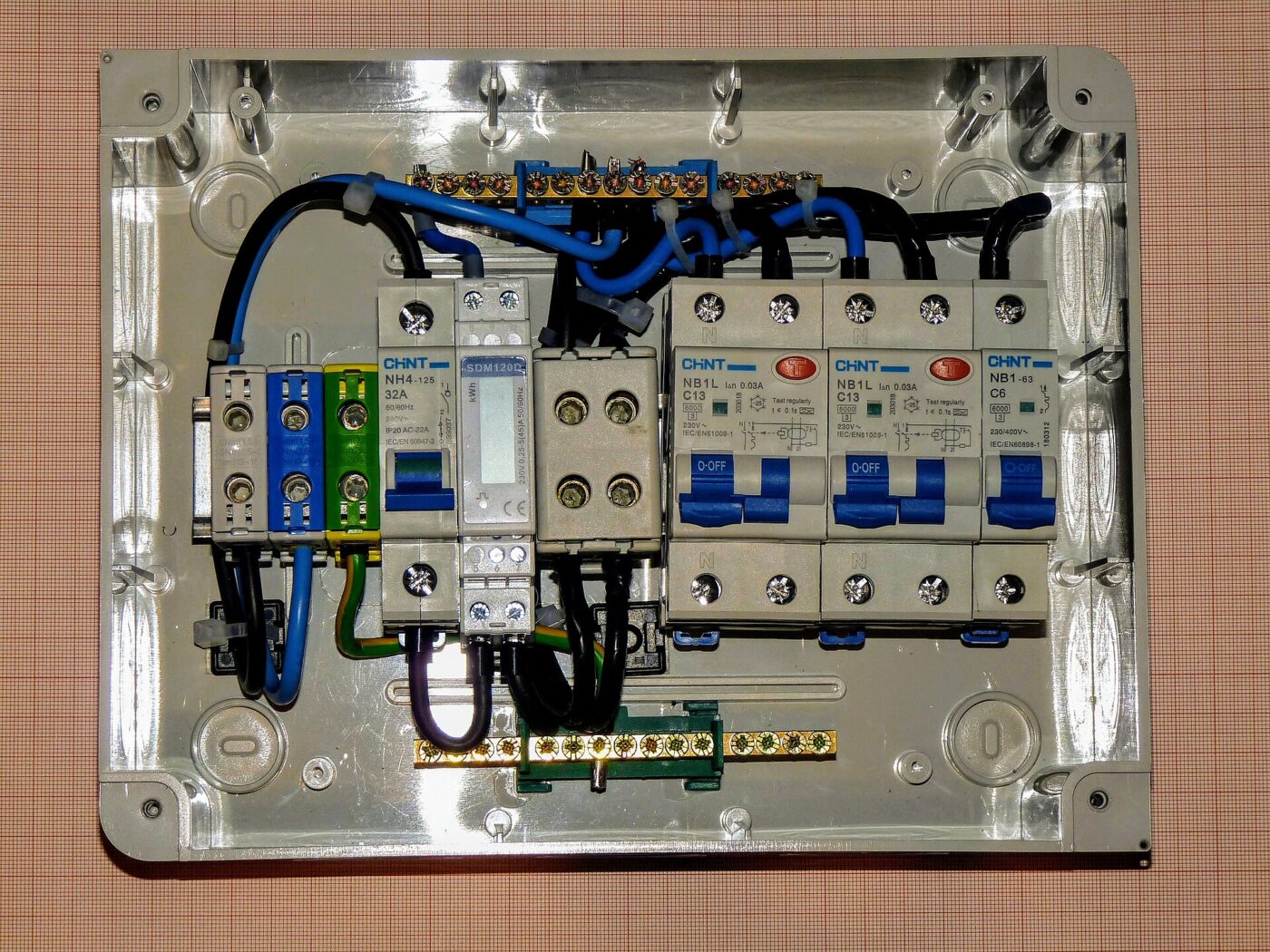
Both manuals open the same way. The appliance goes on an individual, dedicated branch circuit; the wiring must conform to the National Electrical Code, ANSI/NFPA 70, and local codes; and the installer should show the owner the disconnect. Bosch adds, in capitals, do not use an extension cord, and states that all models must be connected with the included 39-inch flexible conduit. There is no plug, which the spec sheet confirms.
GE prints a chart worth copying down, because it converts the nameplate rating into a circuit size. At 240 V, a 4.9 to 7.2 kW rating maps to a 30 A dedicated circuit, 7.3 to 9.6 kW to 40 A, and 9.7 to 12.0 kW to 50 A, with a 20 A row for the smallest ratings; the 208 V column shifts each band down. GE also notes a two-wire, three-conductor 208/240 VAC supply with no white neutral needed. Bosch’s manual names the standard it builds to: UL 858, Household Electric Ranges, Edition 16, published November 7, 2014 and revised July 2, 2026, whose scope covers counter-mounted household cooking equipment rated 600 V or less and excludes commercial appliances.
| What the maker publishes | GE 30-inch induction | Bosch NIT8060UC |
|---|---|---|
| Service or breaker | 40 A for 30-inch units | 30 A at 240 V and at 208 V |
| Supply | Two-wire, three-conductor 208/240 VAC | 208 to 240 V, 60 Hz |
| Connected load | Read the kW rating off the nameplate | 7,200 W |
| Connection | Conduit to a junction box | No plug; 37-inch cord, 39-inch conduit |
| Zone sizes | Minimums of 5, 4 1/2, 7 and 5 inches | 6, 9, 11 and 6 inches |
The federal rule arriving in 2028, and what it leaves out
Under 10 CFR 430.32(j), conventional cooking tops other than portable indoor ones manufactured on or after January 31, 2028 must have an integrated annual energy consumption no greater than 207 kWh per year in the electric smooth element classes. The standard came from a DOE direct final rule published February 14, 2024 at 89 FR 11434. Downdraft venting energy is excluded from the calculation, which matters if the downdraft version is the one you want.
Induction is not its own product class there. DOE folded it into electric smooth element and treated it as a technology option; in the record, the California investor-owned utilities told DOE that eight of the nine smooth-induction cooking tops sampled had an annual energy consumption of 189 kWh per year or less. On share, AHAM told DOE that 4.6 percent of electric cooking tops shipped in 2022 were induction, and DOE’s August 2023 analysis weighted induction at 6.2 percent against 93.8 percent radiant.
The rule also records the wiring problem. DOE wrote that installing an induction cooking top requires added cost for wiring upgrades and ferromagnetic pots, and noted it had assumed half the user population would need upgrades at the highest efficiency level; advocates replied that upgrades may be needed anyway in older homes with 30 amp breakers. DOE separately acknowledged the potential for nuisance tripping of ground-fault protection by high-frequency components such as induction elements.
What the makers print about pacemakers and radio interference
Every induction manual we read carries two notices no other cooktop carries. We are quoting them, not interpreting them, and none of this is medical advice.
GE states: “Persons with a pacemaker or similar medical device should exercise caution when using or standing near an induction cooktop while it is in operation. The electromagnetic field may affect the working of the pacemaker or similar medical device. It is advisable to consult your doctor or the pacemaker manufacturer about your particular situation.” Bosch’s is narrower — caution “when standing near an induction cooktop while it is in use” — followed by an instruction to consult your doctor or the device maker. Duxtop, on a portable, writes that the unit emits an electromagnetic field and people with pacemakers should consult their physician before using. All three point to the same two places.
The second notice is regulatory. Bosch states the cooktop generates ISM frequency energy and complies with Part 18 of the FCC rules, and GE and Duxtop print equivalent statements. DOE confirmed the framework in 2024: the FCC requires equipment emitting radio-frequency energy, including induction cooking tops, to comply with 47 CFR part 18, while FDA’s standard at 21 CFR 1030.10 covers microwave ovens and does not reach them.
If anyone in the household has an implanted device, take the maker’s own wording to the device maker.
Five published numbers to collect before you order
In order: the service or breaker size the maker states for your exact model; the kW rating on the nameplate, which is what GE’s chart converts; whether the unit arrives with a cord and plug or expects conduit to a junction box; the cutout size; and the per-element minimum pan diameters, because the pans you own are part of the purchase. Then hand all five to a licensed electrician. We will not tell you the circuit feeding your current cooktop is adequate, because we cannot see it, and because both manuals put code compliance on the owner and the installer.
If the wiring answer comes back expensive, the category has two off-ramps that need no panel work. A 120-volt unit is a different product with different limits, covered in battery induction ranges on 120 volts, and a countertop unit is different again — mini induction cooktops shows where the small ones stop. For the rest of a kitchen budget, kitchen cabinet tariffs and 120-volt heat pump water heaters are the nearest comparisons we have written, and home EV chargers after the credit covers the other appliance that sends people to the panel.
What to watch next
- Whether more makers follow Bosch in publishing a per-model breaker table rather than one service figure
- Whether induction share of US electric cooking top shipments passes the 6.2 percent weighting DOE used
- Whether DOE revisits the cooking top standard before its compliance date; the docket is on the rulemaking record
Where to start
Paid links: we earn a commission if you buy through the buttons below, at no extra cost to you. As an Amazon Associate I earn from qualifying purchases.
Built-in induction formats and the electrical figure each one hangs on
| Product type | Good fit for | Where to look |
|---|---|---|
| 30-inch built-in induction cooktop | Fits a standard 30-inch cutout | See listings on AmazonOpens Amazon search results, not one listing: check the model on the product page. |
| 36-inch built-in induction cooktop | Fits a wider run of counter | See listings on AmazonOpens Amazon search results, not one listing: check the model on the product page. |
| Two-burner built-in induction cooktop | Fits a narrow or second spot | See listings on AmazonOpens Amazon search results, not one listing: check the model on the product page. |
Product types that fit the trend described above, not tested models. Check the exact listing before you buy. How we pick them.
30-inch built-in induction cooktop
Where to look: Amazon
The mainstream size and the one where brands disagree most. GE states 40 amp service for 30-inch units; Bosch lists 30 amp for all of its.
- Drops into the common 30-inch opening
- Four zones with published minimums
- Breaker size differs by brand
- Hardwired, so no plug
36-inch built-in induction cooktop
Where to look: Amazon
Worth it only if cutout and circuit both exist. Read the maker table rather than scaling up from the 30-inch figure.
- Five zones including a larger one
- More room between pans
- GE states 50 amp for 36-inch
- Bosch splits its 36-inch at 40 and 50 amp
Two-burner built-in induction cooktop
Where to look: Amazon
The category where 120-volt and 240-volt products sit under one search term. Read the voltage line on the spec sheet first.
- Smaller cutout
- Some versions run on 120 volts
- Zones share a power budget
- Published ratings vary widely
More: Home and Kitchen trends and how the Trend Signal is scored.
Sources
- Installation instructions 31-2001183 Rev. 1, induction cooktops — GE Appliances
- Owner center, installation documents for PHP7030DTBB — GE Appliances
- Induction cooktop installation manual 9001444985 — Bosch
- NIT8060UC 30 inch induction cooktop spec sheet — Bosch
- Induction cooktop use and care manual 9001444932 — Bosch
- UL 858, Household Electric Ranges, Edition 16 — UL Standards and Engagement
- 10 CFR 430.32, standards and compliance dates — eCFR
- Consumer conventional cooking products, direct final rule, 89 FR 11434 — DOE via GovInfo
- Duxtop 9600LS user manual — Secura
Questions readers ask
How many amps does a 30 inch induction cooktop need?
It depends on the model. GE’s installation instructions state its induction cooktops require 40 amp service for 30-inch units. Bosch’s installation manual lists a 30 amp breaker for every 30-inch model it sells, at both 240 V and 208 V.
Does a built-in induction cooktop plug in?
The two we read do not. Bosch’s spec sheet lists no plug, and its manual says all models connect with the supplied 39-inch flexible conduit. GE describes conduit to a junction box.
Is there an efficiency standard for induction cooktops?
There will be. Under 10 CFR 430.32(j), conventional cooking tops other than portable indoor ones made on or after January 31, 2028 must not exceed 207 kWh per year in the electric smooth element classes, from a DOE rule published February 14, 2024.
What do the manuals say about pacemakers?
GE writes that persons with a pacemaker or similar medical device should exercise caution when using or standing near an induction cooktop in operation, and that it is advisable to consult your doctor or the pacemaker manufacturer. Bosch and Duxtop print similar cautions.