For three and a half years, a home EV charger came with a federal discount attached. The alternative fuel vehicle refueling property credit paid 30% of the cost of qualified equipment at a main home, capped at $1,000, for property placed in service from January 1, 2023 through June 30, 2026. Public Law 119-21, signed on July 4, 2025, set that end date, and it has now passed.
It is the second incentive to go. The $7,500 clean vehicle credit is available only for vehicles acquired on or before September 30, 2025. So the question changes shape: with no federal help on either the car or the box on the wall, does a Level 2 charger still pay for itself? The running-cost numbers are better than the purchase-price ones.
Trend Signal
30/100 Weak momentum
- Emerging
- Rising
- Mainstream
- Peaking
- Cooling
Both federal incentives behind home charging have now lapsed
The 30% refueling property credit for home charging equipment, capped at $1,000, applied only through June 30, 2026, and the $7,500 clean vehicle credit ended for vehicles acquired after September 30, 2025.
Our editorial reading of the cited data, not a forecast. How it is scored
By the numbers
- $1,000Cap on the federal home refueling property credit, which ended June 30, 2026Internal Revenue Service
- $7,500Clean vehicle credit, for vehicles acquired on or before September 30, 2025U.S. Department of Energy
- 18.34U.S. average residential electricity price in cents per kWh, June 2026, up 5.0% in a yearU.S. Energy Information Administration
- 66% to 70%How far below gasoline fuel costs AAA put EV charging costs in September 2026AAA
What expired, and exactly when
The Internal Revenue Service describes the home version simply: 30% of the cost, capped at $1,000 per item, for each charging port installed at a main home. It was never universal. The property had to sit in a low-income community census tract or a non-urban census tract, verified by matching the 11-digit geographic identifier for the address against the published eligible lists, using 2020 census tract boundaries for property placed in service after January 1, 2025.
The Department of Energy alternative fuels data center records the same window and the law that closed it: equipment placed in service from January 1, 2023 through June 30, 2026, with the end date set by Public Law 119-21 of July 4, 2025. Businesses had a parallel version worth 6% of depreciable costs, or 30% with prevailing wage and apprenticeship compliance, up to $100,000 per item, ending on the same date.
The vehicle side closed earlier. The data center states that the clean vehicle credit of up to $7,500 is available for vehicles acquired on or before September 30, 2025. State and utility programs still exist in many places and are now the only rebates in play.
Both federal credits are closed. Any remaining discount on a home charger is a state or utility program, not a tax credit.
The running-cost math after the credit
The purchase-price argument weakened; the fuel-cost argument got stronger. The Energy Information Administration recorded an average U.S. residential electricity price of 18.34 cents per kilowatt-hour in June 2026, up 5.0% from 17.47 cents in June 2025. Over roughly the same span, regular gasoline reached $4.478 a gallon on September 21, 2026, $1.305 above a year earlier, and BLS measured motor fuel up 27.9% in the 12 months to August 2026.
AAA put the resulting gap in its September 2026 ownership cost analysis, which found EV charging costs running about 66% to 70% below fuel costs for traditional gasoline vehicles. That is the number that decides whether a wall box pays for itself, because it applies to every mile rather than to a one-time purchase.
Two cautions. AAA testing published in May 2026 found EV efficiency drops 35.6% in miles per gallon equivalent at 20 degrees Fahrenheit and 10.4% at 95 degrees, raising home charging costs by $32.11 and $6.78 per 1,000 miles. And a Level 2 charger does not change the cost per kilowatt-hour. What it changes is how much charging happens at home rather than at a public station, where AAA measured the cold-weather penalty at $76.93 per 1,000 miles.
When Level 1 is genuinely enough

The Department of Energy makes a point that charger marketing rarely repeats: many EV owners meet their daily driving range requirements by charging overnight with Level 1 equipment, requiring no additional cost or installation, provided a power outlet on a dedicated branch circuit is available near where they park. That is the cable that came with the car plugged into an ordinary household outlet, and the dedicated circuit is the condition people skip over.
The arithmetic is about your commute, not your battery. A Level 1 connection adds a modest number of miles per hour, but it has 12 or more hours every night. If your daily driving is well inside what an overnight session replaces, a Level 2 install buys convenience on unusual days rather than capability on ordinary ones.
Level 2 earns its cost in specific cases: high daily mileage, two EVs sharing a driveway, a time-of-use rate with a narrow cheap window, or cold winters where preconditioning and efficiency losses eat into what Level 1 restores.
What to check before you pay an electrician
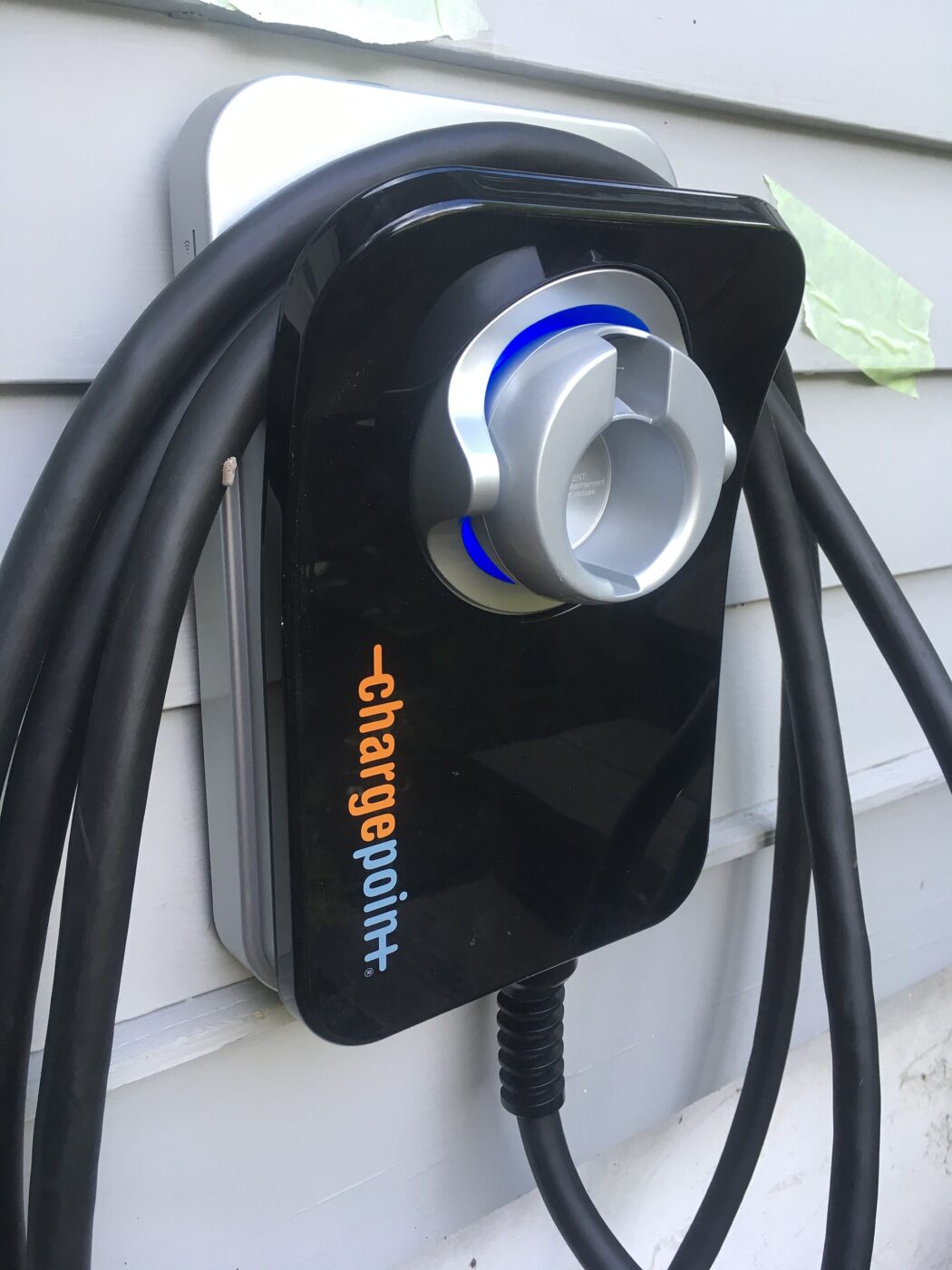
The hardware is the smaller half of the bill. The electrical work is the variable, and it turns on facts specific to your house: spare capacity in the panel, the distance from panel to parking spot, whether the run is surface-mounted or fished through finished walls, and what the local permit process requires.
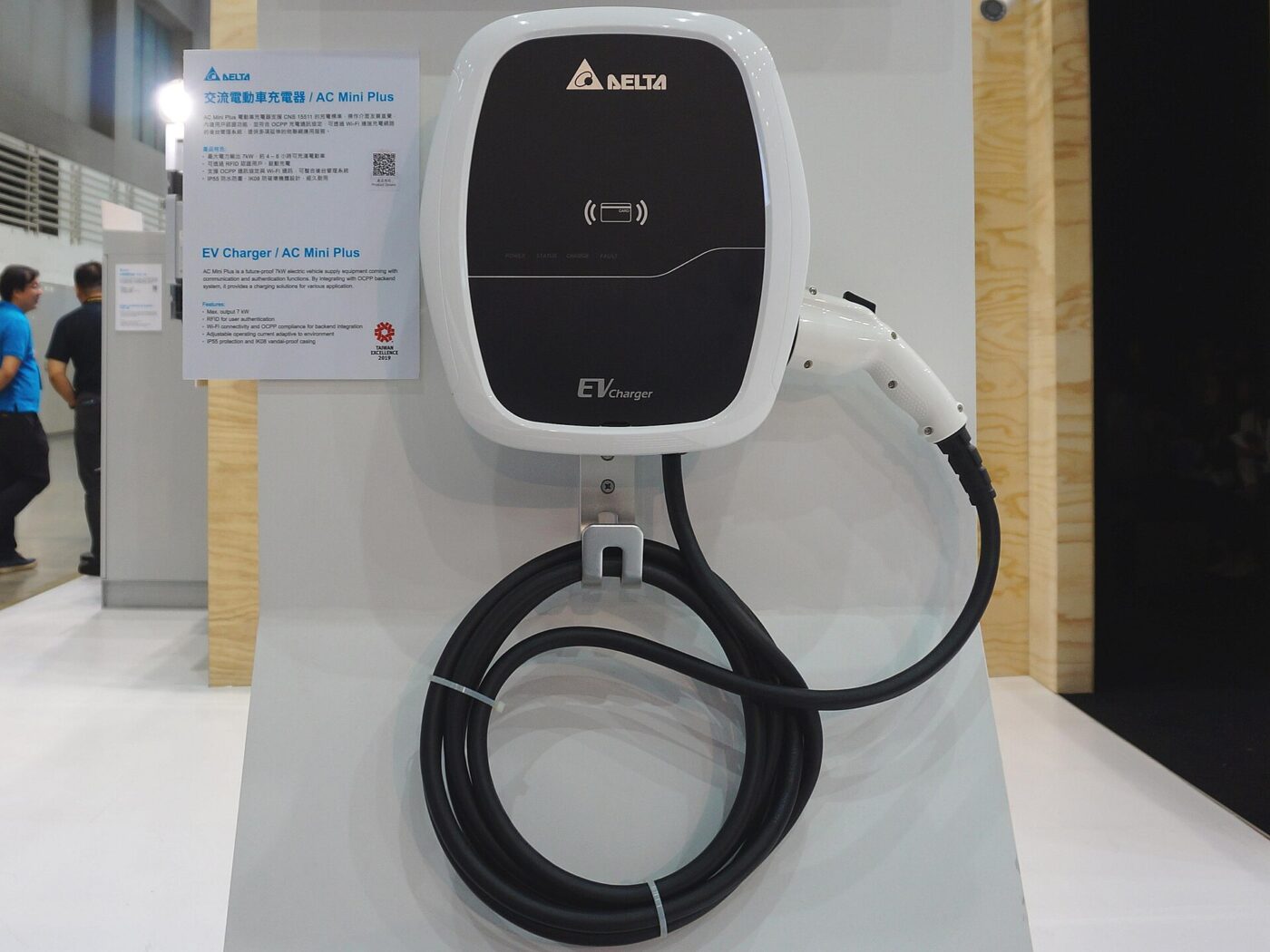
On the equipment, the Department of Energy recommends buying safety-certified products, such as those certified under the ENERGY STAR label. The other decisions are amperage, matched to the circuit your panel can support rather than to the highest number on the box; plug-in versus hardwired, where a plug-in unit on a properly rated receptacle is easier to replace and to take with you; and cable length, the specification people most often get wrong.
If your panel is full, ask about load management before asking about an upgrade. Circuit-sharing and load-sensing devices exist so that a service upgrade is not automatic, and they are usually far cheaper than one.
- Spare panel capacity and the breaker size the electrician will actually install
- Amperage of the unit matched to that circuit, not to the marketing figure
- Plug-in versus hardwired, and whether you might move house
- Cable length measured to the car port from where you really park
- Safety certification, with the DOE pointing to ENERGY STAR certified equipment
- Your utility for a rebate or an EV time-of-use rate, now the only discounts left
Who should wait
Wait if you are a renter, if your parking is on the street, or if you have owned the car for less than a few months and have not learned your actual daily mileage. The common regret here is buying capability for a driving pattern that turned out not to exist.
Wait also if your panel needs an upgrade and your driving fits Level 1. With the federal credit gone, a service upgrade is entirely out of pocket. Run Level 1 for a winter first, since the cold months are when the limitation shows up if it is going to.
Buy now if overnight Level 1 leaves you short, if a second EV is arriving, or if your utility has a time-of-use rate whose cheap window is too narrow for a slow charge. The saving is in the rate and the mileage, and neither is going away.
What to watch next
- Your utility rebate and EV rate pages, which are now the only discounts on home charging equipment.
- The EIA Electric Power Monthly residential price series, since the payback on charging at home is set by that number against gasoline.
- Whether Congress revisits the refueling property credit, which has lapsed for property placed in service after June 30, 2026.
Where to start
Paid links: we earn a commission if you buy through the buttons below, at no extra cost to you. As an Amazon Associate I earn from qualifying purchases.
Home charging options compared on what differs
| Product type | Good fit for | Where to look |
|---|---|---|
| Level 2 home EV charger | Fits high daily mileage | See listings on AmazonOpens Amazon search results, not one listing: check the model on the product page. |
| Portable Level 1 and Level 2 charging cable | Fits renters and travel | See listings on AmazonOpens Amazon search results, not one listing: check the model on the product page. |
| EV charging cable holder | Fits a tidy garage wall | See listings on AmazonOpens Amazon search results, not one listing: check the model on the product page. |
Product types that fit the trend described above, not tested models. Check the exact listing before you buy. How we pick them.
Level 2 home EV charger
Where to look: Amazon
The case for one is mileage and rate structure, not the charger itself. Match the amperage to the circuit an electrician can actually give you.
- Refills a big battery overnight
- Suits narrow off-peak windows
- Install cost is now unsubsidized
- Amperage limited by your panel
Portable Level 1 and Level 2 charging cable
Where to look: Amazon
DOE notes many owners meet daily range needs charging overnight on Level 1, with no extra cost or installation, where a dedicated branch circuit outlet is near the car. A cable with both plug types covers that.
- No installation needed
- Moves between homes and trips
- Slower on a 120V outlet
- Adapter set varies by model
EV charging cable holder
Where to look: Amazon
A dragged connector is the part of a home setup that fails first, so getting the cable off the ground is cheap protection.
- Keeps the cable off the floor
- Reduces connector damage
- Another thing to mount
- Sizing varies by cable diameter
More: Auto and EVs trends and how the Trend Signal is scored.
Sources
- Alternative Fuel Vehicle Refueling Property Credit — Internal Revenue Service
- Alternative Fuel Infrastructure Tax Credit — U.S. Department of Energy
- Clean Vehicle Credit — U.S. Department of Energy
- Charging at Home — U.S. Department of Energy
- Electric Power Monthly, Table 5.6.A — U.S. Energy Information Administration
- Gasoline and Diesel Fuel Update — U.S. Energy Information Administration
- AAA: New Vehicle Ownership Costs Hit $12,863 Annually — AAA
- AAA Study Reveals Temperature Impacts on EV and Hybrid Performance — AAA
Questions readers ask
Is the home EV charger tax credit still available?
No. The IRS describes the credit as 30% of the cost, capped at $1,000 per item, and the Department of Energy records the window as January 1, 2023 through June 30, 2026, with that end date set by Public Law 119-21 of July 4, 2025.
Did the $7,500 EV credit end too?
Yes. The Department of Energy alternative fuels data center states that the clean vehicle credit of up to $7,500 is available for vehicles acquired on or before September 30, 2025.
Is charging at home still cheaper than gasoline?
By a wide margin on current prices. AAA reported in September 2026 that EV charging costs run about 66% to 70% below fuel costs for gasoline vehicles. Residential electricity averaged 18.34 cents per kWh in June 2026, up 5.0% year over year, while BLS measured motor fuel up 27.9% in the 12 months to August 2026.
Do I actually need a Level 2 charger?
Often not. The Department of Energy says many EV owners meet their daily driving range requirements by charging overnight with Level 1 equipment, requiring no additional cost or installation, provided a power outlet on a dedicated branch circuit is available near their parking location. Level 2 earns its keep with high daily mileage, two EVs, cold winters, or a narrow off-peak rate window.
Does cold weather change the math?
Yes. AAA testing published in May 2026 found EVs lose 35.6% in miles per gallon equivalent at 20 degrees Fahrenheit, raising home charging costs by $32.11 per 1,000 miles and public charging by $76.93. That argues for charging at home.