Almost every car sold in the United States for the past two decades has a pleated paper filter behind the glove box, and a large share of drivers have never seen theirs. It costs less than a tank of gas, takes about ten minutes to swap, and is the only air cleaning equipment the vehicle has. It is also the part a shop is most likely to recommend and a driver is most likely to decline.
The useful question is not whether a filter does something, which is settled, but how much it does, how quickly that fades, and whether the upgraded versions earn their higher price. The measured answers are narrower than the marketing.
Trend Signal
55/100 Steady momentum
- Emerging
- Rising
- Mainstream
- Peaking
- Cooling
Universal fitment, steady demand, sharp spikes on smoke and pollen days
A 2023 simulation study in Environmental Science and Pollution Research found a 55% average drop in cabin PM2.5 with a new filter at 70% recirculation, falling to 39% once the same filter had been aged 500 hours.
Our editorial reading of the cited data, not a forecast. How it is scored
By the numbers
- 55%Average cut in cabin PM2.5 with a new filter at 70% recirculation, 2023 simulation studyEnvironmental Science and Pollution Research
- 39%Average cut in the same study once the filter had been aged 500 hoursEnvironmental Science and Pollution Research
- 5.1MAcres burned by U.S. wildfires in 2025, below our 7.55M average for 2015 to 2024National Interagency Fire Center
- 1.7%Change in the BLS index for vehicle parts other than tires, year to August 2026U.S. Bureau of Labor Statistics
Where the filter sits and what it actually catches
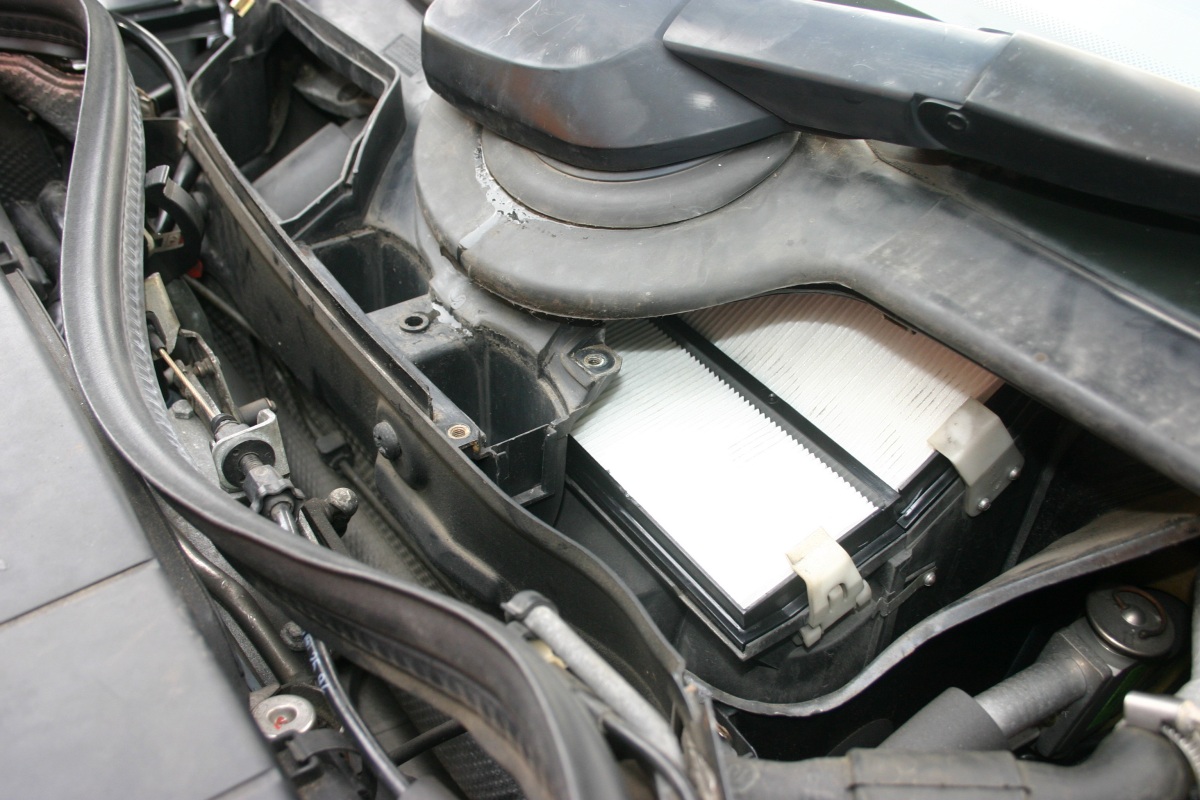
The cabin filter sits in the fresh-air path between the outside vent and the blower, so every cubic foot of air the climate system pushes at you passes through it. It is a separate part from the engine air filter, which protects the intake, and it is not on the oil-change interval. That is the whole reason it gets missed.
What it is asked to catch is mostly fine particulate. The Environmental Protection Agency defines PM2.5 as inhalable particles with diameters generally 2.5 micrometers and smaller, and says those fine particles pose the greatest risk to health. Traffic is a contributor: the agency notes that many particles form in the atmosphere from sulfur dioxide and nitrogen oxides emitted by power plants, industry and automobiles.
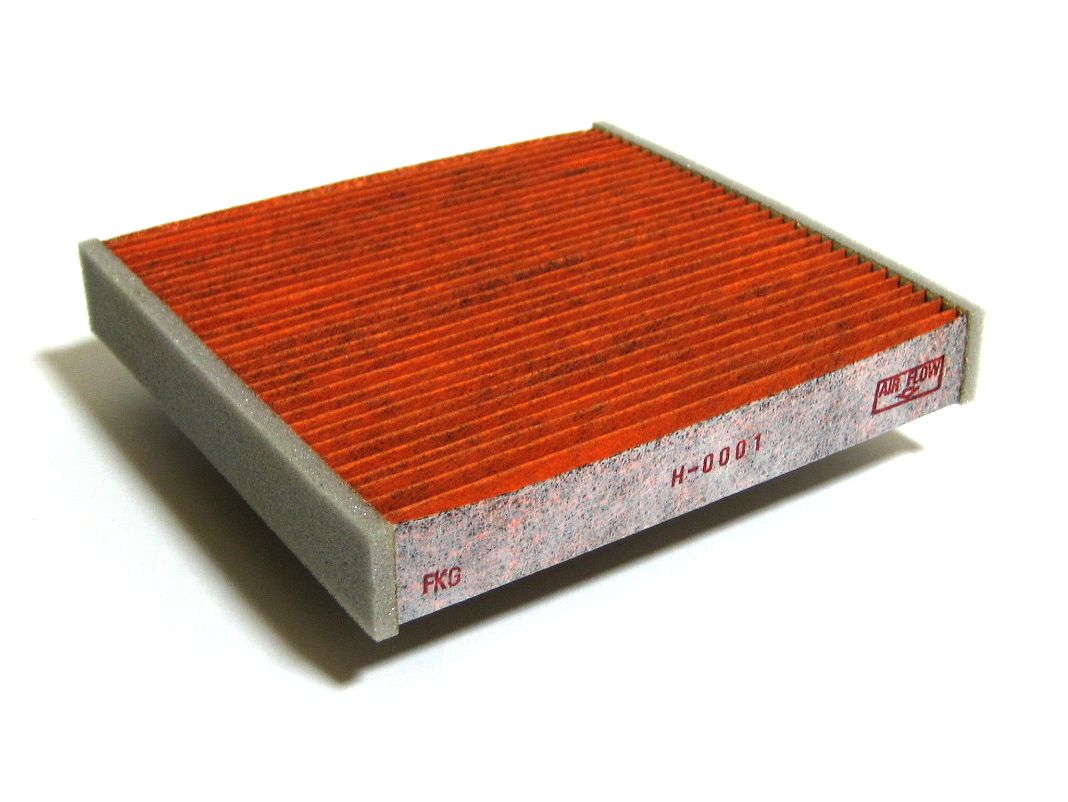
A standard filter is a pleated particle medium. It is good at pollen, road grit and visible dust, less good at sub-micron particles, and does nothing for gases and odors unless it carries an activated-carbon layer.
It is the only air cleaner the car has, and it sits on no service schedule that most drivers follow.
What the research shows about recirculate and filter age
The most useful published numbers come from a 2023 study in Environmental Science and Pollution Research, which built a simulation of a 2018 Volvo XC90 plug-in hybrid, fed it filter efficiencies measured on a rig, and varied both the recirculation fraction and the filter condition. With a new multi-layer electrostatically charged filter, 30%, 50% and 70% recirculation reduced cabin PM2.5 by 22%, 36% and 55% on average, respectively.
The filter condition mattered as much as the setting. At the same 70% recirculation, a filter aged 500 hours to end of service delivered a 39% reduction rather than 55%. The authors reported that with a new filter the cabin met guideline levels at low and medium outside particle levels, while an end-of-service filter failed to meet the guideline at medium and high outside concentrations. In plain terms, the filter you have been driving on for three years is doing a different job than the one you paid for.
The study also modeled the carbon dioxide trade-off that makes people nervous about pressing recirculate. With one passenger, 70% recirculation did not push cabin carbon dioxide above the common 1,000 parts per million guideline, and higher recirculation cut climate system power by up to 27% on average. With more passengers the authors put the safe ceiling lower.
Smoke days changed the job description
Wildfire smoke is the reason a lot of drivers looked up what a cabin filter is. National Interagency Fire Center figures show 77,850 U.S. wildfires burning 5,131,474 acres in 2025. Averaging the ten years before that in the same table, 2015 through 2024, gives about 62,400 fires and 7.55 million acres a year, our calculation. So 2025 brought more fires than usual and burned less land than usual, which is the honest framing: this is a variable hazard, not a one-way trend.
What is consistent is the exposure pattern. A car is a small, sealed box with a powerful fan, so it can hold the cleanest air in a smoky neighborhood or the dirtiest, depending on the filter and the vent setting. The combination that worked in the 2023 study was a filter in good condition plus a high recirculation fraction, not one or the other.
Carbon, HEPA claims and what to check on the box

Three tiers are sold for the same slot. A plain particulate filter is the cheapest and matches what most cars shipped with. An activated-carbon filter adds a bonded charcoal layer that adsorbs odors and some gases, and is the version worth paying for if you sit in traffic or drive through farm country. Filters marketed with HEPA-style language are the priciest and the ones to read carefully, because a cabin slot is a fixed size and pushing a denser medium into it changes airflow.
Denser is not automatically better in a system with a fixed blower. If airflow through the slot drops far enough, defrost performance suffers and the blower works harder for less air at the vent. The practical test is fitment: the filter should fill the frame, the airflow arrow should point the way the factory filter did, and the frame should seat without bowing.
Prices for the category are quiet. The BLS line for vehicle parts and equipment other than tires rose 1.7% in the 12 months to August 2026, and parts and equipment overall rose 0.9%. Premium Guard said in June 2026 that its second phase of buying First Brands assets included oil, air and cabin air filter production lines in Albion, Illinois, so capacity for this part is being restarted rather than retired.
Match the slot and the airflow arrow first. Choose carbon over plain paper if odors or traffic fumes are your problem.
Who should upgrade and who should just replace
Upgrade to an activated-carbon filter if you commute in heavy traffic, live where smoke or agricultural dust is seasonal, or notice exhaust and manure smells inside the car. That is the tier where the extra spend buys a capability the standard filter does not have at all.
Just replace on schedule if your driving is suburban and your complaint is weak airflow rather than smell. Capture falls substantially as a filter ages, so a fresh standard filter usually beats an old premium one. Check your owner manual interval, then halve it if you drive dirt roads or park under trees.
Skip the slot entirely if your vehicle predates cabin filters or has no housing behind the glove box, which is common on older trucks. A plug-in cabin purifier is then the only option, judged on stated clean air delivery rate rather than housing size.
What to watch next
- National Interagency Fire Center year-to-date acreage, which tells you whether the coming season is running above or below the past decade in that table.
- Whether Premium Guard announces further restarts of the Albion, Illinois filter lines, which would ease availability of less common cabin filter sizes.
- The BLS vehicle parts line in the monthly CPI release, for any break from the sub-2% pace that has held through August 2026.
Where to start
Paid links: we earn a commission if you buy through the buttons below, at no extra cost to you. As an Amazon Associate I earn from qualifying purchases.
Cabin air options compared on what changes between them
| Product type | Good fit for | Where to look |
|---|---|---|
| Activated-carbon cabin air filter | Fits odors and traffic fumes | See listings on AmazonOpens Amazon search results, not one listing: check the model on the product page. |
| Particulate cabin air filter | Fits routine replacement | See listings on AmazonOpens Amazon search results, not one listing: check the model on the product page. |
| 12-volt car air purifier | Fits cars with no filter housing | See listings on AmazonOpens Amazon search results, not one listing: check the model on the product page. |
Product types that fit the trend described above, not tested models. Check the exact listing before you buy. How we pick them.
Activated-carbon cabin air filter
Where to look: Amazon
The tier that adds a capability rather than a percentage. Worth it in stop-and-go traffic and near farmland; unnecessary if dust is the only complaint.
- Adsorbs odors a paper filter ignores
- Same slot as the standard part
- Costs more per change
- Carbon capacity fades with time
Particulate cabin air filter
Where to look: Amazon
A fresh standard filter beats an aged premium one, which is the practical lesson from the 2023 simulation study. Buy on fitment, and change it early if you drive dusty roads.
- Cheapest way to restore airflow
- Matches the factory specification
- No effect on gases or smells
- Capture falls as it loads
12-volt car air purifier
Where to look: Amazon
The fallback for older trucks built without a cabin filter housing. Judge it on clean air delivery rate and on noise at the setting you would leave it on.
- Works without a filter slot
- Moves between cars
- Adds a device on the dash
- Needs its own filter replacements
More: Auto and EVs trends and how the Trend Signal is scored.
Sources
- Vehicle cabin air quality: influence of air recirculation on energy use, particles, and CO2 — Environmental Science and Pollution Research
- Total Wildland Fires and Acres, 1983–2025 — National Interagency Fire Center
- Particulate Matter Basics — U.S. Environmental Protection Agency
- Premium Guard Completes Phase 2 Acquisition of First Brands Group Assets — Premium Guard
- Consumer Price Index, Table 2, August 2026 — U.S. Bureau of Labor Statistics
Questions readers ask
Does a cabin air filter actually do anything?
Yes, and it has been quantified. In a 2023 simulation study published in Environmental Science and Pollution Research, a modeled vehicle with a new cabin filter running 70% air recirculation showed an average 55% reduction in cabin PM2.5, and 30% and 50% recirculation gave 22% and 36% reductions.
Is recirculate safe to leave on?
In the same 2023 study, 70% recirculation with one passenger did not raise cabin carbon dioxide above the common 1,000 parts per million guideline, and it cut climate system power by up to 27% on average. The authors did not recommend 70% with more passengers, so ventilate periodically in a full car.
Is a carbon cabin filter worth the extra cost?
It depends on the problem. Activated carbon adsorbs odors and some gases that a plain particulate filter passes straight through. For particles alone, a fresh standard filter is the better value, because the study found average capture falls from 55% to 39% as a filter ages 500 hours.
Are cabin filter prices rising?
Not meaningfully. The BLS index for vehicle parts and equipment other than tires rose 1.7% in the 12 months to August 2026, and parts and equipment overall rose 0.9%. Premium Guard also said in June 2026 that it had acquired cabin air filter production lines in Albion, Illinois.