The 12-volt battery is the most boring component in a car and the one most likely to strand you. What changed is that it is no longer a commodity box of lead and acid. Engine stop-start restarts the engine dozens of times on a single commute and runs accessories while it is off, and the design that tolerates that costs considerably more than the one that did not have to.
The adoption data is not ambiguous. In its 2025 Automotive Trends Report, covering model year 2024, the Environmental Protection Agency measured stop-start on 74.9% of all new U.S. production and on 58% of gasoline non-hybrid vehicles. As that fleet reaches replacement age, owners find out what the battery costs.
Trend Signal
68/100 Strong momentum
- Emerging
- Rising
- Mainstream
- Peaking
- Cooling
Stop-start reached three of four new vehicles and it dictates the battery type
EPA measured stop-start systems on 74.9% of model year 2024 U.S. production, up from under 1% when it began tracking the technology in model year 2012, and those vehicles are built around an enhanced low-voltage battery.
Our editorial reading of the cited data, not a forecast. How it is scored
By the numbers
- 74.9%Share of model year 2024 U.S. production equipped with a stop-start systemU.S. Environmental Protection Agency
- 58%Share of model year 2024 gasoline non-hybrid vehicles with stop-startU.S. Environmental Protection Agency
- 67%Lead-acid battery share of U.S. apparent lead consumption in 2025U.S. Geological Survey
- 281.2Producer price index for battery manufacturing, August 2026, from 267.2 in January 2025Federal Reserve Bank of St. Louis
The battery under the hood is not the one your old car had
EPA explains the mechanism plainly in its trends report: vehicles with stop-start systems generally use a larger alternator and an enhanced low-voltage battery, which lets the engine shut off at idle to save fuel. The report began tracking stop-start in model year 2012 at less than one percent of production. By model year 2024 it covered 58% of gasoline non-hybrid vehicles and, counting hybrids and mild hybrids, 74.9% of all production.
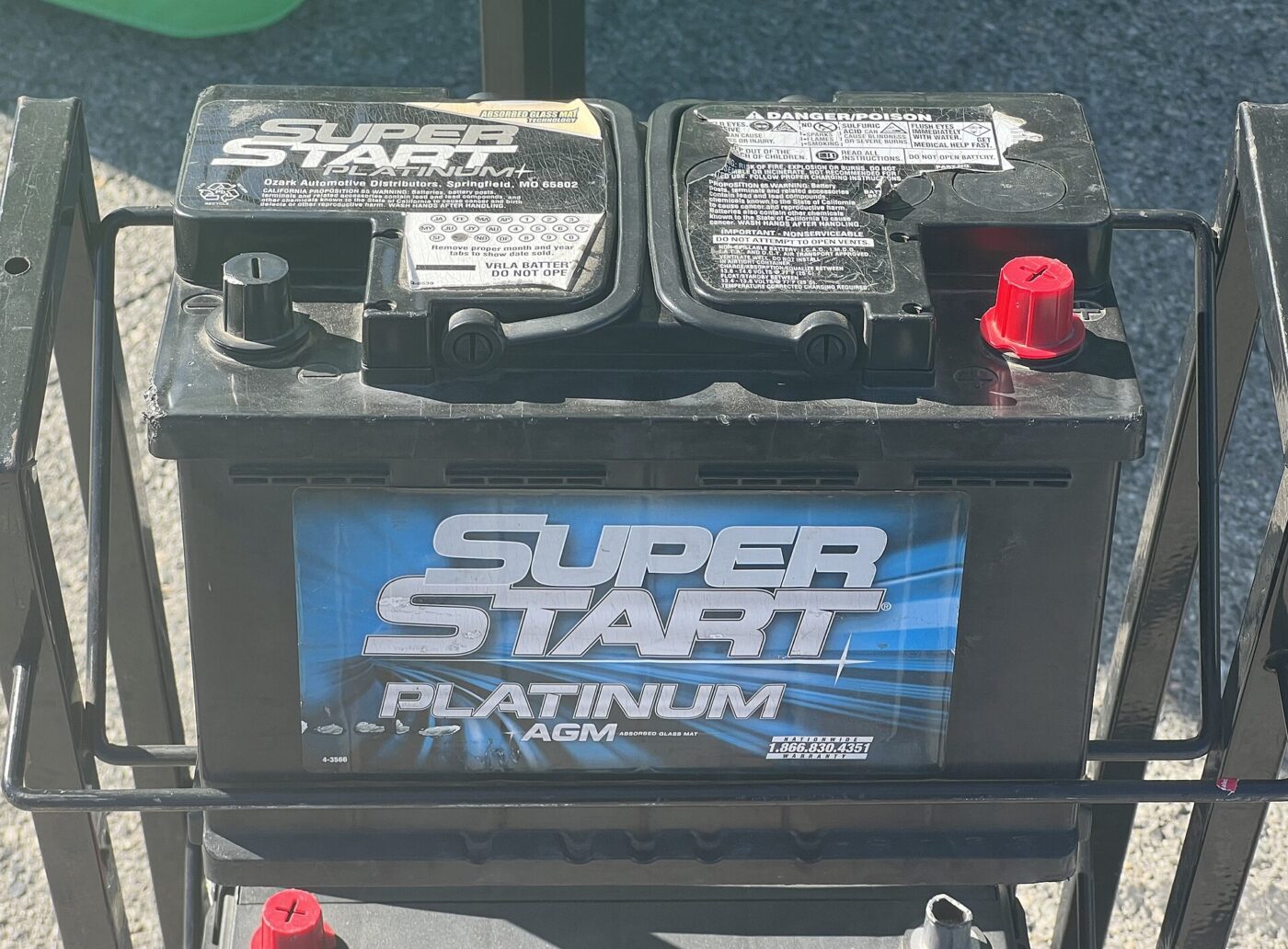
Two designs answer that duty cycle. An absorbent glass mat battery holds its electrolyte in a fiberglass separator, which tolerates repeated partial discharge far better than a flooded plate. An enhanced flooded battery is a cheaper middle step used on some entry-level applications. A conventional flooded battery in a stop-start car works briefly and then fails early, which is the most common expensive mistake here.
The fleet also carries more electrical load than it used to. Table 4.1 in the EPA report puts gasoline engines with stop-start at 57.6% of model year 2024 production against 17.2% without it, plus mild hybrids at 5.3% and strong hybrids at 9.5%. Each of those architectures asks more of a low-voltage battery than a 2010 car did.
If the engine shuts off at a red light, the replacement is an AGM or enhanced flooded battery, not the cheapest box on the shelf.
What the factory-gate price data shows
The Bureau of Labor Statistics producer price index for battery manufacturing is the cleanest read on what the factories charge. It stood at 267.2 in January 2025 and 281.2 in August 2026, a rise of about 5% across those 19 months by our calculation. The steepest stretch was March to September 2025, when the index moved from 267.3 to 278.3, roughly 4% in six months on the same arithmetic, and it has been close to flat since.
That timing lines up with trade policy. Proclamation 10908 of March 26, 2025 imposed a 25% tariff under Section 232 of the Trade Expansion Act of 1962 on imported automobiles and on automobile parts, with the parts duty to take effect no later than May 3, 2025. The battery is squarely inside it: the tariff-schedule list that carries the duty, U.S. Note 33(g) to subchapter III of chapter 99, names subheading 8507.10, which covers lead-acid storage batteries of a kind used for starting piston engines.
At the consumer end the effect is muted, because a battery is one item in a broad basket. BLS measured motor vehicle parts and equipment up just 0.9% in the 12 months to August 2026. The mix shift does more to your bill than the index does: moving from flooded to AGM is a step up in price that no index captures, because it is a different product.
Lead got cheaper, the battery did not
The raw material argument does not explain the price. The U.S. Geological Survey reported that the average North American lead price over the first 10 months of 2025 was 106 cents a pound, 3% below the 108.8-cent average for 2024. Global stocks in London Metal Exchange warehouses at the end of October 2025 were 217,000 tons, 10% below the level at the end of 2024.
What is tightening is the U.S. supply chain around that metal. The last primary lead refinery in the country closed in 2013, and nearly all domestic concentrate has been exported since. Secondary refineries produced an estimated 1 million tons in 2025, equal to 70% of apparent domestic consumption, almost all from old scrap and mostly from spent lead-acid batteries. Net import reliance for refined metal rose to 33% in 2025 from 27% in 2024.
Spent batteries are leaving too. USGS reported 23 million spent starting-lighting-ignition batteries exported in the first eight months of 2025, up 23% from 19 million in the same period of 2024, and on November 7, 2025 lead was added to the U.S. Final 2025 List of Critical Minerals. That is why the core return on your old battery is worth something.
Cheaper lead, tighter domestic refining, and a product mix moving upmarket: the metal is not what raised your bill.
What to check before you buy a replacement
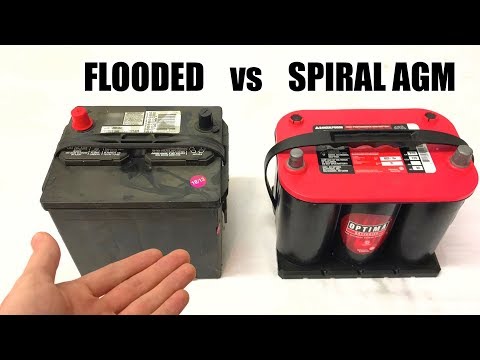
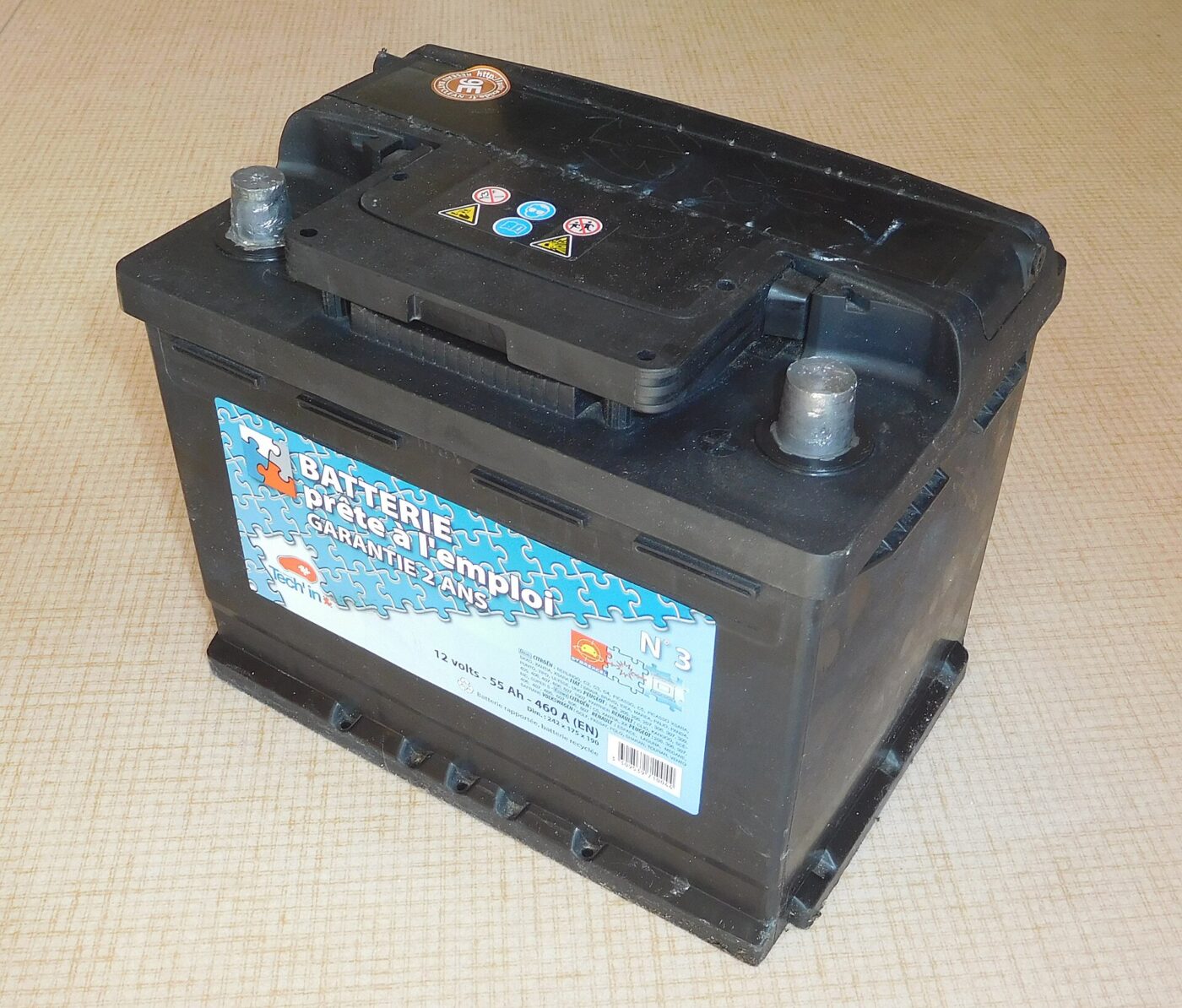
Start with the label on the battery you are removing. Group size sets the physical dimensions and terminal layout, and the wrong group either will not clamp down or puts the terminals out of reach. Cold cranking amps should meet or exceed the original rating. Technology type is the third and most consequential line: AGM, EFB or flooded.
Then check whether your car needs the new battery registered. Many vehicles with stop-start and smart charging run a battery management routine that tracks age and state of charge, and fitting a fresh battery without telling the module leaves the charging system running a profile for a worn one. On those cars a scan tool is part of the job, not an upsell.
- Group size and terminal orientation, copied from the old battery label
- Cold cranking amps at or above the original specification
- AGM, enhanced flooded or flooded, matched to whether the car has stop-start
- Whether the vehicle requires a battery registration or relearn procedure
- Manufacture date code, since a battery that sat on a shelf has already aged
Who should replace early and who should wait
Replace early if the battery is at or past its warranty period and you are heading into a temperature extreme, or if the car cranks slowly and the stop-start function has quietly stopped engaging. Stop-start that no longer works is often the first symptom, because the control module disables the feature when it judges the battery cannot support a restart.
Wait if the battery is healthy under a load test and you are simply worried about prices. The producer price index has been close to flat since September 2025 and lead itself was cheaper in 2025 than in 2024, so there is no price event to front-run.
One thing not to do is downgrade. If the car shipped with AGM, fitting a flooded battery to save money buys a shorter service life and a charging system running the wrong profile.
What to watch next
- The monthly BLS producer price index for battery manufacturing, for whether the flat stretch since September 2025 holds.
- The next USGS Mineral Commodity Summaries for lead, especially the export figure for spent starting-lighting-ignition batteries and net import reliance.
- The next EPA Automotive Trends Report, for whether stop-start share keeps climbing as more strong hybrids enter the mix.
Where to start
Paid links: we earn a commission if you buy through the buttons below, at no extra cost to you. As an Amazon Associate I earn from qualifying purchases.
Battery-related buys compared on what they actually do
| Product type | Good fit for | Where to look |
|---|---|---|
| AGM replacement car battery | Fits stop-start vehicles | See listings on AmazonOpens Amazon search results, not one listing: check the model on the product page. |
| 12-volt battery and charging system tester | Fits diagnosing a slow crank | See listings on AmazonOpens Amazon search results, not one listing: check the model on the product page. |
| Smart battery maintainer | Fits cars parked for weeks | See listings on AmazonOpens Amazon search results, not one listing: check the model on the product page. |
Product types that fit the trend described above, not tested models. Check the exact listing before you buy. How we pick them.
AGM replacement car battery
Where to look: Amazon
The right replacement for the 74.9% of model year 2024 vehicles EPA recorded with stop-start. Copy the group size and cold cranking amps off the old label first.
- Built for repeated partial discharge
- Sealed and spill resistant
- Costs well above flooded
- May need a registration step
12-volt battery and charging system tester
Where to look: Amazon
A resting voltage reading tells you almost nothing. What matters is the voltage held during cranking and the charging output after, so buy a tester that shows both.
- Separates a weak battery from a weak alternator
- Reusable across cars
- Readings need interpreting
- Cheap units skip cranking volts
Smart battery maintainer
Where to look: Amazon
Short trips and long gaps kill modern batteries early, because the alternator never fully recharges them. Look for an explicit AGM setting.
- Keeps a battery from sulfating
- Safe to leave connected
- Needs an outlet near the car
- Wrong mode can overcharge AGM
More: Auto and EVs trends and how the Trend Signal is scored.
Sources
- The 2025 EPA Automotive Trends Report — U.S. Environmental Protection Agency
- Mineral Commodity Summaries 2026: Lead — U.S. Geological Survey
- Producer Price Index by Industry: Battery Manufacturing — Federal Reserve Bank of St. Louis
- Consumer Price Index, Table 2, August 2026 — U.S. Bureau of Labor Statistics
- Proclamation 10908, Adjusting Imports of Automobiles and Automobile Parts — Federal Register
- Harmonized Tariff Schedule, chapter 99, subchapter III, U.S. Note 33 — U.S. International Trade Commission
- Harmonized Tariff Schedule, chapter 85, heading 8507 — U.S. International Trade Commission
Questions readers ask
Why is my replacement car battery so expensive?
Mostly because the product changed. EPA measured stop-start systems on 74.9% of model year 2024 U.S. production, and its report notes those vehicles use a larger alternator and an enhanced low-voltage battery. AGM and enhanced flooded batteries cost more to build than the plain flooded ones they replaced.
Can I put a regular flooded battery in a stop-start car?
It will start the car and it will fail early. Stop-start duty means repeated partial discharge and restarts, which is what AGM and enhanced flooded designs are built for. Many of these vehicles also run a charging profile matched to the fitted battery type.
Are car battery prices still rising in 2026?
They have flattened at the factory gate. The BLS producer price index for battery manufacturing rose from 267.3 in March 2025 to 278.3 in September 2025, then moved only to 281.2 by August 2026. At retail, motor vehicle parts and equipment rose 0.9% in the 12 months to August 2026.
Does returning the old battery matter?
Yes. USGS reported that secondary refineries produced about 1 million tons of lead in 2025, equal to 70% of apparent U.S. consumption, almost all recovered from old scrap and mostly from spent lead-acid batteries. The core charge keeps that feedstock flowing.