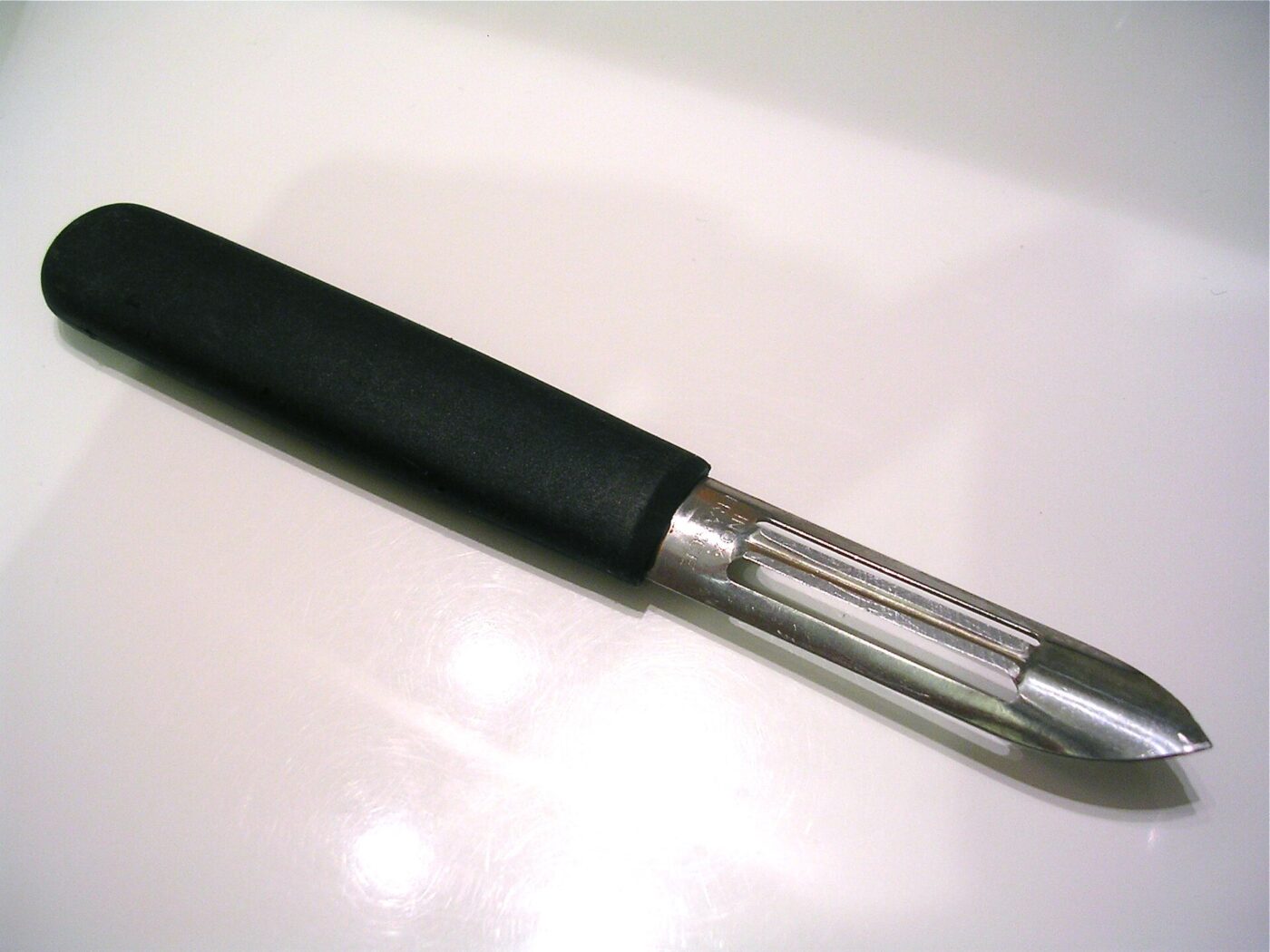
The easy-grip handle stopped being a category and became a default. Thick rubbery grips, oversized knobs and levers that trade twisting for pushing are now spread across ordinary kitchen aisles rather than gathered in a separate section. For anyone shopping for a relative with a weak grip or one usable hand, that is progress with a catch: when everything claims to be comfortable, the claim stops carrying information.
The demand behind it is not a guess. In its Vintage 2024 population estimates, released June 26, 2025, the US Census Bureau put the population age 65 and older at 61.2 million in 2024, up 3.1 percent from 2023, and at 18.0 percent of the US population against 12.4 percent in 2004. Between 2020 and 2024 that group grew 13.0 percent while working-age adults grew 1.4 percent. This is a market that has got bigger every year without anybody marketing to it.
Trend Signal
50/100 Steady momentum
- Emerging
- Rising
- Mainstream
- Peaking
- Cooling
A mature category with a growing buyer base and one certification with a published test
The Census Bureau put the US population age 65 and older at 61.2 million in 2024, 18.0 percent of the country against 12.4 percent in 2004, while the one certification in this category with a published pass-or-fail test is the Arthritis Foundation Ease of Use seal.
Our editorial reading of the cited data, not a forecast. How it is scored
By the numbers
- 61.2MUS population age 65 and older in 2024, up 3.1 percent from 2023U.S. Census Bureau
- 18.0%Share of the US population age 65 and older in 2024, against 12.4 percent in 2004U.S. Census Bureau
- 53.2MUS adults who reported diagnosed arthritis in 2019 to 2021, 21.2 percent of adultsCDC MMWR
- +22%Producer prices for metal cookware, cutlery and flatware, June 2020 to June 2025BLS via FRED
Why the buyer base keeps growing
Two data sets explain the shelf. The first is demographic: the Census Bureau counted 61.2 million Americans aged 65 or older in 2024, a group that grew 13.0 percent between 2020 and 2024 while working-age adults grew 1.4 percent. The second is the CDC’s National Health Interview Survey, reported in MMWR on October 13, 2023, which found 53.2 million US adults, 21.2 percent of the adult population, with diagnosed arthritis in 2019 to 2021. Nearly half of them, 48.3 percent or 25.7 million, were 65 or older.
Those two numbers overlap heavily, and together they describe a buyer who is not shopping in a medical supply catalog. They are shopping in the same store as everyone else, which is exactly why the specialty label faded.
The catch is that the design work that made those handles comfortable was never universal. A thick grip addresses grip strength and does nothing for someone who has one usable hand. The tools that solve for one hand, rocker knives, spiked cutting boards, clamped bowl holders, remain a genuinely separate category that no amount of mainstreaming has absorbed.
Weak grip and one-handed are different problems, and mainstream easy-grip lines only solve the first.
What separates an adaptive tool from a normal one
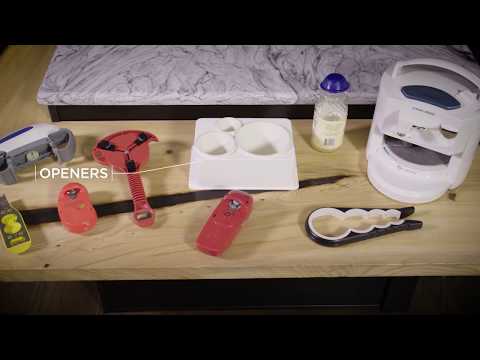
Three mechanical ideas do most of the work, and they are easy to spot once you know the shape. The first is leverage: a jar opener, a lever-arm can opener or a long-handled garlic press converts a twist into a push, trading a sustained pinch grip for a longer lever arm.
The second is stabilization. A spiked or clamped cutting board, a suction-footed bowl or a non-slip mat under a mixing bowl removes the job of the second hand entirely. These are the items that change what a one-handed cook can do, and they are also the items most likely to be sold without any mention of who they are for.
The third is handle geometry: diameter, length and surface. A larger diameter reduces how far the fingers have to close, a longer handle moves the load away from the wrist, and a matte or ribbed surface keeps the tool in place when wet. Almost every mainstream easy-grip line is doing only this third thing, which is why it reads as comfort rather than capability.
The one label with a test behind it
The word ergonomic is not certified by anybody. One label we found in this space is. The Arthritis Foundation runs an Ease of Use certification for products and packaging, which the organization describes as testing through both lab work and human factors analysis, with a report and a pass or fail result. A product or package can be evaluated at prototype stage or once the design is complete, and the Foundation says a fail comes back with design suggestions rather than the seal.
The certified categories are ordinary consumer ones, not medical ones: health and wellness items including joint protection accessories and bottle caps, home and hobbies including gardening and household products, and workplace products meant to reduce strain. That framing is the mainstreaming story in one sentence.
The Foundation also makes a commercial argument to manufacturers, citing that over half of consumers would switch brands or pay more for easier-to-use products. Whether or not that moves a brand, it explains why the seal now appears on packaging that never mentions arthritis anywhere else.
What the price line has done
There is no price index for adaptive utensils specifically, but there is one for the industry that makes most of them. The BLS producer price index for metal cookware, cutlery and flatware manufacturing rose from 111.7 in June 2020 to 136.8 in June 2025, against a December 2011 base of 100. June 2025 is the latest observation FRED carries for this series, so it is where the trail stops; nothing here extends it forward.
The shape of that climb matters more than the total. One of those five years was nearly flat, at under 1 percent; one was a jump of more than 9 percent; and the final twelve months in the series added about 5 percent.
| June | Index, Dec 2011 = 100 | Change from a year earlier |
|---|---|---|
| 2019 | 110.2 | up about 1.5 percent |
| 2020 | 111.7 | up about 1.4 percent |
| 2021 | 114.6 | up about 2.6 percent |
| 2022 | 125.3 | up about 9.3 percent |
| 2023 | 129.0 | up about 2.9 percent |
| 2024 | 130.2 | up about 0.9 percent |
| 2025 | 136.8 | up about 5.1 percent |
What to check when the listing says ergonomic
Nobody vets these on a buyer’s behalf. Chapter 15, section 110.1 of the Medicare Benefit Policy Manual, revision 13889 issued July 30, 2026, groups self-help devices with the equipment it treats as nonmedical, which puts a utensil outside its definition of durable medical equipment. The checks are yours.
- Handle diameter, quoted as a measurement rather than described as chunky.
- Whether the handle is dishwasher safe, since repeated heat hardens some soft grips.
- For an electric jar opener, the range of lid diameters it accepts and whether it runs on batteries.
- For a rocker knife, blade length and whether there is a finger guard above the blade.
- For a non-slip mat, the heat rating, if a hot pan is ever going to land on it.
- For a cutting board with spikes or a clamp, whether it can be cleaned without dismantling it.
- The weight of the tool itself, which is the specification most often left off entirely.
What to watch next
- Whether the BLS producer price index for metal cookware, cutlery and flatware posts an observation after June 2025, its latest
- Whether the Arthritis Foundation Ease of Use seal starts appearing on mainstream kitchen packaging rather than specialty lines
- Census Bureau population estimates for the 65 and older group, which have grown every year since 2020
Where to start
Paid links: we earn a commission if you buy through the buttons below, at no extra cost to you. As an Amazon Associate I earn from qualifying purchases.
Adaptive kitchen tools by the problem they actually solve
| Product type | Good fit for | Where to look |
|---|---|---|
| Electric jar opener | Fits weak grip and painful twisting | See listings on AmazonOpens Amazon search results, not one listing: check the model on the product page. |
| Rocker knife | Fits one-handed preparation | See listings on AmazonOpens Amazon search results, not one listing: check the model on the product page. |
| Non-slip work mat | Fits a bowl that will not stay put | See listings on AmazonOpens Amazon search results, not one listing: check the model on the product page. |
Product types that fit the trend described above, not tested models. Check the exact listing before you buy. How we pick them.
Electric jar opener
Where to look: Amazon
This is the leverage category. The specification that matters is the lid diameter range, and a listing that does not give one is telling you something.
- No sustained pinch grip
- Handles a wide lid range if specified
- Another device to store and power
- Cheap units stall on stiff lids
Non-slip work mat
Where to look: Amazon
Stabilization is the underrated half of this category and the cheapest. A mat that holds a bowl still is doing the work a second hand would.
- Cheapest item that changes what is possible
- Works under boards and bowls
- Heat ratings vary widely
- Loses grip when oily
More: Aging and Accessibility trends and how the Trend Signal is scored.
Sources
- Older adults outnumber children in 11 states and nearly half of US counties — U.S. Census Bureau
- Prevalence of Diagnosed Arthritis, United States 2019 to 2021 — CDC MMWR
- Ease of Use certification program — Arthritis Foundation
- Producer Price Index by Industry: Metal Cookware, Cutlery and Flatware Manufacturing — BLS via FRED
- Medicare Benefit Policy Manual, Chapter 15 — CMS
Questions readers ask
What does the Arthritis Foundation Ease of Use certification mean?
The Arthritis Foundation describes it as testing through both lab work and human factors analysis, producing a report and a pass or fail result. Products can be evaluated as prototypes or finished designs, and ones that do not pass receive design suggestions instead of the seal.
How does the Medicare manual treat adaptive kitchen tools?
Chapter 15 of the Medicare Benefit Policy Manual groups self-help devices with the equipment it treats as nonmedical, which puts a utensil outside its definition of durable medical equipment. In practice these are retail purchases. Other coverage, such as a state program or a plan benefit, is a question for that plan.
Are easy-grip handles enough for one-handed cooking?
No. A thicker handle addresses grip strength. Cooking with one hand needs stabilization instead: a spiked or clamped cutting board, a suction-footed bowl or a non-slip mat, which are a separate group of products.
Have these tools gotten more expensive?
The BLS producer price index for metal cookware, cutlery and flatware manufacturing went from 111.7 in June 2020 to 136.8 in June 2025, which is about 22 percent by our arithmetic, with the largest year-over-year jump of about 9.3 percent falling in the year to June 2022. June 2025 is the latest observation in that series.