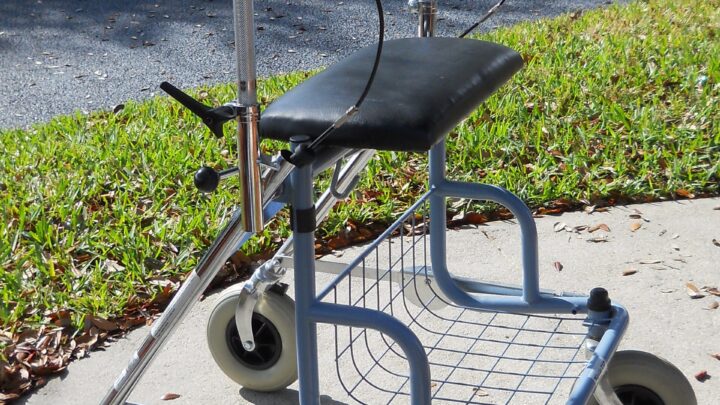
Nothing about a shower stool, a bed rail or a folding walker suggests a trade story, but that is where the price line leads. The Bureau of Labor Statistics tracks a producer price index for medical equipment and supplies manufacturing, and in August 2026 it stood at 144.4 against a December 2003 base of 100. A year earlier it was 138.2. That is a 4.5 percent increase in twelve months, in a category where the products barely change.
The import side has moved less. The BLS import price index for the same industry read 113.2 in August 2026 against 110.6 a year earlier, a 2.4 percent rise. Since August 2018 the domestic index is up about 22 percent while the import index is up about 7 percent. Those percentages are ours, worked from the published index levels. The gap is the thing to watch, because a Section 232 investigation opened in September 2025 could close it from the wrong direction.
Trend Signal
62/100 Steady momentum
- Emerging
- Rising
- Mainstream
- Peaking
- Cooling
Producer prices up again and a Section 232 case with no decision yet
The BLS producer price index for medical equipment and supplies manufacturing rose 4.5 percent in the year to August 2026, and a Commerce Section 232 investigation covering medical equipment imports opened in September 2025 remains undecided.
Our editorial reading of the cited data, not a forecast. How it is scored
By the numbers
- +4.5%US producer prices for medical equipment and supplies, August 2025 to August 2026BLS via FRED
- +2.4%Import prices for the same industry over the same twelve monthsBLS via FRED
- $283Medicare Part B deductible in 2026 before the 20 percent share of equipment costCMS
- Sept 2025Month Commerce opened a Section 232 case on medical equipment importsFederal Register
What the price indexes actually show
Two BLS series bracket this category. The producer price index for medical equipment and supplies manufacturing measures what US factories charge. The import price index for the same industry classification measures what imported equipment costs at the border. They have not moved together.
The domestic series has risen in every twelve-month comparison since 2020, with only shallow monthly dips along the way. The import series was slightly lower in August 2022 than in August 2018, jumped by August 2024, slipped back in 2025 and rose again into 2026. Our reading is that the product mix matters here: domestic and imported equipment have been on different price paths for years, and these two indexes are the public gauge we have for that split.
| August | Medical equipment PPI | Imported medical equipment |
|---|---|---|
| 2018 | 118.2 | 105.6 |
| 2020 | 121.4 | 105.7 |
| 2022 | 127.8 | 104.5 |
| 2024 | 135.8 | 112.3 |
| 2025 | 138.2 | 110.6 |
| 2026 | 144.4 | 113.2 |
By our arithmetic on these levels, domestic factory prices are up about 22 percent since August 2018 and imported equipment about 7 percent.
The tariff case nobody has decided yet
On September 2, 2025 the Secretary of Commerce initiated a Section 232 national security investigation into imports of personal protective equipment, medical consumables and medical equipment including devices. The public comment notice was published in the Federal Register on September 26, 2025. Section 232 is the statute used for steel, aluminum and autos; it authorizes tariffs or quotas if imports are found to threaten national security.
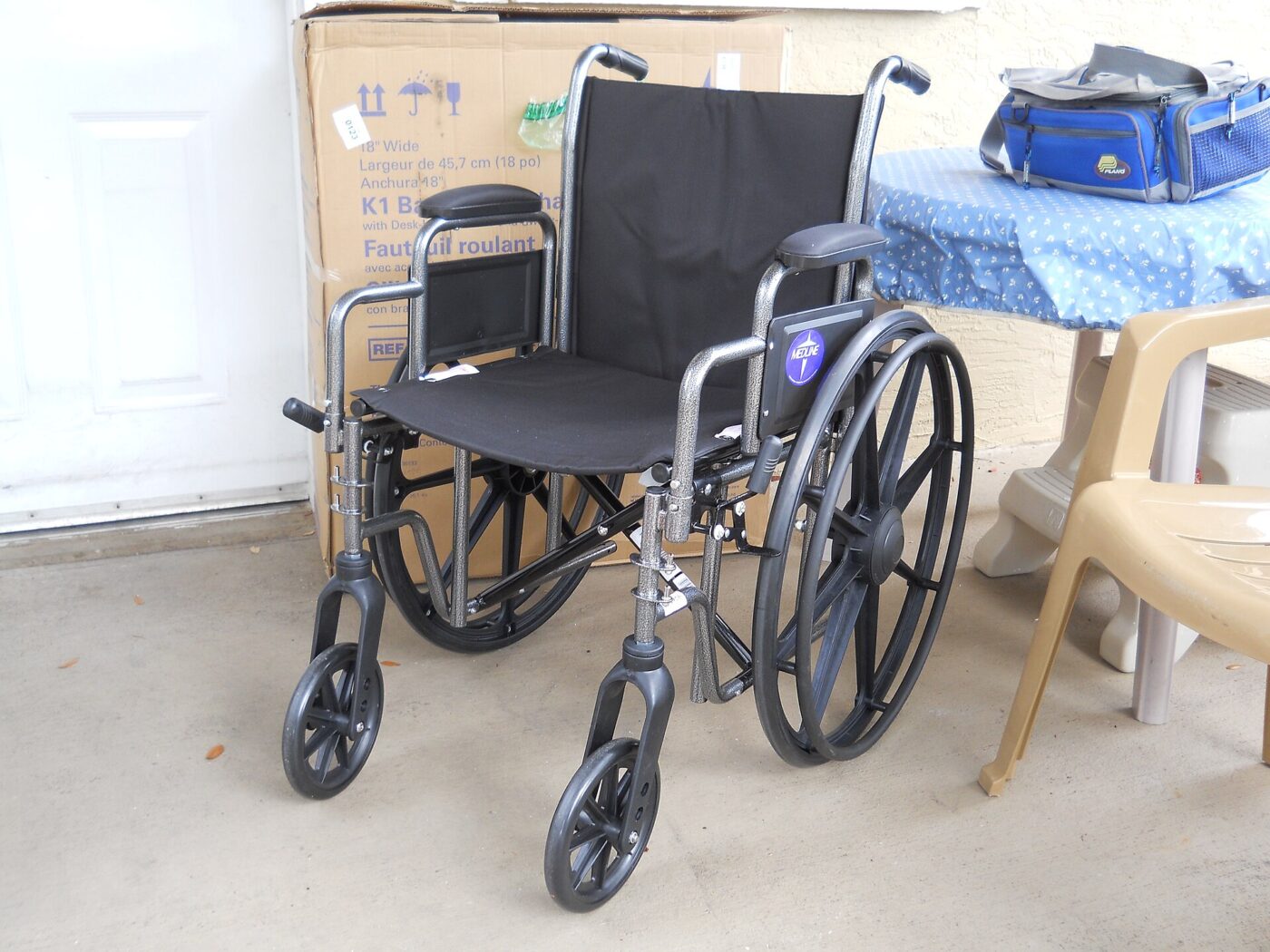
The product list in that notice is broad. It defines PPE to include surgical masks, N95 respirators, gloves and gowns; medical consumables to include syringes, needles and intravenous bags; medical equipment to include carriages and wheelchairs, crutches and hospital beds; and medical devices to include pacemakers, blood glucose monitors and prosthetics. Pharmaceuticals are excluded, the notice says, because they sit in a separate Section 232 investigation. Wheelchairs, crutches and hospital beds are the entries that matter for anyone equipping a home.
Searching the Federal Register for presidential documents adjusting imports, we found no proclamation on PPE, medical consumables or medical equipment through late September 2026. That is the counter-signal in this story: the case is open, the outcome is unknown, and an announcement would land on a category where imports have so far been the cheaper half of the market.
Where the Medicare line falls, and the bill it leaves behind
For equipment Medicare does cover, the CMS fact sheet of November 14, 2025 sets the 2026 math: a $283 Part B deductible, up from $257 in 2025, and then 20 percent of the approved amount when the supplier accepts assignment. The standard Part B premium also rose to $202.90 a month from $185.00, so the fixed cost of the coverage went up before any equipment was ordered.
A lot of home-safety gear sits outside that benefit. Chapter 15, section 110.1 of the Medicare Benefit Policy Manual, revision 13889 issued July 30, 2026, puts self-help devices such as safety grab bars in the group it treats as nonmedical, and classifies elevators and stairway elevators as comfort or convenience items. Medicare.gov’s own definition requires equipment that is used for a medical reason and is typically only useful to someone who is sick or injured.
The result is a split bill. The same manual lists hospital beds, wheelchairs, walkers, canes, crutches and commodes among the items it treats as presumptively medical, so those run through the coverage system with a deductible and a coinsurance share. Grab bars, shower stools, reachers, bed rails and ramps are not on that list, and are typically retail purchases at full price, exposed directly to whatever the producer and import indexes do next.
Where the shelf prices sit
Retail prices in this category are hard to track because the products are unbranded and the listings churn. One reliable public record is the recall notice: CPSC publishes a price range for every recalled product, which gives a dated, official snapshot of what the item was actually selling for.
Adult portable bed rails are a useful example. Across four 2026 recall notices, CPSC recorded selling prices of $45 to $80, $45 to $90, about $66, and $40 to $50, over sales windows that start in September 2019 and end in April 2026. That is a category that held a $40 to $90 band across those windows while producer prices rose, which suggests the pressure was absorbed somewhere other than the sticker.
We read that as thin margins and cheaper construction rather than stable costs. It is also consistent with the recall pattern in the same notices, where the failures cited are retention straps, push pins and missing labels rather than exotic engineering problems.
Who should buy now and who can wait
If the item is covered equipment and a supplier is already involved, timing barely matters: the deductible and the 20 percent share are set annually, not by the week, and the supplier is billing an approved amount rather than a shelf price.
If the item is a retail purchase and it is imported, the open Section 232 case is a reason not to stretch a planned purchase across many months. Import prices for this industry rose 2.4 percent in the year to August 2026 with no Section 232 action on the category in force; such an action would be added on top of that.
If the item is something you would buy a second of, such as a spare frame or a second set of bath gear for another house, that is the purchase to defer. Nothing in the two price series suggests a fall is coming, but nothing suggests a cliff either: since January 2020 the producer index has moved by an average of about 0.3 percent a month, our own calculation from the monthly levels.
What to watch next
- Any Commerce or presidential action closing the Section 232 medical equipment investigation opened on September 2, 2025
- The monthly BLS producer price index for medical equipment and supplies manufacturing, series PCU33913391
- Whether the import price index for the same industry keeps lagging the domestic series or starts to catch up
Where to start
Paid links: we earn a commission if you buy through the buttons below, at no extra cost to you. As an Amazon Associate I earn from qualifying purchases.
Everyday home-safety gear that sits outside the Medicare equipment benefit
| Product type | Good fit for | Where to look |
|---|---|---|
| Folding cane with offset handle | Fits walking outside the house | See listings on AmazonOpens Amazon search results, not one listing: check the model on the product page. |
| Shower stool | Fits a tub or shower with no bench | See listings on AmazonOpens Amazon search results, not one listing: check the model on the product page. |
| Reacher grabber tool | Fits reaching without a step stool | See listings on AmazonOpens Amazon search results, not one listing: check the model on the product page. |
Product types that fit the trend described above, not tested models. Check the exact listing before you buy. How we pick them.
Shower stool
Where to look: Amazon
Bath gear is the clearest example of the split bill: the Medicare manual groups this kind of self-help device with the equipment it treats as nonmedical.
- Simple construction
- Nothing to fail electronically
- Usually a full-price retail purchase
- Rubber tips wear out quietly
Folding cane with offset handle
Where to look: Amazon
A cane is the cheapest item in this category and the one where the producer price rise is least visible, because the bill of materials is short.
- Folds into a bag
- Height adjustable
- Tips are a consumable
- Quality varies widely at the same price
More: Aging and Accessibility trends and how the Trend Signal is scored.
Sources
- Producer Price Index by Industry: Medical Equipment and Supplies Manufacturing — BLS via FRED
- Import Price Index (NAICS): Medical Equipment and Supplies Manufacturing — BLS via FRED
- Section 232 investigation of imports of PPE, medical consumables and medical equipment — Federal Register
- US opens investigation into medical equipment, device imports — Supply Chain Dive
- 2026 Medicare Parts A and B premiums and deductibles — CMS
- Medicare Benefit Policy Manual, Chapter 15 — CMS
- Durable medical equipment coverage — Medicare.gov
- Vive Health recalls adult portable bed rails, two deaths reported — U.S. CPSC
Questions readers ask
Why are home medical equipment prices rising when the products have not changed?
The BLS producer price index for medical equipment and supplies manufacturing went from 138.2 in August 2025 to 144.4 in August 2026, and from 118.2 in August 2018. That is 4.5 percent and about 22 percent by our arithmetic. The series measures what US factories charge, and it has risen in every twelve-month comparison since 2020.
Have tariffs already raised these prices?
We found no Section 232 action covering PPE, medical consumables or medical equipment through late September 2026. Commerce opened the national security investigation on September 2, 2025, and the Federal Register comment notice followed on September 26, 2025. Other trade measures can still reach individual components.
How does the Medicare manual treat grab bars and shower stools?
Chapter 15 of the Medicare Benefit Policy Manual lists self-help devices such as safety grab bars among the items it treats as nonmedical, which places them outside its definition of durable medical equipment. In practice that makes them retail purchases.
What does Medicare-covered equipment cost out of pocket in 2026?
Per the CMS fact sheet of November 14, 2025, the Part B deductible is $283, after which you pay 20 percent of the Medicare-approved amount when the supplier is enrolled and accepts assignment. The standard Part B premium in 2026 is $202.90 a month, against $185.00 in 2025.