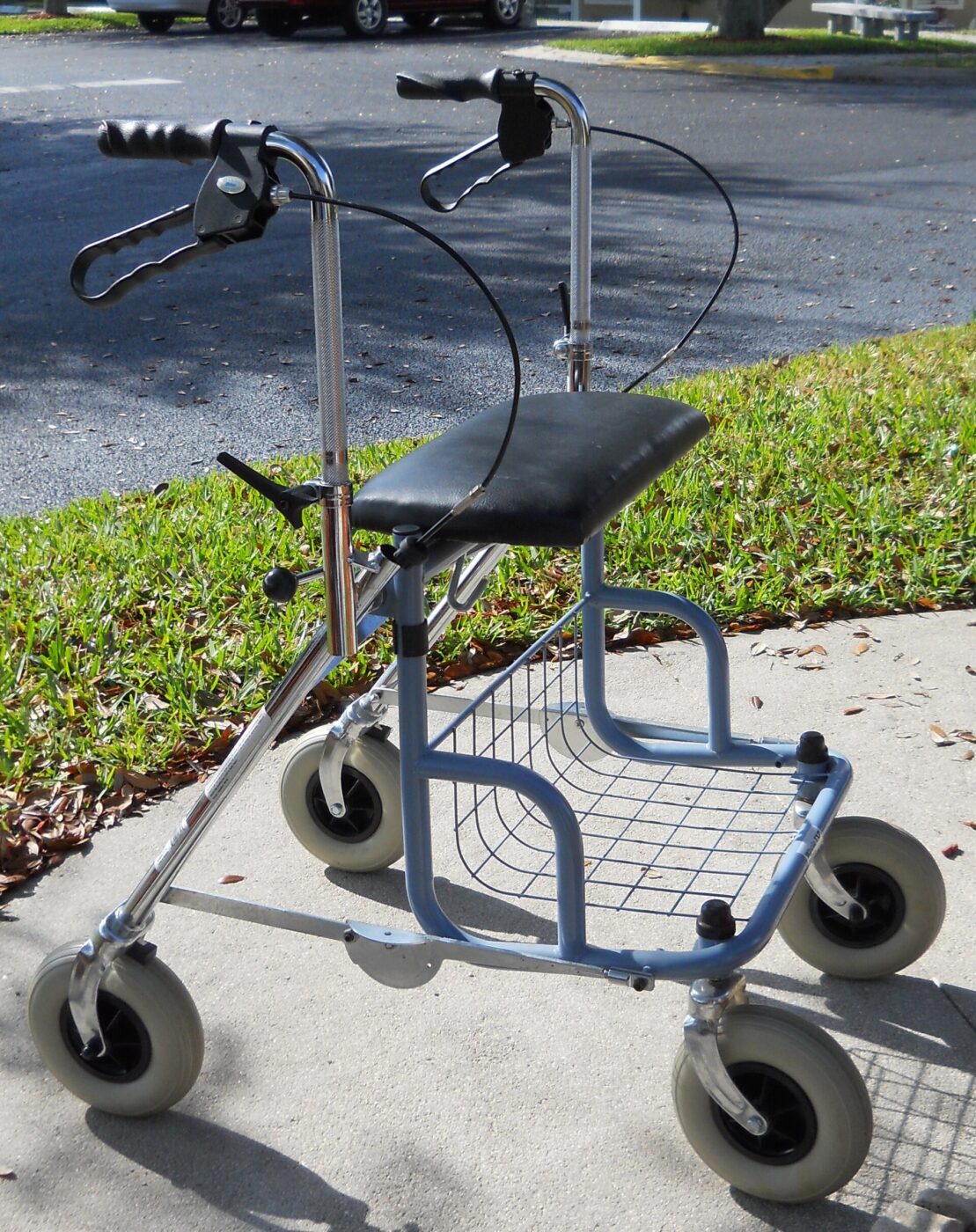
Three frames sit next to each other on the same shelf. A plain folding walker with two front wheels. A four-wheel rollator with hand brakes and a seat. An upright walker with forearm platforms that puts the user’s hands at chest height. On a product listing they read as variations on a theme. Inside Medicare they are not variations at all.
The distinction matters because the program pays for some of these and refuses others by name. The demand is not in doubt: the Centers for Disease Control and Prevention says more than 14 million adults age 65 and older, about one in four, report falling in a year, and the age-adjusted fall death rate in that group rose 21 percent between 2018 and 2024. What follows is how the coverage rules sort the hardware, and what to measure before you order either way.
Trend Signal
56/100 Steady momentum
- Emerging
- Rising
- Mainstream
- Peaking
- Cooling
A settled product category with an unsettled payment rulebook
Medicare.gov says Part B covers walkers including rollators, while the coverage documents behind that sentence deny the enclosed-frame walker, the powered walker and the rollator-plus-transport-chair combination by code.
Our editorial reading of the cited data, not a forecast. How it is scored
By the numbers
- $283Medicare Part B deductible in 2026, up from $257 in 2025CMS
- 300 lbWeight above which the walkers LCD allows a heavy-duty walker, codes E0148 and E0149CMS Medicare Coverage Database
- 1 in 4Adults 65 and older who report falling in a year, more than 14 million peopleCDC
- 78.4Age-adjusted fall death rate per 100,000 adults 65 and older in 2024, from 64.7 in 2018CDC
What the three frames do differently
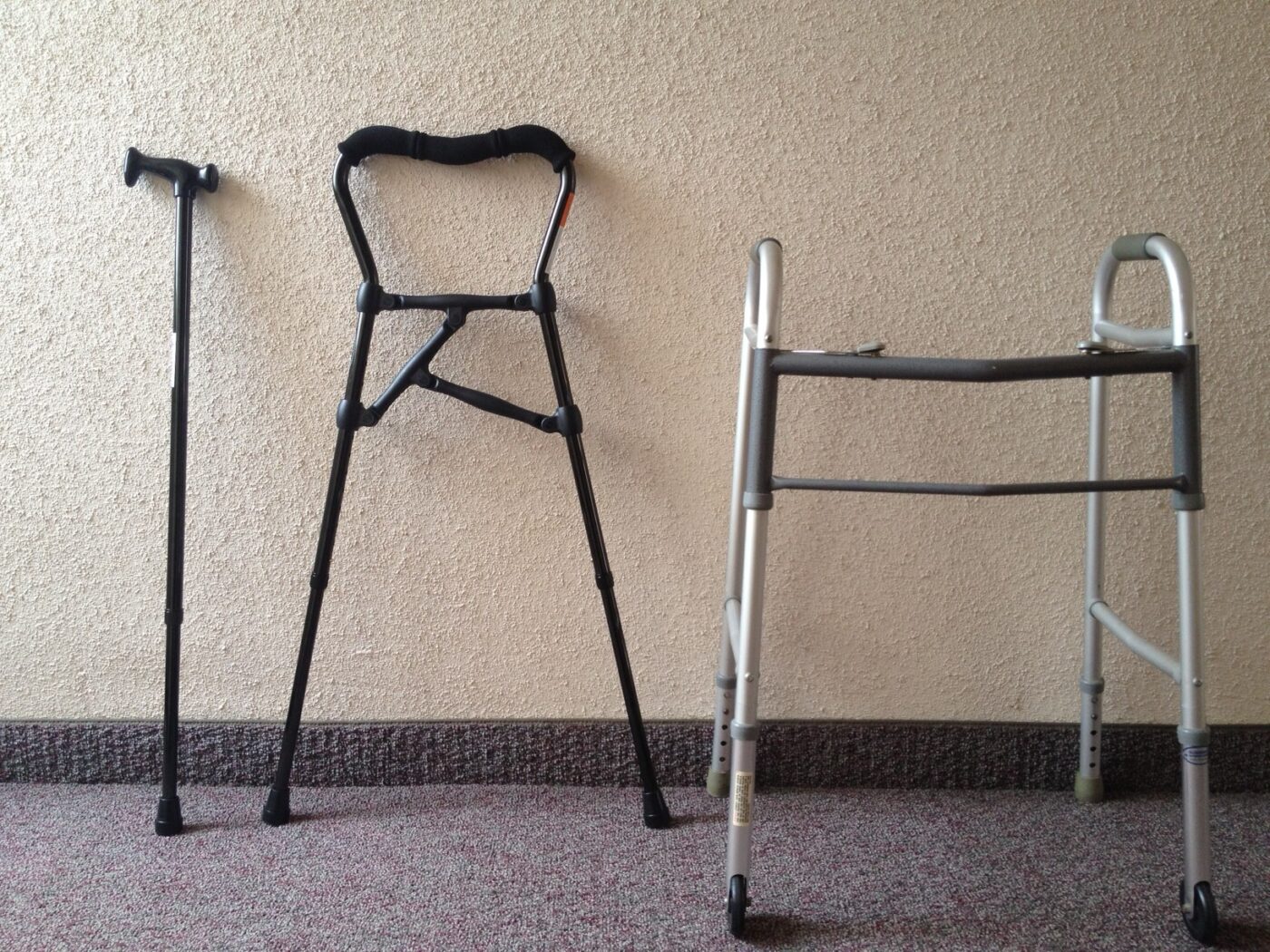
A folding walker with two front wheels is lifted or slid; it stops when the user stops, because there is nothing to roll away. A four-wheel rollator rolls continuously and relies on hand-operated brakes, which is why Medicare’s own code descriptions single out brake type. An upright walker keeps the forearms on padded platforms so the hands sit higher and the user is not leaning forward over a low handle.
Those differences show up as three separate shopping problems. The folding frame is judged on folded width and total weight. The rollator is judged on seat height, wheel diameter and brake mechanism. The upright is judged on the height range of the forearm platforms, because a platform set wrong is worse than no platform at all.
None of this is about which design is better. It is about which measurement decides whether the thing works in the hallway you own, and those measurements are different for each frame.
Different frames, different spec sheets. Compare folded width, seat height and platform height range, not star ratings.
What Medicare covers, and the codes that get denied
Medicare.gov states plainly that Part B covers walkers, including rollators, when a provider prescribes the equipment for use in the home, the supplier is enrolled in Medicare and accepts assignment, and the beneficiary pays 20 percent of the Medicare-approved amount after the Part B deductible.
The coverage determination behind that sentence is LCD L33791, Walkers, in effect since October 1, 2015 and last revised effective January 1, 2020. It sets three conditions: a mobility limitation that significantly impairs one or more mobility-related activities of daily living in the home, the ability to use the walker safely, and a functional mobility deficit a walker can sufficiently resolve. The LCD and its policy article, A52503, then name the codes that fail.
| Code | HCPCS descriptor, shortened | What the coverage documents say |
|---|---|---|
| E0135 | Walker, folding pickup, adjustable or fixed height | Covered when the three walker criteria are met |
| E0143 | Walker, folding, wheeled, adjustable or fixed height | Covered when the three walker criteria are met |
| E0144 | Walker, enclosed, four-sided frame, wheeled, rear seat | Medical necessity not established; denied as not reasonable and necessary |
| E0147 | Walker, heavy duty, multiple braking system, variable wheel resistance | Standard criteria plus restricted use of one hand; model must pass a coding verification review |
| E0148 and E0149 | Walker, heavy duty, without wheels or wheeled | Covered above 300 pounds, on top of the standard criteria |
| E0150 | Combination wheeled walker with seat and transport chair | Noncovered; does not meet the definition of DME |
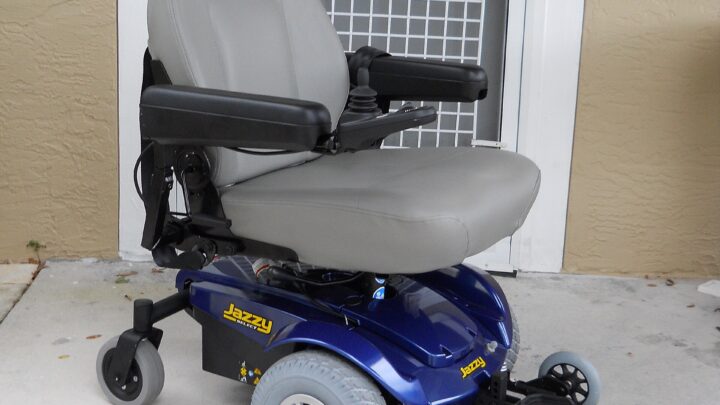
| E0152 | Walker, battery powered, wheeled, folding | Noncovered; does not meet the definition of DME |
Where upright walkers sit in the rules

The walker codes run from E0130 to E0159. Read against the CMS HCPCS alpha-numeric file, their published descriptors cover pickup frames, wheeled frames, a trunk-support frame, heavy-duty frames, the enclosed four-sided frame, the battery-powered frame, the walker-plus-transport-chair combination and a set of attachments. None of them names a forearm-support or upright walker. E0154 does exist, but it describes a platform attachment for a walker rather than a frame type.
What follows is our reading rather than a CMS statement: with no descriptor of its own, an upright frame has to be billed under one of the existing walker codes, and the same three criteria apply. A supplier, not a listing, is the place to settle which code that is.
The accessory rules are written down. The policy article denies enhancement accessories as noncovered and puts them under code A9270, giving style, color, hand-operated brakes other than those in E0147, and baskets as its examples. The coverage determination allows leg extensions, code E0158, only for beneficiaries 6 feet tall or more. A feature no specific code describes has to go under A9900.
So the upright walker question is mostly not a coverage question. It is a fit question you settle before ordering.
What to check before you order
Listings for all three frames quote a lot of numbers and very few of them decide anything. These are the ones that do.
- Folded width, against the narrowest doorway and the narrowest bathroom turn in the house.
- Rated user weight, and whether the seat carries a lower rating than the frame.
- Seat height on a rollator, against the chair heights the user already manages.
- Handle or platform height range, quoted as a range rather than a single figure.
- Wheel diameter, which decides whether the frame crosses a door threshold or stops at it.
- The weight of the walker itself, because someone has to lift it into a trunk.
- Brake type: hand-operated locking brakes behave very differently from push-down glide brakes.
What you will pay either way
On the Medicare path, the 2026 numbers come from the CMS fact sheet of November 14, 2025: a Part B deductible of $283, up from $257 in 2025, after which you pay 20 percent of the approved amount. The equipment also has to meet the program’s general definition of durable medical equipment as medicare.gov states it: durable enough for repeated use, used for a medical reason, typically only useful to someone who is sick or injured, used in the home, and expected to last at least three years.
On the retail path there is no deductible and no coinsurance, just the full price and no paperwork. Plenty of people take that route for a second frame to leave at a relative’s house, or because they want a design the coverage documents deny. Both denied designs, the enclosed-frame walker with a rear seat and the rollator-plus-transport-chair, are sold at ordinary retail.
The trade-off is worth stating plainly: buying retail means nobody checks the fit. The measurements in the previous section are the whole quality-control process.
What to watch next
- Revisions to LCD L33791 and policy article A52503 in the Medicare Coverage Database, which is where denied codes change
- The annual CMS fact sheet on Part B premiums and deductibles, which sets the coinsurance base for the following year
- Whether a distinct HCPCS code appears for forearm-support upright walkers rather than the current wheeled-walker codes
Where to start
Paid links: we earn a commission if you buy through the buttons below, at no extra cost to you. As an Amazon Associate I earn from qualifying purchases.
Walker types compared on the specification that decides the purchase
| Product type | Good fit for | Where to look |
|---|---|---|
| Four-wheel rollator with seat | Fits long outings with rest stops | See listings on AmazonOpens Amazon search results, not one listing: check the model on the product page. |
| Upright walker with forearm supports | Fits a taller upright posture | See listings on AmazonOpens Amazon search results, not one listing: check the model on the product page. |
| Two-wheel folding walker | Fits tight hallways and bathrooms | See listings on AmazonOpens Amazon search results, not one listing: check the model on the product page. |
Product types that fit the trend described above, not tested models. Check the exact listing before you buy. How we pick them.
Four-wheel rollator with seat
Where to look: Amazon
The seat is the reason people buy this frame, so check the seat height and its separate weight rating before the wheel size.
- Hand brakes and a seat
- Covered under standard walker codes
- Rolls away if the brakes are not set
- Bulky in a bathroom
Upright walker with forearm supports
Where to look: Amazon
Uprights live or die on platform height range. A quoted single height tells you nothing; ask for the adjustment range.
- Hands sit higher
- Same three coverage criteria as any walker
- No descriptor of its own in the code list
- Heavier and wider to store
Two-wheel folding walker
Where to look: Amazon
The plain frame is still the one that fits a small bathroom, and it is the simplest thing to get covered.
- Lightest to lift
- Does not roll away
- No seat
- Has to be lifted or slid at every step
More: Aging and Accessibility trends and how the Trend Signal is scored.
Sources
- Walkers coverage — Medicare.gov
- Walkers Policy Article A52503 — Medicare Coverage Database, CMS
- Local Coverage Determination L33791, Walkers — Medicare Coverage Database, CMS
- Durable medical equipment coverage — Medicare.gov
- 2026 Medicare Parts A and B premiums and deductibles — CMS
- Older adult falls data — Centers for Disease Control and Prevention
- HCPCS quarterly update, alpha-numeric code file — CMS
Questions readers ask
Does Medicare cover a rollator?
Medicare.gov says Part B covers walkers, including rollators, if you are eligible. A provider has to prescribe it for use in the home, the supplier has to be enrolled and accept assignment, and you pay 20 percent of the approved amount after the Part B deductible, which CMS set at $283 for 2026. What any individual claim pays is between the supplier and Medicare.
Is there a Medicare code for an upright walker?
Not in the published descriptors. The walker codes E0130 to E0159 name pickup, wheeled, trunk-support, heavy-duty, enclosed, powered and combination frames plus attachments, and none describes a forearm-support or upright walker. E0154 covers a platform attachment, not a frame type.
Why would a walker with a seat be denied?
Two designs are named. Code E0144, an enclosed four-sided frame with a rear seat, is denied as not reasonable and necessary because the coverage determination says medical necessity has not been established. Code E0150, a wheeled walker with a seat plus a transport chair, is noncovered because it does not meet the definition of durable medical equipment.
What counts as a heavy-duty walker?
Codes E0148 and E0149 cover heavy-duty walkers for beneficiaries who weigh more than 300 pounds and who also meet the standard walker criteria. Code E0147 describes a four-wheeled, adjustable-height folding walker rated above 350 pounds with a multiple braking system; only models that have passed a written coding verification review may be billed under it.
Can I just buy one without involving Medicare?
Yes, and many people do for a second frame or for a denied design. You pay the full price, nobody reviews the fit, and the measurements on the listing become the only check on whether it works in your home.