We have tested nothing and assembled nothing for this article. It compares what 16 CFR part 1633 says a foundation is, what two makers publish about the ones they sell, and what their warranties require of whatever sits under the mattress. Everything here was read on October 1, 2026 from the regulation itself, from CPSC business guidance, and from manufacturer pages we opened.
The question people type is simple and the shopping pages answer it badly. Amazon’s own autocomplete for box spring for queen bed fills in a column of heights, 9 inch, 5 inch, 4 inch, 3 inch, 12 inch, 7 inch, 10 inch, 6 inch, which tells you that height is the live variable and that nothing on the listing explains what the choice does. The regulation and the warranty do explain it, from opposite directions.
Trend Signal
46/100 Steady momentum
- Emerging
- Rising
- Mainstream
- Peaking
- Cooling
Federal law treats a mattress and its foundation as one certified unit
Under 16 CFR 1633.2(l) a mattress intended for sale with a foundation is a separate and distinct prototype from the same mattress sold alone, and 16 CFR 1633.12(a)(7) requires the label to state which, naming the foundation where one applies.
Our editorial reading of the cited data, not a forecast. How it is scored
By the numbers
- 9 inchesHigh profile height Tempur-Pedic publishes for its flat foundation, matching a box springTempur-Pedic
- 70 lbsQueen weight Tempur-Pedic publishes for the 9 inch high profile flat foundationTempur-Pedic
- 1.5 inchesIndentation depth Nectar warrants, excluding sag caused by an unsupportive foundationNectar Sleep
- 0 recordsCPSC recall records for product name box spring, our pull of October 1, 2026CPSC
What the federal rules call a foundation
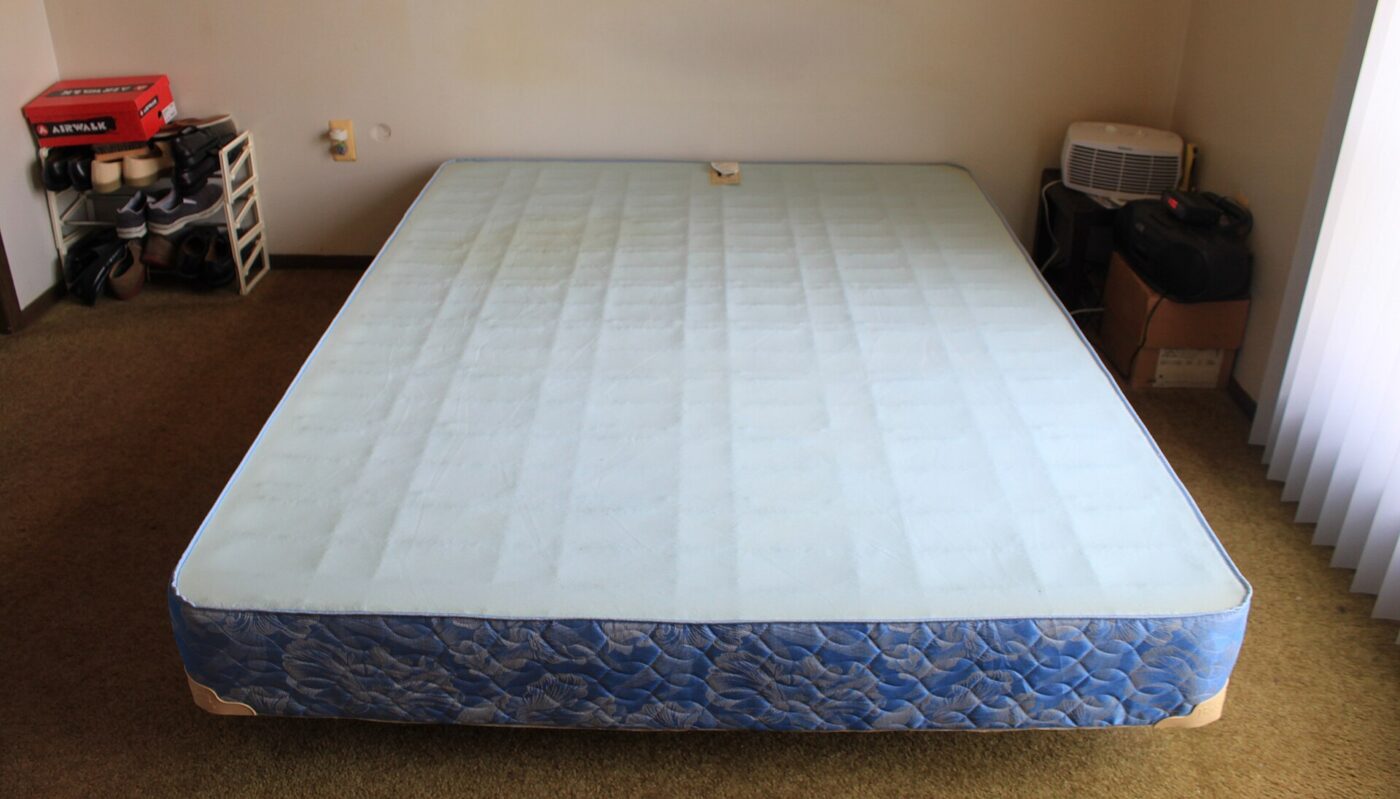
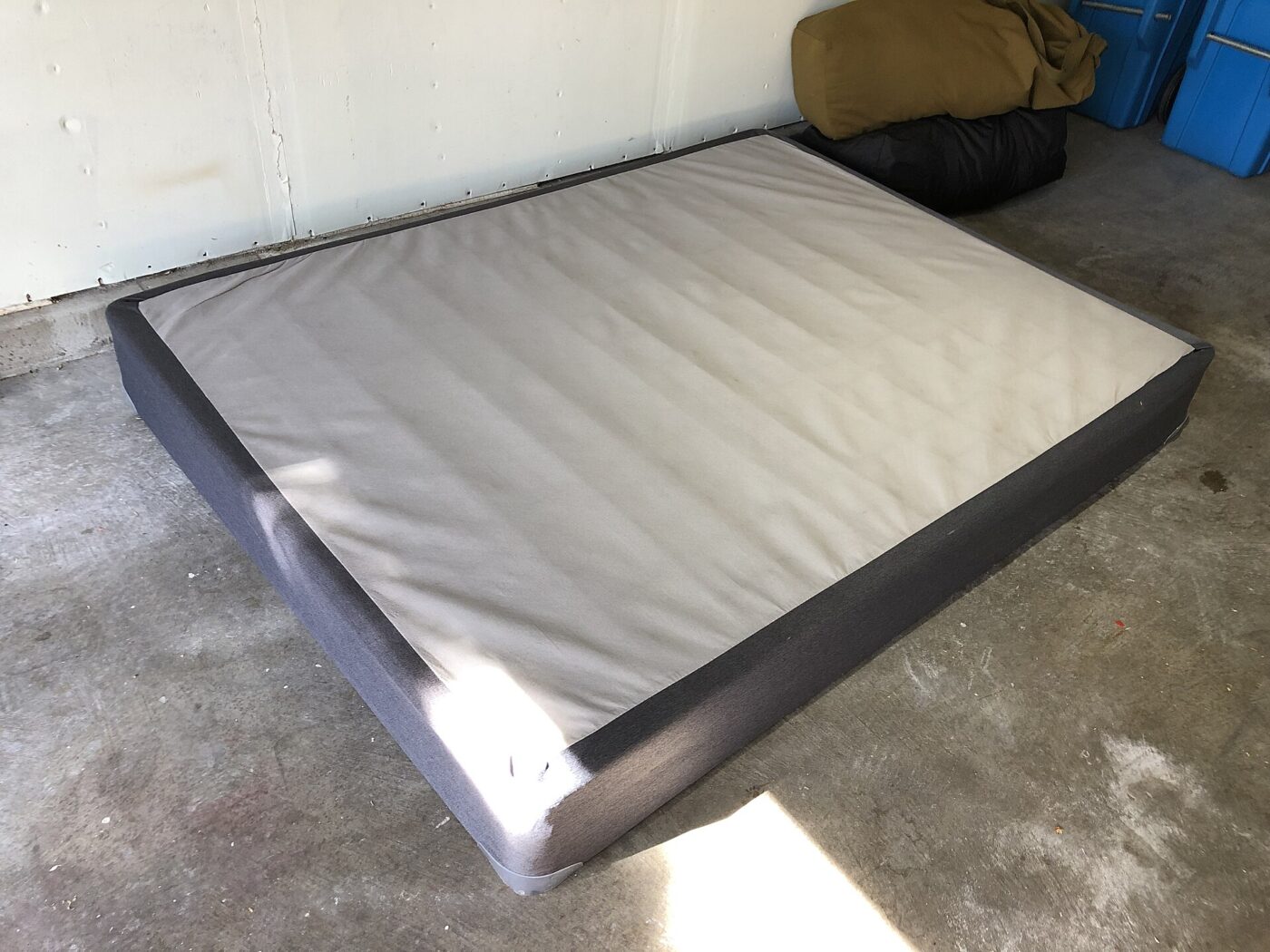
16 CFR 1633.2(b) defines a foundation as a ticking covered structure used to support a mattress or sleep surface, and says the structure may include constructed frames, foam, box springs or other materials, used alone or in combination. A box spring is therefore one kind of foundation, not its opposite. The modern flat foundation, the traditional coil box spring and a solid foam platform all land inside the same definition.
The next definition is the one that matters commercially. Section 1633.2(c) defines a mattress set as either a mattress and foundation labeled for sale as a set, or a mattress labeled for sale without any foundation. The open flame standard applies to mattress sets, so the tested unit is the one the maker declared, and that declaration is a labeling act rather than a packaging one.
Section 1633.2(l) closes the loop. A mattress intended for sale with a foundation is a separate and distinct prototype from a mattress intended for sale without one. Two physically identical mattresses can carry different prototype numbers purely because one was certified on top of a named foundation. CPSC states the same thing in its business guidance for mattresses.
In federal law the foundation is part of the product that was tested, not an accessory bought alongside it.
Your mattress label already names one
Section 1633.12(a)(7) requires every mattress set label to carry a statement identifying whether the manufacturer intends the mattress to be sold alone or with a foundation. The regulation prints the three permitted wordings. Either the label says the mattress is intended to be used without a foundation, or it names the foundation it is intended to be used with, or it covers both cases and names the foundation for the second. Section 1633.12(b) requires that statement in 10 point Arial or Helvetica or larger, in capital letters, on a white label with black text.
This is visible in enforcement records. The CPSC notice for the Crayan recall of June 2025 describes a white label sewn onto the mattress cover carrying the fiber content, the size and the words WG/P Foundation. The notice for the EVLWZL and Gunugu recall of May 2026 describes the same marking. What neither notice says is that the string is the identifier 1633.12 requires; that reading is ours, not CPSC’s.
For a buyer the consequence is small but real. If your label names a foundation, the certification describes that pairing. Nothing in part 1633 regulates what a consumer puts under a bed, but swapping the base means the tested configuration and the one in your bedroom are no longer the same.
Profile height is the decision the listings bury

Tempur-Pedic publishes its flat foundation in three profiles and explains each in one line. The 9 inch high profile matches a traditional box spring height. The 5 inch low profile is described as a more modern look that fits through narrow stairways. The 2 inch ultra low is described as suiting platform-style bed frames. It also publishes shipping weights for the high profile: 46 pounds for a twin, 70 pounds for a queen, and 98 pounds for a king supplied in two pieces.
Those numbers answer most of the height question. Deck height is the frame rail plus the foundation profile plus the mattress, and your sheets have a fixed pocket depth. A 12 inch mattress on a 9 inch foundation is a 21 inch stack before the frame is counted; on a 2 inch platform insert it is 14 inches. Nothing about fire performance changes; everything about fitting a sheet does.
| Profile | Published height | What the maker says it suits |
|---|---|---|
| High | 9 inches | Matches a traditional box spring height |
| Low | 5 inches | A more modern look that fits through narrow stairways |
| Ultra low | 2 inches | Platform-style bed frames |
What the warranties require underneath
This is where the choice has money attached. Tempur-Pedic’s 25 year limited warranty states that its mattresses are designed to work on a firm, solid-surface, non-spring foundation or adjustable base structurally capable of supporting the mattress and its users, and that the warranty and other performance warranties are based on tests conducted on sets consisting of its own mattresses and its own foundations or bases. It reserves the right to require proof of the quality of the foundation used, and to invalidate the warranty over it.
The covered defect is defined around the same point. Tempur-Pedic covers a visible indentation greater than three-quarters of an inch that is not associated with an indentation or sag resulting from an improper or unsupportive foundation or base. The published frame requirement is specific: a center support and at least five or six legs for queen, king and California king, four legs for twin and full. Nectar’s warranty policy covers a visible indentation greater than one and a half inches on the same condition, and states in capital letters that using an inappropriate foundation or box spring with the mattress will void the limited warranties.
Two makers, two indentation thresholds, the same exclusion attached to both. We found the same shape of condition in dresser stability and in TV wall mount weight ratings: the number that voids the claim is published, and almost nobody reads it.
Which one you actually need
If your bed frame has a solid deck or closely spaced slats and your mattress label says the mattress is intended to be used without a foundation, you do not need one. If the label names a foundation, the cheapest way to stay inside both the tested configuration and the warranty is to use the one it names, or the kind the warranty describes. For a memory foam or hybrid mattress that usually means a rigid flat surface rather than a sprung box.
A bunkie board is the minimum version of the same idea: a thin rigid platform that turns a wide-slatted frame into a flat deck. CPSC database queries for bunkie board and box spring returned nothing on October 1, 2026; foundation returned seven records, the most recent a 2015 recall of renovated mattresses and foundations for a fire hazard. We read that thin file as a measure of how rarely these products draw enforcement, not a safety grade.
Anyone about to replace a mattress anyway should wait. The label on the new mattress may name a specific base, and its warranty will describe what it expects underneath, so buying the base first can cost twice. Our report on mattress pricing covers the timing, and our piece on the smart bed market covers what happens when the base is the expensive part.
What to watch next
- Whether more mattress labels name a foundation rather than certifying the mattress alone, which is visible on any law label photograph in a listing
- New entries under foundation and box spring in the CPSC recall database, both of which are near-empty today
- Whether makers start publishing a slat spacing figure, which is the one support specification almost none of them state
Where to start
Paid links: we earn a commission if you buy through the buttons below, at no extra cost to you. As an Amazon Associate I earn from qualifying purchases.
Foundation types compared on height, support and what warranties expect
| Product type | Good fit for | Where to look |
|---|---|---|
| 9 inch mattress foundation | Fits a traditional bed frame | See listings on AmazonOpens Amazon search results, not one listing: check the model on the product page. |
| Low profile mattress foundation | Fits a low bedroom or narrow stairs | See listings on AmazonOpens Amazon search results, not one listing: check the model on the product page. |
| Bunkie board | Fits a wide-slatted frame | See listings on AmazonOpens Amazon search results, not one listing: check the model on the product page. |
Product types that fit the trend described above, not tested models. Check the exact listing before you buy. How we pick them.
9 inch mattress foundation
Where to look: Amazon
Tempur-Pedic publishes 9 inches as the profile matching a traditional box spring height, and 70 pounds as the queen weight. Measure the doorway and stairs before delivery day.
- Matches the height a box spring replaced
- Keeps standard sheets fitting
- Heaviest to carry upstairs
- Adds the most total height
Low profile mattress foundation
Where to look: Amazon
The 5 inch profile exists for access as much as for style, and the maker says so on its own page. It is the sensible default when the mattress is already thick.
- Easier to move through a narrow stairway
- Lower total bed height
- Changes how the bed looks against a tall headboard
- Sheets may fit loosely
Bunkie board
Where to look: Amazon
A rigid insert for a frame whose slats sit too far apart. It solves the deck, not the structure: warranties still ask for a center support and a stated leg count.
- Cheapest way to make a deck flat
- Adds almost no height
- Does not replace a structurally weak frame
- Specifications are rarely published
More: Home and Kitchen trends and how the Trend Signal is scored.
Sources
- Standard for the Flammability Open Flame of Mattress Sets, 16 CFR part 1633 — eCFR
- Mattresses, Mattress Pads and Mattress Sets business guidance — CPSC
- TEMPUR-Flat Foundation product page — Tempur-Pedic
- Mattress 25 year limited warranty — Tempur-Pedic
- Nectar mattress warranty policy — Nectar Sleep
- Recall database query for product name box spring — CPSC SaferProducts
- EVLWZL and Gunugu mattresses recalled, May 7, 2026 — CPSC
Questions readers ask
How do I tell whether my mattress needs a foundation?
Read the sewn-in label. 16 CFR 1633.12(a)(7) requires it to state, in capital letters, whether the mattress is intended to be used without a foundation or with a named foundation, because 1633.2(l) makes those two cases separate certified prototypes.
What height foundation should I buy?
Makers publish the trade-off rather than a rule. Tempur-Pedic lists 9 inches as matching a traditional box spring height, 5 inches as fitting narrow stairways and 2 inches as suiting platform frames. Add the profile to your mattress thickness and compare against your sheet pocket depth.
Can using the wrong base void a mattress warranty?
Both warranties we read say so. Tempur-Pedic states that its performance warranties are based on tests of sets using its own foundations and bases, and reserves the right to invalidate the warranty over an unsuitable foundation. Nectar states in capital letters that using an inappropriate foundation or box spring will void its limited warranties.