Laptop buyers have long expected each upgrade to bring more computer for roughly the same money. That expectation broke in 2026. Apple raised the price of its budget MacBook Neo by $100 on June 25, within four months of its March release, and the government’s price index for computers rose 3.5% in July and 3.8% in August on a seasonally adjusted basis.
The cause is memory. Chipmakers have shifted production toward high-bandwidth memory for AI servers, leaving less of the ordinary DRAM and flash storage that laptops and phones use. Below is what the price data shows, how PC makers are responding, and what it means if a new laptop is on your list for late 2026.
Trend Signal
80/100 Strong momentum
- Emerging
- Rising
- Mainstream
- Peaking
- Cooling
Memory costs are still pushing laptop prices up
The BLS price index for computers, peripherals and smart home assistants was 8.4% higher in August 2026 than a year earlier, and TrendForce expected conventional DRAM contract prices to rise another 13–18% in the third quarter of 2026.
Our editorial reading of the cited data, not a forecast. How it is scored
By the numbers
- 8.4%US CPI for computers, peripherals and smart home assistants, Aug 2025 to Aug 2026BLS
- +17%IDC forecast rise in average PC selling prices for 2026 (June 2026 update)IDC
- 68.2MPCs shipped worldwide in Q2 2026, down 4.9% year over year (IDC data)MacTrast
- $699MacBook Neo base price after the June 25, 2026 increase, up from $599MacRumors
Why memory is driving laptop prices

TrendForce, a Taiwan-based firm that tracks memory contract prices, said in January 2026 that suppliers would keep moving advanced production lines and new capacity toward server and HBM (high-bandwidth memory) products for AI, which had “significantly limited supply in other markets.” It forecast conventional DRAM contract prices would rise 55–60% in the first quarter of 2026 from the prior quarter, with client SSD prices up more than 40%.
IDC put the trade-off plainly in December 2025: every wafer allocated to an HBM stack for an Nvidia GPU “is a wafer denied” to the memory used in consumer devices. Memory is not a small line item: HP’s chief executive reportedly put it at roughly 15–18% of a typical PC’s cost, according to TrendForce, citing the Asia Business Daily. In the same December 2025 report, TrendForce said industry sources expected Dell to raise prices by 15–20% as soon as mid-December, and that a Lenovo notice told customers its price quotations would expire on January 1, 2026.
The increases have slowed but not stopped. In July 2026, TrendForce expected conventional DRAM contract prices to rise another 13–18% in the third quarter and NAND flash 10–15%, and said retail notebook prices “are expected to rise across the board” as higher-cost parts work through inventories.
Each quarter of 2026 has added to memory costs; the rate of increase is slowing, not reversing.
How far shelf prices have moved
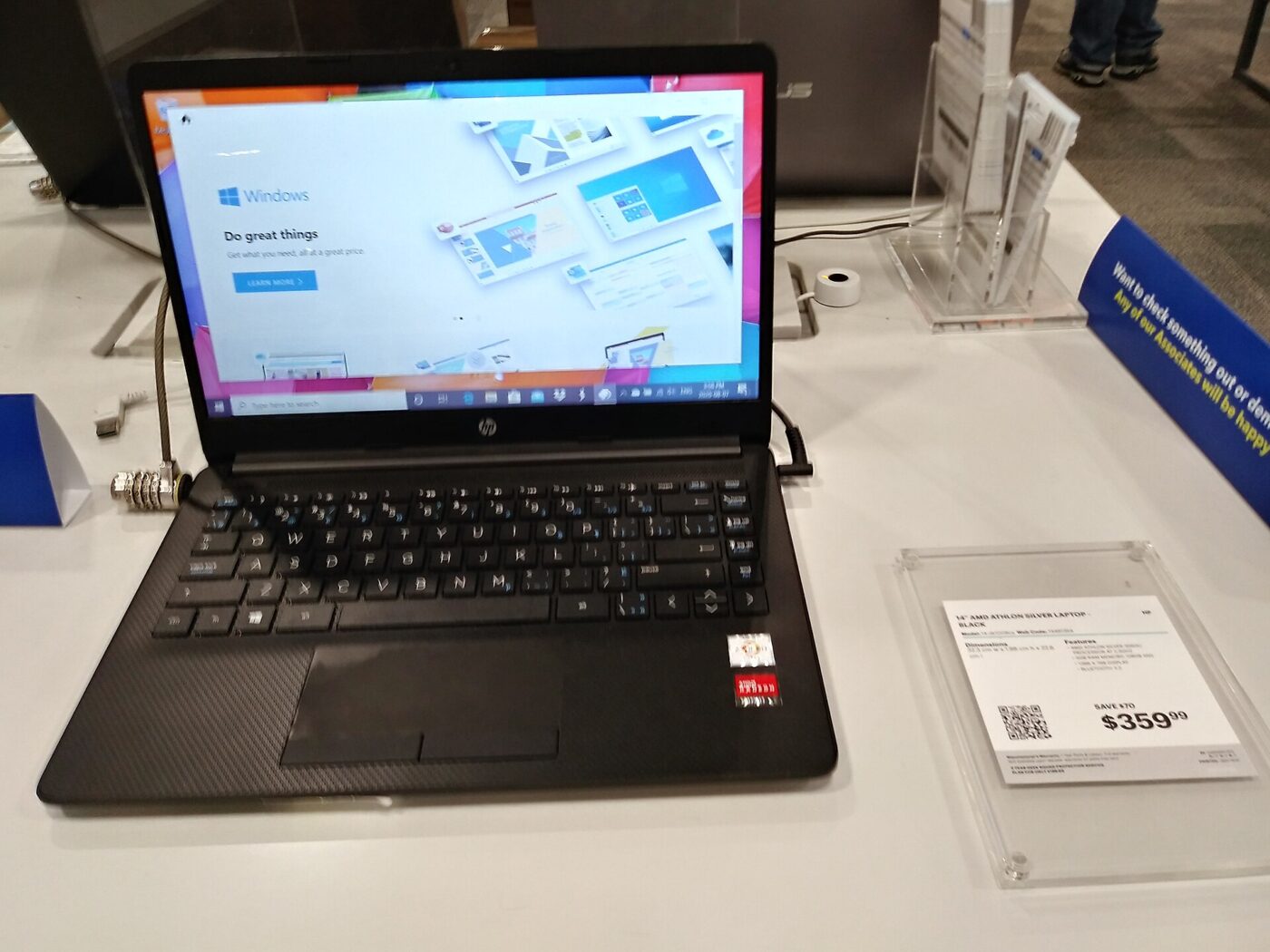
The Bureau of Labor Statistics consumer price index captures the pass-through. Its category for computers, peripherals and smart home assistants was 8.4% higher in August 2026 than in August 2025. Most of that came late: after a 0.7% dip from May to June, the seasonally adjusted index rose 3.5% in July and 3.8% in August.
Apple’s move shows how quickly list prices can change. The MacBook Neo, an 8GB laptop built on the iPhone-class A18 Pro chip, launched at $599 in March 2026. On June 25, Apple raised it to $699, lifted the 512GB model from $699 to $799 and increased education pricing by the same $100; MacRumors noted that the MacBook Air started at $1,299 as of June 25, up from $1,099. Apple’s explanation, as quoted by MacRumors: “We have never seen a component price increase this much, this quickly.”
Phones have not followed the same path in the CPI yet: the BLS smartphone index was 12.2% lower in August 2026 than a year earlier. TrendForce, however, said in July 2026 that it expected smartphone makers to raise retail prices in the third quarter to offset persistently high mobile memory costs.
| BLS index: computers, peripherals and smart home assistants | Change |
|---|---|
| May to June 2026 (seasonally adjusted) | -0.7% |
| June to July 2026 (seasonally adjusted) | +3.5% |
| July to August 2026 (seasonally adjusted) | +3.8% |
| August 2025 to August 2026 (unadjusted) | +8.4% |
Fewer laptops shipped, more revenue per machine
Higher prices are cutting volume. IDC counted 68.2 million PCs shipped worldwide in the second quarter of 2026, down 4.9% from 71.7 million a year earlier, according to MacTrast’s report on the IDC data. HP’s shipments fell 9.0% and Dell’s 5.0%, while Apple’s grew 10.1%, a gain IDC said coincided with the launch of the MacBook Neo.
In its June 2026 forecast update, IDC projected that global PC shipments will fall 11.3% for the full year, with fourth-quarter shipments down 20% year over year, while average selling prices rise 17%. Part of the first-half strength was buyers getting ahead of increases: IDC’s Jean Philippe Bouchard said the anticipation of higher prices and limited configurations “has led some end-users to make purchases earlier than anticipated.”
TrendForce wrote in July 2026 that record-high contract prices mean memory buyers in consumer markets such as PCs and smartphones “are reaching their affordability limit,” one reason it expected smaller contract price increases in the third quarter.
The quieter change: less memory for the money
Not every increase shows up on the price tag. In December 2025, Consumer Reports quoted TrendForce analyst Avril Wu predicting that high-end models would see outright price increases while “mid- to low-end models will more often adopt de-spec strategies.” Avery Bissett of the market-data firm OpenBrand told the magazine that manufacturers would try to “slide in” lower-specced models at familiar price points such as $599 and $799.
That makes the spec sheet more important than usual. IDC expected flagship phones to hold at 12GB of memory rather than moving to 16GB, while higher-end AI PCs shift toward 32GB or more, so the gap between budget and premium configurations is widening.
- Compare RAM and SSD capacity line by line, not model names; the same name can hide a smaller configuration.
- Check whether memory is soldered. If it is, the amount you buy is the amount you keep.
- Price the storage step-up separately, since flash costs rose alongside DRAM.
Buy now or wait?
Waiting for a drop is a weak bet on current forecasts. IDC said in June 2026 that it does not expect relief in the memory shortage before the end of the following calendar year, “which means prices will continue to rise,” and that even as memory capacity expands, “pricing is unlikely to return to 2025 levels.”
If your current laptop still works, waiting is about need rather than price. An external SSD can stretch storage, and a memory upgrade can help where the laptop has open slots, though module prices rose too: Consumer Reports documented one 32GB RAM kit whose price nearly quadrupled between September and December 2025.
Budget buyers have somewhat more choice than the price index suggests. IDC wrote that competitive pressure from the MacBook Neo is providing a partial offset to broader price increases, “keeping some low-cost notebook options alive.”
Buy on specs you can live with for years; do not buy on the hope of a 2025-level price.
What to watch next
- The BLS computers index in the next CPI releases: a third straight monthly jump would show retail pass-through is still accelerating.
- TrendForce’s fourth-quarter 2026 contract price outlook, and whether gains keep narrowing from the 13–18% expected for the third quarter.
- IDC’s third-quarter 2026 PC shipment count, which will show whether the forecast 11.3% full-year decline is on track.
Where to start
Paid links: we earn a commission if you buy through the buttons below, at no extra cost to you. As an Amazon Associate I earn from qualifying purchases.
Ways to buy or extend a laptop while memory is expensive
| Product type | Good fit for | Where to look |
|---|---|---|
| Laptop with 16GB RAM | Fits buyers replacing a laptop now | See listings on AmazonOpens Amazon search results, not one listing: check the model on the product page. |
| Portable USB-C SSD | Fits stretching an older laptop | See listings on AmazonOpens Amazon search results, not one listing: check the model on the product page. |
| Laptop memory upgrade module | Fits laptops with open memory slots | See listings on AmazonOpens Amazon search results, not one listing: check the model on the product page. |
Product types that fit the trend described above, not tested models. Check the exact listing before you buy. How we pick them.
Laptop with 16GB RAM
Where to look: Amazon
For buyers who cannot wait. 16GB configurations carry a premium in 2026, so compare exact RAM and SSD figures across listings.
- Headroom for multitasking
- Avoids a second upgrade later
- Memory costs push these prices up
- Soldered RAM cannot be expanded
Portable USB-C SSD
Where to look: Amazon
The simplest way to add room to a working laptop. Match the drive to your port speed.
- Adds storage without opening the case
- Moves between machines
- One more device to carry
- Flash prices rose in 2026 too
Laptop memory upgrade module
Where to look: Amazon
Only for laptops with a free or replaceable slot. Confirm the memory generation and maximum supported capacity first.
- Can delay a full replacement
- Installs with basic tools
- Many thin laptops solder memory
- Module prices rose sharply
More: Tech and Gadgets trends and how the Trend Signal is scored.
Sources
- Consumer Price Index, Table 2, August 2026 — U.S. Bureau of Labor Statistics
- PC market enters volatile territory as memory shortage persists, June 2026 — IDC
- Global memory shortage crisis: potential impact on the smartphone and PC markets in 2026 — IDC
- Memory makers prioritize server applications, driving across-the-board price increases in 1Q26 — TrendForce
- AI server demand continues to support memory prices in 3Q26 — TrendForce
- Memory crunch hits PCs: Dell hikes prices 15–20% mid-December, Lenovo from January 2026 — TrendForce
- Apple just raised the price of the MacBook Neo — MacRumors
- IDC: Apple the only major computer maker to increase shipments in Q2 2026 — MacTrast
- With AI data centers scooping up RAM, laptop prices could spike in 2026 — Consumer Reports
Questions readers ask
Why are laptops more expensive in 2026?
Mainly memory. Chipmakers moved capacity toward high-bandwidth memory for AI servers, and TrendForce forecast conventional DRAM contract prices up 55–60% in the first quarter of 2026 and another 13–18% in the third quarter. PC makers passed much of that on: the BLS computers index was 8.4% higher in August 2026 than a year earlier.
Will laptop prices go down in 2026?
Forecasters do not expect it. IDC projected in June 2026 that average PC selling prices will rise 17% in 2026 and said pricing is unlikely to return to 2025 levels even as memory supply expands.
How much did the MacBook Neo price go up?
By $100. On June 25, 2026, Apple raised the 256GB model from $599 to $699 and the 512GB model from $699 to $799, with education prices up by the same amount, according to MacRumors.
Are smartphones getting more expensive too?
Pressure is building. TrendForce said in July 2026 that it expected phone makers to raise retail prices in the third quarter to offset memory costs, and IDC said in December 2025 that smartphone average selling prices could rise 3–5% in 2026 in its moderate downside scenario.