We have not tested any of these products. This compares what the makers publish on their own spec pages against the federal rules and the recall record. We limited the field to units sold in the US that publish a complete spec sheet, and checked every brand named here against the CPSC recall database on September 25, 2026.
The camping power station is not a new idea, but the reason people buy one changed. It is not mainly about solar or blackout prep. It is that a quiet, fume-free box is legal to run at 2 a.m. where a generator is not, and that the cells inside got durable enough to be worth carrying. Both are checkable in published documents, and both point at specs the listings bury.
Trend Signal
77/100 Strong momentum
- Emerging
- Rising
- Mainstream
- Peaking
- Cooling
Campground rules favor batteries, and the cell chemistry changed underneath
Great Smoky Mountains National Park prohibits generator use from 8 p.m. to 8 a.m. in its campgrounds, and the three 1 kWh camping units we compared all use LiFePO4 cells, with published cycle claims of 3,000 and 4,000 cycles.
Our editorial reading of the cited data, not a forecast. How it is scored
By the numbers
- 8pm-8amHours generator use is prohibited in Great Smoky Mountains campgrounds, September 2026U.S. National Park Service
- 4,000Charge cycles Jackery publishes for the Explorer 1000 v2, to 70 percent or more capacityJackery
- 3,000Charge cycles Anker publishes for the SOLIX C1000, measured to 80 percent capacityAnker
- 100 WhLithium-ion limit for air travel without operator approval under 49 CFR 175.10eCFR, U.S. Government
Why campgrounds pushed campers toward batteries
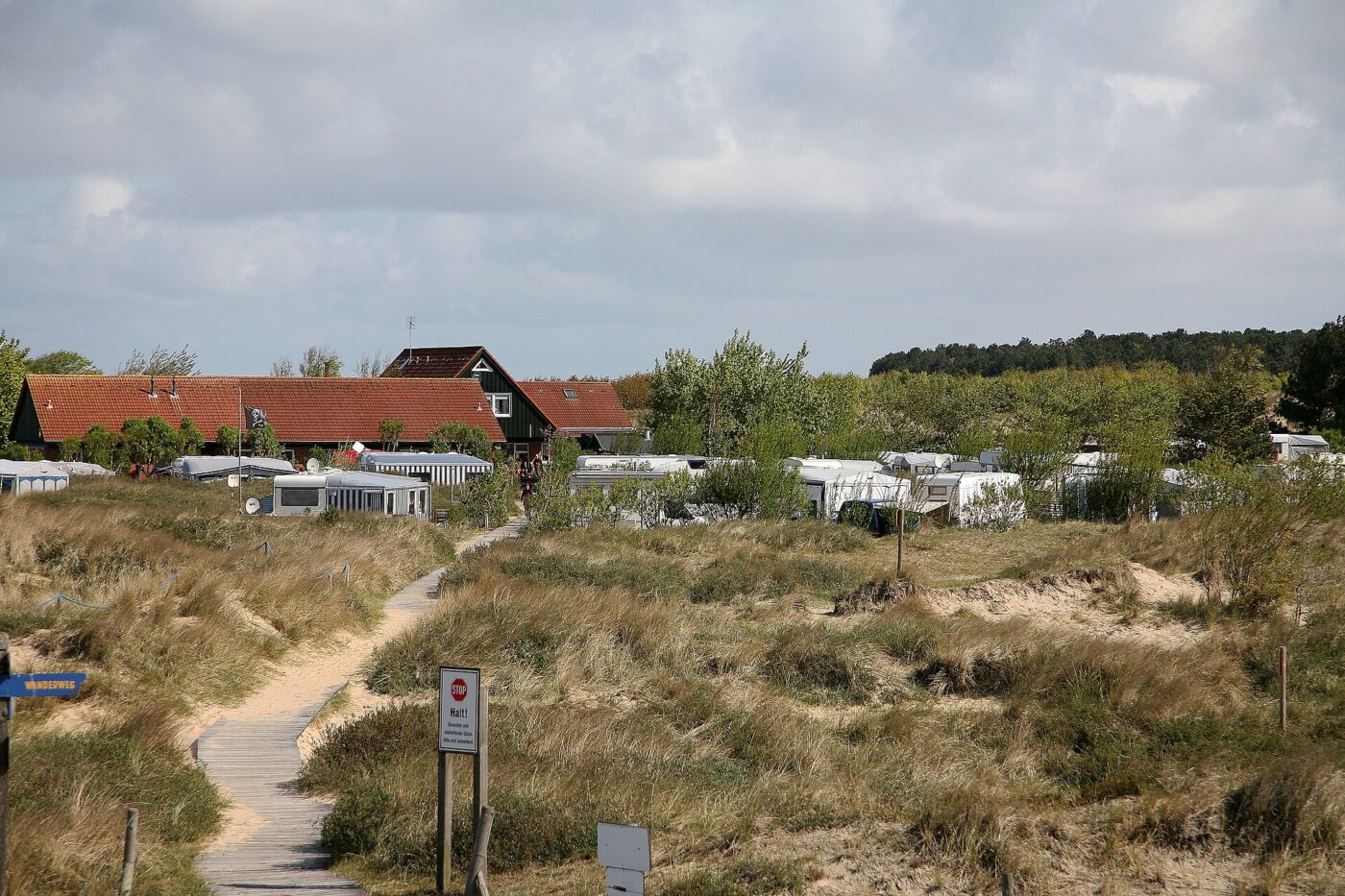
Read a campground regulation page and the shift explains itself. Great Smoky Mountains National Park states that quiet hours run from 10 p.m. to 6 a.m., that “generator use is prohibited from 8 pm to 8 am,” and that “generator use and battery charging by engine idling is prohibited in generator free areas.” That last clause closes the workaround: no idling the truck to top up where generators are banned.
A battery is outside all of that. It makes no exhaust, so it is usable under an awning where a combustion generator never is, and no noise that a quiet-hours rule can catch. For a camper who needs a fridge, lights and phone charging overnight, the rules point one way.
That reframes what to shop for. The binding constraint is not peak wattage, which is what generator buyers compare, but overnight energy, weight in the vehicle, and whether the unit takes a charge on a cold morning.
Check the specific campground page before buying: generator hours and generator-free areas vary park by park.
What the weight and capacity numbers actually compare
At the 1 kWh size that dominates camping listings, the three best-documented units land within 46 Wh of each other and differ mostly on mass. Jackery publishes about 23.8 lb for 1,070 Wh; Anker publishes 28.44 lb for 1,056 Wh; EcoFlow publishes 12.1 kg for 1,024 Wh, roughly 27 lb by our conversion.
Divide capacity by weight and the spread is real: about 45 Wh per pound for the Jackery, 38 for the EcoFlow and 37 for the Anker, by our calculation. Car camping, that is trivial. Carrying one to a walk-in site, it is the whole decision.
Below that class the numbers change shape rather than scale. Anker’s SOLIX C300 DC is a 288 Wh unit rated 300 W, and the DC variant has no AC outlet, which makes it a USB-C and 12-volt device rather than a small version of the big ones.
| Model | Capacity | Weight published | Continuous AC output | Durability claim published |
|---|---|---|---|---|
| Jackery Explorer 1000 v2 | 1,070 Wh | Around 23.8 lb | 1,500 W | 4,000 cycles to 70% or more capacity |
| EcoFlow DELTA 3 Classic | 1,024 Wh | 12.1 kg | 1,800 W | About 10 years, from internal simulation data |
| Anker SOLIX C1000 | 1,056 Wh | 28.44 lb | 1,800 W | 3,000 cycles to 80% capacity |
Cycle claims are published to different end points

All three units use lithium iron phosphate cells, the change that made a camping battery worth its price. EcoFlow prints “LFP(LiFePO4),” Jackery prints “LiFePO4,” Anker prints “LiFePO4 (Lithium Iron Phosphate).” That part is consistent. The durability claims built on top of it are not.
Anker publishes “3,000 (80% Capacity).” Jackery publishes “4,000 cycles to 70%+ capacity.” Those are not the same test: a count measured down to 70% will always look larger than one measured to 80%, so the two cannot be ranked as printed. EcoFlow publishes no cycle count at all, only a footnote saying the unit “is estimated to have a lifespan of approximately 10 years, according to internal simulation test data.”
Temperature limits are the camping-specific spec. Jackery and EcoFlow both publish a charge range of 32°F to 113°F and discharge down to 14°F. Anker publishes charging at 32°F to 104°F and discharging from -4°F. The pattern holds: a lithium iron phosphate pack will run in the cold and will not charge in it.
- Cycle count and the capacity end point it was measured to, in the same sentence
- Charge temperature floor, 32°F on all three units above
- Discharge floor: 14°F on the Jackery and EcoFlow, -4°F on the Anker
- Warranty, five years on the Anker and three plus two on the others
The standard behind the box, and what the listing actually claims
The relevant safety standard has a name and a date. UL 2743, the Standard for Portable Power Packs, reached its Third Edition on September 24, 2025, ANSI approved the same day. It covers packs intended as a portable power source when grid power is not available, excludes power banks, which have their own standard, and hands anything above 20 kWh of lithium-ion or sodium-ion capacity to UL 9540. The Third Edition added requirements for backpacked power packs and a peak discharge current rating test.
What a listing claims is a separate question. Anker’s C1000 FAQ answers “How many UL certifications has Anker SOLIX C1000 received from SGS?” with “Four. Anker SOLIX C1000 is certified by SGS in accordance with UL 1012, UL 1778, UL 1973, and UL 60730.” UL 2743 is not among the four named. That is not a safety verdict; it is a reminder to read which standard a badge refers to.
Our search of the CPSC recall database on September 25, 2026 returned five power station notices since December 2023, covering about 46,200 Goal Zero YETI 3000X units, about 25,030 EcoFlow Delta Max 2000 units, about 6,500 Harbor Freight Predator 2000W units, about 5,740 HALO 1000 units and about 3,800 Klein Tools and Blackfire units. Check a model number before buying a discounted one.
It will not fly, whatever the listing implies
Camping and flying end up in the same shopping cart, so this is worth stating plainly. Under 49 CFR 175.10, a lithium-ion battery in a portable electronic device is limited to 100 Wh; between 100 Wh and 160 Wh it needs the operator’s approval, with no more than two spares. The same section adds that articles whose primary purpose is to power another device must be carried as spare batteries, in carry-on baggage only.
A 1,024 Wh power station is ten times the threshold that needs no approval. Even the 288 Wh SOLIX C300 DC is nearly three times it. We cover the passenger side in our piece on airline power bank rules in 2026; for camping, the takeaway is that this is a drive-to item.
That pushes the decision back toward the vehicle. Weight, the 12-volt charging cable and whether the unit takes a charge after a night below freezing matter more than any feature on the front panel.
What to watch next
- Park-by-park generator rules, published per campground and the reason this category grew
- Whether makers converge on one cycle-life end point, since 3,000 to 80% and 4,000 to 70% are not comparable as printed
- New CPSC power station notices, which have named Costco, REI, Amazon and Harbor Freight
Where to start
Paid links: we earn a commission if you buy through the buttons below, at no extra cost to you. As an Amazon Associate I earn from qualifying purchases.
Camping power station types compared on what differs
| Product type | Good fit for | Where to look |
|---|---|---|
| Compact 300 Wh camping power station | Fits walk-in sites and tight trunks | See listings on AmazonOpens Amazon search results, not one listing: check the model on the product page. |
| LiFePO4 power station in the 1 kWh class | Fits a weekend with a cooler and lights | See listings on AmazonOpens Amazon search results, not one listing: check the model on the product page. |
| Vehicle charging cable for a power station | Fits recharging away from a hookup | See listings on AmazonOpens Amazon search results, not one listing: check the model on the product page. |
Product types that fit the trend described above, not tested models. Check the exact listing before you buy. How we pick them.
Compact 300 Wh camping power station
Where to look: Amazon
The 288 Wh class suits people who walk their gear in. Anker’s SOLIX C300 DC is rated 300 W with no AC outlet, so check the port list against what you plug in.
- Light enough to carry from the car
- Covers phones, lights and a fan
- DC-only models have no AC outlet
- Still far above the 100 Wh flight limit
LiFePO4 power station in the 1 kWh class
Where to look: Amazon
The 1 kWh class is where published specs are most complete. Compare weight per watt-hour and read the cycle claim with its end point attached, since 3,000 to 80% and 4,000 to 70% are different tests.
- Runs a 12-volt fridge overnight
- LiFePO4 cells across all three units we read
- Will not charge below 32 degrees F
- 24 to 28 lb to move
Vehicle charging cable for a power station
Where to look: Amazon
A vehicle cable is the simplest way to refill between campsites, but it is slow and no substitute for idling, which Great Smoky Mountains bans in generator-free areas.
- Recharges while you drive between sites
- Cheap compared with a panel
- Slow: Jackery publishes 12 hours by car adapter
- Idling to charge is banned in generator-free areas
More: Travel and Adventure trends and how the Trend Signal is scored.
Sources
- Campground Regulations, Great Smoky Mountains — U.S. National Park Service
- Jackery Explorer 1000 v2 tech specs — Jackery
- Anker SOLIX C1000 specifications and FAQ — Anker
- DELTA 3 Classic specifications — EcoFlow US
- Anker SOLIX C300 DC — Anker
- UL 2743 Portable Power Packs, Third Edition — UL Standards and Engagement
- 49 CFR 175.10, exceptions for passengers and crewmembers — eCFR
- Goal Zero Recalls YETI 3000X Power Stations — U.S. CPSC
Questions readers ask
Can I use a portable power station during campground quiet hours?
Generally yes, because quiet-hours rules target noise-producing equipment. Great Smoky Mountains National Park prohibits generator use from 8 p.m. to 8 a.m. and sets quiet hours from 10 p.m. to 6 a.m. Rules are set per park, so read that campground’s page.
How long do camping power stations last?
The makers publish it differently. Anker states 3,000 cycles to 80% capacity for the SOLIX C1000, Jackery states 4,000 cycles to 70% or more for the Explorer 1000 v2, and EcoFlow states an estimated 10-year lifespan from internal simulation data with no cycle count.
Will a power station charge in cold weather?
Not below its charge temperature floor. Jackery and EcoFlow both publish a 32°F charge floor for their 1 kWh units and Anker publishes 32°F to 104°F, even though all three discharge below freezing.
Can I take a camping power station on a plane?
No. 49 CFR 175.10 limits a lithium-ion battery to 100 Wh, allows 100 Wh to 160 Wh only with operator approval and a two-spare limit, and requires devices whose purpose is to power other devices to be carried as spare batteries in carry-on baggage.