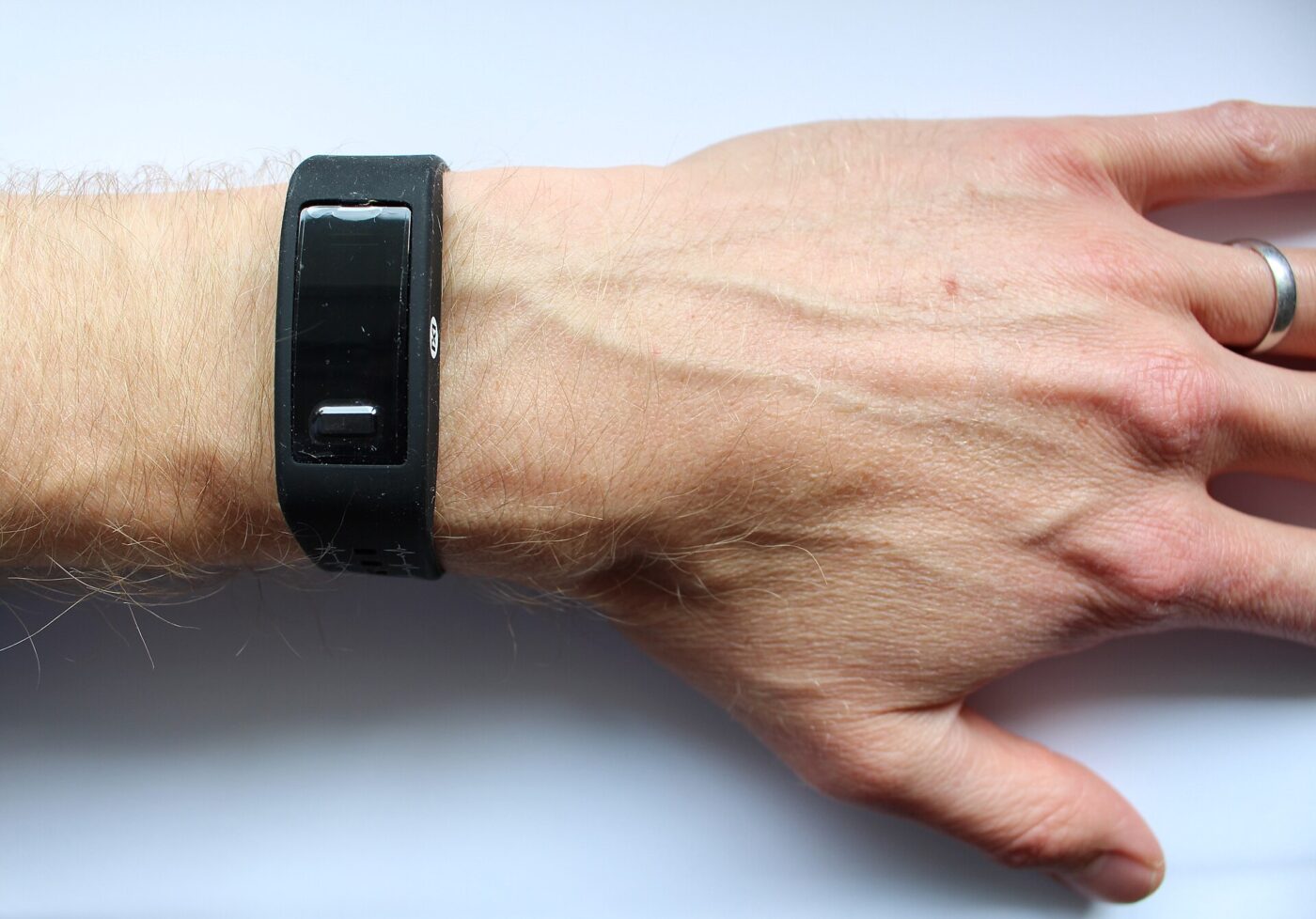
A screenless fitness band is a strap with heart-rate and motion sensors, no display, and an app that turns the data into sleep, recovery and training scores. In 2026 the buying question has shifted from which band has the longest feature list to which one charges a monthly fee, because Garmin and Polar now sell screenless bands with no subscription and Amazfit undercuts both at half the price.
Here is how the current options compare on price, battery and training metrics, where recurring costs still hide, and which kind of buyer each one fits.
Trend Signal
70/100 Strong momentum
- Emerging
- Rising
- Mainstream
- Peaking
- Cooling
Big watch brands now sell no-fee screenless bands
Garmin launched its first screenless band, CIRQA, on July 21, 2026 at $199.99 with no subscription, and its fitness segment revenue rose 25% in the quarter ended June 27, 2026.
Our editorial reading of the cited data, not a forecast. How it is scored
By the numbers
- Nearly halfUS adults who own a fitness tracker or smartwatch, per ACSM (October 2025)American College of Sports Medicine
- +25%Garmin fitness segment revenue growth, quarter ended June 27, 2026, vs a year earlierGarmin
- $199.99US price of Garmin CIRQA at its July 2026 launch, with no subscription requiredGarmin
- $69.99Yearly price of an Oura membership, the same as Garmin’s optional Connect+ planOura
Why the big watch brands want a band with no screen
Wearable technology is the top fitness trend for 2026 in the American College of Sports Medicine’s annual survey of 2,000 clinicians, researchers and exercise professionals, published in October 2025. Lead author Cayla McAvoy said nearly half of US adults now own a fitness tracker or smartwatch, so the question is no longer whether people will use wearables but how.
Garmin’s results show the demand. Its fitness segment revenue rose 25% to $756.8 million in the quarter ended June 27, 2026, and 32% in the first half, with growth across all product categories led by advanced wearables. In the same report, Garmin said the CIRQA Smart Band offers wellness and fitness insights without requiring a subscription and expands its addressable market for wellness devices.
In our read, a no-fee band lets watch brands reach people who do not want a watch on their wrist, and people who wear a regular watch but want training data on the other arm. Polar makes the same pitch for its Loop: no monthly fees, no locked features and full access to every feature from day one.
How the no-subscription bands compare
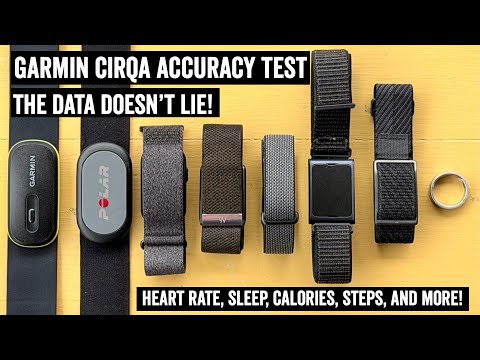
Prices below are US launch prices from each maker’s announcement: Garmin in July 2026, Polar in September 2025 and Amazfit in June 2025. Battery figures are the manufacturers’ own claims.
All three lean on a phone for the heavy lifting. Garmin lists connected GPS through your smartphone for CIRQA, so mapping a run still means carrying the phone. Amazfit lists live heart-rate broadcast to compatible devices, which lets the strap feed a watch or gym machine during a session.
| Band | US launch price | Battery (maker claim) | Subscription | Training metrics listed |
|---|---|---|---|---|
| Garmin CIRQA Smart Band | $199.99 | Up to 10 days | None required | Training readiness, training status, VO2 max, HRV status, 80+ trackable activities |
| Polar Loop | $199.99 | Up to 8 days | None | Nightly Recharge, Training Load Pro, automatic training detection |
| Amazfit Helio Strap | $99.99 | Up to 10 days | No required subscription | Sleep HRV, BioCharge, 25 strength movements recognized, HYROX race mode |
Where the subscription costs still hide
Not every screenless tracker is fee-free. Oura, whose ring is the other popular no-screen format, lists its US membership at $5.99 a month or $69.99 a year before tax as of September 2026. Without it, Oura says the ring and app still work, but the insights and data you receive are much more limited.
Garmin also sells a paid tier. Connect+, launched March 27, 2025, costs $6.99 a month or $69.99 a year and adds AI-powered insights, a performance dashboard and training guidance. Garmin said at launch that all existing features and data in Garmin Connect would remain free, which is how CIRQA can be sold as subscription-free while an optional upgrade still exists.
By our arithmetic, three years of a $69.99 annual membership costs $209.97, more than a $199.99 band. If you keep a tracker for three years, the fee alone outweighs the price of the hardware.
- Oura membership: $5.99 a month or $69.99 a year
- Garmin Connect+ (optional): $6.99 a month or $69.99 a year
- Garmin CIRQA, Polar Loop and Amazfit Helio Strap: no required fee, per each maker
Compare three-year cost, not sticker price: a membership can cost more than the band.
What a band without a screen cannot tell you
No display means no live pace, no mid-workout heart-rate glance and no interval prompts on the wrist. Runners and anyone doing structured intervals still need a watch or phone in the setup, or a chest heart-rate strap paired to one.
Accuracy is the other caveat. In the ACSM report, Sarah Camhi noted that while some wearable data is useful and accurate, some metrics may be experimental or unreliable, and that the data is often most useful for tracking patterns over time. In our read, that applies more to readiness and recovery scores than to plain heart rate and step counts.
For lifters, the gap is closing. Amazfit says the Helio Strap recognizes 25 strength training movements, and Strava said in May 2026 it overhauled strength logging with partners including Amazfit, Garmin and WHOOP, after more than 500 million strength uploads in 2025.
Which band fits which buyer
The choice mostly comes down to what you train and whether you already own a watch:
Buyers who want GPS on the wrist, offline maps or live pace should skip the band category and look at a running watch instead. Garmin launched two easy-to-use GPS running watches, the Forerunner 70 and Forerunner 170, in the April to June 2026 quarter.
- Sleep and recovery tracking alongside an existing watch: a no-fee band from Garmin or Polar, both launched at $199.99
- Strength or HYROX-style training on a budget: the Helio Strap, launched at $99.99, with strength recognition and a race mode
- Prefer a ring: budget for the membership and compare the three-year cost
What to watch next
- Whether other watch brands follow Garmin and Polar with no-fee screenless bands before the 2026 holiday season
- Garmin’s fitness segment growth in its next quarterly report, a read on how much CIRQA adds
- Any change to Oura membership or Garmin Connect+ pricing
Where to start
Paid links: we earn a commission if you buy through the buttons below, at no extra cost to you. As an Amazon Associate I earn from qualifying purchases.
Screenless training trackers compared by type
| Product type | Good fit for | Where to look |
|---|---|---|
| Screenless fitness band, no subscription | Fits sleep and recovery tracking | See listings on AmazonOpens Amazon search results, not one listing: check the model on the product page. |
| Smart ring activity and sleep tracker | Fits people who prefer a ring | See listings on AmazonOpens Amazon search results, not one listing: check the model on the product page. |
| Chest heart rate monitor strap | Fits interval and HYROX-style training | See listings on AmazonOpens Amazon search results, not one listing: check the model on the product page. |
Product types that fit the trend described above, not tested models. Check the exact listing before you buy. How we pick them.
Screenless fitness band, no subscription
Where to look: Amazon
Garmin CIRQA and Polar Loop launched at $199.99 and Amazfit Helio Strap at $99.99, all without a required subscription. Confirm the listing makes the same promise.
- No monthly fee on no-subscription models
- 8 to 10 days per charge, per makers
- Needs a phone to see data
- GPS relies on your phone on some models
Smart ring activity and sleep tracker
Where to look: Amazon
Oura, for example, charges $5.99 a month or $69.99 a year for full insights. Add three years of membership to the ring price when comparing.
- Small and easy to wear overnight
- Sleep and readiness focus
- Full insights may need a membership
- Sizing must be exact
Chest heart rate monitor strap
Where to look: Amazon
A useful add-on for runners and interval training when the band or ring has no screen. Check the connection types your devices support.
- Live heart rate for training zones
- Pairs with watches, apps and machines
- Tracks workouts only, not sleep
- Strap can chafe on long sessions
More: Fitness and Training trends and how the Trend Signal is scored.
Sources
- The Future of Fitness: ACSM Announces Top Trends for 2026 — American College of Sports Medicine
- Garmin second quarter 2026 results (PDF) — Garmin
- Meet CIRQA Smart Band: the screen-free health and fitness tracker from Garmin — Garmin
- Garmin Connect+ premium subscription launch, March 27, 2025 — Garmin
- Polar Loop — Polar
- Polar launches Polar Loop, its first screen-free, subscription-free wearable — Polar press release via ADPR
- Amazfit Helio Strap product page — Amazfit
- Amazfit Introduces Balance 2 Smartwatch and Helio Strap — Zepp Health
- Oura Membership — Oura
- Strava Overhauls Strength Experience with Expanded Partner Ecosystem, New Workout Log and Muscle Maps — Strava
Questions readers ask
Do screenless fitness trackers need a subscription?
Not all of them. Garmin’s CIRQA Smart Band and Polar Loop, both launched at $199.99, and Amazfit’s Helio Strap, launched at $99.99, are sold without a required subscription, according to each maker. Oura’s ring needs a $5.99 monthly membership for full insights.
What is the Garmin CIRQA Smart Band?
It is Garmin’s first screenless band, announced July 21, 2026 at $199.99. Garmin lists up to 10 days of battery, HRV, sleep tracking, training readiness, training status and VO2 max, with no subscription required.
Is Garmin Connect+ required?
No. Garmin said when it launched Connect+ on March 27, 2025 that all existing features and data in Garmin Connect remain free; Connect+ is an optional tier at $6.99 a month or $69.99 a year.
Are wearable recovery scores accurate?
The ACSM 2026 trends report quotes experts saying some wearable data is useful and accurate while some metrics may be experimental or unreliable. Treat scores as trends over time rather than exact measurements.