Almost every surge protector is sold on one number: joules. It is printed large, it is easy to compare, and it is the least standardized figure on the package. The figures that do trace back to a published test sit lower down, in the UL listing, and they describe different things entirely.
The gap matters more in a living room than almost anywhere else, because a TV, a console, a receiver and a gaming PC all end up on one strip behind the furniture. Below is what the two relevant standards actually certify, what the 2026 recall record shows about the cheap end of the category, and which markings are worth reading before anything is plugged in.
Trend Signal
46/100 Steady momentum
- Emerging
- Rising
- Mainstream
- Peaking
- Cooling
A cluster of power strip recalls for missing basic protection
CPSC announced three power strip recalls between December 2025 and March 2026 covering about 18,000 units on our sum of the published counts, and two of them named the same defect: no supplementary overcurrent protection.
Our editorial reading of the cited data, not a forecast. How it is scored
By the numbers
- 11,200ANNQUAN power strips recalled on December 18, 2025 for missing overcurrent protectionCPSC
- 5,543CCCEI power strips recalled on March 26, 2026 for the same missing protectionCPSC
- 10 metersMinimum distance from the service panel for a UL 1449 Type 3 point-of-utilization deviceNEMA Surge Protection Institute
- 20 kAHighest nominal discharge current rating NEMA lists for devices tested to UL 1449NEMA Surge Protection Institute
What UL 1449 actually certifies
UL 1449, Surge Protective Devices, is in its fifth edition, published on January 8, 2021 and approved by ANSI on October 21, 2025. It covers devices that limit transient voltage surges on 50 or 60 Hz power circuits up to 1000 V, and it sorts them into types by where they are installed. Type 1 sits between the service transformer and the service disconnect. Type 2 sits on the load side of that disconnect. Type 3 is the point-of-utilization device, which is where cord-connected strips, direct plug-ins and receptacle units fall.
The NEMA Surge Protection Institute spells out the markings that come with the listing. The voltage protection rating, or VPR, is measured during the nominal discharge current test using a 6 kV, 3 kA combination wave generator. The nominal discharge current rating, written as In, is verified with 15 surges at the marked level, and NEMA lists standard ratings of 20 kA, 10 kA, 5 kA and 3 kA.
Those two figures answer different questions. The VPR describes how much voltage still gets through to whatever is plugged in. The nominal discharge current describes how large a surge the device is built to take repeatedly without failing.
A lower VPR means less voltage reaches the equipment; a higher In means the device is built to survive more events.
A power strip and a surge protector are two listings
The ordinary multi-outlet strip is a relocatable power tap, covered by UL 1363. That standard reached its sixth edition on July 13, 2023, and it applies to indoor, cord-and-plug-connected taps rated 250 V AC or less and 20 amperes or less. Its scope makes the split explicit: a tap with more than two receptacle outlets that employs a surge protective device also has to comply with the applicable requirements for a cord-connected, Type 3 surge protective device in UL 1449.
So the distinction on the shelf is not a marketing tier. A strip with no surge circuitry is a UL 1363 product and should be marked as such. A strip that claims surge protection is carrying a second listing, and it is that second listing that produces the VPR and nominal discharge current figures worth comparing.
One practical consequence is placement. NEMA describes the Type 3 device as positioned a minimum of 10 meters, about 30 feet, of conductor length from the electrical service panel. A plug-in strip is designed as the last line, not the only one.
Three recalls in four months, one shared defect
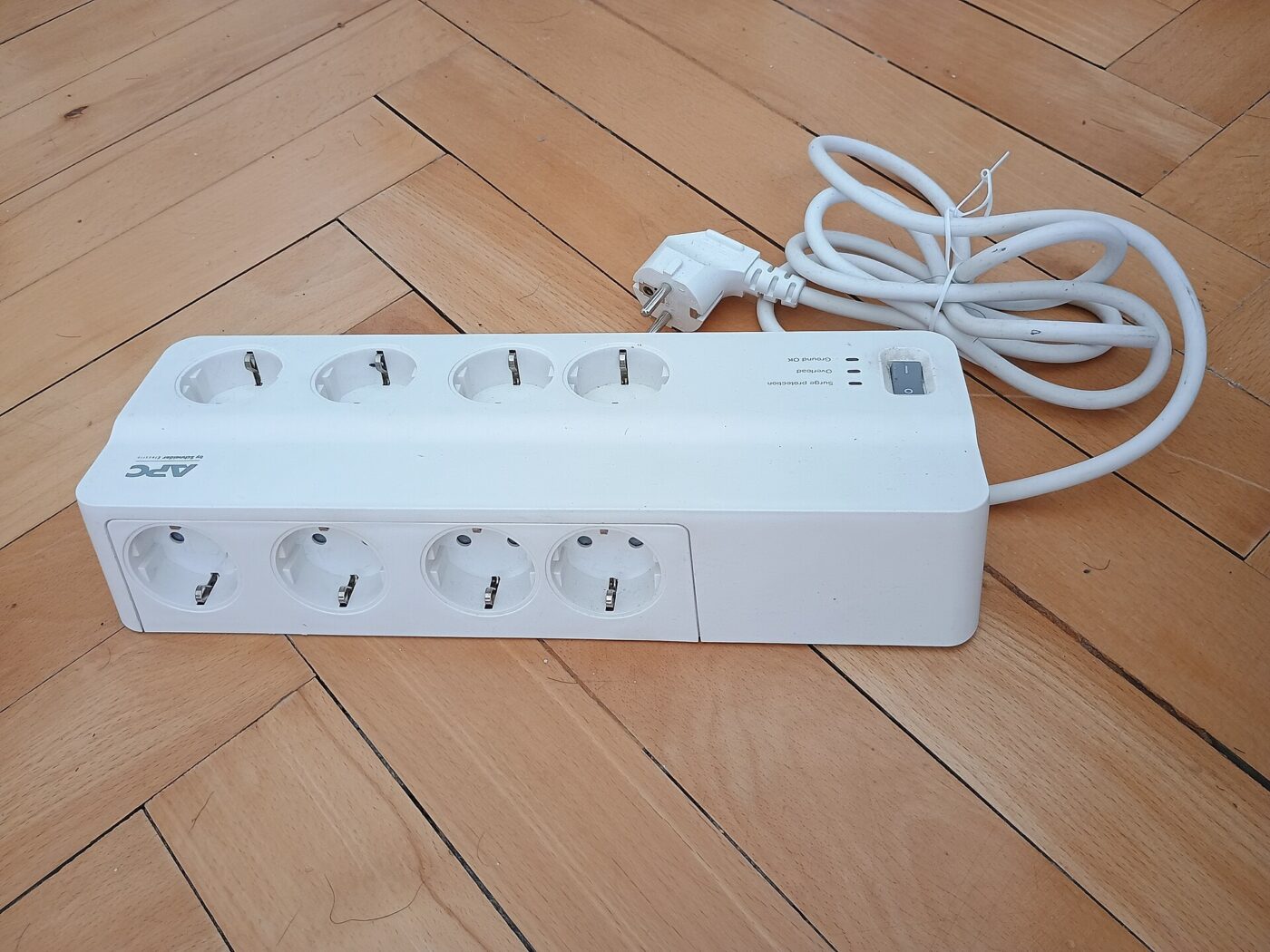
The cheap end of the category has had a visible run of problems. On December 18, 2025, CPSC announced a recall of about 11,200 ANNQUAN power strips sold on Amazon.com from December 2023 through October 2025, because they do not contain supplementary overcurrent protection, creating a fire risk if overloaded. The importer had received seven reports of the strips blowing a fuse.
On January 15, 2026, about 1,320 HEZI power strips were recalled for an ungrounded metal enclosure that poses an electrocution hazard if energized. On March 26, 2026, about 5,543 CCCEI power strips were recalled for the same missing overcurrent protection as the ANNQUAN units, after two reports of sparking and melting; CPSC notes that the action had previously been a product safety warning.
None of the three recalls involves surge performance. They involve the basics a UL 1363 listing exists to cover: a breaker that trips, and a metal case that is bonded to ground. That is the layer to satisfy before any joule figure is worth reading.
Two of the three 2026 power strip recalls named the same defect: no supplementary overcurrent protection.
What a joule rating does and does not say

A joule figure is a manufacturer statement about how much energy the internal components can absorb before they are used up. Neither the UL 1449 listing published by UL Standards and Engagement nor the NEMA Surge Protection Institute pages cited here put joules among the rated values, which are the voltage protection rating, the nominal discharge current and the device type.
That does not make joules meaningless, but it does make them hard to compare across brands, because there is no common published test behind the number the way there is behind a VPR. Two strips quoting the same joule figure can be listed to different nominal discharge currents.
It also explains a familiar frustration: a surge protector that still passes power after a large event may have spent its protection. The indicator light, where one is fitted, is the only ordinary sign, which is why replacement after a known strike is standard advice rather than a sales pitch.
What to check for a TV, console or gaming PC
For a living room rack, the order of checks is boring and effective. Confirm the safety listing first, then the surge markings, then the physical layout, and only then the headline figure on the front of the box.
- A UL listing on the product itself, with a mark and a file number, rather than a claim of UL-listed components.
- A stated voltage protection rating; lower means less let-through voltage reaching the equipment.
- A nominal discharge current rating; NEMA lists 20 kA, 10 kA, 5 kA and 3 kA as the standard steps.
- Outlet spacing that fits the wall warts a console, a router and a soundbar all bring with them.
- The total amp rating against what the rack actually draws, since the recalls above turned on overload behavior.
What to watch next
- CPSC recall notices for relocatable power taps, which produced three actions between December 2025 and March 2026.
- Any further revision activity on UL 1449, whose fifth edition was ANSI-approved on October 21, 2025.
- Whether listings start quoting voltage protection ratings on the front of the box, which would make comparison easier than joules.
Where to start
Paid links: we earn a commission if you buy through the buttons below, at no extra cost to you. As an Amazon Associate I earn from qualifying purchases.
Surge protector formats compared for an entertainment rack
| Product type | Good fit for | Where to look |
|---|---|---|
| Rack-style surge protector for AV gear | Fits a rack behind the TV | See listings on AmazonOpens Amazon search results, not one listing: check the model on the product page. |
| Wall-tap surge protector | Fits a tight outlet space | See listings on AmazonOpens Amazon search results, not one listing: check the model on the product page. |
| Surge protector with a long cord | Fits a console far from an outlet | See listings on AmazonOpens Amazon search results, not one listing: check the model on the product page. |
Product types that fit the trend described above, not tested models. Check the exact listing before you buy. How we pick them.
Rack-style surge protector for AV gear
Where to look: Amazon
The format that suits a TV, receiver and console on one shelf. Read the UL listing and the surge markings before the joule figure on the front.
- Spaced outlets for adapters
- Usually lists surge markings
- Bulky behind a cabinet
- Costs more than a plain strip
Wall-tap surge protector
Where to look: Amazon
Useful where a cord is in the way, but the whole unit is supported by the wall outlet, so check the weight and the number of heavy adapters you plan to hang on it.
- No cord to route
- Frees floor space
- Weight hangs on the receptacle
- Fewer outlets
Surge protector with a long cord
Where to look: Amazon
A longer cord is the safer answer to a distant outlet than chaining strips together, which the recall notices above explicitly warn against on the product label.
- Reaches an awkward outlet
- Avoids a second strip
- Cord gauge varies
- Easy to overload if shared
More: Gaming and Entertainment trends and how the Trend Signal is scored.
Sources
- UL 1449 Surge Protective Devices, Edition 5 — UL Standards and Engagement
- UL 1363 Relocatable Power Taps, Edition 6 — UL Standards and Engagement
- UL 1449 Surge Protective Devices — NEMA Surge Protection Institute
- What is an SPD — NEMA Surge Protection Institute
- ANNQUAN Brand Power Strips Recalled — U.S. Consumer Product Safety Commission
- HEZI Brand Power Strips Recalled — U.S. Consumer Product Safety Commission
- CCCEI Brand Power Strips Recalled — U.S. Consumer Product Safety Commission
Questions readers ask
Is a higher joule rating always better?
Not in a way you can verify. The rated values that come with a UL 1449 listing are the device type, the voltage protection rating and the nominal discharge current, as described by the NEMA Surge Protection Institute. A joule figure sits outside that set, so two products quoting the same number may not be tested to the same nominal discharge current.
What is the difference between a power strip and a surge protector?
A plain strip is a relocatable power tap listed to UL 1363, which reached its sixth edition on July 13, 2023. That standard says a tap with more than two receptacle outlets that employs a surge protective device must also meet the requirements for a cord-connected, Type 3 device in UL 1449, whose fifth edition was published on January 8, 2021.
Do I need a surge protector if my house has one at the panel?
They do different jobs. UL 1449 defines Type 1 and Type 2 devices as permanently connected near the service, and Type 3 as point-of-utilization devices installed a minimum of 10 meters, roughly 30 feet, of conductor length from the panel. A plug-in unit is designed to work downstream of the others.
How do I know if a cheap power strip is safe?
Look for a safety listing on the product and check the CPSC recall list. Between December 2025 and March 2026 CPSC recalled about 18,000 power strips in three actions, on our sum of the published counts, two for having no supplementary overcurrent protection and one for an ungrounded metal enclosure.