Product recalls are normally background noise that shoppers never hear. In 2026 the toy aisle got loud. We queried the Consumer Product Safety Commission’s recall database ourselves on September 24, 2026: 73 announcements published between January 1 and September 24, 2026 carry the word toy in the headline. The same query for the whole of 2023 returns 7. Toys have gone from about 2% of all CPSC recall announcements to about 16%.
A jump that size is rarely about toys suddenly becoming more dangerous. It is about what is being sold, who is selling it and what the agency announces. The pattern inside the notices is consistent, and specific enough to change how a buyer reads a toy listing.
Trend Signal
74/100 Strong momentum
- Emerging
- Rising
- Mainstream
- Peaking
- Cooling
Recall notices naming toys are running at ten times the 2023 rate
Our count, not a CPSC statistic: headlines containing the word toy in the agency’s recall database at saferproducts.gov, pulled September 24, 2026, give 73 notices for January 1 to September 24, 2026 against 7 for all of 2023, and 56 of the 2026 notices cite the mandatory toy standard. A headline match also picks up a few non-toys.
Our editorial reading of the cited data, not a forecast. How it is scored
By the numbers
- 73CPSC recall notices naming a toy, January 1 to September 24, 2026, by our countU.S. CPSC
- 7The same query run over the whole of 2023, our countU.S. CPSC
- 56Of our 73 toy notices, those saying the product violates the mandatory toy standardU.S. CPSC
- 179,739Finger light toys recalled on September 10, 2026 over accessible button cellsU.S. CPSC
What the recall count shows
CPSC publishes every recall it negotiates, with a headline, a hazard description, a unit count and a remedy. There is no official count of toy recalls, so we made one: every announcement in the agency’s recall database at saferproducts.gov whose headline contains the word toy, pulled on September 24, 2026. It is a rough measure: the match catches teething and baby items, and one hit is a walker picked up because the seller’s name contains the word. On that measure 2026 is a different order of magnitude, not a slightly worse year.
Total CPSC recall activity rose too, from 324 announcements in 2023 to 448 in the first nine months of 2026, so some of the increase is a busier agency. But toys went from roughly one recall notice in fifty to roughly one in six, and the comparison holds when the calendar is matched: 22 toy notices out of 291 announcements between January 1 and September 24, 2025, against 73 out of 448 in 2026.
| Period | Recall notices naming a toy | All CPSC recall notices | Toy share |
|---|---|---|---|
| Full year 2023 | 7 | 324 | 2% |
| Full year 2024 | 16 | 305 | 5% |
| Full year 2025 | 30 | 420 | 7% |
| January 1 to September 24, 2025 | 22 | 291 | 8% |
| January 1 to September 24, 2026 | 73 | 448 | 16% |
Toy recalls did not creep up in 2026; the share of CPSC announcements aimed at toys roughly doubled again.
Three hazards do most of the work
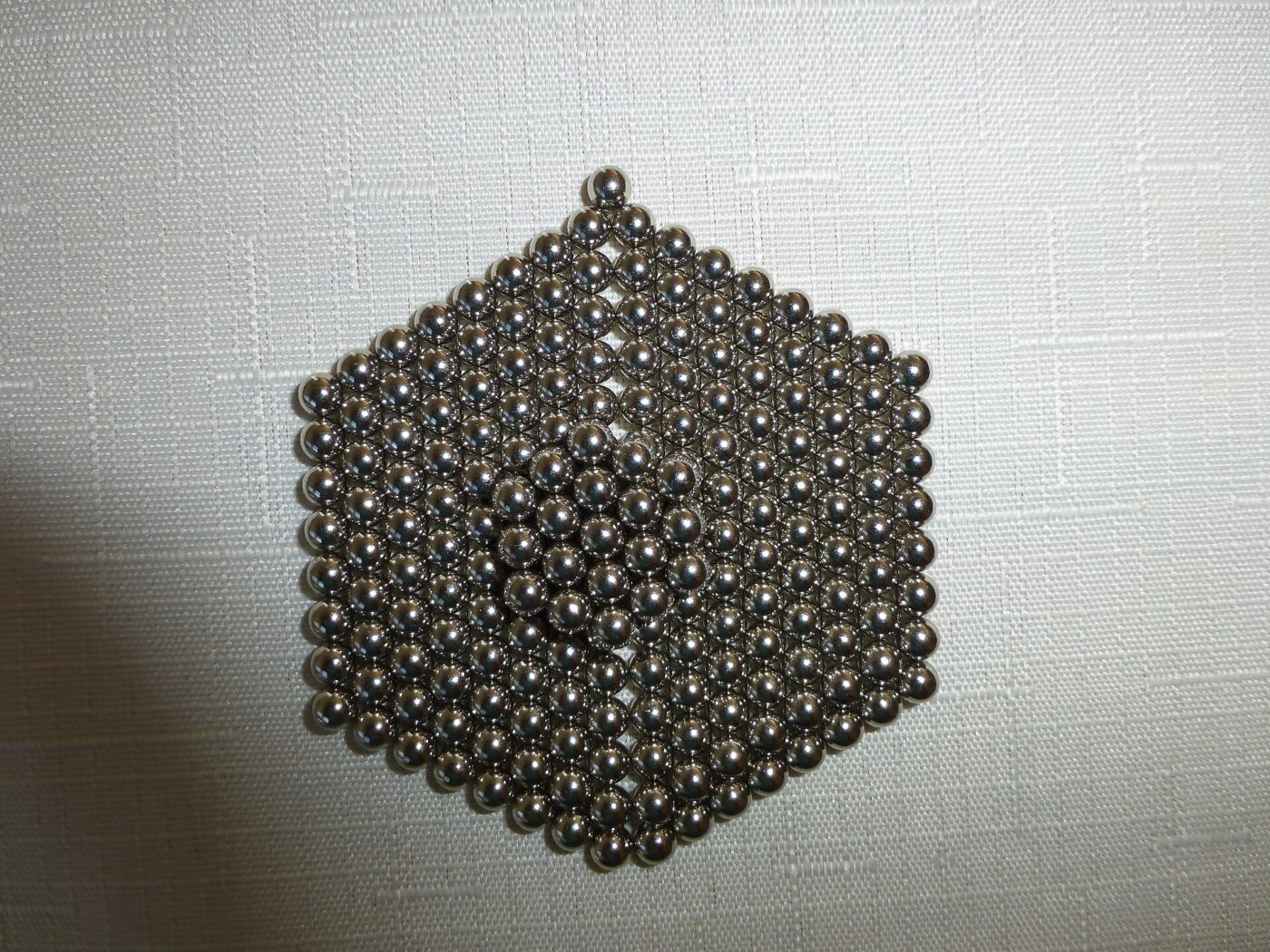
The hazards repeat. Of our 73 notices, 19 headlines cite battery ingestion, 18 cite magnet ingestion and 28 cite choking, with the other eight covering water beads, lead, asbestos, burns, drowning and the misfiled walker. The first two are written into the mandatory toy standard, which since April 20, 2024 has been ASTM F963-23. CPSC’s toy safety guidance puts loose magnets in section 4.38 and batteries in section 4.25, which requires that a child cannot access the battery during play.
The magnet notices read almost identically. On September 17, 2026, about 38,507 Jerify magnetic stick figure sets sold on Amazon were recalled because the toys could release loose high-powered magnets; CPSC cited two children hospitalized after swallowing magnets from the limbs. Similar 2026 notices covered magnetic chess sets, fidget sliders and busy boards.
The battery notices are bigger by units. About 179,739 projecting finger light toys were recalled on September 10, 2026 because they contain button cells a child can get at, and about 84,700 toy headbands and electronic pet toys followed on May 21 for the same reason, with CPSC noting that swallowed coin cells can cause internal chemical burns and death. Fifty-six of the 73 notices say the product violates the mandatory standard, the phrase CPSC uses when a product fails a requirement of that standard.
Why a marketplace is in the headline
Thirty-four of the 73 toy notices name in the headline the marketplace the product was sold on, thirty of those Amazon, with two Temu and two Walmart. CPSC increasingly identifies the storefront and seller account alongside the importer, because the importer is often a small overseas firm with no US retail presence and no way to reach buyers.
On July 29, 2024 the Commission unanimously decided that Amazon acts as a distributor under the Consumer Product Safety Act for goods sold through Fulfilled by Amazon, in a case covering more than 418,000 units of children’s sleepwear, carbon monoxide detectors and hair dryers. The order required Amazon to stop sales, notify purchasers, verify destruction before refunds and report monthly.
The consequence for a shopper is mundane but useful: the seller name on a listing is part of the recall record. Several 2026 notices cover near-identical toys sold by different accounts, which is why two separate magnetic fidget slider recalls landed on August 6, 2026 under two different Amazon seller names.
A product type can be recalled repeatedly under different seller names, so the seller account is worth reading.
The remedy changed too
In a classic recall, a manufacturer sends a repair kit or a replacement part. Almost none of the 2026 toy notices do that. The standard remedy is a refund on proof of disposal: mark the toy as recalled, throw it away, photograph it and email the photo to the firm. The Toyworld168 squishy bun recall of September 17, 2026 spells out that sequence, and the ABC Trading notice from May uses it too.
Refund-on-photo is what you do when a product cannot be fixed, when there is no spare parts operation and when the company would rather not receive 179,739 returned items. It also puts the work on the buyer, who has to find the notice and act on it. That means unit counts overstate how much leaves households: the Colerinsec notice covers toys sold from October 2022, long after the earliest packaging went in the bin.
What a buyer can actually check
None of this makes toys broadly unsafe. Circana reported on August 12, 2026 that US toy dollar sales rose 17% in the first half, and most of that volume comes from brands with compliance programs. The pattern is concentrated at one end: low-priced novelty items, imported in small lots, sold through marketplace accounts.
A recall list cannot tell you what is safe. It records only products CPSC and a firm agreed had failed a requirement, so it lags what is on sale. Nothing below makes a toy safe for a particular child; the checks are narrow, and they are the ones the notices repeat.
- Look for an age grade and a stated safety standard on the listing, remembering a claim on a listing is not a test result.
- Treat loose high-powered magnets as a category to avoid where there are young children, whatever the listing says.
- A screwed battery compartment is what section 4.25 pushes manufacturers toward, though on its own it is not evidence a toy complies.
- Search the CPSC recall page before buying from an unfamiliar seller, remembering it lists only what has already been found to fail.
- Note the seller account name, since 2026 recalls are often issued per seller rather than per product.
What to watch next
- The pace of CPSC toy recall announcements through the fourth quarter of 2026, when holiday stock is already in warehouses.
- Whether CPSC keeps naming marketplaces and seller accounts in recall headlines, which is what makes these notices searchable.
- Any change in remedies, from refund-on-photo back to repair or replacement, which would signal larger firms in the recalled categories.
Where to start
Paid links: we earn a commission if you buy through the buttons below, at no extra cost to you. As an Amazon Associate I earn from qualifying purchases.
Toy types to start from when the recall list is this long
| Product type | Good fit for | Where to look |
|---|---|---|
| Magnetic building tile set | Fits a standard you can check | See listings on AmazonOpens Amazon search results, not one listing: check the model on the product page. |
| Wooden block set | Fits under-three households | See listings on AmazonOpens Amazon search results, not one listing: check the model on the product page. |
| Precision screwdriver set | Fits checking battery doors | See listings on AmazonOpens Amazon search results, not one listing: check the model on the product page. |
Product types that fit the trend described above, not tested models. Check the exact listing before you buy. How we pick them.
Magnetic building tile set
Where to look: Amazon
Eighteen of the 73 toy recall headlines in 2026 cite magnet ingestion, on our count. Tiles hold magnets inside a panel rather than loose, but a cracked panel can still release one, so check build quality.
- Magnets sealed inside panels
- Wide age range
- Cheap copies crack and release magnets
- Prices vary hugely
Wooden block set
Where to look: Amazon
Choking is cited in 28 of the 2026 toy notice headlines on our count, and two February notices cited the federal lead content ban. A set with no batteries and no magnets leaves out those hazards, which is not the same as being safe.
- No batteries or magnets
- Long service life
- Small sets can include choking-size pieces
- Paint quality varies
Precision screwdriver set
Where to look: Amazon
Nineteen 2026 toy recall headlines cite battery ingestion, on our count. A screwdriver shows whether a compartment is screwed shut and tightens one that has worked loose, which is housekeeping rather than a safety check.
- Works on most toy battery doors
- Useful beyond toys
- Not a safety device by itself
- Tiny bits are easy to lose
More: Collectibles and Toys trends and how the Trend Signal is scored.
Sources
- Recalls and Product Safety Warnings — U.S. Consumer Product Safety Commission
- Toy Safety Business Guidance — U.S. Consumer Product Safety Commission
- Colerinsec Recalls Jerify Magnetic Stick Figure Toy Sets — U.S. CPSC
- Cade California Electronic Recalls Finger Light Toys — U.S. CPSC
- ABC Trading Recalls Children’s Toys Over Battery Ingestion — U.S. CPSC
- CPSC Concludes Amazon Is a CPSA Distributor of Products Sold Through Fulfilled by Amazon — Arnold & Porter
- US Toy Industry Posts Strongest First Half in Six Years — Circana
Questions readers ask
How many toys were recalled in 2026?
There is no official toy recall count. Ours, from CPSC’s recall database on September 24, 2026, is 73 announcements with the word toy in the headline for January 1 to September 24, 2026, out of 448 in total; 30 for 2025, 16 for 2024 and 7 for 2023. A headline match includes some non-toys.
Which hazard causes the most toy recalls?
Of our 73 notices for 2026 to date, 28 headlines cite choking, 19 battery ingestion and 18 magnet ingestion. CPSC ties the last two to the mandatory toy standard, ASTM F963-23.
What does violates the mandatory standard for toys mean?
It means CPSC found the toy failed a requirement of ASTM F963-23, which is mandatory for toys manufactured after April 20, 2024. Section 4.25 covers batteries and requires that a child cannot access them during play; section 4.38 covers loose magnets. The phrase describes that one finding, not the whole product.
Why do recalls name Amazon sellers?
Thirty of our 73 toy notices for 2026 name Amazon in the headline, and four more name Temu or Walmart. CPSC decided in July 2024 that Amazon is a distributor under the Consumer Product Safety Act for goods sold through Fulfilled by Amazon, which makes the marketplace part of the notification and refund process when the importer is a small overseas firm.