Wi-Fi 7 arrived in early 2024. By 2026 it had reached volume: the chips ship by the hundreds of millions, mainstream phones and consoles support it, and some routers built on it sell for under $200.
At the same time, the US rules for bringing a new router to market changed. This is what Wi-Fi 7 delivers in practice, what the FCC’s March 2026 router rule does and does not do, and who should buy now.
Trend Signal
66/100 Steady momentum
- Emerging
- Rising
- Mainstream
- Peaking
- Cooling
Chipsets reached volume while a new FCC rule reshuffles which brands can launch models
ABI Research figures in the Wi-Fi Alliance’s 2026 market data put Wi-Fi 7 chipset shipments at 1 billion, and since March 23, 2026 new foreign-produced router models have needed a Conditional Approval to receive FCC authorization.
Our editorial reading of the cited data, not a forecast. How it is scored
By the numbers
- 1BWi-Fi 7 chipset shipments in the Wi-Fi Alliance’s 2026 market data, from ABI ResearchWi-Fi Alliance
- 237.3MConsumer Wi-Fi access points forecast to ship worldwide in 2026, all generationsWi-Fi Alliance, ABI Research
- Mar 23, 2026Date the FCC added routers produced in a foreign country to its Covered ListFCC
- Over 50%Wi-Fi 7 share of enterprise wireless LAN sales in the second quarter of 2026Dell’Oro Group
Wi-Fi 7 reached volume in 2026

The Wi-Fi Alliance’s 2026 market data, based on ABI Research, forecasts 3.8 billion Wi-Fi devices shipping worldwide in 2026 and counts 1 billion Wi-Fi 7 chipsets, against 2.2 billion Wi-Fi 6 chipsets and 1.4 billion for 6 GHz, a group that covers Wi-Fi 6E and tri-band Wi-Fi 7. Wi-Fi 6 still ships in larger numbers, but Wi-Fi 7 is no longer a niche.
The same data puts consumer access point shipments across all Wi-Fi generations at 237.3 million in 2026, and smart home devices at 613.9 million Wi-Fi units, a reminder of how many connections a home router now carries. Businesses moved faster: Dell’Oro Group reported that Wi-Fi 7 accounted for more than half of enterprise wireless LAN sales in the second quarter of 2026.
Wi-Fi 7 is now standard in new premium gear, while Wi-Fi 6 still leads by volume.
What your devices can actually use
Wi-Fi 7’s headline figures are theoretical: up to 46 Gbps, about five times Wi-Fi 6E, using 320 MHz channels that double the width of 6E’s widest, plus Multi-Link Operation that can send data across the 2.4, 5 and 6 GHz bands at once, Engadget explained in August 2026.
Client support is the limit. Engadget lists the iPhone 17 lineup, the PlayStation 5 Pro, iPad Pro tablets and the Surface Laptop 8th Edition among Wi-Fi 7 devices, but notes the iPhone 17 lacks 320 MHz channel support and says its theoretical performance is the same on a Wi-Fi 6 or Wi-Fi 7 router. A Wi-Fi 7 router pays off most when the devices at the other end can use its wider channels and the 6 GHz band.
Prices have moved toward the mainstream: in the same August 2026 explainer, Engadget wrote that good Wi-Fi 7 routers can be found without breaking the bank and pointed to a TP-Link model, the Archer BE550, that can often be found for under $200.
| Feature | Wi-Fi 6E | Wi-Fi 7 |
|---|---|---|
| Widest channel | 160 MHz | 320 MHz |
| Theoretical top speed | About one-fifth of Wi-Fi 7 | Up to 46 Gbps |
| Multi-Link Operation | No | Yes, across 2.4, 5 and 6 GHz |
The FCC router rule, in plain terms
On March 23, 2026, the FCC added “routers produced in a foreign country, except routers which have been granted a Conditional Approval by DoW or DHS” to its Covered List, as the list reprinted in the agency’s July 2026 public notice shows. Equipment on that list cannot receive new FCC equipment authorizations, and the Department of War or the Department of Homeland Security can grant Conditional Approvals that exempt specific devices. Engadget noted that a fully American-made consumer Wi-Fi router does not exist, so the approval process decides which brands can launch new models.
The rule applies to new models. Routers approved before it took effect can still be sold, Android Authority reported, and Engadget noted that routers already in homes are unaffected. Two details reach further: Light Reading reported that previously approved foreign-made routers that change memory or other components also need approval, and Engadget reported that the FCC let affected companies keep pushing security updates until January 1, 2029, later than the March 2027 cutoff first set.
By September 11, 2026, Android Authority counted conditional approvals for Asus, Comtrend, Netgear, Amazon’s eero and SpaceX, with Asus approved on September 9 through March 6, 2028; TP-Link was still waiting. Internet providers hold separate expedited waivers, including AT&T through May 15, 2027 and Verizon through June 26, 2027, and the cable industry group NCTA asked on September 9 for another covering minor hardware changes, Light Reading reported.
| Company | Status as reported | Timing |
|---|---|---|
| Asus | Conditional approval, valid until March 6, 2028 | Granted September 9, 2026 |
| Netgear, Amazon eero, Comtrend, SpaceX | Conditional approval | By September 11, 2026 |
| TP-Link | Still waiting for approval | As of September 11, 2026 |
| AT&T | Expedited waiver | Through May 15, 2027 |
| Verizon | Expedited waiver | Through June 26, 2027 |
What it means for prices and brands
No government agency has published a router price forecast tied to the rule. The pressures we can document point up rather than down: Dell’Oro expects enterprise access point average selling prices to rise through 2026 because AI build-outs are pushing up memory component costs, and under the FCC rule a foreign-made router that swaps memory or other components needs approval, per Light Reading.
Brand choice is where buyers feel the rule most. Models already authorized keep selling, but a brand without a conditional approval cannot bring new foreign-made models to the US. Engadget argued that TP-Link can offer no guarantee that a router bought in the US in mid-2026 will stay secure after the January 1, 2029 update deadline, which makes a maker’s approval status and published update policy worth checking before you buy.
The next standard is not a reason to wait for most homes. Dell’Oro expects the first Wi-Fi 8 revenue in enterprise gear as early as 2027, and Engadget expects Wi-Fi 8 in 2028, which leaves a Wi-Fi 7 router several years of relevance.
Check two things beyond speed specs: the brand’s FCC approval status and how long it promises security updates.
Who should upgrade now
Upgrade now if your router is due for replacement anyway and your household already has Wi-Fi 7 phones, laptops or consoles, or a multi-gigabit internet plan. You get the 6 GHz band, Multi-Link Operation and a model that already carries FCC authorization.
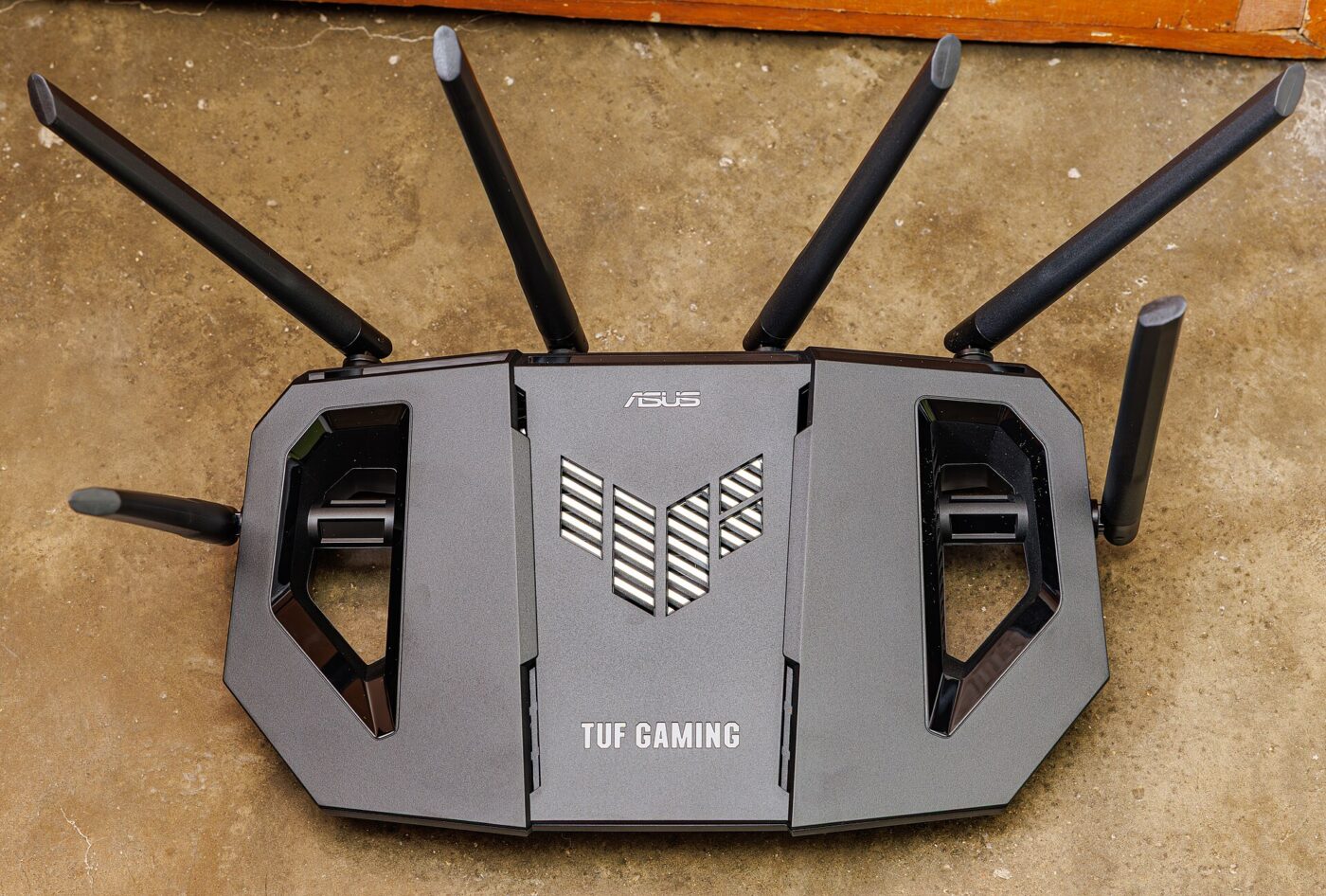
A mesh system suits larger or multi-floor homes where one router leaves weak spots, while a single tri-band router usually covers an apartment. Dual-band Wi-Fi 7 models are the cheapest route but leave out the 6 GHz band.
Wait if your Wi-Fi 6 or 6E router works and most of your devices predate Wi-Fi 7. The phone or laptop, not the router, sets the ceiling, as Engadget’s iPhone 17 example shows.
What to watch next
- Whether TP-Link receives a conditional approval, and further additions to the list of approved router makers
- Whether the FCC moves the January 1, 2029 security-update cutoff again for routers already sold
- Holiday 2026 pricing on Wi-Fi 7 mesh systems as memory component costs rise
Where to start
Paid links: we earn a commission if you buy through the buttons below, at no extra cost to you. As an Amazon Associate I earn from qualifying purchases.
Wi-Fi 7 router types compared by home size and budget
| Product type | Good fit for | Where to look |
|---|---|---|
| Wi-Fi 7 mesh system | Fits large or multi-floor homes | See listings on AmazonOpens Amazon search results, not one listing: check the model on the product page. |
| Tri-band Wi-Fi 7 router | Fits apartments with fast internet | See listings on AmazonOpens Amazon search results, not one listing: check the model on the product page. |
| Dual-band Wi-Fi 7 router | Fits tight budgets | See listings on AmazonOpens Amazon search results, not one listing: check the model on the product page. |
Product types that fit the trend described above, not tested models. Check the exact listing before you buy. How we pick them.
Wi-Fi 7 mesh system
Where to look: Amazon
The choice for homes where one router leaves weak spots. Check the maker’s FCC approval status and update policy along with coverage claims.
- Several nodes cover large homes
- Multi-Link Operation between bands
- Highest total cost
- Needs outlets in each area
Tri-band Wi-Fi 7 router
Where to look: Amazon
Suits apartments and smaller homes with multi-gigabit service. Confirm 320 MHz support if your laptops and phones can use it.
- 6 GHz band for Wi-Fi 7 devices
- Single box to set up
- One router may not reach every room
- Benefits depend on your devices
Dual-band Wi-Fi 7 router
Where to look: Amazon
A sensible upgrade from an aging Wi-Fi 5 router when budget matters more than peak speed.
- Lowest price for Wi-Fi 7 features
- Enough for many phones and laptops
- No 6 GHz band
- Less headroom as devices multiply
More: Smart Home trends and how the Trend Signal is scored.
Sources
- Wi-Fi market data 2026, based on ABI Research — Wi-Fi Alliance
- Wi-Fi 6 vs Wi-Fi 7: what’s the difference and which is better for home internet — Engadget
- Public Notice DA 26-786 with the updated Covered List — Federal Communications Commission
- Another big name gets the green light to keep selling foreign-made routers in the US — Android Authority
- NCTA seeks second exemption from FCC’s router ban — Light Reading
- Should you avoid TP-Link routers? What to know — Engadget
- Wi-Fi 7 surpasses 50 percent of the market with Wi-Fi 8 on the horizon — Dell’Oro Group
Questions readers ask
Is a Wi-Fi 7 router worth it in 2026?
It is worth it if you have Wi-Fi 7 devices and fast internet, because features such as 320 MHz channels and Multi-Link Operation need support on both ends. Engadget notes the iPhone 17 lacks 320 MHz support, so partial Wi-Fi 7 devices gain less.
Are TP-Link routers banned in the US?
No existing model is banned. Since March 23, 2026, new foreign-produced router models need a Conditional Approval to receive FCC authorization, and Android Authority reported on September 11, 2026 that TP-Link was still waiting for one; previously approved models can still be sold.
Will my current router keep working?
Yes. The rule applies to new equipment authorizations, and routers already in homes are unaffected. Engadget reported that the FCC lets affected companies keep pushing security updates until January 1, 2029.
How many Wi-Fi 7 devices are shipping?
ABI Research figures in the Wi-Fi Alliance’s 2026 market data count 1 billion Wi-Fi 7 chipsets, compared with 2.2 billion Wi-Fi 6 chipsets, and forecast 3.8 billion Wi-Fi devices shipping worldwide in 2026.