An adjustable kettlebell is a bet on iron. A single unit covers five or six weights that would otherwise be five or six separate castings, and the whole value proposition is that you pay for one shell and a stack of plates instead of a rack. That makes it unusually exposed to the price of the metal, and the metal has moved a long way since December 2024 while the finished product has barely budged.
We have not tested any of these products. This is a price trail built from three BLS series, one trade action published in the Federal Register and the specifications makers publish, with every product checked against the Consumer Product Safety Commission recall database on October 12, 2026. We worked from adjustable bells with a published weight range and a published plate count.
Trend Signal
56/100 Steady momentum
- Emerging
- Rising
- Mainstream
- Peaking
- Cooling
Raw iron and steel costs are running well ahead of finished equipment prices
The BLS producer price index for iron and steel rose 31.2% between December 2024 and August 2026, while the producer price index for sporting and athletic goods manufacturing rose 4.1% over the same months, both on our calculation from the index levels.
Our editorial reading of the cited data, not a forecast. How it is scored
By the numbers
- +31.2%BLS producer price index for iron and steel, December 2024 to August 2026BLS via FRED
- +4.1%BLS producer price index for sporting goods manufacturing, Dec 2024 to Aug 2026BLS via FRED
- +3.5%BLS consumer price index for sports equipment, August 2025 to August 2026BLS
- 12.5%Section 301 duty on products of China entered for consumption from July 24, 2026Federal Register
What one adjustable bell replaces
The published specs tell you how much iron you are buying. REP Fitness publishes three adjustable kettlebell models with five settings each: 8, 10, 12, 14 and 16 kg; 16, 18, 20, 22 and 24 kg; and 20, 25, 30, 35 and 40 lb. Each weight is held by its own internal nylon thermoplastic fastener, and the bell is adjusted by pushing down and twisting. Its tech specs list 34.6 mm for the kilogram models and 35 mm for the pound model, without labeling what the figure measures.
Titan Fitness takes the other approach on its 40-pound bell: a 10-pound core plus six drop cast-iron plates of 4.6 to 6 pounds each, numbered 1 through 6 for the order they go on, with a quick-lock mechanism, an 11-inch overall height, a 7-inch handle width, a 28 mm handle and a one-year warranty. Its competition-style model is a 12 kg shell taking plates of 2, 2, 3, 3, 4 and 6 kg, published at 210 mm diameter, 290 mm tall and a 35 mm handle.
Those numbers are the comparison that matters. Five settings from 20 to 40 pounds is five fixed bells, 150 pounds of iron, compressed into one object. The question is not whether the bell is cheaper per pound, but whether you would have bought all those fixed bells and found somewhere to put them, which is the calculation we ran on home gym equipment prices.
An adjustable bell sells compression, not weight. Count the settings you would otherwise buy.
Three price series, pulling in different directions
The raw material has moved sharply. The BLS producer price index for iron and steel stood at 288.188 in December 2024 and 378.128 in August 2026, a rise of 31.2% on our calculation from the index levels, with most of it arriving during 2026: the index was 323.978 in December 2025, so it has gained 16.7% in eight months. Iron foundries, the industry that pours cast iron, show a much smaller move, from 348.827 to 365.530 over the same months, up 4.8%.
Finished equipment has barely moved with it. The producer price index for sporting and athletic goods manufacturing went from 175.518 to 182.697 over the same 20 months, up 4.1%. At retail, the consumer price index for sports equipment, not seasonally adjusted, fell 0.3% over calendar 2025, from 83.351 in December 2024 to 83.069 in December 2025, then rose to 86.510 by August 2026: a 3.5% gain on August 2025 and 4.1% on December 2025.
The gap between a 31.2% input move and a 4.1% finished-goods move is the story of this price trail. Either the metal cost is being absorbed in margins or it has not reached the shelf, and we read the 2026 turn in the retail series as the start of the second.
| Series | Dec 2019 | Dec 2024 | Dec 2025 | Aug 2026 |
|---|---|---|---|---|
| PPI, iron and steel | 207.300 | 288.188 | 323.978 | 378.128 |
| PPI, iron foundries | 262.700 | 348.827 | 356.661 | 365.530 |
| PPI, sporting and athletic goods manufacturing | 152.600 | 175.518 | 179.731 | 182.697 |
| CPI, sports equipment | n/a | 83.351 | 83.069 | 86.510 |
Why the input rose and the shelf did not, yet
The notice the US Trade Representative published on July 28, 2026 imposes Section 301 duties on all products of 60 investigated economies entered for consumption from 12:01 a.m. eastern time on July 24, 2026, with exemptions in Annexes I and II. The rate for products of China is 12.5% and for Taiwan 10% net of the most-favored-nation duty.
The exemption list is where it gets interesting for cast iron. Among the additional products the Trade Representative determined to exclude are pig iron, certain ferrous inputs and waste, and certain aluminum scrap and waste. The notice records comments explaining that US iron foundries depend on imported pig iron because more than 95% of domestic production has historically been consumed internally by integrated steel producers. Finished equipment got no such treatment: sporting goods are on the notice’s own list of products requested for exemption that the Trade Representative determined do not warrant one.
That asymmetry favors domestic casting at the margin and raises the landed cost of imported finished bells, though duty is charged on customs value rather than shelf price and usually shows up as narrower discounting first.
Pig iron is exempt from the July 2026 action. Sporting goods were refused an exemption.
The spec gaps that decide the purchase

The published specs here are unusually loose, and the gaps are the buying risk. The Titan competition-style page states a 12 kg shell adjustable to 32 kg in one place and a 2 kg to 32 kg range in another, without resolving the conflict, and does not describe the locking mechanism beyond noting that a hex key and wrench are included. Handle diameters vary from 28 mm to 35 mm across the products we read.
Two other gaps matter. The first is whether the plates are captive when the bell is unlocked: REP describes a separate internal fastener for each weight, Titan numbered plates added in sequence with a quick-lock. The second is the warranty, published as one year by Titan and not stated on the REP pages we read.
The safety record is thin in a way that cuts both ways. A product-name search of the CPSC recall database on October 12, 2026 returned no kettlebell entries at all, across any brand or format, which is an absence result rather than proof that none exists. There is no recall history to screen against here, unlike resistance bands or adjustable dumbbells, so the published mechanism description is the only evidence a buyer has.
- Weight range and the discrete settings, not just the top number
- Handle diameter, which ranged from 28 mm to 35 mm in the specs we read
- Whether each plate is retained individually or stacked in a numbered sequence
- Published overall height and diameter
- Warranty length, which was one year where it was published at all
Buy now or wait, given the series
Our read is that waiting for a lower price is the weaker bet. The retail series turned up in 2026 after a flat 2025, the input series is up 31.2% since December 2024, and a 12.5% duty on products of China took effect in July 2026. None of those pressures reverse on their own, and the window between late October and the end of December is the realistic chance of a better number.
Wait if the spec sheet is incomplete. A bell whose page contradicts itself on the weight range, or that does not say how the plates are held, cannot be checked against anything, and no recall record exists as a second source. For the rest of a setup, see at-home HYROX gear and our gym flooring price trail.
What to watch next
- Monthly BLS iron and steel PPI, for whether the 2026 climb continues into the holiday window
- The sports equipment CPI, where any pass-through from metal costs would show up at retail
- Whether the Annex I and Annex II exemptions to the July 2026 Section 301 action change for finished steel goods
Where to start
Paid links: we earn a commission if you buy through the buttons below, at no extra cost to you. As an Amazon Associate I earn from qualifying purchases.
Adjustable kettlebell formats compared on the things that differ
| Product type | Good fit for | Where to look |
|---|---|---|
| Adjustable kettlebell with set weights | Fits the smallest weight jumps | See listings on AmazonOpens Amazon search results, not one listing: check the model on the product page. |
| Competition-style adjustable kettlebell | Fits a competition-style grip | See listings on AmazonOpens Amazon search results, not one listing: check the model on the product page. |
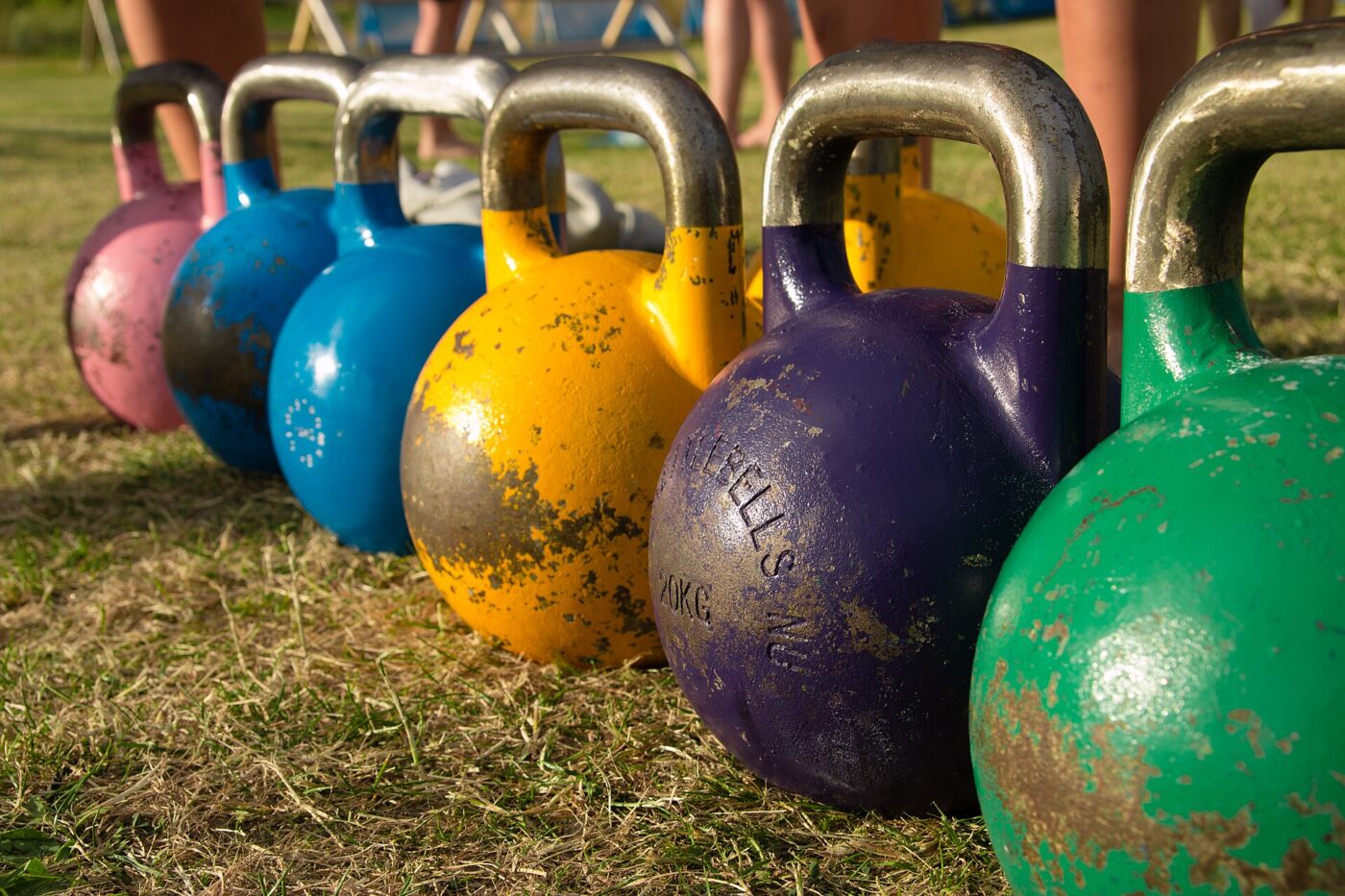
| Fixed cast iron kettlebell | Fits a single fixed weight | See listings on AmazonOpens Amazon search results, not one listing: check the model on the product page. |
Product types that fit the trend described above, not tested models. Check the exact listing before you buy. How we pick them.
Adjustable kettlebell with set weights
Where to look: Amazon
Published ranges we read cover 8 to 16 kg, 16 to 24 kg and 20 to 40 lb at five settings each. Check whether every plate is retained individually when the bell is unlocked.
- Five settings in one object
- Replaces a rack of fixed bells
- Mechanism varies by maker
- No recall record to screen against
Competition-style adjustable kettlebell
Where to look: Amazon
One published example is a 12 kg shell taking 2, 2, 3, 3, 4 and 6 kg plates at 210 mm diameter and 290 mm tall. Confirm the minimum weight, since one page we read gave two different figures.
- Constant outside dimensions
- 35 mm handle is published
- Pages can contradict on the range
- Heavier shell to store
Fixed cast iron kettlebell
Where to look: Amazon
A single casting has no mechanism to check. It is the sensible first purchase if you only need one weight for now.
- Nothing to unlock or misload
- Cheapest route to one weight
- One weight per object
- Floor space adds up fast
More: Fitness and Training trends and how the Trend Signal is scored.
Sources
- PPI, iron and steel, WPU101 — BLS via FRED
- PPI, iron foundries — BLS via FRED
- PPI, sporting and athletic goods manufacturing — BLS via FRED
- CPI, sports equipment, CUUR0000SERC02 — BLS
- Section 301 notice of actions, July 2026 — US Trade Representative
- Adjustable kettlebell specifications — REP Fitness
- 40 lb adjustable kettlebell specifications — Titan Fitness
- 12 to 32 kg competition style kettlebell — Titan Fitness
- Recalls and product safety warnings database — CPSC
Questions readers ask
Have kettlebell prices risen in 2026?
At retail, the BLS consumer price index for sports equipment rose 3.5% from August 2025 to August 2026 after falling 0.3% over calendar 2025. There is no published index for kettlebells alone.
Why do iron costs matter here?
An adjustable bell is mostly cast iron. The BLS producer price index for iron and steel rose 31.2% between December 2024 and August 2026, while the iron foundries index rose 4.8% over the same months.
Do tariffs apply to imported kettlebells?
The July 28, 2026 Section 301 notice imposes duties on all products of 60 economies from July 24, 2026, with exemptions in Annexes I and II. The rate for China is 12.5% and for Taiwan 10% net of the most-favored-nation duty. Pig iron was exempted; sporting goods were on the list the Trade Representative determined do not warrant exemption.
How many weights does an adjustable kettlebell cover?
The published models we read offer five settings each: 8 to 16 kg, 16 to 24 kg, or 20 to 40 lb. A plate-and-core design published a 10-pound core with six plates of 4.6 to 6 pounds.
Have adjustable kettlebells been recalled?
A product-name search of the CPSC recall database on October 12, 2026 returned no kettlebell entries of any kind. That is an absence result rather than proof, but it means there is no recall history to screen a product against, so the published mechanism description carries more weight than usual.