Fall is the standard time to test garden soil, and Illinois Extension says plainly that it is not something that needs doing every year: ideally it would be done every three years. That is why the query shows up now and why it is worth one careful read rather than an annual purchase. The confusion in the demand data is visible, since two of the ten Amazon completions name analytes, one just pH and one all four of pH, nitrogen, phosphorus and potassium.
They are not buying one thing. A colorimetric kit and a state laboratory analysis are different instruments that share a name, and the gap between them is mostly about what happens to the soil before anything is measured. This is an explainer on the measurement and the service, not on what to do with the result. We give no fertilizer, lime or plant-treatment guidance anywhere in it; that belongs with the laboratory that wrote your report.
Trend Signal
46/100 Steady momentum
- Emerging
- Rising
- Mainstream
- Peaking
- Cooling
A steady category where the fee calendar is the only moving part
North Carolina’s state lab tests homeowner soil samples free from April 1 to November 30, 2026 and charges $5 per sample from December 1, 2026. Montana State University Extension puts general laboratory fees at roughly $15 to over $50 per sample.
Our editorial reading of the cited data, not a forecast. How it is scored
By the numbers
- FreeNorth Carolina state lab fee for soil samples from April 1 to November 30, 2026NC Dept. of Agriculture
- $5Per-sample fee the same North Carolina lab charges starting December 1, 2026NC Dept. of Agriculture
- Every 3 yrsSoil testing interval Illinois Extension suggests for a home gardenIllinois Extension
- $15–$50+Per-sample laboratory fee range cited by Montana State University ExtensionMSU Extension
Two different instruments with the same name
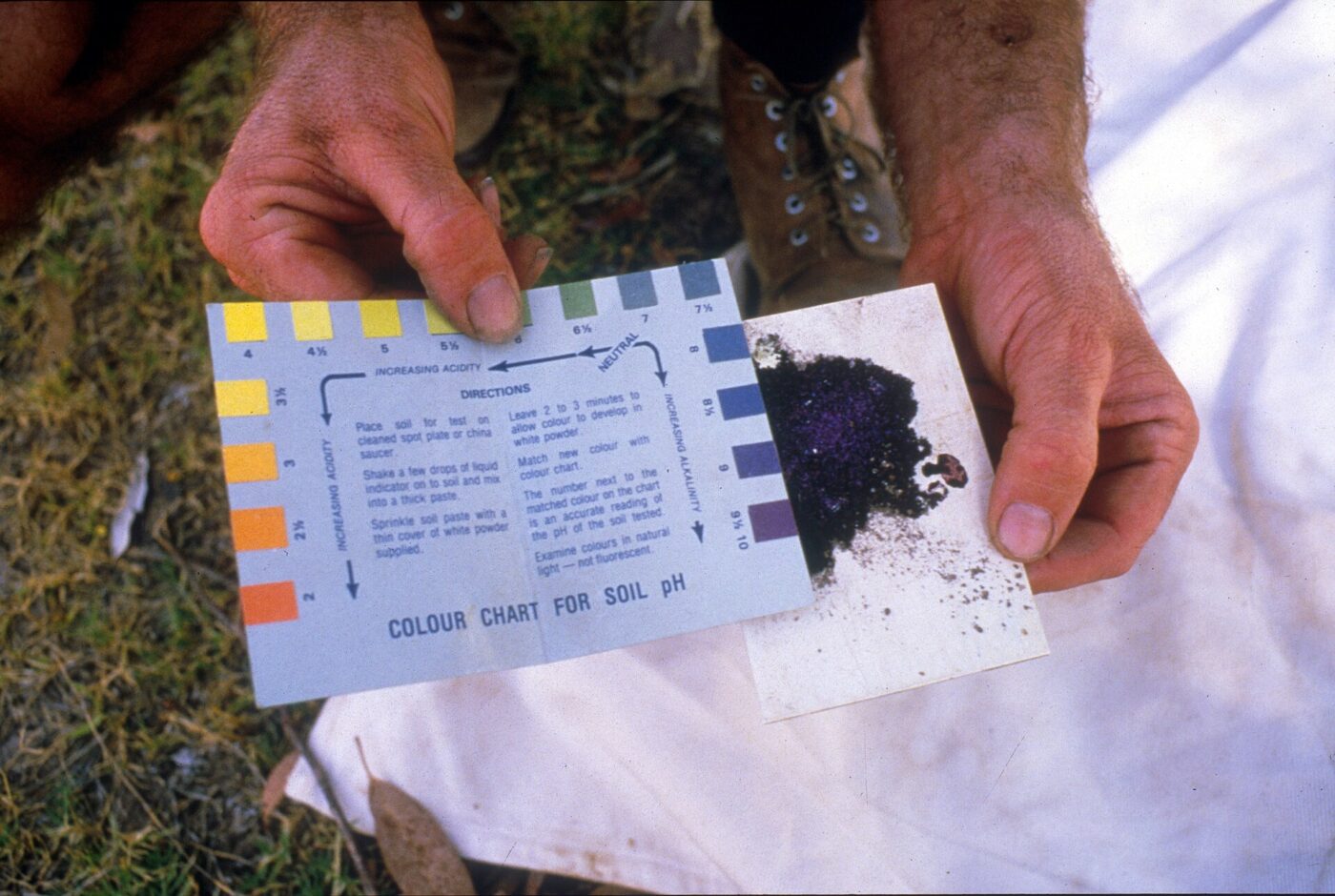
Montana State University Extension published a short comparison in May 2019 that remains the clearest public statement of the difference, with Dr. Clain Jones, its Extension soil fertility specialist, as the contact. On what kits cover it says test kits generally measure nitrogen, phosphorus, potassium and soil pH. On what a laboratory adds it says a laboratory test can also measure salts or a host of other nutrients, such as iron.
The reporting format differs as much as the coverage. Kits typically return a category, low, medium or high, while in the extension’s words laboratories report unit values and fertilizer recommendations based on field trials. North Carolina’s state lab describes its own output the same way: nutrient results are reported as an index showing whether levels are low, optimum or excessive, with pH and acidity measured separately and homeowner recommendations expressed in pounds per 1,000 square feet for properties of an acre or less.
A kit returns a category; a lab returns a number and a written recommendation.
Sample handling is most of the difference
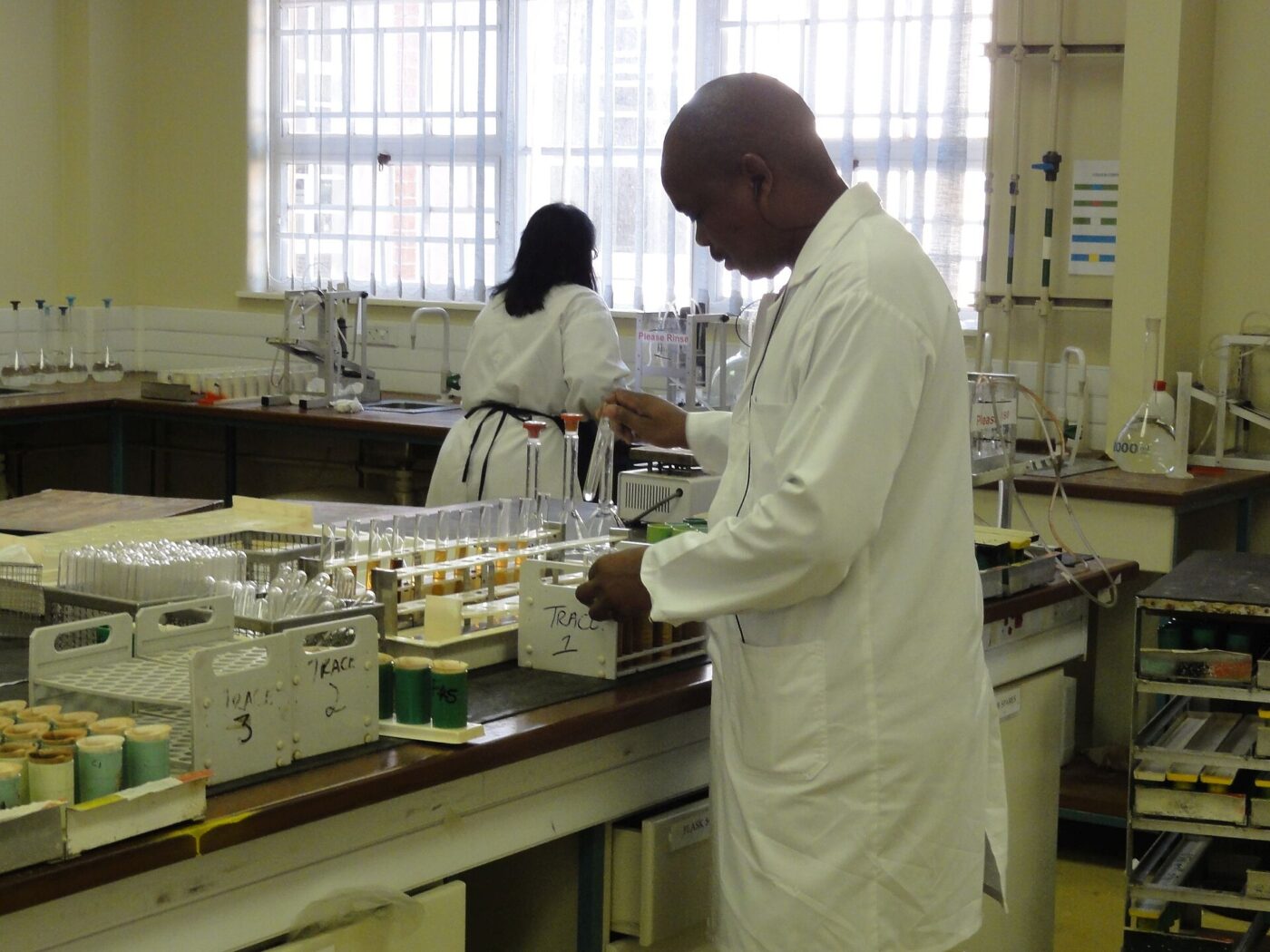
The mechanism behind that gap is preparation rather than chemistry. Montana State Extension states it directly: most soil test kits require combining the soil sample with water to make a slurry. In contrast, soil testing laboratories dry, sort, grind and sieve soils to remove rocks and residue. Everything downstream inherits whatever that step got wrong, which is why two tests of the same garden can disagree.
Extraction method matters as well, and a kit cannot adjust it. The extension notes that the Olsen P test is accurate for soils with pH greater than 6 while the Bray or Mehlich tests are accurate for soil pH less than 7.3, that Montana guidelines use Olsen P because most of its soils exceed pH 6, and that there is no simple conversion between the two families of values. It also cites a study in Crops and Soils, published by the American Society of Agronomy, that ran four kits against four soils: the more thorough kit, which required sorting, drying and grinding, gave results very similar to laboratory results, while the results from simpler kits differed moderately or even highly. The kits that behave like a laboratory are the ones that ask you to do laboratory work.
Nitrogen is the number nobody hands you

The analyte people most want is the one the laboratories decline to report. North Carolina’s state lab describes its test as covering plant-available nutrients except nitrogen. Illinois Extension explains why: nitrogen is not included in a basic fertility test because nitrogen moves through soil and its levels change constantly. The most common reported nutrients, it says, are phosphorus, potassium, magnesium and calcium, along with soil pH.
One of the ten Amazon completions asks for exactly that missing number, and Montana State Extension confirms kits generally include a nitrogen pad. A kit will therefore give you an N reading that a state laboratory considers too unstable to report from a single sample. That is a statement about how fast soil nitrate changes, and it is the most important thing to know before paying for either product. If your question is about pH or the relatively stable nutrients, both routes answer it and the laboratory answers in units.
Fees and the October calendar
The costs are small and the calendar is what to watch. North Carolina’s Department of Agriculture states that soil testing is free from April 1 to November 30, 2026, with a $5 per-sample fee starting December 1, 2026, and its site also notes that the peak soil season has ended until December 1, 2026, which is a queue warning rather than a fee change. Montana State Extension puts laboratory fees generally at roughly $15 to over $50 per sample.
Read alongside Illinois Extension’s advice that fall is a good time to test and that once every three years is enough, that produces a clear window: a sample mailed in October goes in under the free or lower-fee period in the states that run one, and the report arrives with months to spare. Each state laboratory sets its own fees and seasons, so check yours before mailing. Illinois Extension adds one timing note worth having: changing soil pH with lime or sulfur can take a year or more to show any effect, which is a statement about how slowly the measurement moves.
| Source | Fee | What it reports |
|---|---|---|
| NC Department of Agriculture state lab | Free April 1 to November 30, 2026; $5 from December 1, 2026 | pH and acidity, plus a low, optimum or excessive index for nutrients other than nitrogen |
| Laboratories generally, per MSU Extension | About $15 to over $50 per sample | Unit values and recommendations based on field trials, plus salts and nutrients such as iron |
| A basic fertility test, per Illinois Extension | Not stated | Phosphorus, potassium, magnesium, calcium and pH; nitrogen not included |
Which one fits your question
Collection technique is the part entirely in your hands, and Illinois Extension gives specifics: mix the sample in a plastic bucket, avoid metal buckets, rusty spades and galvanized products because they add zinc and skew results, and submit about one cup of mixed soil in a plastic bag labeled with your name, the date and the soil type, such as garden or lawn. It also suggests sampling separately where plants did well and where they did not.
A kit fits a quick pH check, a comparison between two beds and a recurring curiosity about whether anything has moved. It does not fit a decision that costs money, because a category rating cannot be converted into a rate. A laboratory test fits anything you intend to act on, a new garden with no history, or a lawn you are about to spend real money on; where pH is above 6, Montana State Extension’s instruction is to ask for Olsen P specifically. Whatever the result says, the recommendation belongs to the laboratory that issued it. For the rest of the fall list, see our reports on home composting bin rules and lawn replacement rebates, and how we track trends for how these are sourced.
What to watch next
- Your own state laboratory fee schedule, since several change on a fixed date rather than annually
- Whether any consumer kit starts publishing its extraction method, which decides comparability with a laboratory
- Whether state labs extend free homeowner testing windows, as North Carolina does through November 30, 2026
Where to start
Paid links: we earn a commission if you buy through the buttons below, at no extra cost to you. As an Amazon Associate I earn from qualifying purchases.
Soil testing routes compared on what you get back
| Product type | Good fit for | Where to look |
|---|---|---|
| Colorimetric soil test kit | Fits a quick comparison between beds | See listings on AmazonOpens Amazon search results, not one listing: check the model on the product page. |
| Soil pH meter | Fits a pH reading you repeat | See listings on AmazonOpens Amazon search results, not one listing: check the model on the product page. |
| Sample bags and a plastic scoop | Fits mailing a sample to a lab | See listings on AmazonOpens Amazon search results, not one listing: check the model on the product page. |
Product types that fit the trend described above, not tested models. Check the exact listing before you buy. How we pick them.
Colorimetric soil test kit
Where to look: Amazon
Suits comparing two beds on one afternoon. Montana State Extension notes the thorough kits, which ask you to dry and grind, track lab results more closely.
- Immediate result
- Cheap enough to repeat
- Returns categories rather than units
- Slurry preparation limits accuracy
Soil pH meter
Where to look: Amazon
Suits anyone whose only question is pH. Illinois Extension notes that pH changes slowly, so there is little point reading it often.
- No chemicals to reorder
- Quick to use
- Needs calibration
- Measures pH only
Sample bags and a plastic scoop
Where to look: Amazon
Suits the laboratory route. Illinois Extension asks for about one cup of mixed soil, labeled with name, date and soil type.
- Plastic avoids the zinc problem
- Pairs with a free or low-fee lab test
- No result on its own
- Lab turnaround takes time
More: Garden and Backyard trends and how the Trend Signal is scored.
Sources
- Soil Testing — North Carolina Department of Agriculture and Consumer Services, Agronomic Services
- Understanding your soil report — North Carolina Department of Agriculture and Consumer Services
- Soil Testing — Illinois Extension
- Soil test kits vs. laboratory tests — Montana State University Extension
Questions readers ask
Are home soil test kits accurate?
Montana State University Extension says most kits combine the sample with water to make a slurry while laboratories dry, sort, grind and sieve soils, and cites a Crops and Soils study in which a more thorough kit requiring sorting, drying and grinding gave results very similar to laboratory results while simpler kits differed moderately or even highly.
Why does a soil test not include nitrogen?
Illinois Extension says nitrogen is not part of a basic fertility test because nitrogen moves through soil and its levels change constantly. North Carolina’s state lab describes its analysis as covering plant-available nutrients except nitrogen. Most consumer kits do include a nitrogen pad, which is why kit and laboratory results differ on that analyte.
How much does a soil test cost?
North Carolina’s state lab tests samples free from April 1 to November 30, 2026 and charges $5 per sample from December 1, 2026. Montana State University Extension puts laboratory fees generally at roughly $15 to over $50 per sample. Each state laboratory sets its own schedule, so check yours before mailing.
When should you test garden soil?
Illinois Extension says fall is a good time and that testing is not something that needs to be done every year, ideally every three years. It also notes that changing soil pH with lime or sulfur can take a year or more to show any effect, which is why more frequent testing adds little.