The small-greenhouse search in October is not about summer tomatoes. Amazon’s completions for greenhouse small are led by outdoor and walk in, and two of the ten ask directly for a heater or a fan. Google Trends lists portable greenhouse as a rising related query at +130% for the twelve months to October 12, 2026. People are buying a shell to hold a few more weeks and to overwinter what they already have.
The question worth answering first is how much a shell actually changes, because the marketing and the extension data say different things. We have not tested any greenhouse. What follows uses Penn State Extension’s published guidance on tunnels and season extension, EIA energy data for the heating side, NOAA climate normals for timing, and the CPSC recall database, which we pulled on October 12, 2026.
Trend Signal
57/100 Steady momentum
- Emerging
- Rising
- Mainstream
- Peaking
- Cooling
Demand is for the shell plus a heater, which is where the cost sits
Two of the ten Amazon completions for greenhouse small name a heater or a fan, and Google Trends lists portable greenhouse as a rising related query at +130% for the twelve months to October 12, 2026. Penn State Extension puts the fall gain from a high tunnel at up to six weeks after the first outdoor frost.
Our editorial reading of the cited data, not a forecast. How it is scored
By the numbers
- 6 weeksFall season extension Penn State attributes to a high tunnel after the first outdoor frostPenn State Extension
- 45°FTemperature below which Penn State says most high-tunnel crops can be damagedPenn State Extension
- 12,800Mini greenhouses recalled on February 15, 2024 after 10 overheating reportsCPSC
- 3,150Heating degree days EIA forecasts for the 2026–27 US winter, 3% under the ten-year averageEIA Short-Term Energy Outlook
Why the shell sells in October
The seasonal logic is straightforward. Outdoor growing ends at the first hard freeze, and a covered structure pushes that date back. The commercial version of this is the high tunnel, and because it is commercial it is also documented: Penn State Extension describes a single layer of greenhouse-grade polyethylene film at six mil, rather than the double-layer inflated film used on a heated greenhouse, with sample budgets built around a 25-by-128-foot tunnel without heaters.
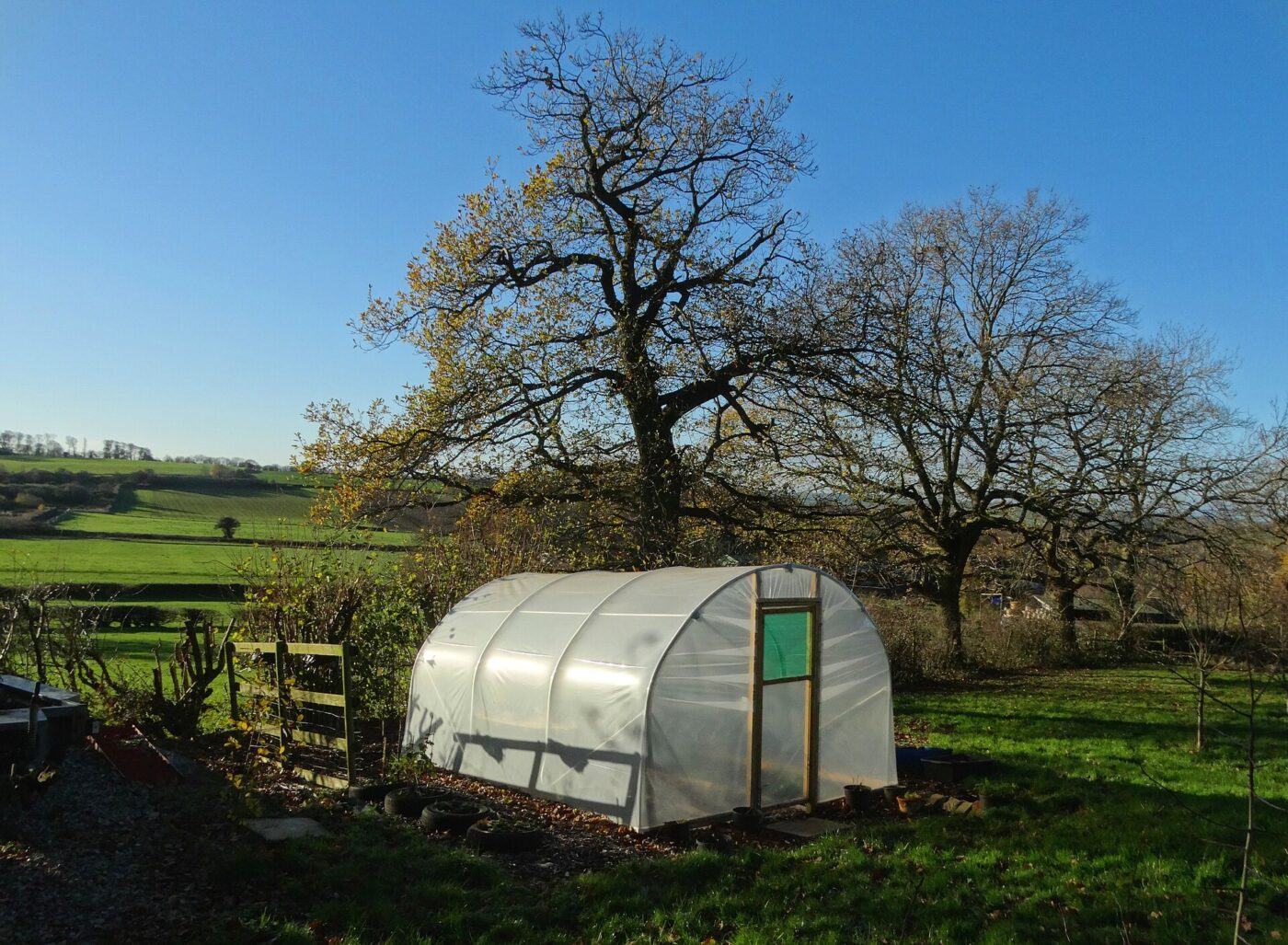
The consumer version is the walk-in shell that arrives flat-packed, and the demand data says that is what people want: walk in greenhouse small outdoor is the third completion Amazon offers. The appeal is that it is reversible, which is also why portable greenhouse is the rising query rather than greenhouse kit. The timing question is personal, and the data to answer it is public: NOAA’s National Centers for Environmental Information publishes US Climate Normals for 1991 to 2020, a dataset with more than 500 separate types of weather and climate statistic, including the number of days with temperatures below freezing.
This is a season-extension purchase with a known expiry date, not a climate upgrade.
Weeks, not zones: what an unheated shell buys
Penn State Extension is specific about the size of the gain. In spring, a tunnel can gain as much as eight weeks before the field production season, with early transplanting generally four to six weeks ahead of the earliest field planting date. In fall, the season can be extended up to six weeks after the first outdoor frost. Pushing earlier than that in spring, the guidance notes, increases the need for supplemental heat.
The hard limit is published too: most crops in high tunnels can be damaged if air temperatures drop below 45°F. That sentence reframes the product, because an unheated structure buys weeks at the shoulder of the season and does not hold a winter night above freezing. The daily work is also the opposite of what buyers expect. Penn State calls ventilation the key management factor and says internal temperatures should be checked several times a day with roll-up sides adjusted, adding that automated vents, fans, heaters and sides reduce manual adjustment. That is why greenhouse small fan appears in the completions at all.
The heater and the fan are the expensive half
Once supplemental heat enters the plan, the purchase stops being one-time. Penn State notes that growers may use a portable heater during unusually cold spells or install thermostat-controlled heaters. A thermostat is the difference between a heater that runs when needed and one that runs all night, and it is the component most worth having.
The running cost sits on the electricity series. EIA’s Electric Power Monthly, released September 24, 2026, puts the US average residential price at 18.31 cents per kilowatthour for July 2026 against 17.45 cents a year earlier, with state averages from 12.72 cents in Louisiana to 48.00 cents in Hawaii. Take a 1,500-watt heater, a rating we are assuming rather than reading off a maker page, running for an assumed eight hours a night. At 1.5 kilowatthours for every hour it runs, that is 12 kilowatthours, about $2.20 at the US average and about $5.76 at Hawaii’s figure, by our arithmetic. How many of those hours you actually pay for depends on the thermostat setting and the weather, which is why this is an illustration rather than a bill.
- A thermostat, so the heater runs on temperature rather than on the clock
- A max-min thermometer inside, since the published 45°F limit is about the low, not the average
- A vent or a circulation fan, because overheating on sunny days is the commoner failure
- Anchoring, which decides whether a lightweight frame survives a fall storm
What the recall database shows
We searched the CPSC recall database on October 12, 2026 for products named as greenhouses and found one matching recall, which is worth reading for what it was about. On February 15, 2024 Ocean State Job Lot recalled about 12,800 Growing Table Mini Greenhouse and Raised Garden Bed units. The hazard notice reads: the recalled greenhouses can overheat, posing a fire hazard resulting in property damage and injury. The firm had received 10 reports of overheating, one of which involved an injury, and the remedy was a full refund.
The failure mode there was heat, not cold, in a product sold for growing, which is consistent with the extension guidance about ventilation being the daily job. It is also a reason not to treat a cheap powered accessory inside a sealed plastic shell casually. One recall is not a safety record for the category: it records a single product found to fail, and most portable greenhouses are unpowered frames that would never appear in a notice at all. For powered yard equipment, the same database is the right place to check before buying.
Who should buy now, and who should wait
Buy now if you want the six weeks. If your first frost is close and you have plants worth carrying into November, an unheated walk-in shell with a thermometer and a vent is a modest, reversible purchase that does what the extension data says it does. The same applies to anyone who needs a sheltered place to harden off plants in spring, where the published gain is larger.
Wait if the plan depends on heat. A thermostat-controlled heater turns a one-time purchase into a monthly bill in the most expensive electricity in years, and an unheated shell will not hold 45°F through a winter night in most of the country. EIA’s October 2026 outlook also expects a cooler-than-average October before a milder winter, which is the worst sequence for an impulse purchase that still needs anchoring. For the rest of the fall list, start with our notes on garden tool prices and home composting bin rules.
What to watch next
- Whether the 2026–27 winter lands near the 3,150 heating degree days EIA forecast in October 2026
- New CPSC entries for greenhouse or growing-structure products, since our October 12, 2026 search returned only one
- Whether portable greenhouse keeps rising in Google Trends through November, marking it as a season-extension buy
Where to start
Paid links: we earn a commission if you buy through the buttons below, at no extra cost to you. As an Amazon Associate I earn from qualifying purchases.
Portable greenhouse add-ons compared on what each one fixes
| Product type | Good fit for | Where to look |
|---|---|---|
| Walk-in portable greenhouse | Fits a few more weeks outdoors | See listings on AmazonOpens Amazon search results, not one listing: check the model on the product page. |
| Max-min greenhouse thermometer | Fits knowing the overnight low | See listings on AmazonOpens Amazon search results, not one listing: check the model on the product page. |
| Greenhouse circulation fan | Fits sunny-day overheating | See listings on AmazonOpens Amazon search results, not one listing: check the model on the product page. |
Product types that fit the trend described above, not tested models. Check the exact listing before you buy. How we pick them.
Walk-in portable greenhouse
Where to look: Amazon
Suits carrying plants a few weeks past the first frost. Read the cover thickness and the anchoring kit, not the floor area.
- Reversible and storable
- Penn State puts the fall gain at up to six weeks
- Will not hold 45 degrees overnight in winter
- Needs real anchoring
Max-min greenhouse thermometer
Where to look: Amazon
Suits anyone relying on the shell rather than a heater. The published damage threshold is about the low, so measure the low.
- Cheap next to the structure
- Tells you whether the 45 degree limit was crossed
- Needs resetting
- Placement changes the reading
Greenhouse circulation fan
Where to look: Amazon
Suits a sealed shell in sun. Penn State calls ventilation the key management factor, checked several times a day.
- Addresses the commoner failure mode
- Low power draw
- Another cord in a damp space
- Does not replace opening a vent
More: Garden and Backyard trends and how the Trend Signal is scored.
Sources
- High Tunnel Production — Penn State Extension
- Ocean State Job Lot recalls Growing Table Mini Greenhouse and Raised Garden Bed — CPSC
- Short-Term Energy Outlook, October 2026 — US EIA
- Electric Power Monthly table 5.6.A, average price of electricity by state — US EIA
- US Climate Normals — NOAA National Centers for Environmental Information
Questions readers ask
How much does a portable greenhouse extend the season?
Penn State Extension puts the fall gain from a high tunnel at up to six weeks after the first outdoor frost, and the spring gain at as much as eight weeks before the field production season, with early transplanting generally four to six weeks ahead of the earliest field planting date.
Will an unheated greenhouse stop frost damage?
Not reliably. Penn State Extension warns that most crops in high tunnels can be damaged if air temperatures drop below 45°F, and notes that pushing the season earlier increases the need for supplemental heat. An unheated shell extends the shoulder of the season rather than removing winter.
Do small greenhouses need a fan?
Penn State Extension calls ventilation the key management factor for tunnels and says internal temperatures should be checked several times a day with the sides adjusted, adding that automated vents, fans, heaters and sides reduce manual work. Overheating is also the hazard behind the only greenhouse recall our October 12, 2026 search of the CPSC database returned, which covered about 12,800 units in February 2024.
What does it cost to heat a small greenhouse?
It depends on run time and your state price. A 1,500-watt heater uses 1.5 kilowatthours for every hour it actually runs, so eight hours a night is 12 kilowatthours, roughly $2.20 at the US average residential price of 18.31 cents per kilowatthour EIA reported for July 2026 and about $5.76 at Hawaii’s 48.00 cents. The 1,500-watt rating and the eight hours are our assumptions, not published figures.