There is no published price index for a wheelbarrow. What there is, inside the Consumer Price Index, is a split that describes the garden aisle rather well. Tools, hardware and supplies covers what BLS item descriptions call non-powered hand tools, naming shovels, hoes, trowels, rakes and shears. Outdoor equipment and supplies covers powered mowers, trimmers and chainsaws, barbecue grills, and the soils, mulches, seeds and plants sold alongside them.
Between January 2025 and August 2026 those two baskets went in different directions. The non-powered side rose 8.5%. The powered and materials side rose 3.2% over the same 19 months, and only 0.4% in the 12 months to August 2026. Steel, a widened tariff list and a supply chain that has now moved twice in three years account for most of the gap.
Trend Signal
45/100 Steady momentum
- Emerging
- Rising
- Mainstream
- Peaking
- Cooling
A staple category with softer US demand and a harder cost base
The BLS index for tools, hardware and supplies rose 8.5% between January 2025 and August 2026, while the outdoor equipment and supplies index rose 0.4% in the year to August 2026.
Our editorial reading of the cited data, not a forecast. How it is scored
By the numbers
- +8.5%Change in the BLS tools, hardware and supplies index, January 2025 to August 2026BLS
- +0.4%Change in the BLS outdoor equipment and supplies index in the year to August 2026BLS
- 407Tariff codes Commerce added to the steel and aluminum derivative list in August 2025Federal Register
- $516MUS revenue of the Griffon tool unit in fiscal 2025, down from $716M in fiscal 2023SEC filing
What the price indexes actually show
Take the parent index first. Tools, hardware, outdoor equipment and supplies stood at 116.450 in August 2026 against 114.837 a year earlier, a rise of 1.4%. That looks unremarkable until the two halves are separated.
The non-powered half is doing the work. Tools, hardware and supplies went from 120.185 in January 2025 to 130.385 in August 2026, up 8.5%, and it was still up 2.8% over the 12 months to August 2026. The outdoor equipment and supplies half went from 106.661 to 110.062 across the same 19 months, up 3.2%, and had drifted down from a January 2026 reading of 112.271 by the time August arrived.
Two cautions apply. These are national average indexes, not the price of any one item, and neither basket is a garden basket: the BLS item description behind the non-powered half covers all non-powered hand tools, so wrenches, hammers and saws sit in it alongside the shovels and rakes. The useful signal is the direction of the split.
| CPI index | Aug 2025 | Aug 2026 | Change |
|---|---|---|---|
| Tools, hardware, outdoor equipment and supplies | 114.837 | 116.450 | +1.4% |
| Tools, hardware and supplies | 126.887 | 130.385 | +2.8% |
| Outdoor equipment and supplies | 109.645 | 110.062 | +0.4% |
Why the metal half moved
A contractor wheelbarrow is mostly steel: tray, brace, handles and wheel rim. A long-handled shovel is a steel blade and a socket. That makes these products unusually exposed to metal policy, and the policy widened in 2025.
On August 19, 2025 the Bureau of Industry and Security published a notice adding 407 Harmonized Tariff Schedule codes to the list of products treated as steel or aluminum derivatives under Section 232 of the Trade Expansion Act of 1962. The duties took effect for goods entered on or after August 18, 2025, and the notice said the tariff was assessed on the value of the steel or aluminum content in each product. Proclamation 11021 of April 2, 2026 changed that base: for goods entered on or after April 6, 2026 the metal duties apply to the full customs value of the imported product, regardless of metal content. The list runs well past raw metal into finished household and outdoor goods.
The suppliers say so in their own filings. In its annual report for the year ended September 30, 2025, Griffon Corporation, whose AMES unit sells shovels, spades, rakes, hoes, wheelbarrows and lawn carts, told investors that certain products sold in the United States are sourced from suppliers in China, some exclusively, and that trade actions taken since January 2025 may increase the cost of shifting that sourcing elsewhere.
The tariff list now reaches finished goods, and steel is most of what a barrow or a spade weighs.
How the supply chain moved, twice
The first move was voluntary and came before the tariffs. Griffon announced in May 2023 that it was expanding global sourcing to include long-handled tools, material handling and wood storage lines for the US market, and its filing says that was completed as of September 30, 2024. Manufacturing ended at four plants and four wood mills, cutting about 1.2 million square feet, roughly 15% of the unit’s footprint, and about 600 jobs.
The second move is visible in customs paperwork. A Customs and Border Protection ruling dated July 22, 2026 describes a garden cart whose high-density polyethylene base and polypropylene wheels are made in Cambodia, then shipped to China for assembly with a Chinese steel handle, stator and wheel frame. CBP held the country of origin to be Cambodia, because the base and wheels give the cart its character. A ruling of April 5, 2024 on a similar cart reached the same conclusion with Thailand. Both are prospective rulings on sourcing an importer described rather than shipments already made, so they show how the trade is being planned, not how much of it runs this way.
The financial result so far has been lower volume rather than higher revenue. Griffon’s consumer and professional products revenue fell 10% in fiscal 2025 to $935.7 million on a 12% volume decline, which the company attributed to weaker demand in North America and the United Kingdom and to disrupted US customer ordering patterns caused by increased tariffs. Its United States revenue in that segment went from $716.1 million in fiscal 2023 to $638.8 million in 2024 and $516.3 million in 2025.
What that looks like on the shelf
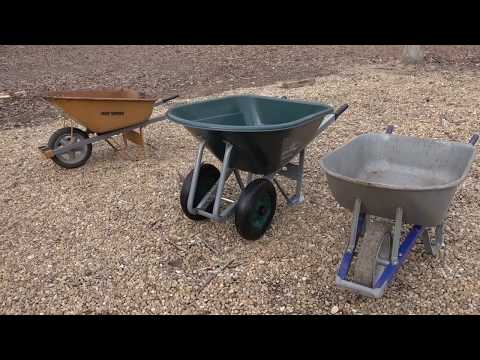
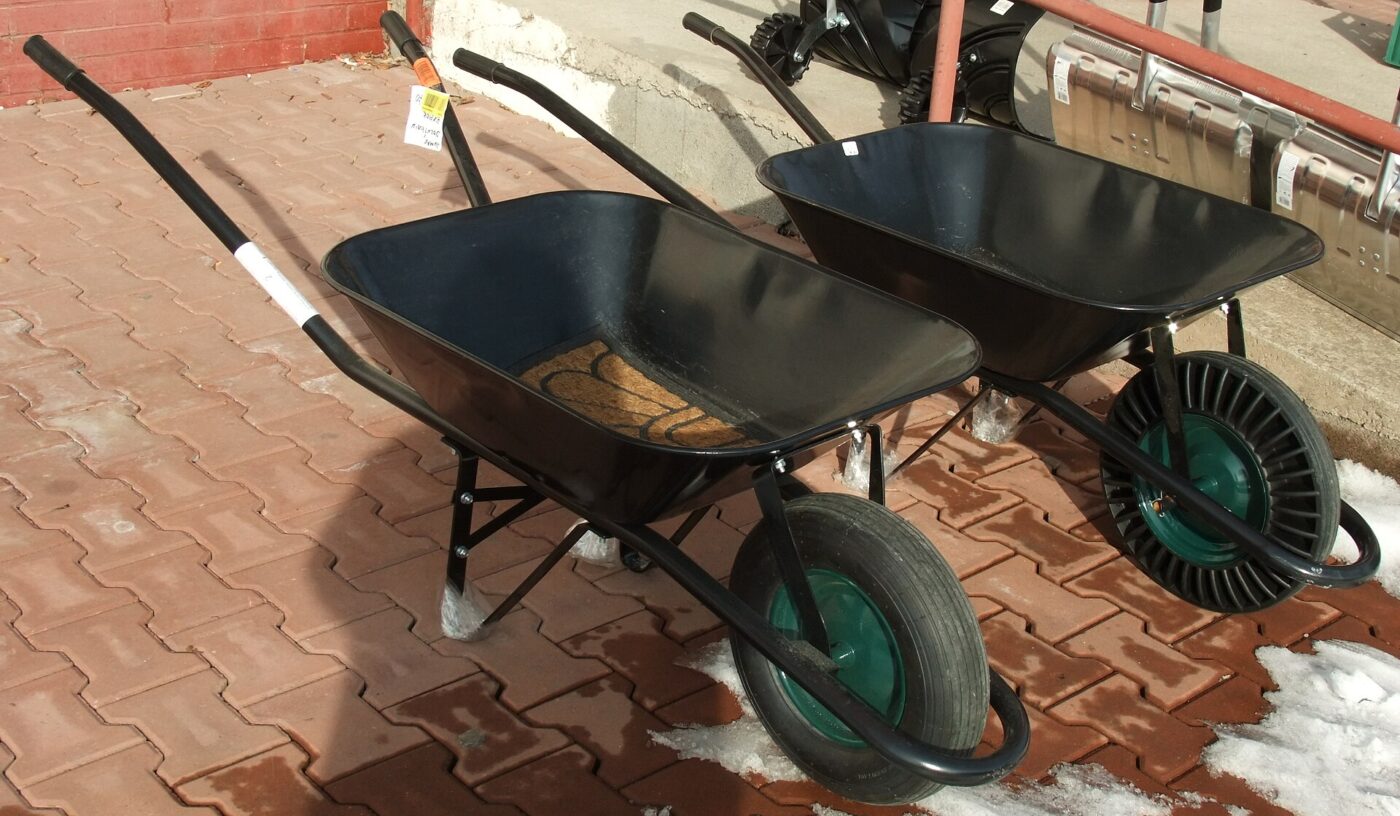
For carts and barrows the practical fork is tray material. A steel tray takes rock, rubble and hot ashes and can be repaired; a poly tray will not rust or dent and costs less, but cracks if it is loaded with sharp rubble and left in the sun for years.
Wheels are the other decision. A pneumatic tire rolls better over turf and gravel but can puncture; a solid or foam-filled wheel never goes flat and never rolls as easily. One wheel gives maneuverability in tight beds, two give stability under a heavy load, and a four-wheel dump cart trades maneuverability for capacity.
On hand tools the price move is easier to feel than to see, because makers change specification rather than sticker. Handle material is where it usually happens: ash, hickory, fiberglass and tubular steel are not interchangeable, and a lighter handle on the same head changes how the tool works.
- Tray: steel for rubble and ashes, poly for soil, mulch and lighter loads
- Wheel: pneumatic for rough ground, solid or foam-filled for zero maintenance
- Handle: check the material and length, not just the total price
- Capacity: compare cubic feet, and the load rating on carts
Buy now or wait
Nothing in the data points to a price break on the non-powered side. The tariff expansion took effect in August 2025 and is not scheduled to unwind, and the main domestic supplier has already closed the plants that once gave it a non-imported option. If a tool is broken now, waiting is a bet against the evidence.
The powered and materials side reads differently. That index is up only 0.4% over the year to August 2026 and has come down since January 2026, so a mower, trimmer or grill purchase is not being punished by delay in the way a spade purchase might be. End-of-season markdowns in the fall are a normal feature of that half of the aisle.
Buying used is the other lever, and it works better here than in most categories. A steel tray barrow with a flat tire is a tire problem, and a wooden handle is a replaceable part on most long-handled tools.
Replace broken hand tools now; a mower or grill is the purchase that can wait for a markdown.
What to watch next
- The monthly BLS tools, hardware and supplies index, which has been the faster-rising half of the aisle
- Any further Bureau of Industry and Security notice adding tariff codes to the steel and aluminum derivative list
- Griffon quarterly filings, which report US revenue for the unit that makes AMES and True Temper tools
Where to start
Paid links: we earn a commission if you buy through the buttons below, at no extra cost to you. As an Amazon Associate I earn from qualifying purchases.
Garden carts and digging tools compared on what differs
| Product type | Good fit for | Where to look |
|---|---|---|
| Steel-tray wheelbarrow | Fits tight beds and single-wheel work | See listings on AmazonOpens Amazon search results, not one listing: check the model on the product page. |
| Poly garden dump cart | Fits heavy loads on flat ground | See listings on AmazonOpens Amazon search results, not one listing: check the model on the product page. |
| Long-handled digging spade | Fits breaking new ground | See listings on AmazonOpens Amazon search results, not one listing: check the model on the product page. |
Product types that fit the trend described above, not tested models. Check the exact listing before you buy. How we pick them.
Steel-tray wheelbarrow
Where to look: Amazon
The traditional single-wheel barrow. Steel is the reason it handles rubble, and also the reason its price tracks metal policy most closely.
- Takes sharp and hot loads
- Repairable tray and handles
- Rusts if stored wet
- Heavier to tip and empty
Poly garden dump cart
Where to look: Amazon
Four wheels and a tipping tray. The July 2026 customs ruling describes this construction: a plastic base and plastic wheels, with steel in the handle, stator and wheel frame.
- No rust or dents
- Stable under a heavy load
- Poor in narrow beds
- Plastic can crack with age
More: Garden and Backyard trends and how the Trend Signal is scored.
Sources
- CPI, tools, hardware and supplies, US city average — U.S. Bureau of Labor Statistics
- CPI, outdoor equipment and supplies, US city average — U.S. Bureau of Labor Statistics
- CPI, tools, hardware, outdoor equipment and supplies, US city average — U.S. Bureau of Labor Statistics
- Consumer Price Index entry level item descriptions — U.S. Bureau of Labor Statistics
- Adoption and procedures of the Section 232 steel and aluminum tariff inclusions process — Federal Register via GovInfo
- Proclamation 11021 of April 2, 2026 — Federal Register via GovInfo
- Griffon Corporation annual report on Form 10-K for fiscal 2025 — SEC EDGAR
- Ruling N363279, country of origin of a garden cart — U.S. Customs and Border Protection
Questions readers ask
Does BLS publish a price index for wheelbarrows?
No. The closest published series are tools, hardware and supplies, which BLS item descriptions say covers all non-powered hand tools for indoor and outdoor use, from wrenches and hammers to shovels, hoes, rakes and shears, and outdoor equipment and supplies, which covers powered lawn and garden equipment and grills.
How much did garden hand tools go up?
The BLS tools, hardware and supplies index rose from 120.185 in January 2025 to 130.385 in August 2026, an increase of 8.5% on our arithmetic, and was up 2.8% over the 12 months to August 2026.
What did the August 2025 tariff change do?
The Bureau of Industry and Security added 407 Harmonized Tariff Schedule codes to the steel and aluminum derivative list for goods entered on or after August 18, 2025, with the Section 232 tariff assessed then on the steel or aluminum content. Proclamation 11021 of April 2, 2026 moved the duty onto the full customs value of the article, regardless of metal content, from April 6, 2026.
Is a steel or a poly tray better?
They fail differently. Steel handles rubble, sharp debris and hot ashes and can be repaired, but rusts if stored wet. Poly is lighter and will not rust or dent, but can crack under sharp loads and long sun exposure.