The front lawn is losing its official support. In the West, water agencies pay people to tear out grass, and Colorado has written turf limits into state law. Utah is even retiring its toilet rebate on November 1, 2026 so the money can shift to outdoor water savings. In the Upper Midwest the pitch is pollinators rather than water, but the money goes to the same place: native plants where grass used to be.
For a homeowner, that means a lawn conversion can be partly paid for, if you follow the rules. Here is where the money is in 2026, what the programs require, and which products the conversions actually use.
Trend Signal
60/100 Steady momentum
- Emerging
- Rising
- Mainstream
- Peaking
- Cooling
Water agencies and legislatures keep paying to pull out grass
Utah Water Savers pays up to $3 per square foot to replace grass and is retiring its toilet rebate on November 1, 2026 to shift money outdoors; Colorado’s limits on new nonfunctional turf took effect locally January 1, 2026.
Our editorial reading of the cited data, not a forecast. How it is scored
By the numbers
- $3/sq ftTop Utah Water Savers payment for replacing grass with water-wise plantings, 2026Utah Water Savers
- $2/sq ftMetropolitan Water District turf rebate, up to 5,000 sq ft of yard per yearSoCal Water$mart
- Up to 70%Share of household water use that yard irrigation can account for, per Utah Water SaversUtah Water Savers
- Jan 1, 2026Start of Colorado limits on new turf installs on commercial and HOA common propertyColorado General Assembly
The policy shift away from lawns
Colorado put limits into state law. SB24-005, signed March 18, 2024, prohibits local governments from allowing the installation of nonfunctional turf, artificial turf or invasive plant species on commercial, institutional and industrial property, common interest community property such as HOA common areas, and street rights-of-way, parking lots and medians, starting January 1, 2026. Artificial turf on athletic fields is exempt, and private single-family yards are not among the property types the law lists.
The state is also paying for conversions. HB22-1151, signed June 8, 2022, created a statewide Turf Replacement Program with $2 million from the general fund, which local governments, districts, tribes and nonprofits can tap to finance their own turf replacement programs.
Utah is moving money outdoors. Utah Water Savers says yard irrigation accounts for up to 70% of household water use. It is retiring its toilet rebate on November 1, 2026, after helping more than 4,500 households replace nearly 6,000 older toilets since 2019, and says the funding will shift toward outdoor conservation, where the greatest remaining savings are. Utah’s House Bill 217 also prevents HOAs from requiring detached homes to keep a lawn.
Grass is shifting from the default yard to something governments pay you to remove.
Where the rebate money is
In Southern California, the Metropolitan Water District pays $2.00 per square foot for up to 5,000 square feet of converted yard per year, and local water agencies may add more. Since March 4, 2024 it has also paid $100 per new tree, up to five trees per application. You must reserve funds before starting and then have 180 days to finish.
Utah Water Savers offers up to $3 per square foot to remove grass on residential or commercial property and replace it with water-wise plantings, plus up to $100 for a WaterSense-labeled smart irrigation controller. The lawn incentive is available only in cities, towns and counties that have adopted the state’s water efficiency standards.
Minnesota’s Lawns to Legumes program, run by the Board of Water and Soil Resources with Metro Blooms and Blue Thumb, offers workshops, coaching, planting guides and cost-share grants for installing pollinator-friendly native plantings in residential lawns.
| Program | What it pays | Key condition |
|---|---|---|
| Metropolitan Water District, Southern California | $2.00 per sq ft, up to 5,000 sq ft a year; $100 per tree, up to 5 | Reserve first; 3 plants per 100 sq ft; no synthetic turf |
| Utah Water Savers | Up to $3 per sq ft; up to $100 for a smart controller | Living, maintained lawn; local government must have adopted water efficiency standards |
| Minnesota Lawns to Legumes | Cost-share grants plus coaching | Pollinator-friendly native plantings in residential lawns |
| Colorado Turf Replacement Program | $2 million state fund | Finances local government, district, tribal and nonprofit programs |
Why the money favors native plants over gravel and plastic
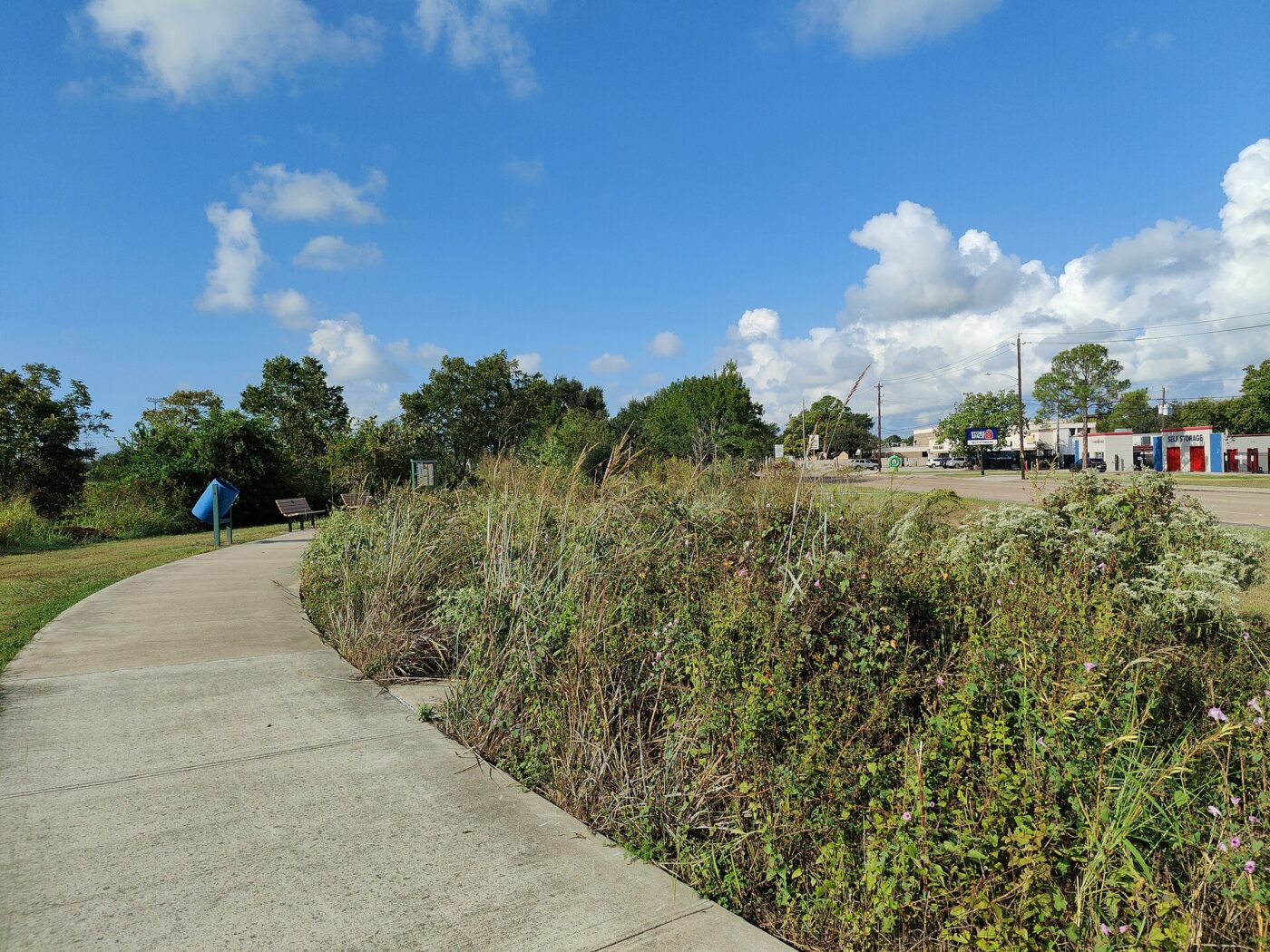
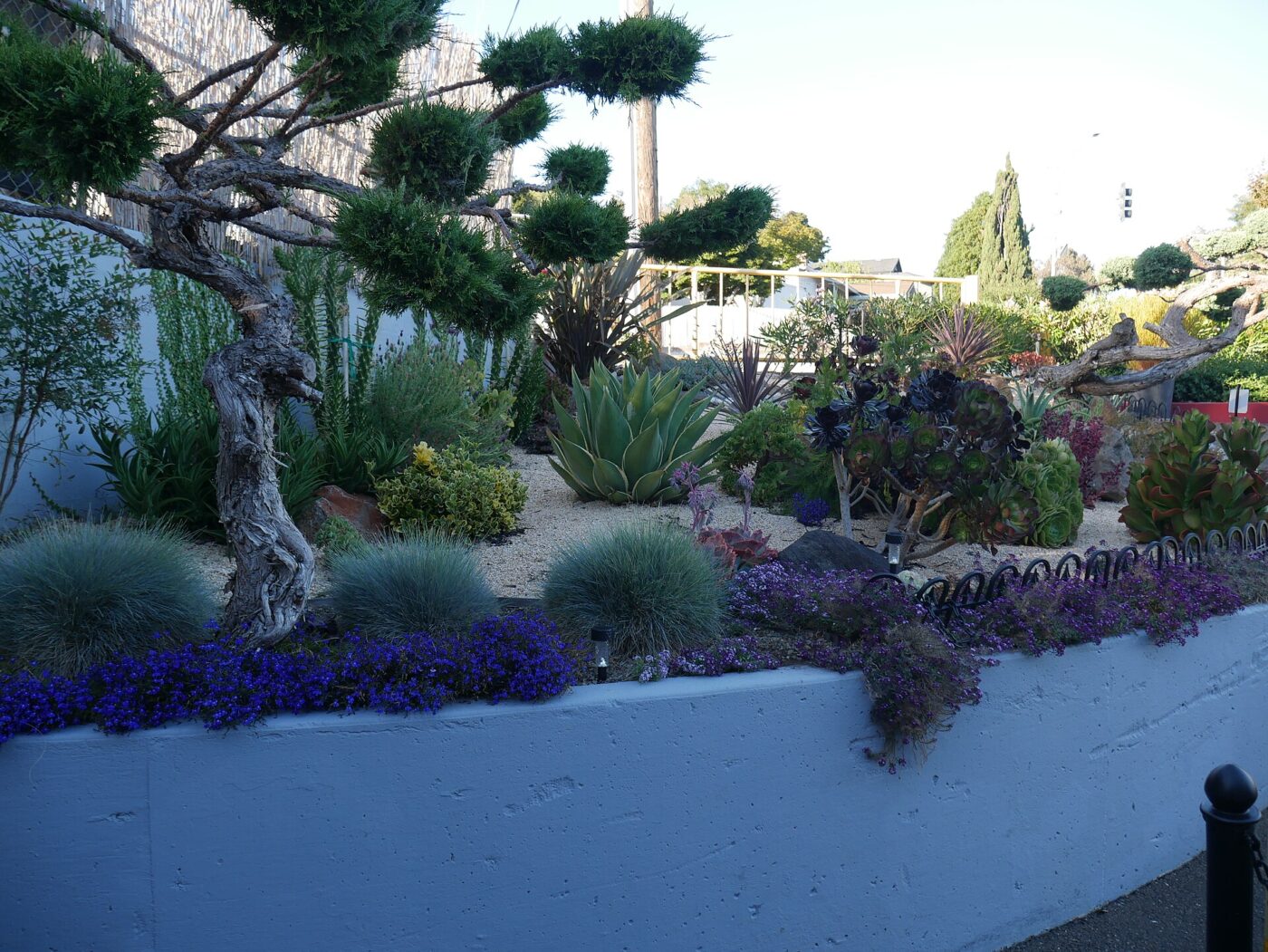
The rules are written to get living plants into the ground. Southern California’s program says synthetic turf is not an approved conversion, and every project needs 3 plants per 100 square feet, a stormwater retention feature, no hardscape other than permeable surfaces, and replacement or modification of overhead spray sprinklers. Colorado’s law bans artificial turf alongside nonfunctional grass in the property types it covers.
Utah draws a different line: its programs cannot pay for any type of lawn, so swapping to a drought-tolerant grass blend does not qualify. Minnesota’s program is built around pollinator habitat from the start. Across all four states the direction is the same: fewer square feet of irrigated grass, and more plants that need less water and feed pollinators.
Rebates reward plants, not rocks or plastic, so plan the planting before the removal.
What a conversion takes and what it uses

The order of steps matters because of the paperwork. Apply and get approval before removing anything: Southern California requires a reservation, and Utah pays only to replace a current living and maintained lawn, so killing the grass first can cost you the rebate.
The watering system is the other half of the job. Southern California’s guidance points to converting sprinklers to drip, hand watering, micro-spray or rotating nozzles, and notes that weather-based controllers, soil moisture sensors, rain barrels and cisterns may qualify for separate device rebates. Utah’s controller rebate requires a WaterSense label.
- Drip irrigation or micro-spray kit to replace overhead spray heads
- Regional native plants or seed mixes dense enough to meet plant-count rules
- A WaterSense-labeled smart controller where a controller rebate applies
- A rain barrel or cistern where the program counts rainwater capture
Counter-signals and who should wait
Rebates are finite. Southern California says its amounts can change at any time and depend on availability when an application is approved, and Utah’s lawn incentive is not offered everywhere in the state. Colorado’s turf law covers new installations on commercial, institutional, industrial and common-interest property, not a single-family yard.
HOA rules still matter. Utah law stops HOAs from requiring a lawn at detached homes, but an HOA can still require board approval of plans and materials. In Colorado, HB21-1229 added artificial turf to the drought-tolerant materials an HOA may regulate but not prohibit in a unit’s backyard. Check both your program and your HOA before committing. If your area has no program, a conversion is still possible, but the payback depends on your own water bill rather than a rebate check.
What to watch next
- Whether Utah expands outdoor incentives after its toilet rebate retires on November 1, 2026
- How Colorado cities write SB24-005 turf limits into local codes during 2026
- Changes to the Metropolitan Water District $2 per square foot rate, which it says can change with funding
Where to start
Paid links: we earn a commission if you buy through the buttons below, at no extra cost to you. As an Amazon Associate I earn from qualifying purchases.
Products a lawn conversion typically uses
| Product type | Good fit for | Where to look |
|---|---|---|
| Drip irrigation conversion kit | Fits replacing spray zones | See listings on AmazonOpens Amazon search results, not one listing: check the model on the product page. |
| Regional native wildflower seed mix | Fits sunny open areas | See listings on AmazonOpens Amazon search results, not one listing: check the model on the product page. |
| WaterSense smart sprinkler controller | Fits rebate-program yards | See listings on AmazonOpens Amazon search results, not one listing: check the model on the product page. |
Product types that fit the trend described above, not tested models. Check the exact listing before you buy. How we pick them.
Drip irrigation conversion kit
Where to look: Amazon
Suits converting an old spray zone to planted beds. Match the kit to your water pressure and bed size.
- Waters roots instead of pavement
- Meets sprinkler-change rules in some programs
- Tubing needs checking for leaks
- Layout takes planning
Regional native wildflower seed mix
Where to look: Amazon
Suits large open areas. Pair with container plants where a program counts plants per square foot.
- Low cost per square foot
- Supports pollinators
- Slow to fill in the first season
- May not meet plant-count rules alone
WaterSense smart sprinkler controller
Where to look: Amazon
Suits yards in programs that pay for WaterSense-labeled controllers, such as Utah’s.
- Adjusts watering to weather
- Can qualify for its own rebate
- Needs Wi-Fi where the controller mounts
- App setup required
More: Garden and Backyard trends and how the Trend Signal is scored.
Sources
- SB24-005, Prohibit Landscaping Practices for Water Conservation — Colorado General Assembly
- HB22-1151, Turf Replacement Program — Colorado General Assembly
- HB21-1229, Home Owners’ Associations Governance — Colorado General Assembly
- Turf Replacement Program — SoCal Water$mart, Metropolitan Water District
- Programs and FAQs — Utah Water Savers
- Lawns to Legumes — Minnesota Board of Water and Soil Resources
Questions readers ask
How much do lawn replacement rebates pay?
It depends on the program. As posted in September 2026, the Metropolitan Water District in Southern California pays $2.00 per square foot for up to 5,000 square feet a year, and Utah Water Savers pays up to $3 per square foot to replace grass with water-wise plantings.
Does artificial turf qualify for turf replacement rebates?
Not in Southern California, where the Metropolitan Water District says synthetic turf is not an approved conversion option. Colorado’s SB24-005 also bars new artificial turf installations on the commercial and common-interest property it covers, with an exemption for athletic fields.
Should I remove my grass before applying?
No. Southern California requires you to reserve rebate funds before starting, and Utah’s lawn incentive is available only to owners with a current living and maintained lawn.
Can an HOA make me keep a lawn?
In Utah, House Bill 217 prevents HOAs from requiring detached homes to keep lawn, though HOAs may require approval of plans and materials. Rules differ by state, so check your state law and your HOA documents.