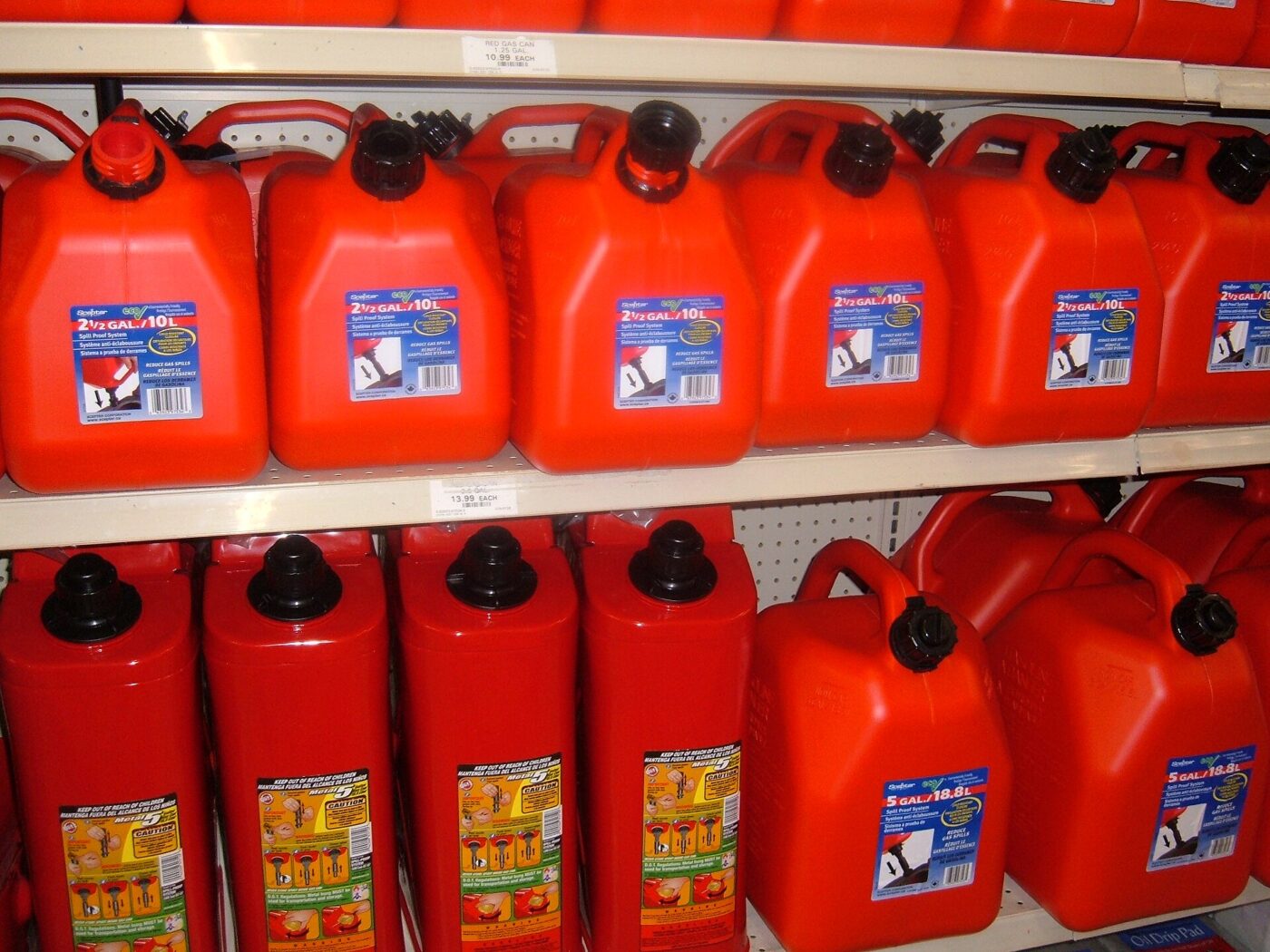
Anyone who has filled a mower in the past decade has met the modern gas can: a spout that has to be pushed, twisted or squeezed before fuel moves, a cap that seals hard, and a screen across the opening that slows the pour to a trickle. None of that is a design fashion. It is the visible result of two separate federal rulebooks, written by two different agencies, for two different reasons.
One is an air quality rule from the Environmental Protection Agency that limits how much gasoline vapor a container may release. The other is a safety rule from the Consumer Product Safety Commission that requires a device to stop a flame from traveling back into the can. They arrived 16 years apart, and as of September 2026 both are in force while a repeal bill sits in a House committee.
Trend Signal
42/100 Steady momentum
- Emerging
- Rising
- Mainstream
- Peaking
- Cooling
Two federal rulebooks, one spout, and a repeal bill in committee
The CPSC flame mitigation requirement has been a consumer product safety rule since July 12, 2023, and the agency’s enforcement discretion for certain pre-filled containers ran out on January 12, 2026.
Our editorial reading of the cited data, not a forecast. How it is scored
By the numbers
- 5 gallonsMaximum capacity for a container to count as a portable fuel container under the PFCSAeCFR
- 8.45 galMaximum capacity of gasoline containers covered by the child-resistant closure ruleCPSC
- 0.3 g/galEPA daily hydrocarbon emissions limit per gallon for a portable fuel containereCFR
- Jan 12, 2026Date CPSC enforcement discretion for certain pre-filled fuel containers endedCPSC
Two rulebooks, not one
The older rule is EPA’s, at 40 CFR part 59, subpart F, first published on February 26, 2007. It sets one headline number: hydrocarbon emissions from a portable fuel container may not exceed 0.3 grams per gallon per day, measured over both daily venting and permeation through the container walls. The rule states that a portable fuel container includes spouts, caps, gaskets and other supplied parts, which is why the spout changed when the plastic did.
Two further clauses explain most of the pouring complaints. Containers must be free of leaks when upright, partially inverted or completely inverted, and any vent an operator can open to bypass the emission controls has to close automatically, without operator involvement. EPA also assigns a useful life of five years from the date of sale and requires the month and year of manufacture to be indelibly marked on each container.
The newer rule is CPSC’s. The Children’s Gasoline Burn Prevention Act of 2008, as amended by the Portable Fuel Container Safety Act of 2020, requires containers of gasoline, kerosene or diesel with a maximum capacity of 8.45 gallons to meet the child-resistant closure requirements of ASTM F2517, at 16 CFR part 1460. The 2020 act also directed the agency to require a flame mitigation device that impedes the propagation of flame into the container.
The sealed cap and self-closing vent come from EPA. The screen in the opening comes from CPSC.
What the flame mitigation rule actually requires

CPSC put the requirement into 16 CFR part 1461, and the rule works by pointing at existing voluntary standards rather than writing test methods from scratch. Containers sold empty, which covers the familiar red, blue and yellow plastic cans, must meet ASTM F3326-21. Containers sold pre-filled, such as charcoal lighter fluid, pourable fireplace fuel and pre-mixed engine fuel, must meet ASTM F3429/F3429M-24. Empty containers that qualify as safety cans may meet section 18 of ANSI/CAN/UL/ULC 30:2022 instead of ASTM F3326-21.
The definition is broader than most buyers assume. Under the statute a portable fuel container is any container intended for a flammable liquid fuel with a flash point below 140 degrees Fahrenheit, that is a consumer product with a capacity of five gallons or less, and that the manufacturer knows or reasonably should know is used by consumers for transporting, storing and dispensing fuel. The regulation spells out that this reaches any spout, cap or closure component, and specifically any retrofit or aftermarket spout intended for use with such a container. A replacement spout is inside the rule, not a way around it.
Propane and similar substances are excluded, because they are only liquid at high pressure, so a grill cylinder is a different product under different rules.
- Sold empty: ASTM F3326-21, or section 18 of UL 30:2022 for safety cans
- Sold pre-filled: ASTM F3429/F3429M-24
- Child-resistant closure up to 8.45 gallons: ASTM F2517 under 16 CFR part 1460
The dates that moved the shelf
CPSC made its determinations on the three voluntary standards in a notice published on January 13, 2023, and under the statute they took effect by operation of law as consumer product safety rules on July 12, 2023.
Empty gas cans were the straightforward part. Pre-filled containers were not, and the CPSC compliance office issued a run of enforcement discretion letters, beginning on May 19, 2023, to prevent a shortage of fuels used in emergencies. Further letters followed on July 3, 2024, February 13, 2025 and July 11, 2025, each naming specific product categories rather than pre-filled containers as a whole. The last covered pre-filled 2.5-gallon and 5-gallon metal pails that use plastic pull-out spouts, plus pre-filled containers holding fuel additives, and it ran until January 12, 2026. That category is where pre-mixed two-stroke fuel for trimmers and chainsaws, charcoal lighter fluid and pourable fireplace fuel live.
| What changed | Date |
|---|---|
| CPSC determinations published | January 13, 2023 |
| Flame mitigation requirement took effect | July 12, 2023 |
| 16 CFR part 1461 published | October 31, 2023 |
| Part 1461 amended | April 30, 2024 |
| Enforcement discretion for certain pre-filled containers ended | January 12, 2026 |
What this means when you buy or replace one
Start with the marking. EPA requires the month and year of manufacture to be indelibly marked on every container at the time of manufacture, and requires the emission control label to sit on a part that can be easily viewed when the can is in use rather than on the bottom. That date separates a current can from old stock. The five-year useful life EPA assigns runs from the date of sale to the buyer, not from the molded date.
Then check what the listing claims. A can built to the current requirements will name a flame mitigation device, a flame arrestor or the ASTM standard; a listing that says nothing about either is worth a second look, particularly from unfamiliar marketplace sellers. Safety cans are a separate path: the metal, self-closing type built to UL 30 may meet that standard instead.
Replacement spouts are where people most often go wrong. Because the regulation folds aftermarket spouts into the definition of the container, a bare tube with no flame mitigation is not a compliant part, and thread sizes are not interchangeable across brands.
Check the molded date, check for a named flame mitigation device, and match the spout thread to the can.
What could change this again
The requirements have not settled. CPSC has already updated which edition it points to once, moving pre-filled containers from ASTM F3429/F3429M-20 to the 2024 revision, and the same mechanism applies as ASTM and UL revise their documents.
The other direction is legislative. A bill introduced in the House on February 13, 2025, titled the Gas Can Freedom Act of 2025, would repeal both the Portable Fuel Container Safety Act of 2020 and the Children’s Gasoline Burn Prevention Act, strip force and effect from the regulations written under them, and bar CPSC from requiring either a flame mitigation device or a child-resistant gasoline container in future. It was referred to the House Committee on Energy and Commerce, and the CPSC business guidance page still lists all three standards as mandatory.
For a buyer, the practical read is that nothing on the shelf is about to get easier to pour. A repeal would not pull existing cans back, and the EPA emissions rule behind the sealed cap and the self-closing vent is a separate law the bill does not touch.
What to watch next
- Whether CPSC publishes another notice of availability pointing at a revised ASTM or UL edition, which is how the required standard changes
- Whether a further enforcement discretion letter appears on the CPSC portable fuel container guidance page
- Whether the House Committee on Energy and Commerce acts on the 2025 repeal bill
Where to start
Paid links: we earn a commission if you buy through the buttons below, at no extra cost to you. As an Amazon Associate I earn from qualifying purchases.
Gas can types compared on what actually differs
| Product type | Good fit for | Where to look |
|---|---|---|
| Five-gallon gas can with flame mitigation | Fits routine mower and trimmer refills | See listings on AmazonOpens Amazon search results, not one listing: check the model on the product page. |
| Replacement gas can spout kit | Fits a can you already own | See listings on AmazonOpens Amazon search results, not one listing: check the model on the product page. |
| Metal safety can with self-closing lid | Fits longer-term fuel storage | See listings on AmazonOpens Amazon search results, not one listing: check the model on the product page. |
Product types that fit the trend described above, not tested models. Check the exact listing before you buy. How we pick them.
Five-gallon gas can with flame mitigation
Where to look: Amazon
The standard plastic can sold empty. It has to meet ASTM F3326-21, and the flame mitigation screen is part of why it pours slowly.
- Cheapest current-spec option
- Sizes from 1 to 5 gallons
- Slow pour by design
- Spouts vary by brand
Metal safety can with self-closing lid
Where to look: Amazon
A safety can built to section 18 of UL 30:2022 may meet that standard instead. It is the type used where fuel sits for months.
- Spring lid relieves pressure
- Rugged steel body
- Heavier and costlier
- Needs a funnel for small tanks
More: Garden and Backyard trends and how the Trend Signal is scored.
Sources
- Portable fuel container business guidance — U.S. Consumer Product Safety Commission
- CPSC requires flame mitigation devices on gas cans and other portable fuel containers — U.S. Consumer Product Safety Commission
- Portable fuel container frequently asked questions — U.S. Consumer Product Safety Commission
- 16 CFR part 1461, Portable Fuel Container Safety Act Regulation — eCFR
- 40 CFR part 59 subpart F, control of evaporative emissions from portable fuel containers — eCFR
- Determinations regarding portable fuel container voluntary standards — Federal Register via GovInfo
- H.R. 1345, Gas Can Freedom Act of 2025, as introduced — GovInfo
Questions readers ask
Do these rules apply to a gas can I already own?
No. 16 CFR part 1461 applies to portable fuel containers manufactured for sale in the United States, so it governs what may be sold, not what is in your garage. The definition does reach aftermarket spouts intended for use with such containers.
Why does a new can need me to press or twist something before it pours?
That comes from EPA, not CPSC. Under 40 CFR part 59 subpart F, containers must be free of leaks upright or inverted, and any vent an operator can open to bypass the emission controls must close automatically.
Is a propane cylinder covered?
No. CPSC states that products storing substances such as propane are outside the definition, because those substances are only liquid at high pressure.
Do metal safety cans meet the same standard as plastic cans?
Not the same one. Empty containers classified as safety cans that meet section 18 of ANSI/CAN/UL/ULC 30:2022 are not required to comply with ASTM F3326-21.