Checked bags got more expensive in a hurry in 2026. Between late March and mid-April, JetBlue, United, American, Alaska and Hawaiian all published higher bag fees, and Aerospace Global News reported that Delta and Southwest had raised theirs as well. By April 10, the trade publication put the going rate for a first checked bag on many domestic flights at about $45 to $50 across the major US carriers.
The timing tracks jet fuel, which jumped after the conflict in the Middle East disrupted oil shipments. The fee data also show a shift that predates the fuel spike: Southwest’s end of free bags in 2025 turned it into a major bag-fee collector almost overnight. Here is the price trail, and what it means for how you pack.
Trend Signal
80/100 Strong momentum
- Emerging
- Rising
- Mainstream
- Peaking
- Cooling
Fee increases across the major US carriers, driven by jet fuel
United, American, Alaska, JetBlue, Delta and Southwest raised checked-bag fees in spring 2026, and BTS data show US airlines collected $1.9 billion in bag fees in the first quarter of 2026, up from $1.65 billion a year earlier.
Our editorial reading of the cited data, not a forecast. How it is scored
By the numbers
- $7.44BBaggage fees collected by US airlines in 2025, up from $7.27B in 2024BTS
- $1.9BUS airline baggage fee revenue in Q1 2026, 3.0% of operating revenueBTS
- $50American Airlines first checked bag paid at the airport, tickets booked from April 9, 2026Aerospace Global News
- $3.72Gulf Coast jet fuel spot price per gallon, August 2026 average ($2.02 in August 2025)EIA
What a checked bag costs after the spring 2026 increases
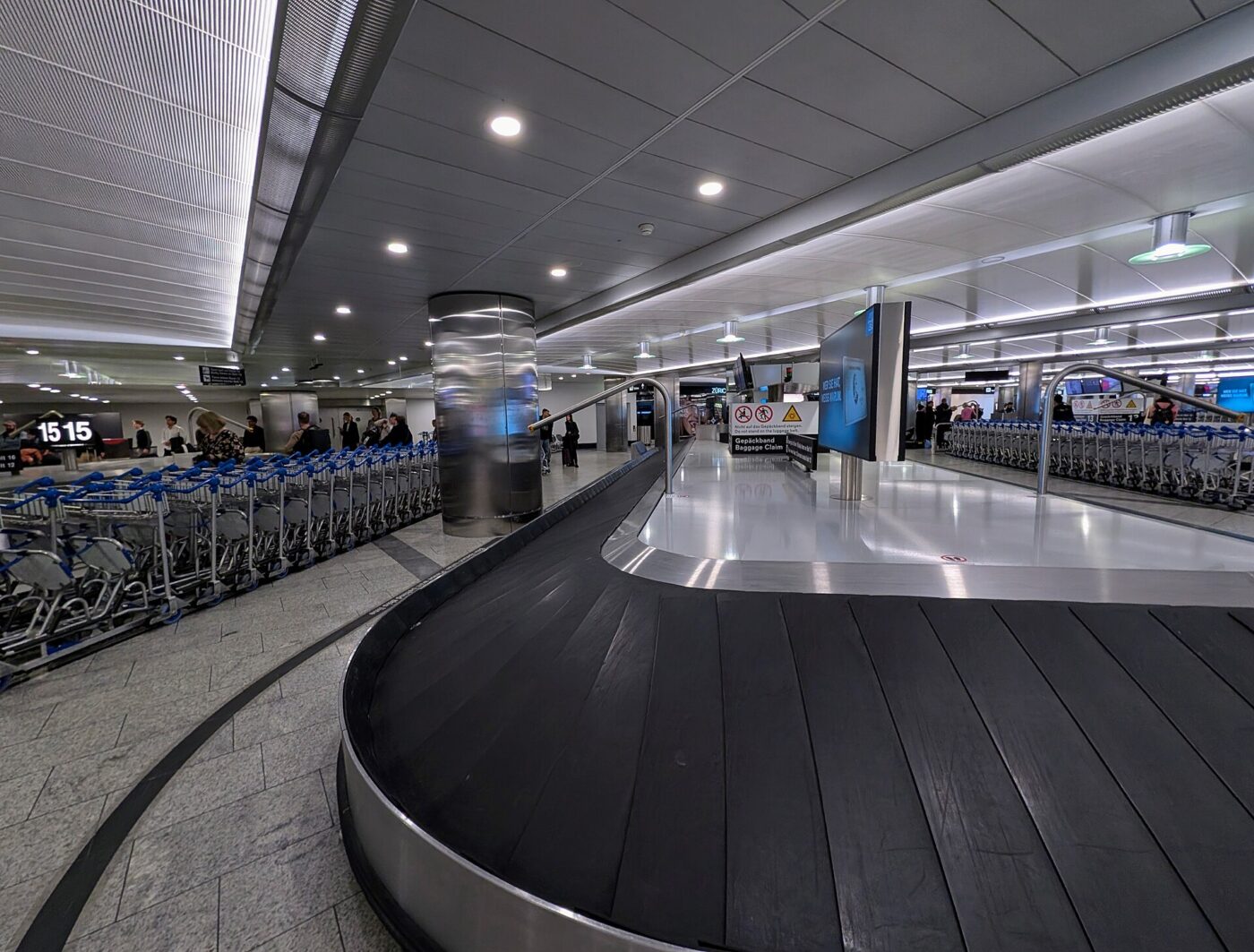
United raised checked-bag fees by $10 on tickets bought from early April 2026, its first increase in roughly two years, according to Aerospace Global News. A first bag now costs $45 prepaid or $50 if paid within 24 hours of departure, and a second bag $55 prepaid or $60. JetBlue had already lifted its first-bag fee on peak days to $49, from $40, at the end of March.
American followed on April 9, 2026: most domestic and short-haul international travelers pay $50 for a first bag and $60 for a second at the airport, with a $5 discount for prepaying online. Alaska raised its fees on April 10 by $5 for a first bag and $10 for a second on North American flights, and Hawaiian Airlines adopted the same increases. Elite members, premium-cabin passengers and eligible cardholders keep their free-bag benefits at United and American, the same reports noted.
| Airline | Change | Applies to | First bag now |
|---|---|---|---|
| United | +$10 per bag | Tickets bought from early April 2026 | $45 prepaid, $50 within 24 hours |
| JetBlue | Up from $40 on peak days | From the end of March 2026 | $49 on peak days |
| American | New first and second bag prices | Tickets booked from April 9, 2026 | $50 at the airport, $45 prepaid |
| Alaska and Hawaiian | +$5 first bag, +$10 second | Tickets booked from April 10, 2026 | Varies by route |
Jet fuel set the timing
EIA’s monthly average spot price for kerosene-type jet fuel on the US Gulf Coast was $2.03 a gallon in January 2026 and $2.26 in February. It jumped to $3.70 in March, peaked at $3.94 in May, eased to $3.04 in June and climbed back to $3.72 in August, compared with $2.02 in August 2025.
Airlines said as much. United CEO Scott Kirby told Bloomberg that if oil prices stayed where they were, fuel would add $11 billion of expense and require fares about 20% higher to break even, Aerospace Global News reported, and the publication described bag fees as one of the fastest ways to pass on fuel costs without raising fares right away. IATA put jet fuel at $209 a barrel in early April, compared with $85 to $90 before the conflict began, the same outlet reported.
| Month | Gulf Coast jet fuel, dollars per gallon |
|---|---|
| August 2025 | $2.02 |
| January 2026 | $2.03 |
| March 2026 | $3.70 |
| May 2026 | $3.94 |
| June 2026 | $3.04 |
| August 2026 | $3.72 |
Fares take time to reprice; bag fees can change overnight, which is why they moved first.
What the government fee data shows
The Bureau of Transportation Statistics, which collects airline financial reports, counted $7.44 billion in baggage fees in 2025, up from $7.27 billion in 2024 and equal to 2.9% of operating revenue in both years. In the first quarter of 2026, before most of the spring increases, bag fees brought in $1.9 billion, or 3.0% of revenue, compared with $1.65 billion a year earlier.
The airline mix shifted. American collected $1.47 billion in 2025, United $1.35 billion and Delta $1.09 billion, all close to their 2024 totals. Southwest jumped from $83 million to $582 million, while Spirit fell from $775 million to $545 million and Frontier from $862 million to $746 million.
| Airline | 2024 bag fees | 2025 bag fees |
|---|---|---|
| American | $1.50B | $1.47B |
| United | $1.34B | $1.35B |
| Delta | $1.06B | $1.09B |
| Frontier | $862M | $746M |
| Southwest | $83M | $582M |
| JetBlue | $622M | $556M |
| Spirit | $775M | $545M |
| All reporting carriers | $7.27B | $7.44B |
Southwest shows how travelers respond to a new fee
Southwest ended free checked bags for most passengers on May 28, 2025. Rapid Rewards A-List members kept one free bag, and A-List Preferred members and business-class customers kept two, Aerospace Global News reported when the change was announced in March 2025.
Travelers adjusted fast. On its second-quarter 2025 earnings call, Southwest said a third fewer bags were being checked at the counter while gate-checked bags increased, and it estimated bag fees would add more than $350 million of EBIT, or operating profit, in 2025, with a run rate near $1 billion a year. The BTS data bear out the revenue: Southwest’s quarterly bag-fee take rose from $21 million in the first quarter of 2025 to $279 million in the fourth.
Across the industry, the IdeaWorksCompany yearbook found ancillary revenue rose 13.4% in 2025 among 58 airlines with comparable data, against 7.2% growth in their total revenue, and put Southwest’s ancillary revenue per passenger up nearly 20% to $58.25, Aerospace Global News reported.
How to keep the bag bill down
Price the bag with the fare. A basic fare plus a $50 bag can cost more than a standard fare on a carrier where your status or card already covers a bag, and United and American both keep free-bag benefits for elites, premium cabins and eligible cardholders.
Pay early. United’s first bag is $5 cheaper prepaid than within 24 hours of departure, and American takes $5 off for prepaying online.
Pack to the size you pay for. Southwest’s jump in gate checks shows how quickly overhead space fills when checked bags cost money, so a bag that fits under the seat is the only carry-on you can count on keeping with you. A digital luggage scale at home catches an overweight bag before the counter does.
What to watch next
- EIA’s monthly jet fuel series: the June 2026 dip showed prices can fall, and a sustained drop would test whether airlines trim bag fees
- The BTS second-quarter 2026 airline financial release, the first quarter to include most of the spring fee increases
- Whether any major carrier announces another round of bag-fee increases before the holiday travel season
Where to start
Paid links: we earn a commission if you buy through the buttons below, at no extra cost to you. As an Amazon Associate I earn from qualifying purchases.
Gear that lowers the bag bill, compared by trip type
| Product type | Good fit for | Where to look |
|---|---|---|
| Under-seat personal item bag | Fits basic economy fares | See listings on AmazonOpens Amazon search results, not one listing: check the model on the product page. |
| Digital luggage scale | Fits checked-bag travelers | See listings on AmazonOpens Amazon search results, not one listing: check the model on the product page. |
| Carry-on spinner suitcase | Fits carry-on-only trips | See listings on AmazonOpens Amazon search results, not one listing: check the model on the product page. |
Product types that fit the trend described above, not tested models. Check the exact listing before you buy. How we pick them.
Under-seat personal item bag
Where to look: Amazon
The bag to build a short trip around when a fare includes only a personal item. Measure it fully packed, since that is how gate staff see it.
- Stays with you at your seat
- Avoids overhead-bin and gate-check fights
- Holds a few days of clothes at most
- Sizes differ by airline
Digital luggage scale
Where to look: Amazon
Useful for anyone who still checks a bag, especially on the way home when souvenirs add weight. Check that it reads in pounds and has a hold function.
- Catches overweight bags at home
- Small enough to pack for the return
- Handheld readings can wobble
- Needs a battery
Carry-on spinner suitcase
Where to look: Amazon
For travelers on standard fares who want to avoid a $45 to $50 checked bag. Confirm your fare includes an overhead bag before you rely on it.
- Skips the checked-bag fee entirely
- Rolls through long terminals
- Can be gate-checked when bins fill
- Heavier than an under-seat bag
More: Travel and Adventure trends and how the Trend Signal is scored.
Sources
- Baggage Fees by Airline 2025 — Bureau of Transportation Statistics
- U.S. Airlines Lose $1.0 Billion in First Quarter 2026 — Bureau of Transportation Statistics
- US Airlines profited $6.0 billion in 2025 — Bureau of Transportation Statistics
- United Airlines raises bag fees by $10 as jet fuel costs spike — Aerospace Global News
- Airline bag fees climb as American, Alaska raise prices — Aerospace Global News
- Southwest U-turns on Bags Fly Free scheme — Aerospace Global News
- Southwest Airlines will make $1 billion from checked bag fees — Aerospace Global News
- Airline extras boom as ancillary revenue grows 13.4% — Aerospace Global News
- US Gulf Coast Kerosene-Type Jet Fuel Spot Price FOB, monthly — U.S. Energy Information Administration
Questions readers ask
How much is a checked bag in 2026?
After the spring 2026 increases, most major US carriers charge about $45 to $50 for a first checked bag on many domestic flights. United charges $45 prepaid or $50 within 24 hours of departure, and American charges $50 at the airport or $45 prepaid online.
Why did airlines raise bag fees in 2026?
Jet fuel. EIA data show the Gulf Coast jet fuel price rose from $2.03 a gallon in January 2026 to $3.94 in May, and airlines used bag fees to pass on costs faster than they could reprice fares, Aerospace Global News reported.
Does Southwest still have free checked bags?
Not for most passengers. Since May 28, 2025, Southwest charges for first and second checked bags, while Rapid Rewards A-List members keep one free bag and A-List Preferred members and business-class customers keep two.
How much do US airlines make from bag fees?
The Bureau of Transportation Statistics counted $7.44 billion in baggage fees in 2025 and $1.9 billion in the first quarter of 2026, about 3% of airline operating revenue.