Parents who lived through the 2022 infant formula shortage remember empty shelves and fast-rising prices. Four years on, the federal price data tell a calmer story. The Bureau of Labor Statistics’ consumer price index for baby food and formula rose 1.3% from August 2025 to August 2026, while the all-items index rose 3.4%. From July to August 2026 alone, the baby food and formula index fell 1.4%.
That does not make formula cheap. The index is far above where it stood before the shortage, and it bundles formula with jarred and pouched baby foods. But the direction has changed, and the reasons show up in manufacturer results and federal regulatory records. Here is the trail and what it means for your next purchase.
Trend Signal
28/100 Weak momentum
- Emerging
- Rising
- Mainstream
- Peaking
- Cooling
Formula price growth is running well below overall inflation
BLS data show the CPI for baby food and formula rose 1.3% from August 2025 to August 2026, against 3.4% for all items, after a 22% jump between August 2021 and August 2023.
Our editorial reading of the cited data, not a forecast. How it is scored
By the numbers
- 1.3%Change in the CPI for baby food and formula, Aug. 2025 to Aug. 2026Bureau of Labor Statistics
- 3.4%Change in the all-items CPI over the same 12 months to August 2026Bureau of Labor Statistics
- 22%Rise in the baby food and formula CPI, Aug. 2021 to Aug. 2023Bureau of Labor Statistics
- 10.7%Abbott U.S. pediatric nutrition sales, Q2 2026 versus Q2 2025Abbott
The price trail since the 2022 shortage
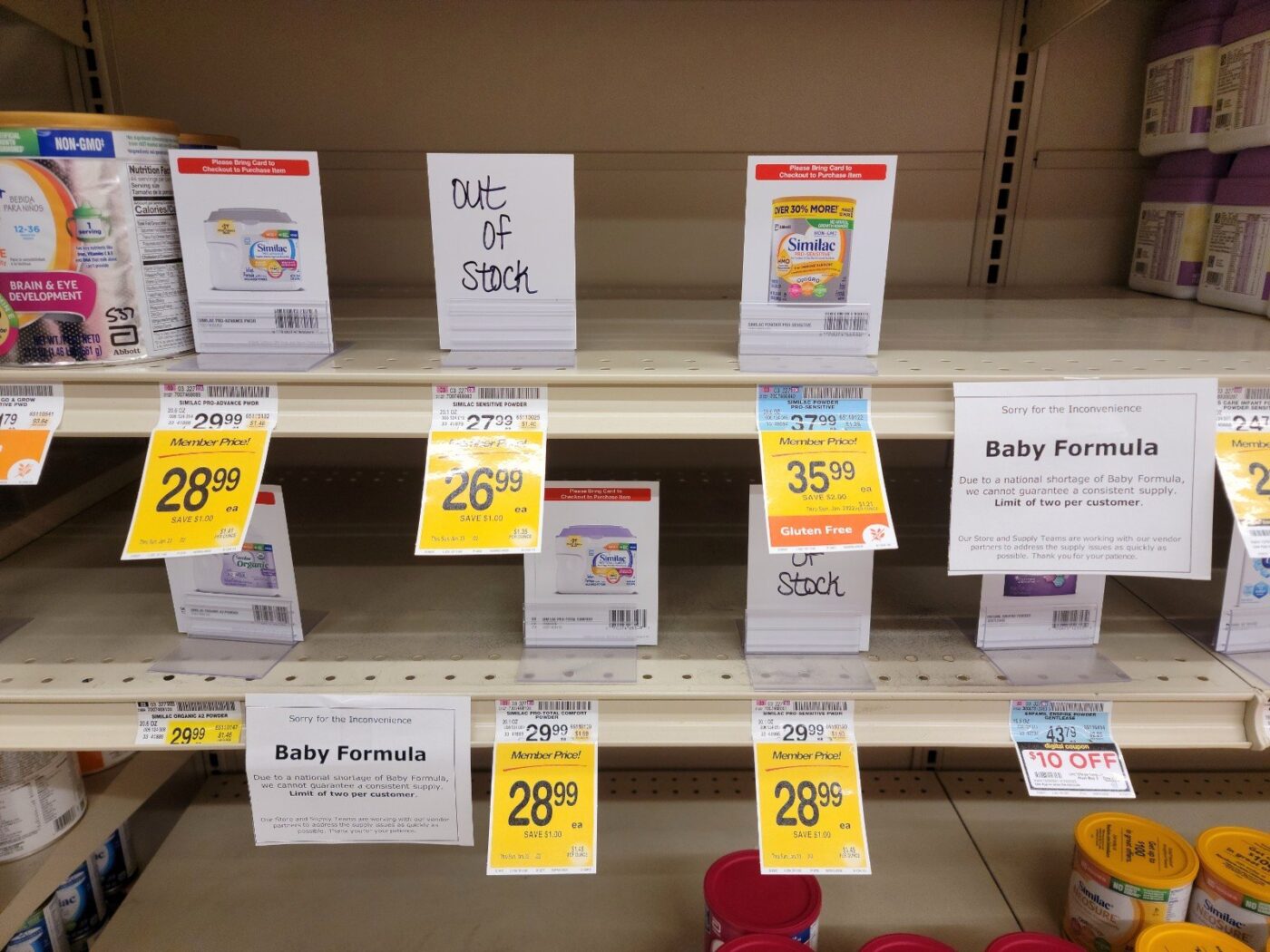
BLS does not publish a formula-only index. Its baby food and formula category covers formula in powder, liquid concentrate and ready-to-drink forms, along with juice, fruit, vegetable, cereal, meat and snack products made for newborns, infants and toddlers. A 2023 BLS analysis found the category rose at a 2.1% annualized rate from March 2010 to March 2020, then at 6.7% from March 2020 to December 2022, with year-over-year increases peaking at 15.0% in the summer of 2022.
Our calculation from BLS index levels shows how the curve bent. From August 2021 to August 2023 the index climbed 22.0%, close to twice the 12.2% rise in overall prices. From August 2023 to August 2026 it rose only 5.6%, while overall prices rose 9.1%.
One caveat on the data: BLS has no October 2025 reading for the series because of the 2025 lapse in federal appropriations, so month-to-month comparisons around that point have a gap.
| Period | Baby food and formula CPI | All-items CPI |
|---|---|---|
| Aug. 2021 to Aug. 2023 | +22.0% | +12.2% |
| Aug. 2023 to Aug. 2026 | +5.6% | +9.1% |
| Aug. 2025 to Aug. 2026 | +1.3% | +3.4% |
Formula-related prices rose faster than inflation through 2023 and slower than inflation since.
What the biggest maker is reporting
Abbott, which makes Similac, gives the clearest company-level view. In second-quarter 2026 results released July 16, 2026, its U.S. pediatric nutrition sales were $525 million, down 10.7% from a year earlier, and worldwide pediatric nutrition sales fell 2.7%. Abbott said the quarter reflected lower sales volumes than the prior year and the effect of strategic pricing actions it put in place in the fourth quarter of 2025, and that those actions, together with new products, are contributing to improving performance.
Abbott did not spell out the direction of those pricing actions, so we do not read them as a price cut. What the numbers do show is a leading brand selling less in the U.S. while the federal index barely moves, a setting that makes large price increases harder to push through.
The recall that set off the 2022 shortage is also being closed out. On September 14, 2026, Abbott said it will pay $385 million to resolve the Justice Department investigation and lawsuit, and related suits by several state attorneys general, over the manufacturing and 2022 recall of powdered formula at its plant in Sturgis, Michigan. Abbott said the settlement does not represent any finding of fault or liability and that the government has closed its criminal investigation.
Weaker U.S. volumes at a leading brand line up with a flat price index.
Safety headlines and the shelf

Regulation is the other storyline. HHS and the FDA launched Operation Stork Speed on March 18, 2025, and in May 2025 the FDA opened the first comprehensive review of infant formula nutrient requirements since 1998. On April 29, 2026 the agency published results from testing 312 formula samples across 16 brands for heavy metals, PFAS, pesticides and plasticizers, and said the majority had undetectable or very low levels of contaminants. The nutrient review is still under way.
Two small brands left shelves. The FDA says all ByHeart Whole Nutrition formula products were recalled in November 2025 during an outbreak investigation; ByHeart made up about 1% of U.S. infant formula sales, and the outbreak was declared over on February 26, 2026. On June 13, 2026, Nara Organics agreed to recall all of its whole milk organic powdered formula, which the FDA lists as under recall with an ongoing outbreak investigation.
At roughly 1% of sales, ByHeart was too small to move national prices on its own. The practical effect fell on families who used those brands and had to switch, which is a reason to know the FDA’s recall notes before stocking up on any small label.
New formats and what they cost
Whole milk formulas are the product trend to watch. On August 31, 2026, Abbott launched Similac 360 Total Care Made With Whole Milk, which it calls the first and only ready-to-feed liquid infant formula made with whole milk in the U.S., saying parents have been asking for more whole milk options. It launched at Target and Amazon, with Walmart and other chains to follow in the following weeks, in 8 and 32 fluid ounce sizes.
Pricing is the notable part: Abbott says launch pricing is similar to the per-feeding cost of its Similac 360 Total Care powders. That is a claim you can check at the shelf by dividing the price by the number of feedings, not by the size of the container.
Store brands are the other lever. The FDA’s list of infant formulas marketed in the U.S., last updated September 1, 2026, includes retailer brands alongside national ones, and the agency states that all infant formula sold in the U.S., whether produced domestically or internationally, must meet all U.S. requirements, including those for safety and nutritional adequacy.
Compare formula by cost per feeding, and treat store brands as a legitimate way to pay less.
How to pay less without guessing
With the index flat, savings come from what you choose rather than from waiting for a sale season or a price drop that the data do not show coming.
Waiting only makes sense for new formats. If you are curious about whole milk formulas, per-feeding prices and availability will be clearer once the Walmart and club-store rollout Abbott announced for the weeks after its August 31 launch is complete.
- Compare cost per feeding or per prepared ounce, not the can price.
- Consider a store-brand version of the same formula type; the FDA says all formula sold in the U.S. must meet the same federal requirements.
- Check with your child’s doctor before switching formula types.
- Check the FDA’s list of formulas marketed in the U.S., which flags products under recall.
- Buy sizes you will finish before the use-by date instead of stockpiling.
What to watch next
- The BLS CPI release for September 2026, and whether baby food and formula keeps running below overall inflation
- Findings from the FDA’s Operation Stork Speed nutrient review
- Abbott’s third-quarter 2026 results, and whether U.S. pediatric nutrition volumes recover
Where to start
Paid links: we earn a commission if you buy through the buttons below, at no extra cost to you. As an Amazon Associate I earn from qualifying purchases.
Formula-feeding basics that affect cost
| Product type | Good fit for | Where to look |
|---|---|---|
| Store-brand infant formula powder | Fits families comparing cost per feeding | See listings on AmazonOpens Amazon search results, not one listing: check the model on the product page. |
| Formula mixing pitcher | Fits batch prep for night feeds and daycare | See listings on AmazonOpens Amazon search results, not one listing: check the model on the product page. |
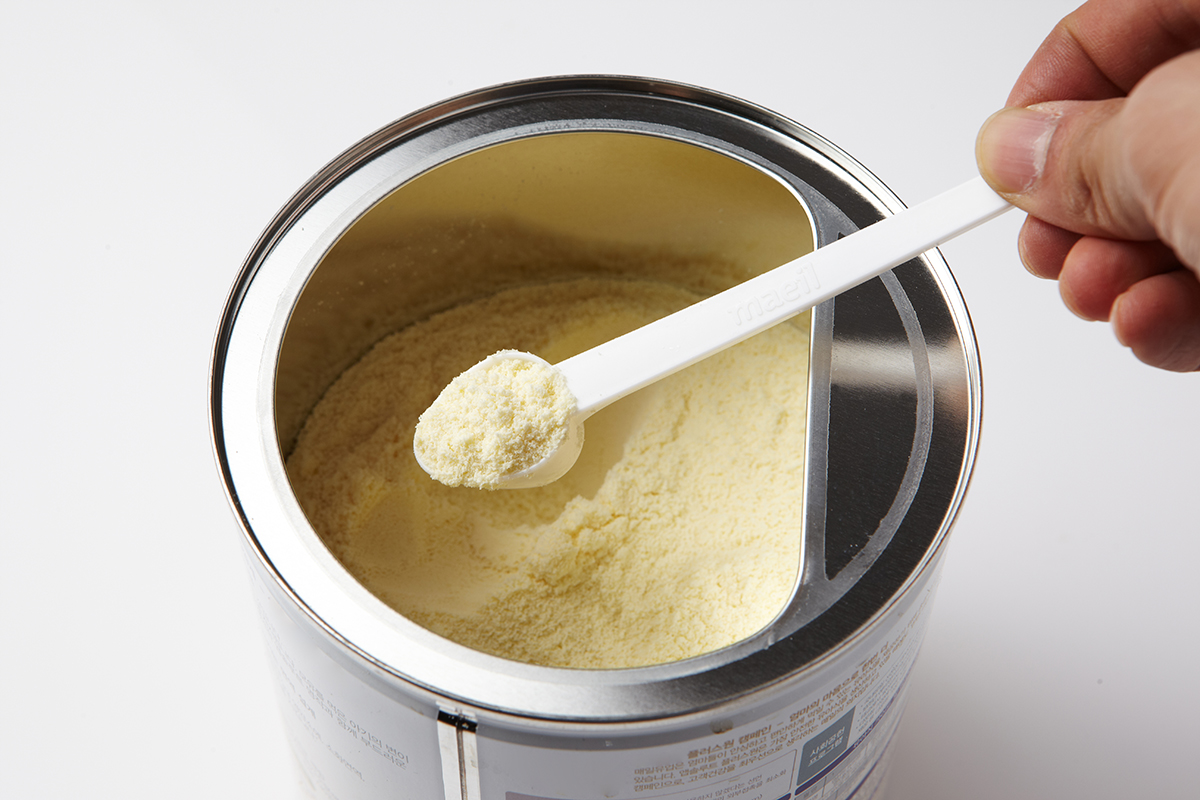
| Portable formula powder dispenser | Fits outings and travel | See listings on AmazonOpens Amazon search results, not one listing: check the model on the product page. |
Product types that fit the trend described above, not tested models. Check the exact listing before you buy. How we pick them.
Store-brand infant formula powder
Where to look: Amazon
For families who want to pay less for the same formula type. Compare the per-feeding price with your current brand.
- Same U.S. requirements as all formula
- Sold by major retailers
- Switching types needs a doctor check
- Stock varies by store
Formula mixing pitcher
Where to look: Amazon
For households preparing bottles ahead for nights or daycare. Follow the formula label on storage times.
- Mix several bottles at once
- Easy to pour
- Needs fridge space
- More parts to wash
Portable formula powder dispenser
Where to look: Amazon
For outings where measuring powder is awkward. Check each compartment holds the amount your bottle needs.
- Pre-measured powder portions
- No scooping on the go
- Holds only a few feeds
- Must be kept dry
More: Baby and Parenting trends and how the Trend Signal is scored.
Sources
- Consumer Price Index, detailed expenditure categories, August 2026 — Bureau of Labor Statistics
- CPI-U series CUUR0000SEFT05, baby food and formula — Bureau of Labor Statistics
- CPI-U series CUUR0000SA0, all items — Bureau of Labor Statistics
- Looking at recent price increases for baby food — Bureau of Labor Statistics
- Abbott Reports Second-Quarter 2026 Results — Abbott
- Abbott launches ready-to-feed liquid infant formula made with whole milk — Abbott
- Abbott reaches agreement with Department of Justice relating to 2022 infant formula recall — Abbott
- Operation Stork Speed — U.S. Food and Drug Administration
- HHS, FDA initiate comprehensive review of nutrients in infant formula — U.S. Food and Drug Administration
- FDA’s Infant Formula Product Testing Results — U.S. Food and Drug Administration
- Outbreak investigation of infant botulism and ByHeart infant formula, November 2025 — U.S. Food and Drug Administration
- Infant Formulas Marketed in the U.S. — U.S. Food and Drug Administration
Questions readers ask
Are baby formula prices going down in 2026?
Not on an annual basis, but they are rising slowly: the BLS index for baby food and formula rose 1.3% from August 2025 to August 2026, and fell 1.4% from July to August 2026.
How much did formula prices rise after the 2022 shortage?
The baby food and formula CPI rose 22.0% from August 2021 to August 2023, versus 12.2% for all items, based on BLS index levels.
Are store-brand formulas held to the same standards?
The FDA states that all infant formula sold in the U.S., whether produced domestically or internationally, must meet all U.S. requirements, including those for safety and nutritional adequacy.
What is Operation Stork Speed?
An HHS and FDA initiative launched March 18, 2025 that includes the first comprehensive review of formula nutrient requirements since 1998 and expanded contaminant testing, with results on 312 samples published April 29, 2026.