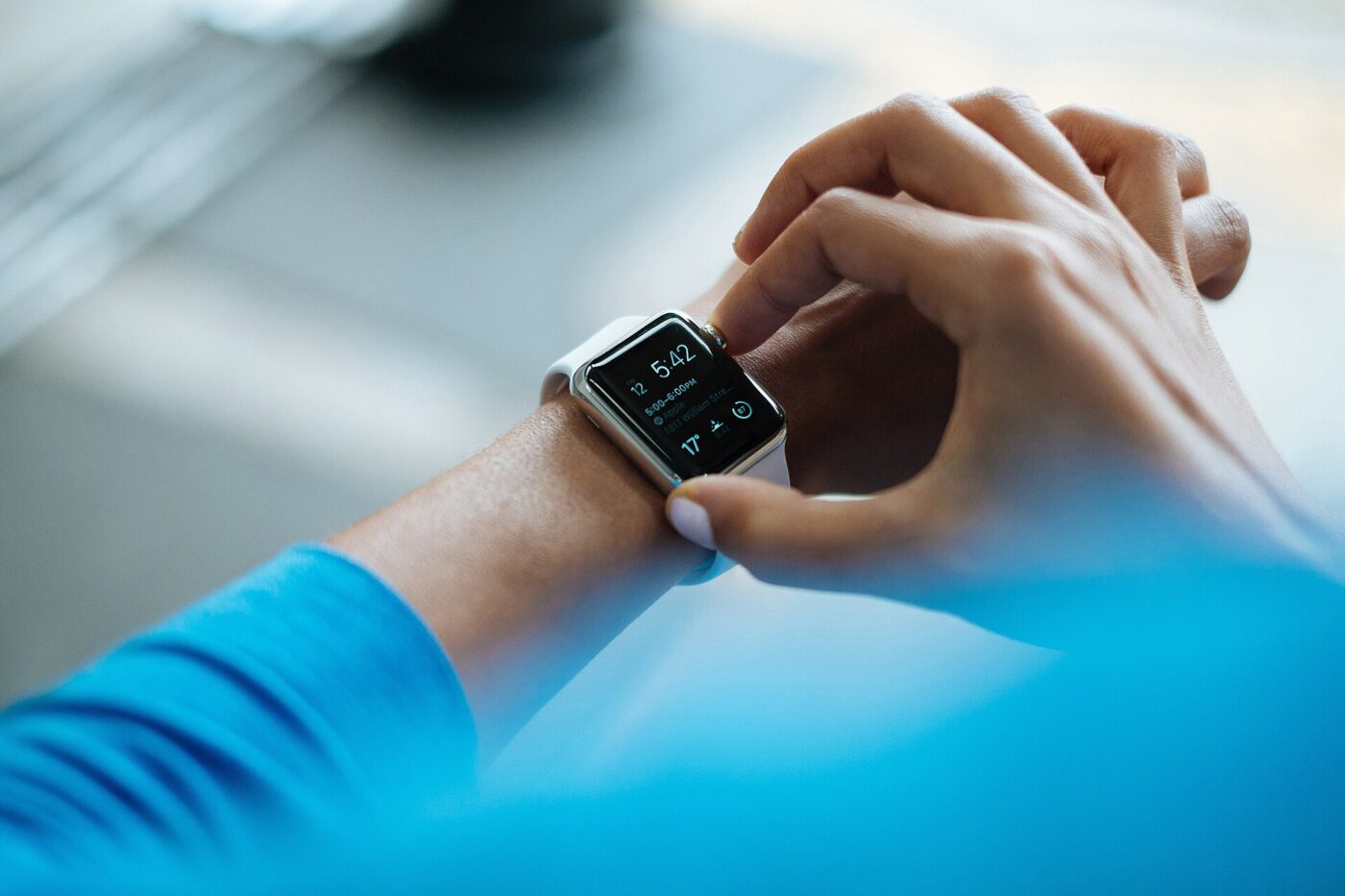
The first phone has long been a milestone parents negotiate around age 11 or 12. Some families add a step before it: a cellular smartwatch that can call and message a short list of approved contacts and share location with a parent. The idea is not new; what changed in September 2025 is that Apple and Garmin pitched new watches squarely at it.
Two things changed. Survey data from Pew Research Center put numbers on how many parents want to delay the smartphone, and two major wearable brands built products aimed squarely at those parents. Here is what the evidence shows, what the watches cost, and where the category still falls short.
Trend Signal
62/100 Steady momentum
- Emerging
- Rising
- Mainstream
- Peaking
- Cooling
Big wearable brands are entering a niche parents already use
Pew found 11% of parents of kids 12 and under said their child uses a smartwatch in May 2025, and in September 2025 Garmin launched its Bounce 2 kids’ watch while Apple pitched its new SE 3 at its kids’ setup.
Our editorial reading of the cited data, not a forecast. How it is scored
By the numbers
- 11%Parents of kids 12 and under who say their child uses a smartwatch, May 2025Pew Research Center
- 23%Parents of kids 12 and under who say their child has their own smartphone, 2025Pew Research Center topline
- 38 + D.C.States requiring districts to ban or restrict student phones, July 2026 tallyPatch, citing Education Week
- $9.99/moLTE plan for Garmin’s $299.99 Bounce 2 kids’ smartwatch, Sept. 2025Garmin
The gap between wanting to wait and actually waiting
Pew surveyed 3,054 parents of children 12 and under from May 13 to 26, 2025. Most, 68%, said children should be at least 12 before having a smartphone of their own: 41% picked 12 to 14 and 27% picked 15 to 17. Nearly half said smartphones are more harmful than beneficial for children.
Behavior runs ahead of those preferences. About a quarter of parents (23%) said their child 12 or younger already has their own smartphone, up from 17% in Pew’s 2020 survey, which asked parents of children 11 and under. Pew reported that about six in ten parents of 11- and 12-year-olds say their child has their own phone. Smartwatches are a smaller slice: 11% of parents said their child uses one.
Another pair of figures shows the pressure. Pew found 61% of parents say their child uses or interacts with a smartphone, but only 23% say the child has one of their own, which suggests many kids are borrowing a device. A parent who wants to reach a 9-year-old walking home from school has had two options: hand over a phone early or go without contact. A calling watch is the compromise, and brands now make that pitch openly.
Parents say 12 or older for a smartphone, but a quarter of kids 12 and under already have one; watches are sold as the middle step.
Why the big brands moved in

Garmin announced the Bounce 2 on September 17, 2025, under the headline that parents can delay the smartphone. It lists at $299.99, and its LTE plan, managed by Garmin, costs $9.99 a month. Garmin lists two-way calling, voice and text messaging with parent-approved contacts, real-time location, and temporary geofences that alert parents when a child enters or leaves an area, with up to two days of battery life, all managed from the Garmin Jr. app.
Apple went further by folding kids into its mainstream watch line. At the September 9, 2025 launch of Apple Watch SE 3, which starts at $249 in the U.S., Apple called the SE 3 an excellent option for Apple Watch For Your Kids, a setup that lets a parent manage a child’s watch from the parent’s iPhone and gives the child their own Apple Account and phone number. Apple’s kids page says other cellular models from Series 4 onward also work, and that a cellular plan is required.
When two major wearable brands both market a watch to parents of children without phones, the product type stops being a niche. That breadth is the main reason we score the trend as Rising rather than Emerging, even though the usage figure Pew measured, 11%, is still modest.
School phone rules are part of the pitch
Schools are pushing in the same direction. As of July 2026, at least 38 states and the District of Columbia require districts to ban or restrict student cellphone use, according to Education Week tracking reported by Patch, and 28 states plus D.C. have bell-to-bell policies that restrict phones from the morning bell to the dismissal bell.
Watchmakers have built features around that. Apple’s Schooltime mode restricts apps and notifications during school hours and shows a yellow circle on the watch face. Contact approval lets parents allow calls and messages only from people they choose and block everyone else, and the Find My app shows the watch’s location and can send location notifications.
The counter-signal is that a phone ban does not automatically clear a watch. The Education Week count covers phones, and whether a cellular watch is treated like a phone is set by each state law and district policy. Read your district’s written device rules before buying a watch on the assumption that it will be allowed in class.
Phone bans help the watch pitch, but read your district’s rules on wearables before you buy.
What a kids’ watch really costs
Sticker prices understate the bill because the useful features need service. Garmin’s own prices make the math simple: by our calculation, a $299.99 Bounce 2 plus 24 months of the $9.99 plan comes to $539.75 over two years, before tax. Apple’s route starts at $249 for SE 3, but Apple’s kids setup requires a GPS + Cellular model and a carrier plan, so the real starting cost is above the headline price and depends on your carrier.
The case for a calling watch is control rather than savings. In both Apple’s and Garmin’s setups, parents approve contacts and see location from their own app, and Apple adds school-hours limits. Those controls are what parents are paying the monthly fee for.
Cheaper routes exist, with trade-offs. A GPS tracker without a screen, or a kids’ fitness band without cellular, can skip or shrink the monthly bill, but neither lets a child call home on their own. Match the device to the problem you are solving: reaching your child, knowing where they are, or neither.
Who should buy one now, and who should wait
A calling watch fits a grade-schooler who is starting to walk to school, ride a bus or stay at activities without a parent, in a family that wants to hold off on a smartphone. It fits less well for a child near 12, when Pew’s data show about six in ten already have their own phone and a watch may feel like a step backward.
Wait if your child already carries a phone or if your school keeps wearables out of class. The next test for the category is whether kids’ smartwatch use climbs past the 11% Pew measured in 2025.
- Confirm carrier coverage and the monthly plan price before buying; calling does not work without service.
- For Apple, confirm the model is GPS + Cellular, since Apple’s kids setup requires a cellular plan.
- Read the school’s device policy for wearables.
- Check battery life against your child’s longest day; Garmin lists up to two days for Bounce 2.
What to watch next
- Pew’s next survey of parents and kids’ tech, and whether smartwatch use moves above 11%
- Education Week’s state tracker, and whether new laws name smartwatches alongside phones
- Kid-mode features and plan pricing from Apple, Garmin and carriers ahead of the 2026 holidays
Where to start
Paid links: we earn a commission if you buy through the buttons below, at no extra cost to you. As an Amazon Associate I earn from qualifying purchases.
Kids’ calling and location devices compared
| Product type | Good fit for | Where to look |
|---|---|---|
| LTE kids’ smartwatch with calling | Fits kids who need to call home | See listings on AmazonOpens Amazon search results, not one listing: check the model on the product page. |
| GPS tracker for kids without a screen | Fits location-only needs | See listings on AmazonOpens Amazon search results, not one listing: check the model on the product page. |
| Kids’ fitness tracker band | Fits activity tracking without a plan | See listings on AmazonOpens Amazon search results, not one listing: check the model on the product page. |
Product types that fit the trend described above, not tested models. Check the exact listing before you buy. How we pick them.
LTE kids’ smartwatch with calling
Where to look: Amazon
For kids who travel without a parent and need to reach home. Confirm the carrier and the plan before you buy the watch.
- Two-way calls and messages
- Parent-approved contacts
- Monthly service fee
- Schools may restrict wearables
GPS tracker for kids without a screen
Where to look: Amazon
For parents who mainly want to know where a child is. Read the subscription terms for live tracking.
- No screen to manage
- Clips to a backpack
- Location only, no conversations
- Easy to leave behind in a bag
Kids’ fitness tracker band
Where to look: Amazon
For younger kids who want a watch of their own without any contact features.
- No monthly bill
- Simple to set up
- No calling or live location
- Syncs through a parent device
More: Baby and Parenting trends and how the Trend Signal is scored.
Sources
- How Parents Manage Screen Time for Kids — Pew Research Center
- How parents describe their kids’ tech use — Pew Research Center
- Parents, Kids and Screens survey topline, May 2025 — Pew Research Center
- Parents can delay the smartphone with Bounce 2 kids smartwatch — Garmin
- Apple introduces Apple Watch SE 3 — Apple Newsroom
- Apple Watch For Your Kids — Apple
- School Cellphone Bans Expand As Students Return To Class In 2026 — Patch
Questions readers ask
Can a kids smartwatch replace a phone?
For calls and location, largely yes. Garmin’s Bounce 2 and Apple’s kids setup both support calling and messaging over cellular and location sharing, and both limit contact to people a parent approves.
How much does a kids smartwatch cost per month?
Garmin’s Bounce 2 plan costs $9.99 a month on top of the $299.99 watch. Apple’s kids setup needs a cellular plan from a carrier, priced by that carrier.
Does an Apple Watch for kids need the child to have an iPhone?
No. Apple Watch For Your Kids is managed from a parent’s iPhone. It needs an Apple Watch with cellular, Series 4 or later, with SE 3 the model Apple recommends, plus a cellular plan.
Are smartwatches allowed in schools with phone bans?
It depends on the state and district. At least 38 states and D.C. required phone bans or restrictions as of July 2026, per Education Week, but how wearables are treated is set locally.
What age do parents think is right for a smartphone?
In Pew’s May 2025 survey, 68% of parents of kids 12 and under said children should be at least 12 before having their own smartphone.