For a product that costs about $50 and sits on a sofa, the nursing pillow took an unusually long route to regulation. CPSC banned certain granular-filled infant pillows in 1992, but nursing pillows either fell outside that ban or were exempt, and many were marketed for lounging as well as feeding. A proposed rule followed in September 2023 and the final rule on October 25, 2024.
That rule created 16 CFR part 1242. It applies to every nursing pillow manufactured after April 23, 2025 and, unusually, it went further than the voluntary standard ASTM published while the rulemaking was underway. Understanding what it measures is the fastest way to tell a current pillow from one that has been sitting in a warehouse since 2024.
Trend Signal
35/100 Steady momentum
- Emerging
- Rising
- Mainstream
- Peaking
- Cooling
A narrow category getting narrower as the rule removes designs
The CPSC rule at 16 CFR part 1242 has applied to nursing pillows manufactured after April 23, 2025; CPSC estimated about 1,000 models across the market would need redesign, in a category it sizes at roughly 1.34 million units a year.
Our editorial reading of the cited data, not a forecast. How it is scored
By the numbers
- 10.0 NMinimum force to press a 3-inch probe one inch into the pillow at any measured pointeCFR
- $67MCPSC estimate of annual US sales of new nursing pillows, at about 1.34 million unitsFederal Register
- $15MCPSC estimate of first-year redesign cost across the industry, over about 1,000 modelsFederal Register
- 4,008Nursing pillows recalled on July 2, 2026 for violating the mandatory standardsCPSC
What the standard actually requires
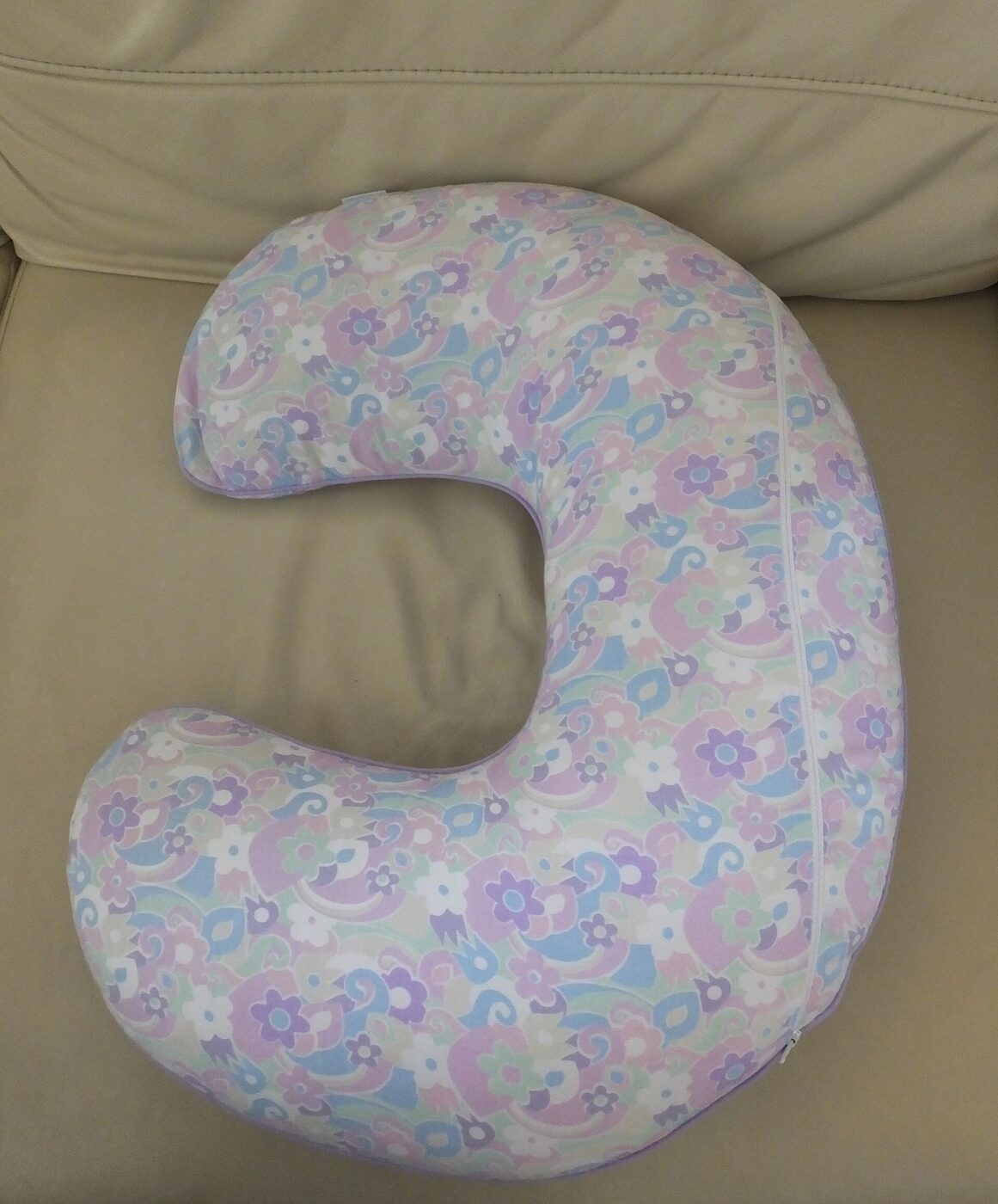
Part 1242 defines a nursing pillow as any product intended, marketed or designed to position and support an infant close to a caregiver’s body while feeding, including removable covers sold with it. Maternity pillows are exempt, as are sling carriers under part 1228 and soft carriers under part 1226.
Four performance requirements carry the rule. Firmness: the force needed to push a three-inch hemispheric probe one inch into the pillow must exceed 10.0 newtons, or 2.24 pounds, at every measurement location. Infant containment: a nine-inch head probe placed in the caregiver opening must not be constrained by the surrounding surfaces and must extend past the opening. Infant restraints: a nursing pillow may not include any restraint system at all. Seam strength and caregiver attachment strength complete the set.
The labeling side is just as prescriptive: warnings must be permanent, follow the ANSI Z535.4 format, and print the safety alert symbol and the word WARNING at least 0.2 inches high. Nursing pillows were also added to the durable infant or toddler product list under 16 CFR part 1130, which means a registration card in the box.
| Requirement | What the rule sets | What it is aimed at |
|---|---|---|
| Firmness | More than 10.0 N to push a 3-inch probe in one inch | Surfaces soft enough to conform around a face |
| Infant containment | A 9-inch head probe must not be constrained in the caregiver opening | Deep hollows that hold an infant in place |
| Infant restraints | Not permitted at all | Designs that invite unattended use |
| Covers | Slipcovers sold with the pillow are in scope | A soft cover undoing a firm core |
Why the straps had to go
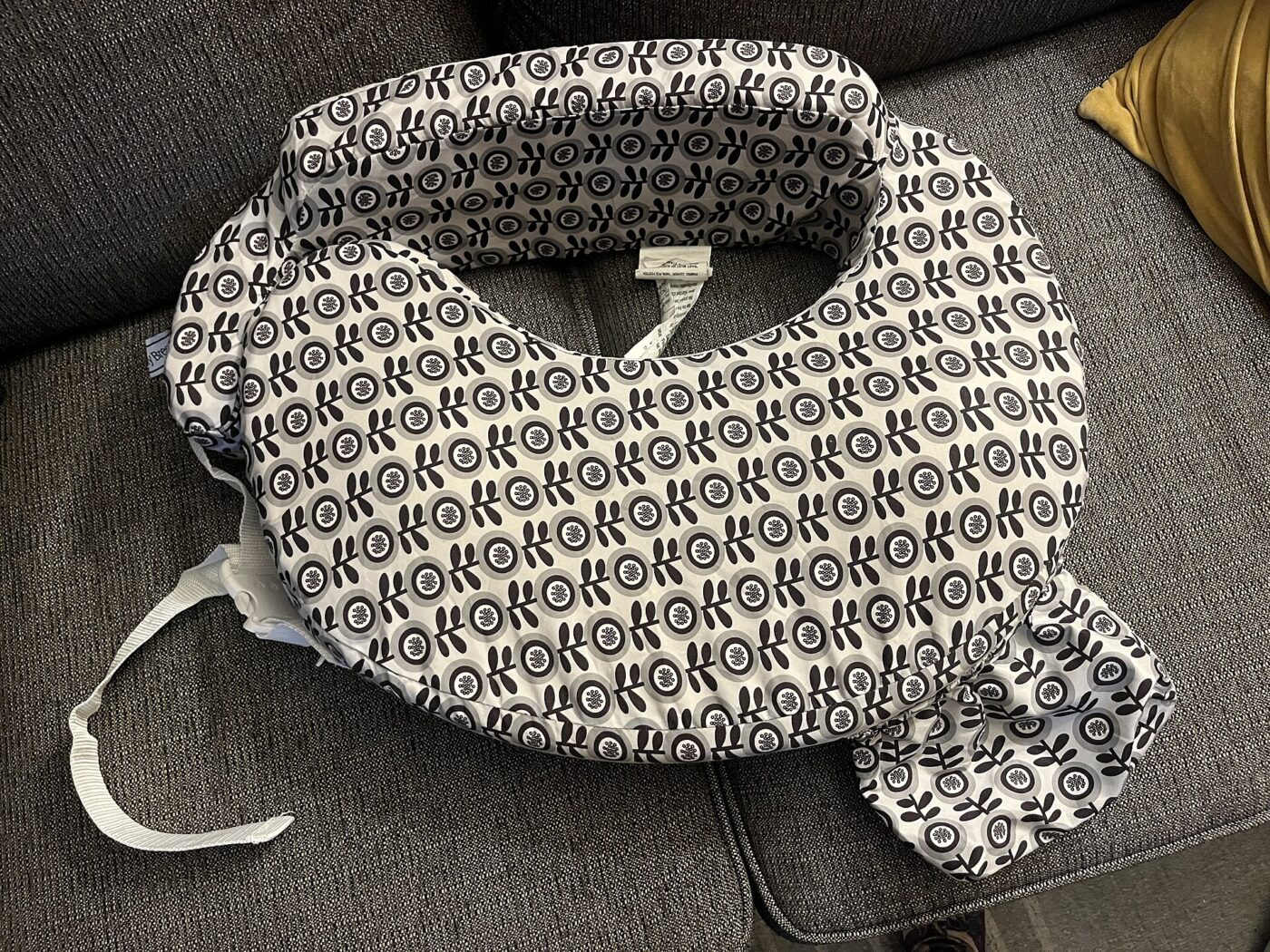
The prohibition on infant restraints is the most visible change, because straps were a selling point on several designs. CPSC’s case rests on how the product is used rather than how it is sold. Searching its incident databases, the agency identified 154 fatal and 88 nonfatal incidents and consumer concerns involving infants up to 12 months old, reported between January 1, 2010 and December 31, 2022.
The pattern is narrow. Of the 154 reported fatalities, 144, or 94 percent, involved infants six months old or younger, and 110, or 71 percent, were three months or younger. CPSC states it is aware of 142 fatalities that involved use of the pillow for sleep, often alongside other unsafe sleep conditions.
A restraint system changes the product from something a caregiver holds a baby against into something a baby can be left in. The firmness floor and the containment test work the same way. The rule also adds a warning to move the baby to an infant sleep product if either of them falls asleep, a scenario CPSC links to three known fatalities and one the ASTM voluntary standard did not address.
What it costs the industry and the buyer
CPSC’s economic analysis is unusually specific for such a small category. It estimates annual sales of new nursing pillows at roughly $67 million, built from about 1.34 million units at an average price near $50. Pillows range from $15 to $100, with most between $25 and $65; the dearer models have removable covers.
Most pillows on the market needed modification. With about 1,000 models to redesign across every firm selling into the US, CPSC put the first-year redesign cost as high as $15 million, based on roughly 200 hours of professional staff time per model. Third-party testing runs $500 to $1,000 per model, plus about $150 a year for samples.
For a shopper the pass-through is small. CPSC estimated that labels, registration forms and manuals add about $1 per item, and that passing on testing costs might add another $1, for a total near $2 on a $50 pillow. It also noted that more than 1,000 suppliers serve the US market, nearly all below 90,000 units a year, so the burden lands on small sellers rather than on the price tag.
The rule reshapes what is on sale far more than what it costs, since $2 on $50 is inside normal promotional noise.
Two recalls show where the line sits
On June 4, 2026 CPSC announced a recall of about 1,430 Little Grape Land nursing pillows sold on Amazon from August 2025 through April 2026 for $28 to $30. On July 2, 2026 it announced a recall of 4,008 AMASKY nursing pillows sold on Amazon from January through March 2026 for $24 to $30. Neither notice reports an incident.
Both hazard statements are worded the same way: the pillows were advertised for infant feeding and tummy time and violate the mandatory standards for nursing pillows and infant support cushions because they can obstruct an infant’s breathing. The pairing matters, because the infant support cushion standard at 16 CFR part 1243 took effect earlier, on November 4, 2024, and a pillow marketed for lounging can be caught by both.
The remedy in both cases is a refund after the buyer cuts the pillow in half and sends a photograph, the same destruction-based remedy CPSC has been using across marketplace recalls.
How to tell a post-rule pillow from an old one
The date of manufacture is the most useful thing on the product. Part 1242 requires the manufacturer name, place of business and telephone number, plus a code mark identifying at least the month and year of manufacture, on the product and its retail package. A pillow made after April 23, 2025 is subject to the rule; one made before it is not, and both can legally be on sale.
The second check is physical. There should be no straps, buckles or harness of any kind intended to hold the infant, because the rule bans infant restraint systems outright. A deep, enclosing hollow is the other thing to look at, since the containment test is designed to rule out shapes that trap a head probe.
The third is the registration card, which part 1130 now requires in the box. If you are buying secondhand, CPSC notes that used pillows are commonly bought on marketplaces such as eBay, often at prices approaching half their original sale price, and nothing in a used listing tells you when the pillow was made.
What to watch next
- The CPSC recall database for nursing pillows and infant support cushions, which produced two nursing pillow recalls between June and July 2026.
- Whether CPSC amends part 1242, which it wrote itself rather than by incorporating ASTM F3669-24 by reference, so a new ASTM edition does not change the rule on its own.
- Whether marketplace listings start showing manufacture dates, since that is the one field that separates in-scope from pre-rule stock.
Where to start
Paid links: we earn a commission if you buy through the buttons below, at no extra cost to you. As an Amazon Associate I earn from qualifying purchases.
Feeding-support products to compare on what the rule measures
| Product type | Good fit for | Where to look |
|---|---|---|
| Firm feeding-support pillow | Fits feeding support only | See listings on AmazonOpens Amazon search results, not one listing: check the model on the product page. |
| Nursing pillow slipcover | Fits washing between feeds | See listings on AmazonOpens Amazon search results, not one listing: check the model on the product page. |
| Tummy time mat | Fits supervised floor time | See listings on AmazonOpens Amazon search results, not one listing: check the model on the product page. |
Product types that fit the trend described above, not tested models. Check the exact listing before you buy. How we pick them.
Firm feeding-support pillow
Where to look: Amazon
The rule turned firmness into a number: more than 10.0 newtons to displace a three-inch probe by one inch. CPSC noted that one pillow already meeting it was also among the lightest examined, so firm need not mean heavy.
- Firmness is now a measured property
- Registration card included
- Pre-rule stock still on sale
- Firm feel divides opinion
Nursing pillow slipcover
Where to look: Amazon
Covers sold with a pillow are inside the standard. Third-party replacement covers are not, which CPSC acknowledges directly, so match the size and shape to your pillow rather than assuming a universal fit.
- Cheaper than replacing the pillow
- Keeps the core dry
- Aftermarket covers are outside the rule
- Fit varies by model
Tummy time mat
Where to look: Amazon
Both 2026 nursing pillow recalls involved products marketed for tummy time as well as feeding. A flat mat does the floor job without the shape the containment test is written against.
- Flat surface, no hollow
- Easy to wipe down
- Takes floor space
- Not a feeding aid
More: Baby and Parenting trends and how the Trend Signal is scored.
Sources
- Safety Standard for Nursing Pillows, final rule, October 25, 2024 — Federal Register via GovInfo
- 16 CFR part 1242, Safety Standard for Nursing Pillows — eCFR
- AMASKY nursing pillows recalled, July 2, 2026 — CPSC
- Little Grape Land recalls nursing pillows, June 4, 2026 — CPSC
- Injuries and Deaths Associated With Nursery Products, 2025 report — CPSC
Questions readers ask
When did the nursing pillow standard take effect?
CPSC published the final rule on October 25, 2024 and it became effective April 23, 2025. Part 1242 applies to nursing pillows manufactured after that date, so pillows made earlier are not covered and can still be sold.
What does the firmness requirement mean?
The force needed to displace a three-inch hemispheric probe by one inch must be greater than 10.0 newtons, which is 2.24 pounds, at any measurement location on the pillow. The test runs after a 48-hour conditioning period at set temperature and humidity.
Why are straps not allowed on nursing pillows?
Section 1242.4(c) states that nursing pillows shall not include any infant restraint system. CPSC linked the product to 154 reported fatal incidents between 2010 and 2022, of which 142 involved use of the pillow for sleep.
How big is the US nursing pillow market?
CPSC estimated annual sales of new nursing pillows at approximately $67 million, based on about 1.34 million units at an average price of roughly $50. Prices range from $15 to $100, with most models between $25 and $65.
Do pregnancy pillows fall under the rule?
No. Part 1242 exempts maternity pillows, defined as large body pillows intended to support a pregnant adult while lying down, along with sling carriers under 16 CFR part 1228 and soft carriers under part 1226.