Stain-resistant and water-repellent finishes have been ordinary on nursery gear for decades. Three states have now decided the fluorinated chemistry behind many of them does not belong in products designed for children, and they wrote the ban around a product list rather than a chemical list.
That matters more than the usual state patchwork, because the lists are long and specific. California, Minnesota and Maine all define a juvenile product as something designed or marketed for infants and children under 12, then name about 30 products apiece, from bassinets and booster seats to car seats, crib mattresses, high chairs, nursing pillows, play yards and strollers. A manufacturer selling in all 50 states has a practical choice between three product lines and one.
Trend Signal
64/100 Steady momentum
- Emerging
- Rising
- Mainstream
- Peaking
- Cooling
State bans keep arriving on a rolling schedule the national market has to follow
California banned regulated PFAS in juvenile products from July 1, 2023, Minnesota from January 1, 2025 and Maine from January 1, 2026, using a product definition that names about 30 nursery items apiece.
Our editorial reading of the cited data, not a forecast. How it is scored
By the numbers
- Jul 1, 2023Date California banned the sale of new juvenile products containing regulated PFASCalifornia Health and Safety Code
- 100 ppmCalifornia threshold for regulated PFAS, measured as total organic fluorineCalifornia Health and Safety Code
- Jan 1, 2026Date Maine’s ban on intentionally added PFAS in juvenile products took effectMaine Revised Statutes
- Oct 13, 2026EPA deadline for reporting PFAS in articles manufactured or imported since 2011US EPA
Three states, three dates, one shelf
California moved first. Assembly Bill 652, enacted in 2021, added chapter 12.5 to the Health and Safety Code. Section 108946 states that on and after July 1, 2023 nobody, manufacturers included, may sell or distribute in commerce in the state any new juvenile product that contains regulated PFAS. The word new matters: the ban does not reach secondhand sales.
Minnesota Statutes section 116.943, subdivision 5, took effect on January 1, 2025 and bars intentionally added PFAS in eleven product groups at once, juvenile products among them. The prohibition does not reach a product whose intentionally added PFAS sit only in electronic or internal components, and subdivision 2 separately required manufacturers of any product containing intentionally added PFAS to file product details with the state commissioner on or before January 1, 2026.
Maine reached the same point on January 1, 2026. Title 38, section 1614 of the Maine Revised Statutes now prohibits the sale of a juvenile product containing intentionally added PFAS, and extends that to a product carrying no PFAS itself if it is sold in a fluorinated container. Every category in that paragraph, juvenile products included, is exempt when sold in used condition.
| State | Law | Juvenile products ban effective |
|---|---|---|
| California | AB 652, Health and Safety Code 108946 | July 1, 2023 |
| Minnesota | Minnesota Statutes 116.943, subdivision 5 | January 1, 2025 |
| Maine | Title 38, section 1614 | January 1, 2026 |
Three effective dates in three years, all using the same product category, is what pushes a national supply chain to reformulate once.
What counts as a juvenile product
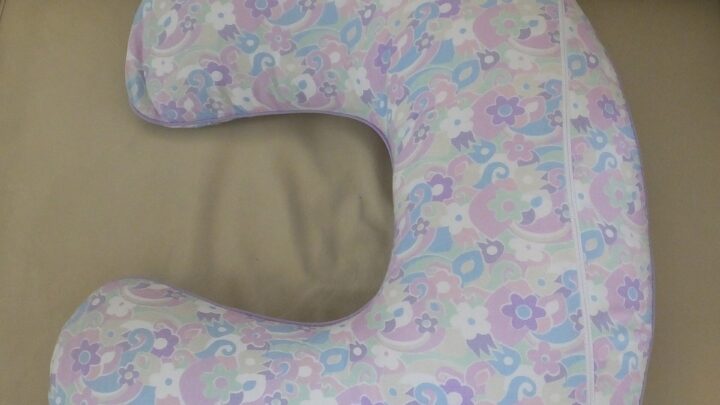
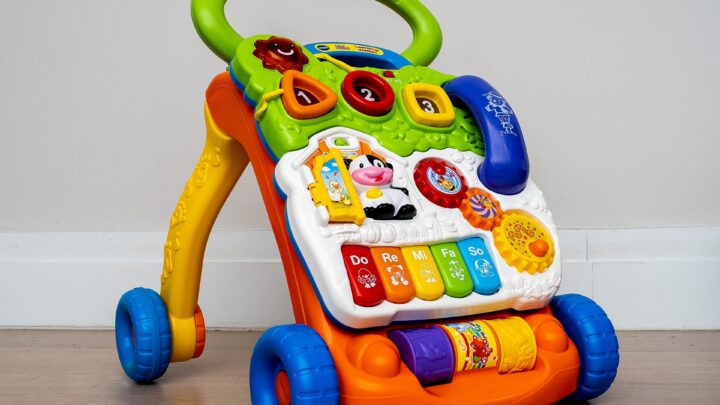
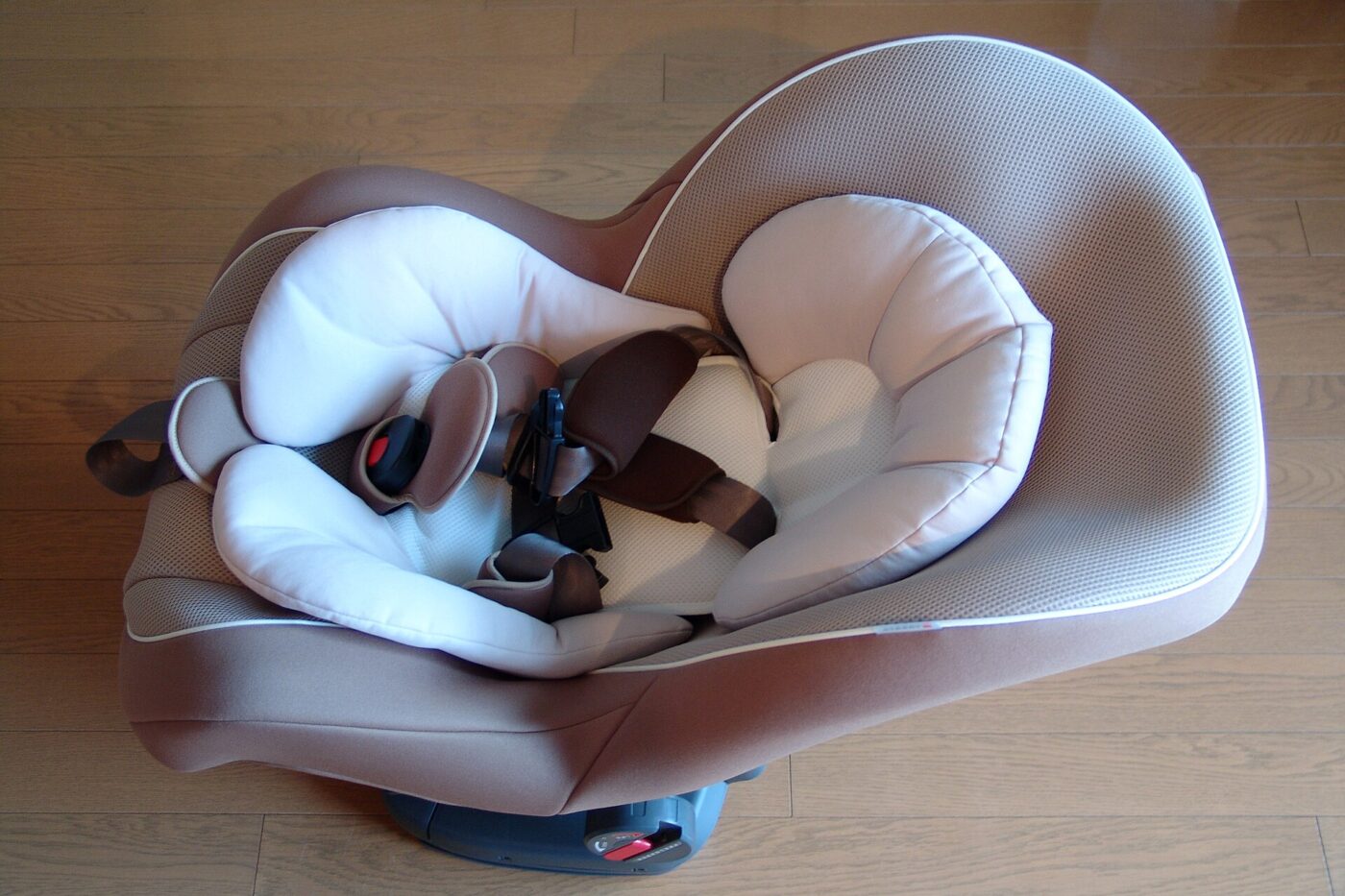
The definitions are close enough to read as one. California section 108945 defines a juvenile product as the following products designed for use by infants and children under 12 years of age, and the list that follows is the whole of it, 31 entries: a baby or toddler foam pillow, bassinet, bedside sleeper, booster seat, changing pad, child restraint system for use in motor vehicles and aircraft, co-sleeper, crib mattress, floor playmat, highchair and highchair pad, infant bouncer, carrier, seat, sleep positioner, swing, travel bed and walker, nap cot, nursing pad, nursing pillow, playpen, play yard, polyurethane foam mat, pad or pillow, portable infant sleeper, portable hook-on chair, soft-sided portable crib, stroller and toddler mattress.
Minnesota’s list in section 116.943 runs to 30 of the same entries and is explicitly open-ended, using the phrase including but not limited to. Maine’s is the same again. The difference matters for anything the drafters missed: in California a product has to be on the list; in Minnesota and Maine a comparable item can be caught without being named. Either way, nearly every soft or padded thing in a nursery is covered, and the car seat is named twice over, since all three statutes reach restraints for both motor vehicles and aircraft.
All three exclude children’s electronics such as personal computers, game consoles and their peripherals, and adult mattresses. California alone carves out medical devices, and an internal component that would not come into direct contact with a child’s skin or mouth during reasonably foreseeable use and abuse.
What the bans do not cover

These are sales bans in three states, not a federal prohibition, and they are written against intentional use. California is the only one with a numeric backstop: section 108945 defines regulated PFAS as either PFAS intentionally added with a functional or technical effect, or PFAS at or above 100 parts per million measured as total organic fluorine. Minnesota and Maine rest on the intentionally added test alone.
Secondhand goods sit outside. California’s prohibition applies only to a new, not previously owned juvenile product, and Maine exempts everything in its 2026 ban when sold in used condition. Given how much nursery gear moves through resale, these laws reach the installed base far more slowly than the effective dates suggest.
None of the three attaches a labeling mandate. Nothing requires a package to say PFAS-free, and nothing stops a seller saying it without a test behind it.
The federal reporting deadline in October 2026
The federal layer is disclosure, not prohibition. EPA’s rule under section 8(a)(7) of the Toxic Substances Control Act applies to anyone who manufactured, which includes imported, PFAS or PFAS-containing articles since January 1, 2011. Reporting covers chemical identity, categories of use, volumes, byproducts, worker exposure and disposal.
The phrase PFAS-containing articles is what brings juvenile products in. A car seat, a stroller or a high chair imported with a treated fabric is an article. EPA has moved the submission window more than once; after an interim final rule in May 2025 and a further final rule in April 2026, the general deadline now stands at October 13, 2026. A later window applies to small businesses that only import PFAS-containing articles, which covers much of the nursery aisle.
We read that combination as the reason to expect national reformulation rather than state-specific product lines. A manufacturer facing three sales bans, a reporting obligation reaching back to 2011 and a list that names its whole catalog has little reason to keep two stroller fabrics in production.
What a shopper can actually verify
Start with the fabric claim rather than the chemical claim. The finishes these laws target are the ones sold as stain-resistant, water-repellent or easy-clean. A listing that promotes those properties on a car seat cover, a high chair pad or a changing pad is describing a treatment; a listing that says nothing about them usually has nothing to describe.
Then check where the product is sold. A national brand shipping into California, Minnesota and Maine has to meet the strictest of the three, and California’s 100 parts per million threshold is the strictest because it does not depend on proving intent. Small direct-from-overseas sellers are least likely to have addressed any of it.
Finally, weigh the material. Untreated cotton, plain polyester, solid wood and molded plastics are not where these finishes live, and a crib sheet without a stain finish will stain.
There is no label to look for, so the reliable signal is the absence of a stain or water-repellent claim.
What to watch next
- Whether more states adopt the same juvenile product definition, which is the mechanism turning a state rule into a national specification.
- Minnesota’s PFAS in products reporting, since the first filings were due on or before January 1, 2026.
- The EPA submission window under TSCA section 8(a)(7), with a general deadline of October 13, 2026 and a later one, April 13, 2027, for small article importers.
Where to start
Paid links: we earn a commission if you buy through the buttons below, at no extra cost to you. As an Amazon Associate I earn from qualifying purchases.
Nursery surfaces where finishes usually live
| Product type | Good fit for | Where to look |
|---|---|---|
| Wipe-clean changing pad | Fits a wipe-clean changing spot | See listings on AmazonOpens Amazon search results, not one listing: check the model on the product page. |
| Foam floor play mat | Fits floor time without a finish | See listings on AmazonOpens Amazon search results, not one listing: check the model on the product page. |
| Cotton crib sheets | Fits a plain-cotton crib setup | See listings on AmazonOpens Amazon search results, not one listing: check the model on the product page. |
Product types that fit the trend described above, not tested models. Check the exact listing before you buy. How we pick them.
Wipe-clean changing pad
Where to look: Amazon
Changing pads are named in all three state definitions. A wipeable solid surface avoids the textile finish question; if you add a cloth cover, that cover is the part worth reading.
- Solid surfaces need no textile finish
- Easy to clean between changes
- Cold to the touch
- Covers add a fabric back in
Foam floor play mat
Where to look: Amazon
Floor playmats and polyurethane foam mats are both named in the statutes. Foam mats sold by material, rather than by a stain-resistance claim, are the simpler read.
- No fabric treatment involved
- Wipes clean
- Foam type varies widely
- Bulky to store
Cotton crib sheets
Where to look: Amazon
Crib mattresses are covered by the bans; the sheet over them is an ordinary textile. Plain cotton with no performance claim is the least ambiguous thing in the nursery.
- Plain woven cotton carries no finish
- Cheap to replace
- Stains show
- Needs frequent washing
More: Baby and Parenting trends and how the Trend Signal is scored.
Sources
- AB 652 (2021), Health and Safety Code chapter 12.5, Juvenile Products — California Legislative Information
- Minnesota Statutes 116.943, products containing PFAS — Office of the Revisor of Statutes
- Maine Revised Statutes Title 38, section 1614 — Maine Legislature
- TSCA section 8(a)(7) reporting and recordkeeping for PFAS — U.S. Environmental Protection Agency
Questions readers ask
Which states ban PFAS in baby products?
California has banned the sale of new juvenile products containing regulated PFAS since July 1, 2023 under Health and Safety Code section 108946. Minnesota banned intentionally added PFAS in juvenile products from January 1, 2025 under Minnesota Statutes section 116.943, and Maine did the same from January 1, 2026 under Title 38, section 1614.
Does the ban cover car seats?
Yes. All three statutes include a child restraint system for use in motor vehicles and aircraft in their list of juvenile products, alongside strollers, high chairs, crib mattresses, play yards, infant carriers and nursing pillows.
How is regulated PFAS defined?
California uses two tests: PFAS a manufacturer intentionally added that have a functional or technical effect, or the presence of PFAS at or above 100 parts per million measured as total organic fluorine. Minnesota and Maine rely on the intentionally added test without a numeric threshold.
Do the bans apply to secondhand baby gear?
No. California’s prohibition applies only to a new, not previously owned juvenile product, so resale is outside its scope, and Maine exempts every category in its 2026 ban when sold in used condition.
Is there a federal PFAS rule for baby products?
There is a federal reporting rule rather than a sales ban. EPA’s rule under TSCA section 8(a)(7) requires anyone who manufactured or imported PFAS or PFAS-containing articles since January 1, 2011 to report, with a general deadline of October 13, 2026 and a later window for small businesses that only import PFAS-containing articles.