By headcount, camping has never been bigger. The Outdoor Industry Association counted a record 183.2 million Americans ages 6 and older taking part in outdoor recreation in 2025, and Kampgrounds of America’s 12th annual camping report, released April 14, 2026, counted over 52 million North American households that camped in 2025, above pre-pandemic levels.
Look past the headcount and the market is changing shape. Campers go out less often, younger households are more price-sensitive, glamping is the entry point for many newcomers, and RV shipments are falling. Here is what the 2026 data says, and what it means if you are buying gear.
Trend Signal
46/100 Steady momentum
- Emerging
- Rising
- Mainstream
- Peaking
- Cooling
Participation at a record, trip frequency and RV shipments down
OIA counted a record 183.2 million outdoor participants in 2025 and KOA just over 52 million camping households, but RVIA wholesale shipments were down 13.9% through July 2026 and KOA reports far more once-a-year campers.
Our editorial reading of the cited data, not a forecast. How it is scored
By the numbers
- 52M+North American households that camped in 2025, per KOA’s 2026 reportKOA
- 183.2MAmericans 6 and older who took part in outdoor recreation in 2025, a recordOutdoor Industry Association
- 13.9%RV wholesale shipments, January to July 2026 versus the same months of 2025RV Industry Association
- 257%Increase since 2019 in people who camp just once a year, per KOA’s CEORVBusiness
More campers, fewer trips per camper
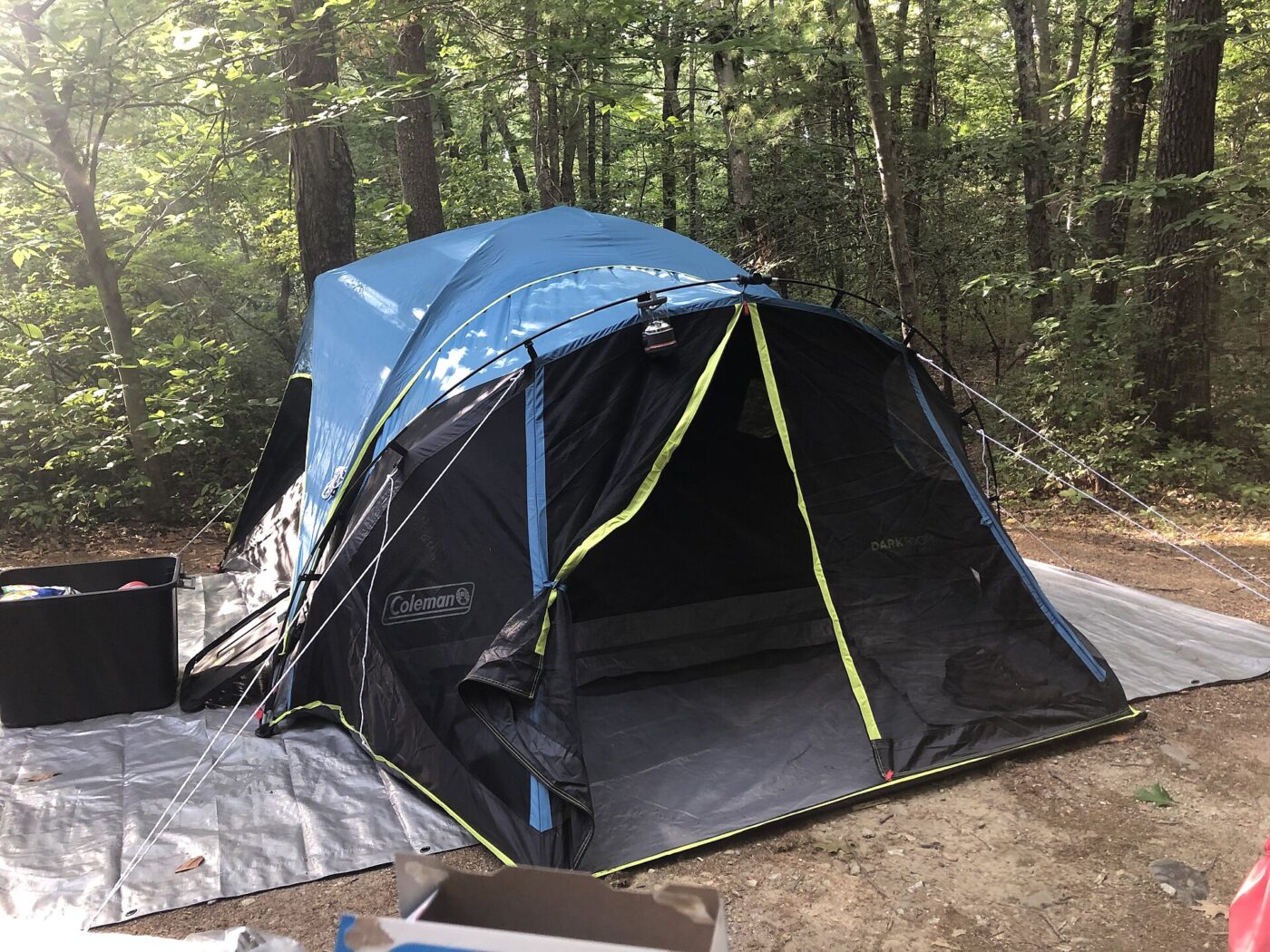
KOA’s report found the number of active camping households nearly identical to the year before, at just over 52 million. In an interview reported by RVBusiness, KOA CEO Toby O’Rourke called 2024 and 2025 a stable baseline after the pandemic swings and put the number of people who camped in 2025 about 24% above 2019.
What changed is frequency. O’Rourke said there has been a 257% increase since 2019 in people who camp just once a year, and fewer people now camp two or three times a year. The OIA sees the same pattern across outdoor recreation: participation has added nearly 30 million people since 2019, yet Americans head outdoors less often than before the pandemic, a shift OIA describes as more casual, less consistent engagement.
The camping market is wide and shallow: more households, fewer nights each.
Who is camping and who is pulling back
Younger campers are pulling back and Baby Boomers are returning. In the interview reported by RVBusiness, O’Rourke said younger generations increasingly say camping is not affordable for them and that Gen Z may be choosing other kinds of travel, while Boomers include a large number of new campers and are less price-sensitive.
Newcomers keep arriving: more than two million households camped for the first time in 2025, according to KOA. Glamping accounted for 29% of camping experiences in 2025, and 31% of new campers chose glamping accommodations. Cost still helps camping’s case, with 35% of adults calling it the most affordable travel option, although average daily spending per person, excluding accommodations, topped $200 in 2025.
- Just over 52 million households camped in 2025, nearly flat versus 2024
- 29% of camping experiences in 2025 were glamping
- More than 2 million households camped for the first time
- 35% of adults called camping the most affordable way to travel
RVs are the weak spot
RV Industry Association figures show manufacturers shipped 19,948 RVs in July 2026, down 11.9% from July 2025, and 183,592 in the first seven months, down 13.9% from 213,338 a year earlier. Towables fell 9.8% in July and motorhomes 25.6%, while park model RVs rose 29.7%.
KOA counts 14% fewer households that went RVing than in 2019, which O’Rourke described as almost one and a half million campers, and 21% of travelers borrowed an RV in 2025. Dometic, which supplies appliances to RV makers, said in its July 14, 2026 report that US recreational vehicle production fell by double digits in the second quarter, and it extended a restructuring program to cope with weak RV demand in the Americas.
Interest is moving toward renting. Nearly half of campers say they are likely to rent an RV, and Gen Z campers are twice as likely as Millennials to rent rather than own, according to KOA.
| Segment | July 2026 shipments | Change vs July 2025 |
|---|---|---|
| All RVs | 19,948 | -11.9% |
| Towables | 17,754 | -9.8% |
| Motorhomes | 2,194 | -25.6% |
| Park model RVs | 410 | +29.7% |
What campers say they want in 2026
KOA calls the dominant mood “analog camping.” In its 2026 report, 77% of campers said just being in nature is enough, without structured programming or extra amenities, and 49% said they book trips specifically to improve mental well-being. Sixty percent said traditional campfire activities and games are a key motivator, according to KOA’s summary of the findings.
Trips are also stretching. KOA found 31% of campers plan to spend more nights camping in 2026 than in 2025, and 43% are planning a heritage or Americana-focused trip, with the Route 66 centennial and America’s 250th anniversary as draws. Spring and fall are gaining too: KOA says 42% of campers cite lower costs and 41% better weather for those seasons, and 66% say fewer crowds improve the experience.
What the shift means for gear buyers
A once-a-year camper needs different gear from a monthly one. For occasional trips, the priorities are fast setup, compact storage and comfort at a drive-in campsite. We read the data as favoring mid-priced, easy gear over big-ticket purchases that sit unused most of the year.
Shoulder-season plans change the sleep setup more than the tent. Spring and fall nights run colder than midsummer, so a sleeping pad with a stated insulation rating matters more than an extra tent feature, and a rechargeable lantern covers a site without hookups.
If you are weighing an RV, the numbers argue for renting or borrowing first. Wholesale shipments are falling, a major supplier is cutting costs around weak RV demand, and KOA found 21% of travelers borrowed an RV in 2025 while nearly half of campers say they are likely to rent one.
What to watch next
- RVIA’s monthly shipment reports, and whether the year-to-date decline narrows from 13.9% by year end
- OIA’s frequency data in its next participation report, the clearest test of whether casual participants become regulars
- KOA’s quarterly research on camping nights, since 31% of campers said they planned more nights in 2026
Where to start
Paid links: we earn a commission if you buy through the buttons below, at no extra cost to you. As an Amazon Associate I earn from qualifying purchases.
Camping gear for occasional and shoulder-season trips
| Product type | Good fit for | Where to look |
|---|---|---|
| Instant cabin tent | Fits once-a-year campers | See listings on AmazonOpens Amazon search results, not one listing: check the model on the product page. |
| Self-inflating camping pad | Fits shoulder-season trips | See listings on AmazonOpens Amazon search results, not one listing: check the model on the product page. |
| Rechargeable camping lantern | Fits campsites without power | See listings on AmazonOpens Amazon search results, not one listing: check the model on the product page. |
Product types that fit the trend described above, not tested models. Check the exact listing before you buy. How we pick them.
Instant cabin tent
Where to look: Amazon
Suits drive-in campsites and families who camp once or twice a season. Check the packed dimensions against your car trunk and closet.
- Pitches quickly with preattached poles
- Room to stand and sort gear
- Bulky and heavy to carry far
- Tall walls catch wind
Self-inflating camping pad
Where to look: Amazon
The upgrade that matters most for spring and fall nights. Look for a stated R-value and a size that fits your tent floor.
- Insulates you from cold ground
- Rolls up for storage
- Slower to pack than a foam mat
- Can puncture
Rechargeable camping lantern
Where to look: Amazon
Covers a tent site without hookups. Compare runtime at the low setting, which is how most of an evening is spent.
- Recharges from a car or USB
- No fuel to carry
- Runtime drops at high brightness
- Cold weather shortens battery life
More: Travel and Adventure trends and how the Trend Signal is scored.
Sources
- KOA 2026 Camping and Outdoor Hospitality Report press release — Kampgrounds of America
- The Camping Trends Defining Travel in 2026 — KOA
- KOA Report Shows Stable, Evolving Camping Market — RVBusiness
- 2026 Outdoor Participation Trends Report — Outdoor Industry Association
- July RV Shipments Near 20,000 Units — RV Industry Association
- Quarterly Report Q2 2026 — Dometic Group
Questions readers ask
Is camping still popular in 2026?
Yes by headcount: KOA counted just over 52 million North American households that camped in 2025, and OIA counted a record 183.2 million outdoor participants. But people go less often, with KOA reporting a 257% rise since 2019 in once-a-year campers.
Are RV sales down in 2026?
Wholesale shipments are. The RV Industry Association reported 183,592 RVs shipped from January through July 2026, down 13.9% from the same months of 2025, with motorhomes down 25.6% in July alone.
What is analog camping?
It is KOA’s term for camping built around simplicity rather than programmed activities. In its 2026 report, 77% of campers said being in nature is enough on its own, and 60% said traditional campfire activities are a key motivator.
Is glamping replacing tent camping?
No, but it is the on-ramp. Glamping made up 29% of camping experiences in 2025 and 31% of new campers chose it, while KOA says many campers are returning to tent camping as well.