A box of clumping litter is one of the heaviest things a household buys on repeat, and it is priced like the commodity it mostly is: mined clay, dried with natural gas, packed and trucked. Its cost sits in energy and freight more than in brand marketing.
The most recent figures point in two directions. The Bureau of Labor Statistics index covering the purchase of pets, pet supplies and accessories rose 1.9% in the year to August 2026 and has drifted down since March 2026. Oil-Dri Corporation of America, which mines the clay behind Cat’s Pride, Jonny Cat and private-label litters sold in U.S. stores, told investors its domestic cost of goods sold per ton rose 3%, then 4%, then 6% across the first three quarters of its 2026 fiscal year. Costs moving faster than prices is the setup for the next increase, not for a discount.
Trend Signal
55/100 Steady momentum
- Emerging
- Rising
- Mainstream
- Peaking
- Cooling
Production costs are climbing faster than the pet supplies index
Oil-Dri, which mines the clay behind Cat’s Pride and the private-label litters it makes for retailers, reported domestic cost of goods sold per ton up 3%, then 4%, then 6% across the first three quarters of fiscal 2026, while the BLS index covering pet supplies purchases rose 1.9% in the year to August 2026.
Our editorial reading of the cited data, not a forecast. How it is scored
By the numbers
- +1.9%Change in the BLS index for pet supplies purchases, August 2025 to August 2026Bureau of Labor Statistics
- 6%Rise in Oil-Dri domestic cost of goods sold per ton, quarter ended April 30, 2026Oil-Dri filing
- 48%Share of U.S. bentonite clay used for pet waste absorbents, 2025 estimateU.S. Geological Survey
- $255.9MOil-Dri cat litter net sales in fiscal 2025, up 6% from fiscal 2024Oil-Dri 10-K
Where the shelf price actually sits
There is no official cat litter price index. The closest public measure is the Consumer Price Index item for the purchase of pets, pet supplies and accessories, which also contains leashes, toys, bowls and live animals. Read it as a direction rather than a litter price, and the direction is mildly upward: 133.257 in August 2026 against 130.816 a year earlier, a 1.9% gain.
The longer view is flatter than most shoppers remember. The same index sat at 126.915 in August 2023, so three years produced roughly a 5% rise. It peaked at 134.986 in March 2026, the highest reading since the series began in December 1997, and has come off about 1.3% since. One month is missing from the series entirely: BLS published no October 2025 value for this item.
| Month | Index level | Change from a year earlier |
|---|---|---|
| August 2023 | 126.915 | – |
| August 2024 | 130.816 | +3.1% |
| August 2025 | 130.816 | 0.0% |
| March 2026 (peak) | 134.986 | +3.5% |
| August 2026 | 133.257 | +1.9% |
The official measure that contains litter is up about 5% in three years, and it turned down after March 2026.
Why a heavy, cheap mineral keeps costing more

The U.S. Geological Survey, in the Mineral Commodity Summaries it published in February 2026, estimates U.S. clay production at 26 million tons worth $1.8 billion in 2025, mined by about 120 companies in 38 states. Pet waste absorbents are the largest use of bentonite, at an estimated 48% of domestic consumption, and absorbents account for an estimated 79% of fuller’s earth use. The same report lists the normal trade relations rate on bentonite, tariff line 2508.10.0000, as free as of December 31, 2025, and puts U.S. bentonite exports at an estimated 640,000 tons in 2025 against imports of all clay types of 140,000 tons. The Section 301 duties the U.S. Trade Representative announced in July 2026 sit on top of that rate for goods of the investigated economies, but the clay itself is overwhelmingly domestic.
The cost sits in what happens after mining. Oil-Dri surface mines its clay near plants in Mississippi, Georgia, Illinois and California, dries it, sizes it and ships it. Its annual report flags natural gas price volatility and the cost of trucking and ocean freight as the pressures on that chain, and the effect shows quarter by quarter: domestic cost of goods sold per ton rose 3% in the quarter ended October 31, 2025, 4% in the quarter ended January 31, 2026 and 6% in the quarter ended April 30, 2026.
Margins absorbed most of it. Consolidated gross margin went from 29.5% to 27.4% to 26.7% across those three quarters, against 31.9%, 29.5% and 28.6% a year earlier. Weather added its own knock: the company said Winter Storm Fern delayed shipments in the quarter ended January 31, 2026 and pushed $2.8 million of revenue into backlog.
Lightweight and crystal are taking the growth
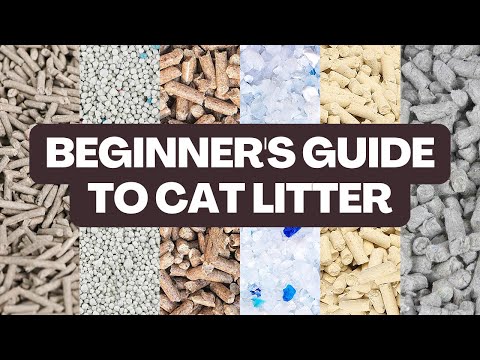
Oil-Dri’s cat litter net sales were $226.3 million in fiscal 2023, $241.9 million in fiscal 2024 and $255.9 million in fiscal 2025, a 6% gain in the most recent full year. The mix inside that number is the interesting part. Domestic litter excluding co-packaged product rose $13.1 million in fiscal 2025, and silica gel crystal litter, added through the May 2024 purchase of Ultra Pet, accounted for $14.9 million of the increase while clay-based litter fell.
Fiscal 2026 has run the same way. Domestic litter excluding co-packaging was $56.2 million in the first quarter, down 6%; $56.0 million in the second, up 0.5%; and $57.9 million in the third, up 10%. Co-packaged litter rose 31% and then 94% as the co-packed range added a lightweight option. The company said in its June 2026 results release that crystal litter volumes hit record levels and that 13-week retail data ended April 18, 2026 showed the lightweight segment again outperforming the overall cat litter category.
The other side of the shelf tells a similar story. Church and Dwight listed ARM and HAMMER cat litter among the brands driving 5.1% organic sales growth in its domestic consumer business in the quarter ended June 30, 2026, with volume up 3.6% and price and mix adding 1.5%, and it launched a Microban antimicrobial clumping litter into that demand.
Growth is in lighter and longer-lasting formats, not in the heavy clay boxes that anchor the low end.
What lightweight does to the price you pay
Lightweight clumping litter is the same clay processed to weigh less for a given volume. A box holding the same number of fills weighs less, which is easier to carry and cheaper to ship, but the price per pound is higher than on the heavy box beside it. Comparing the two on price per pound flatters the heavy one; comparing them on weeks of use for one cat is the honest test.
Crystal litter is a different material, silica gel granules rather than clay, sold on the claim that one fill lasts longer for a single cat. Oil-Dri states in its fiscal 2025 annual report that the crystals are 99.9% dust free and absorb up to 90% of their weight in liquid. The trade is a higher price per bag against fewer full changes, which pays off mainly in a one-cat or two-cat home where the box is scooped daily.
Store brands deserve a second look here. Oil-Dri states that it produces private-label scoopable and non-clumping litter, that lightweight scoopable litters lead its private-label range, and that sales to Walmart were about 19% of its total net sales in fiscal 2025. A store-brand box and a branded box can come from the same mines and plants.
Who should stock up and who should wait
Buy the heavy clay box on promotion if you have the storage space and a strong back. Per-ton costs are still rising and margins are compressing, so the structural direction of litter pricing is up, and the discounts that appear are promotional rather than a change in list price. Litter does not spoil.
Hold off on switching to crystal or lightweight on price alone. Both cost more per pound and are sold on how long a fill lasts, which depends on how many cats use the box and how often it is scooped. Buying one bag and counting the weeks before a full change is the only way to know whether the math works in your house, and in a three-cat home that per-week figure matters more than any sticker.
What to watch next
- Oil-Dri’s annual report for the fiscal year ended July 31, 2026, for whether domestic cost per ton is still climbing
- The monthly BLS index for pet supplies purchases, which peaked in March 2026 and has eased since
- Whether the shift toward lightweight and crystal shows up as a higher price per pound on your regular shelf
Where to start
Paid links: we earn a commission if you buy through the buttons below, at no extra cost to you. As an Amazon Associate I earn from qualifying purchases.
Cat litter types compared on what actually differs
| Product type | Good fit for | Where to look |
|---|---|---|
| Lightweight clumping cat litter | Fits carrying it up stairs | See listings on AmazonOpens Amazon search results, not one listing: check the model on the product page. |
| Silica crystal cat litter | Fits one-cat households | See listings on AmazonOpens Amazon search results, not one listing: check the model on the product page. |
| Litter trapping mat | Fits tracking control | See listings on AmazonOpens Amazon search results, not one listing: check the model on the product page. |
Product types that fit the trend described above, not tested models. Check the exact listing before you buy. How we pick them.
Lightweight clumping cat litter
Where to look: Amazon
The format taking the category’s growth, and the reason price per pound is a poor comparison tool. Judge it on weeks of use per box instead.
- Half the weight of standard clay
- Easier to pour and store
- Higher price per pound
- Lighter grains scatter more
Silica crystal cat litter
Where to look: Amazon
Silica gel rather than clay. The economics depend on one or two cats and daily scooping, so test one bag first.
- Sold on longer intervals between changes
- Low dust
- Higher price per bag
- Texture some cats refuse
Litter trapping mat
Where to look: Amazon
The cheapest way to make litter go further is to stop paying for what leaves the box on paws. Check that the mat can be rinsed.
- Cuts what gets carried across the floor
- Cheap next to litter itself
- Needs shaking out often
- Some designs trap grit inside
More: Pets trends and how the Trend Signal is scored.
Sources
- CPI, purchase of pets, pet supplies and accessories, U.S. city average — Bureau of Labor Statistics
- Oil-Dri reports record third quarter revenues, quarter ended April 30, 2026 — Oil-Dri via SEC
- Oil-Dri Corporation of America annual report on Form 10-K for fiscal 2025 — SEC
- Oil-Dri second quarter fiscal 2026 results, quarter ended January 31, 2026 — Oil-Dri via SEC
- Oil-Dri first quarter fiscal 2026 results, quarter ended October 31, 2025 — Oil-Dri via SEC
- Clays, Mineral Commodity Summaries 2026 — U.S. Geological Survey
- Church and Dwight second quarter 2026 results — Church and Dwight via SEC
Questions readers ask
Why does cat litter cost more than it used to?
The inputs, not the clay. The U.S. Geological Survey lists the normal trade relations rate on bentonite as free and records the United States as a net exporter of clays, so the pressure sits in drying fuel, packaging and freight. Oil-Dri reported domestic cost of goods sold per ton up 3%, 4% and 6% across the first three quarters of fiscal 2026.
Is there an official cat litter price index?
No. The nearest public series is the BLS Consumer Price Index item for the purchase of pets, pet supplies and accessories, which also covers toys, leashes and live animals. It stood at 133.257 in August 2026, up 1.9% from a year earlier.
Is lightweight litter cheaper or more expensive?
More expensive per pound, because the same processing is spread over less weight. Compare on how long one box lasts rather than on price per pound.
Are store-brand litters different from branded ones?
Often not by much. Oil-Dri states that it produces private-label scoopable and non-clumping litters, and that its lightweight scoopable litters lead its private-label range.