Heart rate is the one training metric almost everybody records and almost nobody checks. The number on a watch face looks authoritative at rest, drifts during hard intervals, and settles back into plausibility by the time you finish. Whether that matters depends on what you do with it, and on which device produced it.
The useful way to read the 2026 evidence is to notice what the researchers wear. In two validation studies published this spring the device under test was a consumer wearable and the reference was the same in both cases: an electrode-based chest strap. That is the argument for straps in one sentence, and it also sets a fair bar for the wrist.
Trend Signal
46/100 Steady momentum
- Emerging
- Rising
- Mainstream
- Peaking
- Cooling
Flat category, still used as the yardstick everything else is measured against
Two separate validation studies published in 2026 used a Polar H10 chest strap as their reference standard, one to test earbuds and one to test four smartwatches.
Our editorial reading of the cited data, not a forecast. How it is scored
By the numbers
- 2.08 bpmAirPods Pro 3 mean absolute error against a Polar H10 chest strap, April 2026PLOS Digital Health
- 1.52 bpmApple Watch SE mean absolute error against a Polar H10 reference, June 2026Frontiers in Sports and Active Living
- 400 hBattery life Polar states for the H10 on one CR2025 coin cellPolar
- 6%Wrist-worn fitness tracker unit sales, first 7 months of 2025, per Circana, Sept 18 2025Circana
What a chest strap measures that a watch does not
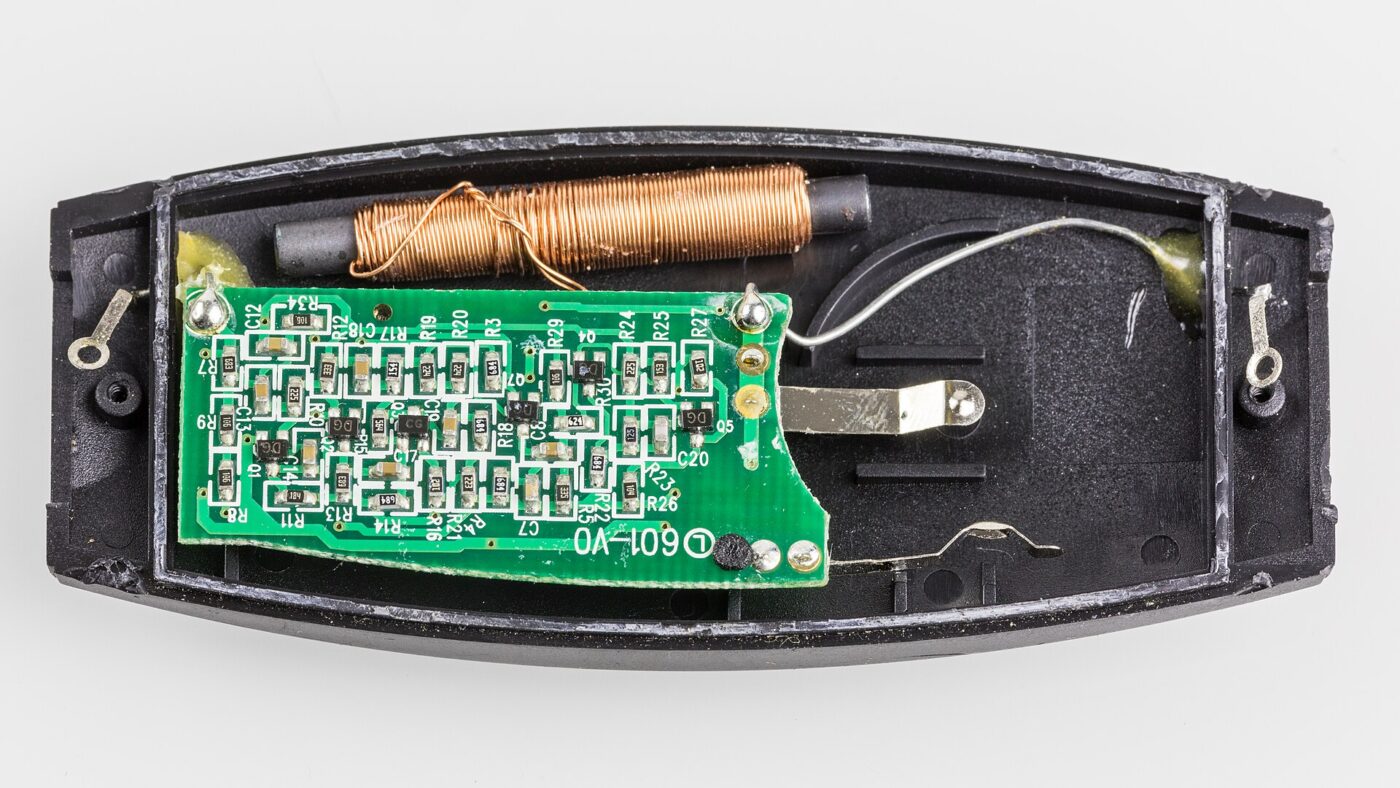
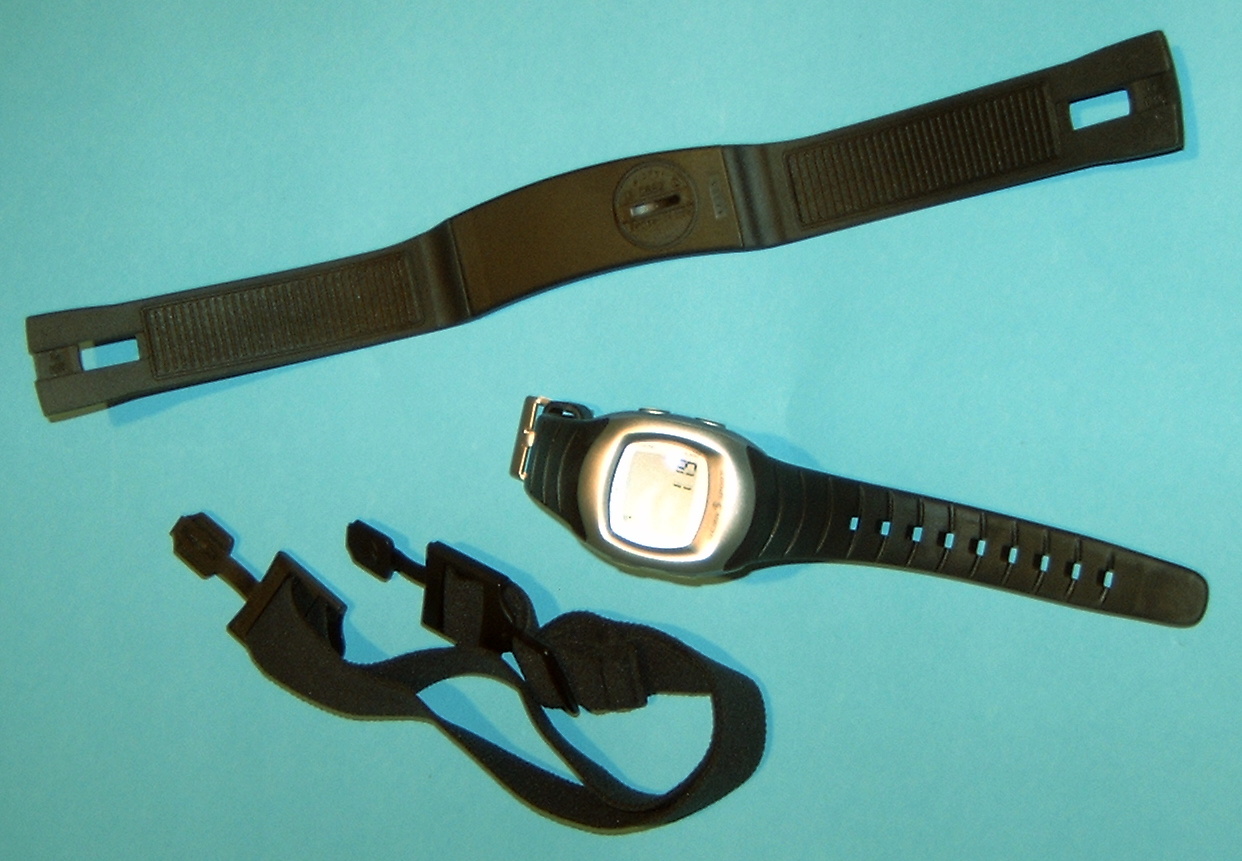
A chest strap and a watch are not two versions of the same instrument. Polar states that its H10 uses electrical sensors, reading the heart’s electrical activity the way an electrocardiogram does. A watch or a ring uses light: it shines LEDs into the skin and infers a pulse from changes in how much light comes back, a technique called photoplethysmography.
That difference decides where each one struggles. An electrical signal does not care how hard you grip a barbell or how cold your hands are. An optical signal cares about both, because it depends on blood flow at the skin surface and on steady sensor contact. Anything that breaks contact or squeezes the tissue under the sensor, which describes much of lifting and sprinting, degrades it.
The specifications follow from that. Polar lists the H10 on its product page, as published in September 2026, with up to 400 hours on a single CR2025 coin cell, Bluetooth LE and ANT connections, a 295-foot broadcast range, and memory for one session of up to 30 hours. The dual radio matters more than it sounds: it lets one strap feed a watch and a bike computer at once.
An electrode reads the heart directly. An optical sensor infers it from blood flow, which is why contact and grip pressure change the answer.
What the 2026 validation studies found

In a study published in PLOS Digital Health on April 30, 2026, researchers put AirPods Pro 3 on 40 adults during graded treadmill exercise and compared them against a Polar H10. Across 16,735 paired epochs the mean absolute error was 2.08 bpm, with a mean difference of –0.03 bpm and 95% limits of agreement of –10.27 to 10.22 bpm. At rest the error was 1.31 bpm; at vigorous intensity it was 2.4 bpm.
A second study, published in Frontiers in Sports and Active Living on June 3, 2026, ran 40 adults aged 20 to 59 through a 45-minute session wearing four watches at once, again referenced against a Polar H10: an Apple Watch SE, a Garmin Forerunner 245, a Xiaomi Mi Watch Lite and a ThaiSook watch. The Apple Watch SE posted the lowest mean absolute error at 1.52 bpm and the Garmin 2.10 bpm.
The budget devices did not. The Xiaomi averaged 6.93 bpm of error and the ThaiSook 8.60 bpm, and both sat below a 0.9 correlation with the strap during the running phase. Together the two studies say something more specific than the usual claim that straps are more accurate: a good optical sensor, in an ear or on a wrist, is now within about 2 bpm of an electrode on average, and a cheap one is not.
| Device | Reference | Mean absolute error | Study |
|---|---|---|---|
| AirPods Pro 3 | Polar H10 | 2.08 bpm overall | PLOS Digital Health, April 2026 |
| Apple Watch SE | Polar H10 | 1.52 bpm | Frontiers in Sports and Active Living, June 2026 |
| Garmin Forerunner 245 | Polar H10 | 2.10 bpm | Frontiers in Sports and Active Living, June 2026 |
| Xiaomi Mi Watch Lite and ThaiSook | Polar H10 | 6.93 and 8.60 bpm | Frontiers in Sports and Active Living, June 2026 |
Where an average of 2 bpm still misleads you
A mean absolute error is an average over a whole session, and training decisions are not made on averages. The PLOS study reported limits of agreement stretching past 10 bpm in both directions, so individual readings can land a zone away from the truth even when the session average looks excellent. If you set intervals by zone, that is the number that bites.
The failure is not random either. Both studies found accuracy highest at rest and lowest during movement, which is the part of the session you care about. An optical device that tracks recovery perfectly can still lag through a hard effort, and a lag at the end of an interval looks identical on a graph to real cardiac drift. That is a reason to keep a strap for the sessions where the number drives a decision, not a reason to distrust a good watch for everyday training.
What the market is doing
Retail is not following the accuracy story. Circana reported on September 18, 2025 that U.S. retail sales of fitness trackers rose 88% in revenue over the first seven months of 2025, on more than 1.3 million devices sold, a 35% unit increase. Almost all of it came from one format: smart ring unit sales rose 195%, reaching $217 million and 75% of total fitness tracker revenue, up from 46% a year earlier, at average selling prices close to four times those of wrist-worn devices.
Wrist-worn tracker units fell 6% over the same period, while sales of fitness device accessories rose nearly 50%. That is a market buying fewer dedicated wrist trackers, more rings and more add-ons, which describes how a strap gets bought in 2026: as a second sensor alongside something else rather than as the main device. It also explains why the category looks flat rather than declining.
Who still needs a strap
Buy a chest strap if you train by heart rate zone, do interval work, lift with a tight grip, or ride with a bike computer that needs its own sensor feed. The dual Bluetooth and ANT broadcast is often the deciding feature rather than the accuracy, because it lets one sensor serve a watch, a head unit and a gym machine.
Consider an optical armband if the chest band itself is the obstacle. It sits on the upper arm, away from the wrist bones and off the chest, and it is the usual compromise for people who will not wear a strap; the motion caveats still apply, but the placement is kinder than the wrist. Skip the strap entirely if your training is steady-state and you want trend data rather than zone precision, and if your existing strap reads erratically, replace the band before the module.
What to watch next
- Whether the next round of validation studies keeps using a chest strap as the reference or switches to a medical ECG
- Circana’s next wearables update, for whether wrist-worn unit sales keep falling while accessories rise
- Whether major watch makers publish their own accuracy figures rather than leaving it to independent studies
Where to start
Paid links: we earn a commission if you buy through the buttons below, at no extra cost to you. As an Amazon Associate I earn from qualifying purchases.
Heart rate sensor types compared on the things that differ
| Product type | Good fit for | Where to look |
|---|---|---|
| ECG chest strap heart rate monitor | Fits interval and zone work | See listings on AmazonOpens Amazon search results, not one listing: check the model on the product page. |
| Optical armband heart rate sensor | Fits people who dislike chest bands | See listings on AmazonOpens Amazon search results, not one listing: check the model on the product page. |
| Replacement heart rate strap band | Fits a sensor you already own | See listings on AmazonOpens Amazon search results, not one listing: check the model on the product page. |
Product types that fit the trend described above, not tested models. Check the exact listing before you buy. How we pick them.
ECG chest strap heart rate monitor
Where to look: Amazon
The format researchers use as their reference. The specification worth reading is the radio list: a strap on both Bluetooth and ANT can serve a watch and a bike computer in one session.
- Electrical reading is not affected by grip
- Feeds several devices at once
- Has to be worn and dampened
- Electrodes wear out
Optical armband heart rate sensor
Where to look: Amazon
The usual compromise when a chest band is the reason a monitor goes unused. The upper arm avoids the wrist movement that degrades optical readings.
- Comfortable for long sessions
- Better placement than the wrist
- Still an optical sensor
- Can slip during heavy lifting
Replacement heart rate strap band
Where to look: Amazon
Erratic readings from an older strap are usually the band, not the electronics. Measure the chest before ordering, since a loose band causes dropouts.
- Cheapest fix for a drifting reading
- Elastic and electrodes are the wear items
- Module fit varies by brand
- Wrong size reads badly
More: Fitness and Training trends and how the Trend Signal is scored.
Sources
- Accuracy of heart rate measurement using AirPods Pro 3 during graded treadmill exercise — PLOS Digital Health
- Impact of central adiposity on the heart rate and calorie estimation accuracy of diverse smartwatches — Frontiers in Sports and Active Living
- Polar H10 heart rate sensor product page — Polar
- Spending on fitness trackers grows 88% in 2025 — Circana
Questions readers ask
Are chest straps more accurate than wrist heart rate monitors?
They are the reference wrist devices get measured against. Two validation studies published in 2026, one on earbuds in PLOS Digital Health and one on four smartwatches in Frontiers in Sports and Active Living, both used a Polar H10 as the standard. The better optical devices came within about 1.5 to 2.1 bpm on average; the two budget watches in that study averaged 6.93 and 8.60 bpm of error.
Why does wrist heart rate lag during hard efforts?
A wrist sensor infers heart rate from light reflected off blood flow, so it depends on steady skin contact. Both 2026 studies found accuracy highest at rest and lower as intensity rose, with the PLOS study reporting 95% limits of agreement from –10.27 to 10.22 bpm despite a 2.08 bpm mean absolute error.
Do I need ANT as well as Bluetooth?
Only if more than one device needs the signal. Polar lists the H10 with both Bluetooth LE and ANT and a 295-foot broadcast range, which lets one strap feed a watch, a bike computer and gym equipment at the same time.
Is the heart rate monitor category still growing?
Not on the wrist. Circana reported in September 2025 that U.S. wrist-worn fitness tracker unit sales fell 6% over the first seven months of 2025, while total fitness tracker revenue rose 88% on the back of smart rings, whose unit sales rose 195%.