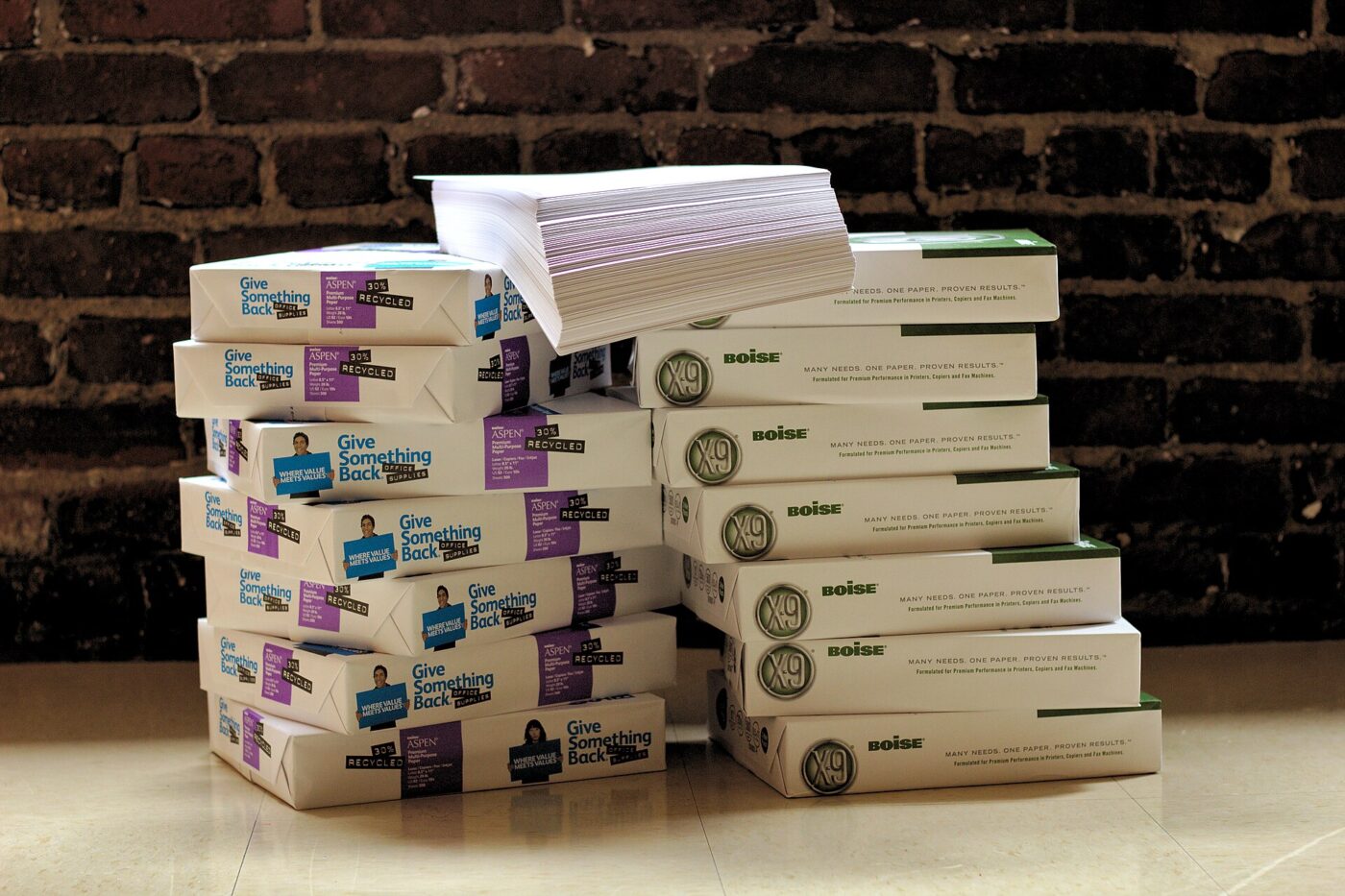
A case of copy paper is the least interesting thing on a home office shelf, and one of the few that has clearly gotten more expensive in 2026. The Bureau of Labor Statistics producer price index for paper stood at a preliminary 282.266 in August 2026. It was 256.718 in August 2025 and 251.082 in August 2024, which by our calculation is a rise of about 10 percent in the latest year and about 12 percent over two.
What makes that unusual is the other side of the ledger. Shipments of printing-writing paper in the United States fell 7 percent in August 2026 against August 2025, and 9 percent in July, according to monthly reports the American Forest & Paper Association released on September 17 and August 19, 2026. Prices usually follow demand. Here they are moving against it, because the mills that make office paper have been closing or converting faster than the market for it has shrunk.
Trend Signal
34/100 Steady momentum
- Emerging
- Rising
- Mainstream
- Peaking
- Cooling
Prices up about 10 percent while shipments keep falling
The BLS producer price index for paper rose from 256.718 in August 2025 to a preliminary 282.266 in August 2026, about 10 percent by our calculation, while the American Forest & Paper Association, in a report released September 17, 2026, put US printing-writing shipments down 7 percent in August against a year earlier.
Our editorial reading of the cited data, not a forecast. How it is scored
By the numbers
- +10%BLS producer price index for paper, August 2025 to August 2026 (our calculation)BLS
- 7%US printing-writing shipments, August 2026 vs 2025, reported September 17, 2026AF&PA
- 7%Share of North American annual uncoated freesheet supply a conversion cut, per SylvamoPackaging Dive
- +38%US net imports of uncoated free sheet, July 2026 vs July 2025, per AF&PAAF&PA
What the paper index actually shows
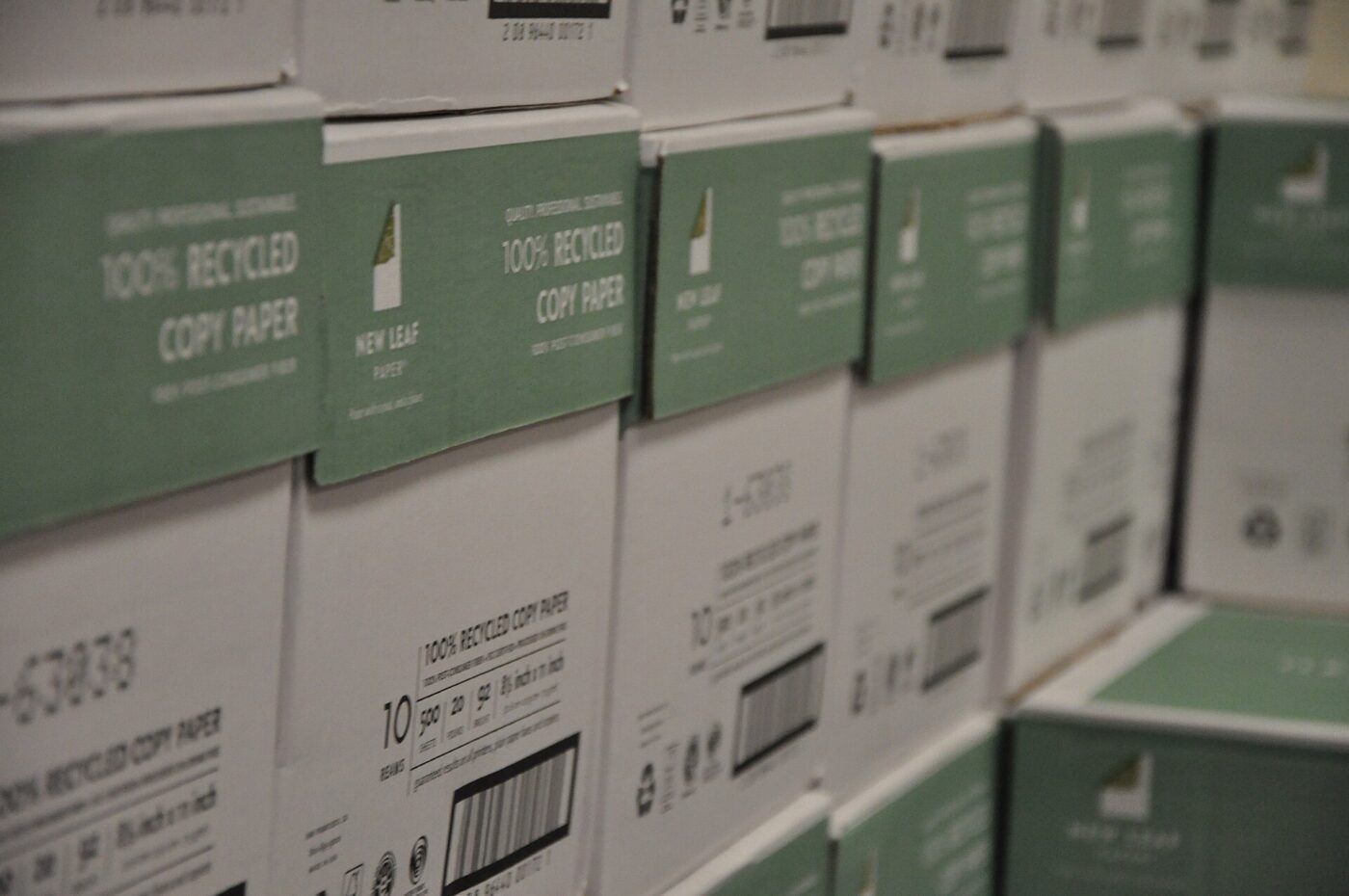
The series is titled PPI commodity data for pulp, paper, and allied products — paper, not seasonally adjusted, and it measures what US producers charge, not what a shopper pays at the register. On that measure 2025 was quiet: the index moved from 250.121 in January 2025 to 256.366 in December, about 2.5 percent across the whole year by our calculation.
Then it moved. January 2026 came in at 256.980, February at 263.831, April at 270.864, June at a preliminary 280.520 and July at a preliminary 283.145, before easing to a preliminary 282.266 in August. That is a climb of about 9.8 percent from January to August by our math, and it is the steepest stretch in the three years the table covers.
Two cautions belong with that number. The index covers a broad basket of paper grades, not the cut-size sheets in an office case, and BLS still marks every value from May 2026 onward as preliminary, so they can be revised.
| Month | PPI, paper (1982 = 100) | Change from January 2026 |
|---|---|---|
| August 2024 | 251.082 | n/a |
| August 2025 | 256.718 | n/a |
| January 2026 | 256.980 | — |
| April 2026 | 270.864 | +5.4% |
| July 2026 (P) | 283.145 | +10.2% |
| August 2026 (P) | 282.266 | +9.8% |
Producer prices for paper were flat through 2025 and then rose about 10 percent in the first eight months of 2026.
Capacity left the market faster than demand did
The clearest single event is a conversion. International Paper turned its Riverdale mill in Selma, Alabama from uncoated freesheet to containerboard, and Packaging Dive reported on August 11, 2026 that, on Sylvamo executives’ figures, the change removed 7 percent of the North American industry’s annual uncoated freesheet supply. Sylvamo had been buying from that mill under an agreement dating to its 2021 spin-off from International Paper, and the companies ended the purchasing in May 2026.
Sylvamo is adding capacity of its own, but not enough to fill the hole. Paper machine work at its Eastover, South Carolina mill will add 60,000 tons of annual uncoated freesheet capacity, against roughly 90,000 tons lost from the International Paper contract.
Before that came a closure. WOUB Public Media reported on July 12, 2025 that workers at Pixelle Specialty Solutions’ Chillicothe, Ohio mill had learned around Easter that the company would cease production there, that more than 700 people worked at the site, and that Pixelle was pointing to an August 10 date in a government-mandated WARN mass layoff notice. The same report described Chillicothe as a 200-year-old mill.
What the sellers told investors about the rest of 2026
Sylvamo said it continues to implement uncoated freesheet price increases across regions and expects the realization to continue through the end of the year, according to the same Packaging Dive report. It guided to a price and mix benefit of $75 million to $85 million in the second half of 2026 compared with the first half.
That is not a company printing money: Sylvamo’s net loss grew to $11 million in the second quarter of 2026 from $3 million in the first. The increases are being pushed through a shrinking market, which is why they stick on the producer side.
The counterweight is arriving. In its monthly reports released on August 19 and September 17, 2026, AF&PA said printing-writing inventories rose 3 percent from June to July 2026 and another 1 percent from July to August, and that US net imports of uncoated free sheet were up 38 percent in July against a year earlier. Imported paper and rising warehouse stock are what usually end a run like this.
The increases are sticking because supply left, not because demand came back, and imports are already answering.
What it looks like at the office supply shelf
A producer index is not a price tag. Retailers buy ahead, run promotions on cases and set their own margins, so the pass-through to a shopper arrives late, unevenly and sometimes not at all on the lines a store uses to pull traffic. The useful thing the index gives a buyer is direction: the index rose in every month from December 2025 through July 2026 before the August dip, so the cheap listing found in early 2026 is not the baseline any more.
When comparing listings, compare the same unit. Cases are sold by the ream and reams by the sheet count, and a case that looks cheap can hold fewer reams than the one next to it. The basis weight and brightness printed on the wrapper change the feel and the price of otherwise identical paper, and recycled lines are priced separately from virgin ones.
- Compare cost per ream, not per case, since case counts differ
- Check the basis weight and brightness on the wrapper before assuming two listings are the same paper
- Treat recycled and virgin lines as separate price series rather than substitutes
Who should buy now and who can wait
Buy now, in case quantities, if paper is a working input rather than an occasional convenience. Eight months of producer increases have not yet been fully answered by the import and inventory build, and the mills that left the market are not coming back on a schedule anyone has published.
Wait if the printer is idle most weeks. AF&PA’s data say the market for office paper is still contracting, with shipments down 7 percent in August 2026 and 9 percent in July, and a contracting market eventually gets promotional. The first sign will be in the AF&PA monthly reports: shipments still falling while inventories keep climbing is the setup for discounting.
What to watch next
- The monthly AF&PA printing-writing report, for shipments still falling while inventories keep rising, which is the usual setup for discounting
- The BLS paper index WPU0913, where August 2026 was the first month-over-month dip of the year
- Whether Sylvamo reports the $75 million to $85 million price and mix benefit it guided to for the second half of 2026
Where to start
Paid links: we earn a commission if you buy through the buttons below, at no extra cost to you. As an Amazon Associate I earn from qualifying purchases.
Copy paper types compared on what actually differs
| Product type | Good fit for | Where to look |
|---|---|---|
| Multipurpose copy paper, multi-ream case | Fits steady printing at home | See listings on AmazonOpens Amazon search results, not one listing: check the model on the product page. |
| Recycled copy paper | Fits buyers with a recycled-content rule | See listings on AmazonOpens Amazon search results, not one listing: check the model on the product page. |
| Heavier premium printer paper | Fits double-sided and client-facing pages | See listings on AmazonOpens Amazon search results, not one listing: check the model on the product page. |
Product types that fit the trend described above, not tested models. Check the exact listing before you buy. How we pick them.
Multipurpose copy paper, multi-ream case
Where to look: Amazon
The default buy for a household that prints every week. The only comparison that matters is cost per ream, because cases are not a standard size.
- Lowest cost per ream in most listings
- One delivery covers months
- Needs dry storage space
- Case counts vary between listings
Recycled copy paper
Where to look: Amazon
Worth buying on the number printed on the wrapper rather than on the word recycled, since the post-consumer share is what differs between them.
- Stated post-consumer content
- Sold in the same sizes as virgin paper
- Priced as a separate line, not a substitute
- Recycled share differs widely
Heavier premium printer paper
Where to look: Amazon
A small part of the shelf that is worth the premium only for pages someone else will handle. Check the printer manual for the heaviest stock the tray takes.
- Less show-through on two-sided printing
- Stiffer feel for documents that leave the house
- Costs more per sheet
- Heavy stock can jam light-duty trays
More: Work and Office trends and how the Trend Signal is scored.
Sources
- PPI commodity data for pulp, paper, and allied products — paper — US Bureau of Labor Statistics
- AF&PA releases August 2026 printing-writing monthly report — American Forest & Paper Association
- AF&PA releases July 2026 printing-writing monthly report — American Forest & Paper Association
- Pricing actions dominate quarterly fiber discussions — Packaging Dive
- Workers and Chillicothe locals prepare as the Pixelle paper mill closure draws closer — WOUB Public Media
Questions readers ask
Why is copy paper more expensive in 2026?
Supply left the market faster than demand fell. The BLS producer price index for paper rose about 10 percent between August 2025 and August 2026 by our calculation, after International Paper converted its Riverdale mill away from uncoated freesheet, removing 7 percent of North American annual supply on Sylvamo’s figures.
Is copy paper likely to get cheaper?
No public forecast covers retail copy paper. The pressure points both ways: Sylvamo expects price increases to keep being realized through the end of 2026, while AF&PA reported inventories rising in June, July and August 2026 and net imports of uncoated free sheet up 38 percent in July, which usually caps an increase.
Does the BLS index tell me what I will pay?
Not directly. Series WPU0913 measures what US producers charge for paper, not retail prices, and it covers many grades rather than office cut-size sheets alone. It is useful for direction and timing, not for predicting a shelf price.
Is demand for office paper still falling?
Yes, on the trade association’s own numbers. The American Forest & Paper Association reported total US printing-writing paper shipments down 7 percent in August 2026, in a release dated September 17, 2026, and down 9 percent in July, in one dated August 19, each against the same month a year earlier.