For most of the past decade, composting at home was a choice made by people who wanted to make it. That is changing in specific places and for specific reasons: states set organic waste diversion targets, cities have to hit them, and the cheapest way to hit them is to ask every household to put food scraps in a separate container. New York City already does. Washington is phasing it in. New Jersey has written county-level targets into law.
What that means for a kitchen is smaller than it sounds. Almost none of these rules mention a particular product. They specify what the outdoor container has to be, what may be used to line it, and what can go in. The countertop pail, the filter and the bag are your choices, and getting them wrong is the usual reason people give up in the first month.
Trend Signal
66/100 Steady momentum
- Emerging
- Rising
- Mainstream
- Peaking
- Cooling
Mandates are moving from businesses to households, state by state
New York City has required residents to separate food scraps since 2024 and has been able to fine property owners since April 1, 2025, while Washington requires covered cities and counties to offer residential organics collection from April 1, 2027.
Our editorial reading of the cited data, not a forecast. How it is scored
By the numbers
- 66M tonsUS wasted food from retail, food service and homes in 2019, latest EPA estimateEPA
- 75%California SB 1383 target for reducing organic waste sent to landfills by 2025CalRecycle
- 26 timesMinimum yearly residential organics collections Washington requires from April 1, 2027Washington Department of Ecology
- 50%Food waste cut every New Jersey county must reach by 2035 from a 2022 baselineBioCycle
Where separating food scraps is already the rule
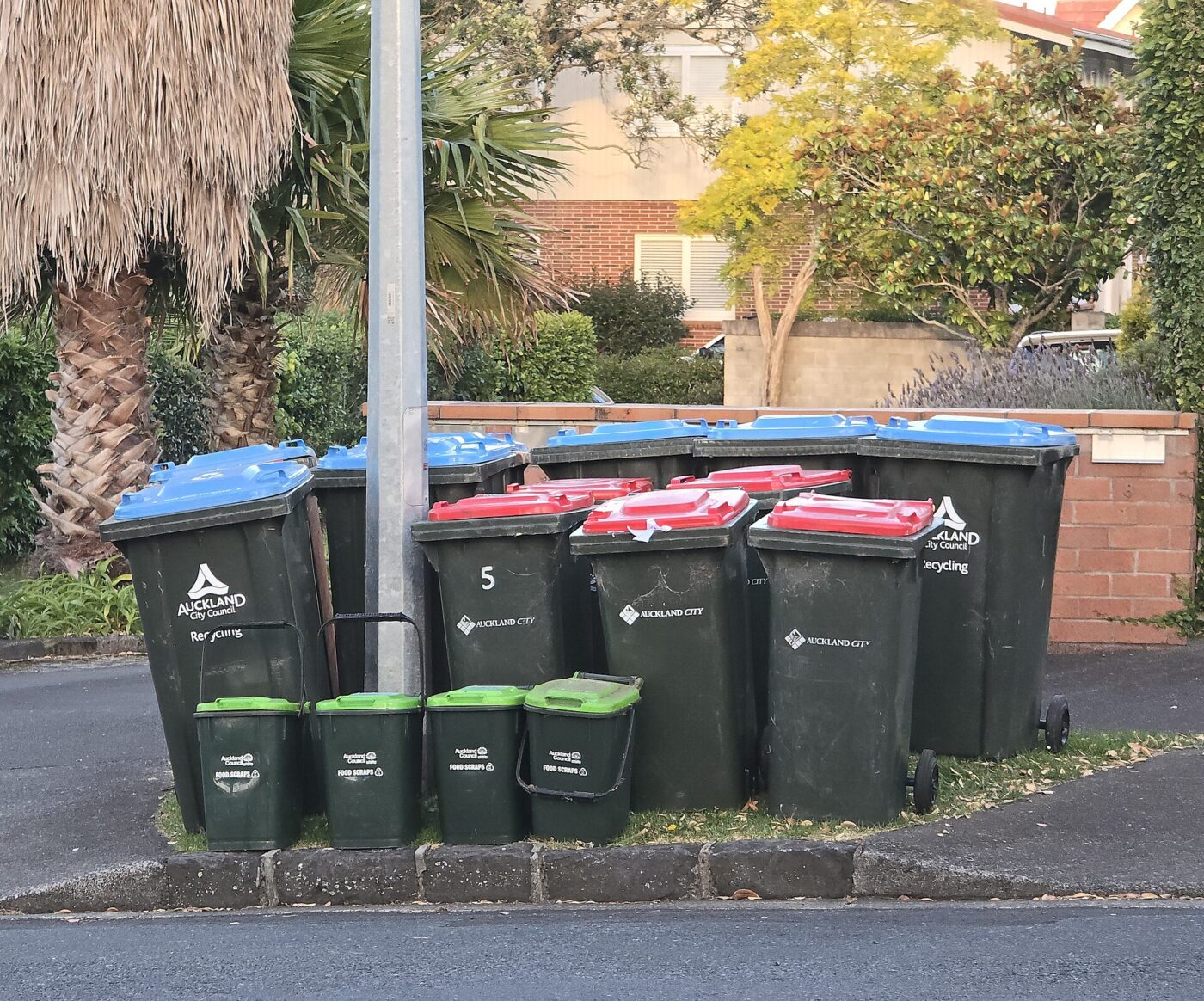
New York City is the clearest case. The Department of Sanitation states that all residents are required to separate food scraps, food-soiled paper or yard waste from trash, and that as of April 1, 2025 property owners may receive a fine if compostable material is not separated. That converts a voluntary program into a housekeeping obligation for millions of households.
California got there by a different route. SB 1383 set statewide targets of 75% less organic waste sent to landfills and 20% of unsold, still-edible food redirected to food recovery organizations, with jurisdictions required to establish collection services accessible to all residents and businesses. CalRecycle notes that organics make up half of what Californians send to landfill and that the state throws away 5 to 6 million tons of food waste a year.
Washington is phasing its version in. Under the state’s organics management law, businesses inside a designated area generating 96 gallons or more of organic waste a week have had to manage it since January 2026. From April 1, 2027, cities and counties inside an organics recycling collection area must provide year-round collection to residential customers other than multifamily buildings, at least 26 times a year, and from April 1, 2030 that collection stops being elective for those customers.
The pattern is consistent: businesses first, then households, with the residential step arriving on a published date.
The newer laws are about counties and thresholds
BioCycle reported on April 7, 2026 that New Jersey enacted S2464/A2090 in January 2026, requiring every county to cut food waste 50% by 2035 against a 2022 baseline, with updated solid waste management plans due by the end of 2027 and reductions achievable through donation, composting or anaerobic digestion. The state is also building a four-tier permitting structure so smaller composting operations face lower barriers.
New York State is lowering thresholds rather than adding households. Its food donation and food scraps recycling regulations currently capture generators producing two tons a week within 25 miles of a recycler; that moves to one ton within 50 miles on January 1, 2027 and half a ton on January 1, 2029. BioCycle reported 1,078 establishments complying, with each threshold step expected to add roughly 4,000 more. Maryland, meanwhile, has funded a $250,000-a-year grant program for farmers investing in composting infrastructure and food rescue equipment.
What the rules actually ask of your kitchen

Read the New York City instructions and the shopping list is short. The outdoor container must hold 55 gallons or less and have a secure lid, and the city says to line it with a clear plastic, paper or compostable bag. Extra leaf and yard waste can go in a paper lawn and leaf bag or a clear plastic bag, and twigs and branches can be bundled with twine. Nothing in there specifies a brand, a filter or a stainless pail.
That means the real decisions happen indoors, where the rules are silent. The variables that matter in a countertop pail are capacity against how often you will walk it out, whether the lid seals, whether the body goes in the dishwasher, and whether it takes a liner size you can actually buy.
Liners are where programs differ most, so check your own program’s accepted-materials list before you buy a case of anything. Some accept compostable bags, some want paper, some want clear plastic that is removed at the facility. The Biodegradable Products Institute, the North American certifier for compostable products, runs two marks: a commercial-only certification for items it says will break down in commercial compost facilities, and a commercial-and-home certification for items it says will also break down in properly managed home compost bins. A certification mark tells you what a bag was tested against; your city tells you whether it is allowed.
- Check the accepted-materials list for your program before buying liners in bulk.
- Match the liner size to the pail, not to the outdoor cart.
- Prefer a pail you can put in the dishwasher over one with a fabric or foam gasket.
- If your program takes paper bags, they are usually the cheapest liner that stays intact for a week.
Where the money is worth spending, and where it is not
The cheapest working setup is a lidded pail on the counter or under the sink, the liner your program accepts, and the cart your city provides. Charcoal filters in the lid are a common upsell; they reduce smell and they are a consumable, so factor in the replacement cost before deciding they are necessary. Emptying more often achieves the same thing for nothing.
Countertop electric food recyclers are the expensive end. They dry and grind scraps into a reduced material, which solves storage and smell in a small kitchen. What they do not do is decide for your program: whether the output is accepted in an organics cart, a yard-waste stream or only a garden depends on local rules.
There is also a reason to do this that has nothing to do with rules. EPA measured 66 million tons of wasted food from retail, food service and residential sources in 2019, about 60% of it landfilled and only 3.3 million tons composted, and notes that an average family of four wastes close to $3,000 of food a year. Separating scraps makes that number visible in a way a trash bag never does.
What to watch next
- Washington’s April 1, 2027 residential collection date, and whether your jurisdiction sits inside a designated collection area.
- New York State’s threshold step on January 1, 2027, which pulls thousands more generators into the food scraps rules.
- Whether your city publishes its own accepted-liner list, which is the detail that decides what you can buy.
Where to start
Paid links: we earn a commission if you buy through the buttons below, at no extra cost to you. As an Amazon Associate I earn from qualifying purchases.
Kitchen composting gear compared on what actually differs
| Product type | Good fit for | Where to look |
|---|---|---|
| Countertop compost pail with lid | Fits a small kitchen counter | See listings on AmazonOpens Amazon search results, not one listing: check the model on the product page. |
| Certified compostable liner bags | Fits programs that take certified bags | See listings on AmazonOpens Amazon search results, not one listing: check the model on the product page. |
| Lidded outdoor compost cart | Fits a yard and a weekly cart | See listings on AmazonOpens Amazon search results, not one listing: check the model on the product page. |
Product types that fit the trend described above, not tested models. Check the exact listing before you buy. How we pick them.
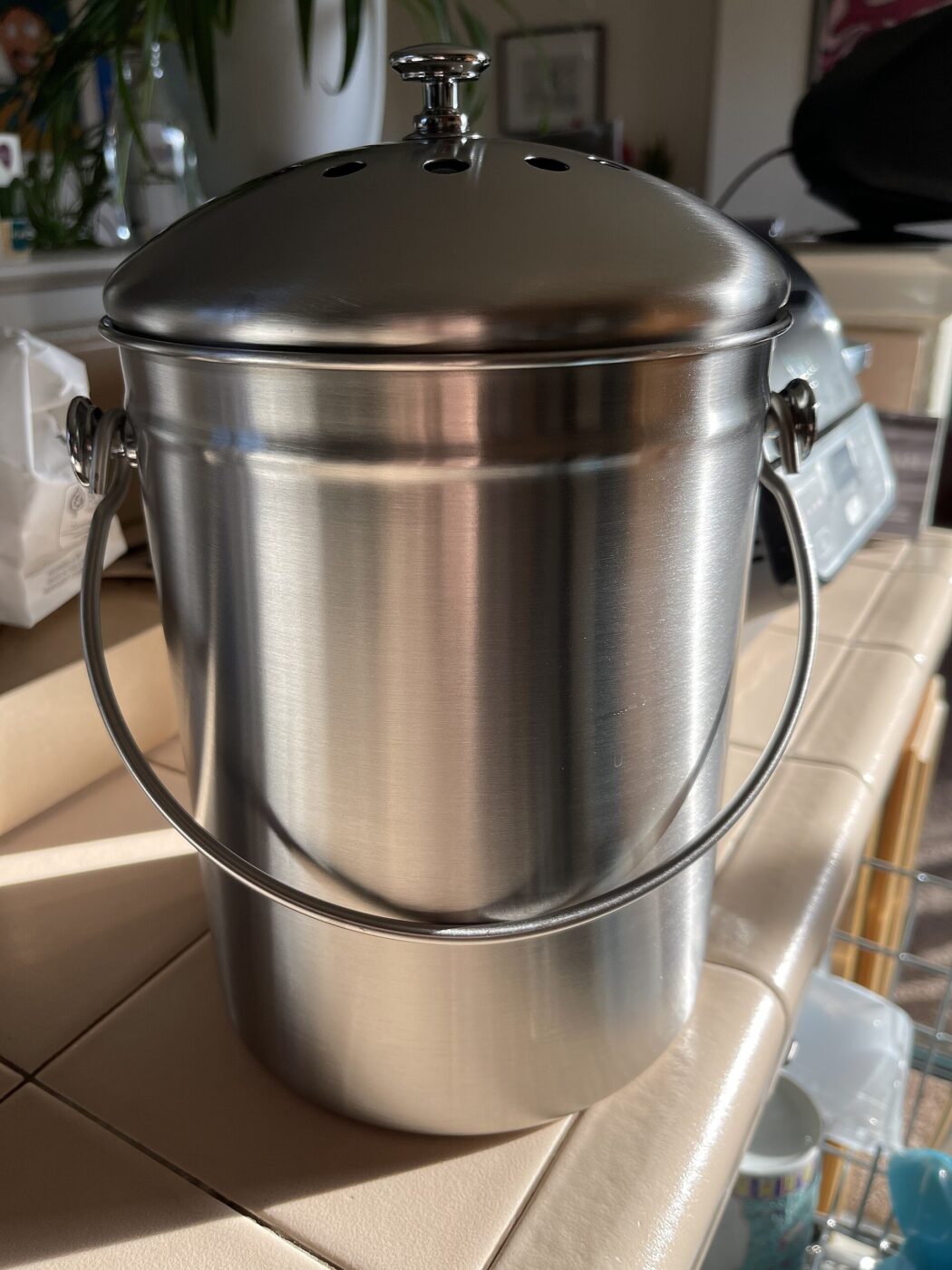
Countertop compost pail with lid
Where to look: Amazon
The only piece most households actually need. Capacity is the trade-off: larger means fewer trips outside and more time for smell to develop.
- Cheap and immediate
- Easy to rinse if dishwasher safe
- Needs emptying every few days
- Filters are a running cost
Certified compostable liner bags
Where to look: Amazon
Check your program first. Where compostable bags are accepted these are the tidiest option; where they are not, paper or clear plastic may be required instead.
- Keeps the pail clean
- Certification states where the bag breaks down
- Not accepted everywhere
- Shorter shelf life than plastic
Lidded outdoor compost cart
Where to look: Amazon
Only needed where the city does not supply a cart. New York City, for example, caps residential containers at 55 gallons with a secure lid, so check your own limit before buying.
- Holds a week of scraps and yard waste
- Secure lid keeps animals out
- Needs outdoor space
- Size limits are set by your city
More: Home and Kitchen trends and how the Trend Signal is scored.
Sources
- Curbside composting for residents — New York City Department of Sanitation
- SB 1383 organic waste reduction requirements — CalRecycle
- Organics Management Law compliance dates — Washington State Department of Ecology
- States turn up the pressure on food waste — BioCycle
- Food material-specific data — US Environmental Protection Agency
- Sustainable management of food — US Environmental Protection Agency
- Compostable product certification — Biodegradable Products Institute
Questions readers ask
Am I legally required to compost food scraps?
It depends where you live. New York City requires all residents to separate food scraps, food-soiled paper or yard waste, and property owners have been able to receive fines since April 1, 2025. Washington requires covered jurisdictions to provide residential organics collection from April 1, 2027, becoming non-elective for those customers from April 1, 2030. Many states have no household requirement at all.
Do I need compostable bags?
Not necessarily. New York City says to line the bin with a clear plastic, paper or compostable bag. Because programs differ, check your own accepted-materials list before buying a case. The Biodegradable Products Institute certifies products as breaking down in commercial compost facilities, and separately for properly managed home compost bins, but a certification does not override a local rule.
Are electric countertop composters accepted by city programs?
That is a local question. These appliances dry and grind scraps rather than composting them in the municipal sense, and whether the output may go in an organics cart, a yard waste stream or only a garden depends on the program. Confirm before buying one to meet a requirement.
How much food does a household actually throw away?
EPA’s most recent estimate, for 2019, put wasted food from retail, food service and residential sources at 66 million tons, with about 60% landfilled and 3.3 million tons composted. EPA also states that an average family of four wastes almost $3,000 worth of food a year.