We have not tested a filter or a purifier, and this is not a review. It is an explainer built from the federal regulation that defines the term, the EPA pages that interpret it, and the wording manufacturers were printing on September 25, 2026. We name a product only where we read its own page, and we chose those examples because each shows a different way of writing about the same 99.97 percent figure.
Amazon autocomplete under portable air purifier returns portable air purifier with hepa filter as a standard completion, so this is a phrase people shop on. The phrase splits in two: a filtration efficiency defined in regulation, and a marketing family built around it that regulation does not define.
Trend Signal
58/100 Steady momentum
- Emerging
- Rising
- Mainstream
- Peaking
- Cooling
A federal definition exists; EPA says the consumer version of the word has none
EPA’s technical summary on residential air cleaners states that while HEPA-designated home air filters usually perform at levels comparable to a MERV 16 filter, there is no widely accepted definition of HEPA performance in consumer products.
Our editorial reading of the cited data, not a forecast. How it is scored
By the numbers
- 99.97%Efficiency the federal HEPA definition requires at 0.3 micrometers, in 40 CFR 763.83Code of Federal Regulations
- 0.3 micronParticle size EPA calls the most penetrating, the worst case for a filterEPA
- MERV 16What EPA says residential HEPA-described filters are generally equivalent toEPA
- 246Models on the ENERGY STAR certified room air cleaner list, pulled 25 September 2026ENERGY STAR
Where 99.97 percent at 0.3 microns comes from
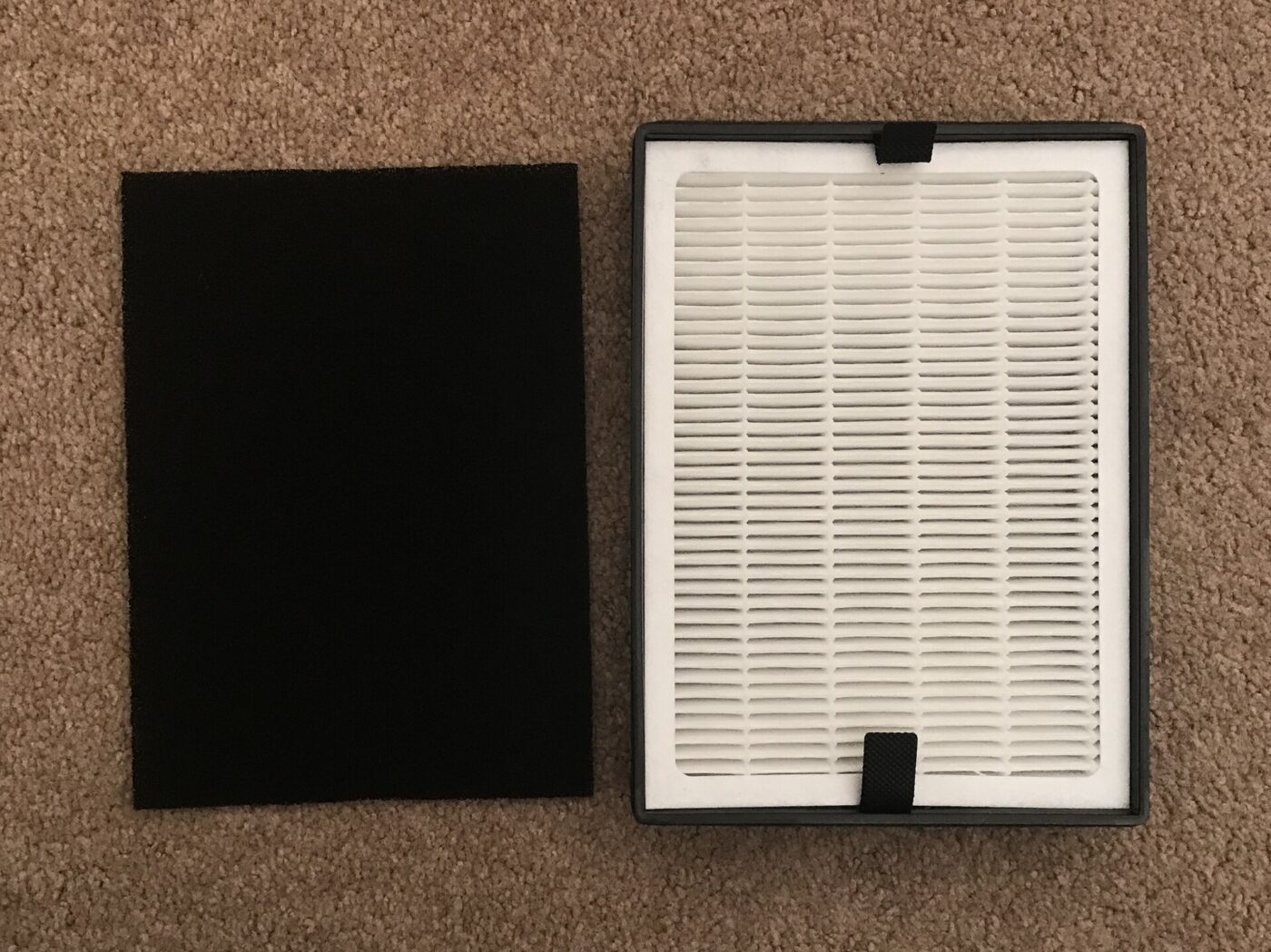
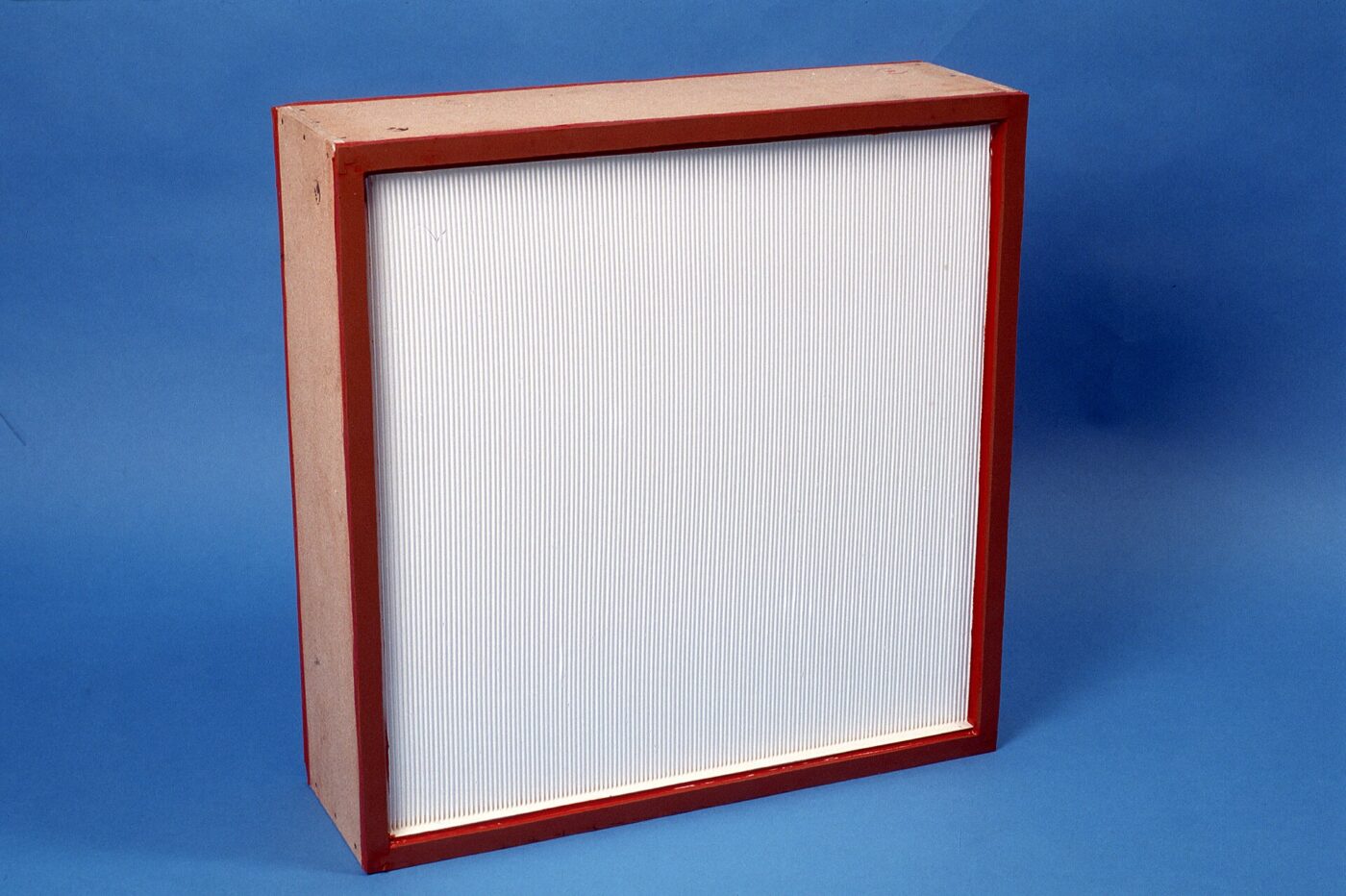
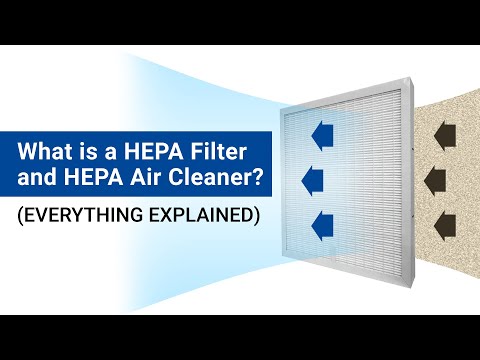
The number is not a manufacturer convention. It appears in federal regulation, in the asbestos rules at 40 CFR 763.83, which define high-efficiency particulate air as a filtering system capable of trapping and retaining at least 99.97 percent of all monodispersed particles 0.3 micrometers in diameter or larger. That is the whole definition, and it describes a filtering system, not a product category.
EPA’s own explainer page, last updated January 13, 2026, describes HEPA as a type of pleated mechanical air filter common in portable air cleaners, says the acronym is officially defined by the U.S. Department of Energy, and states this type of filter can theoretically remove at least 99.97 percent of airborne particles with a size of 0.3 microns. The part most summaries get backwards is what 0.3 microns represents: EPA writes that it corresponds to the worst case, the most penetrating particle size, and that particles larger or smaller are trapped with even higher efficiency.
The 0.3 micron figure is the hardest size to catch, not the smallest size caught.
What EPA says about the word on a consumer box
EPA published a technical summary on residential air cleaners, third edition, in August 2018, and its section on HEPA filters is the most useful paragraph a shopper can read. It says that in residential air cleaners, filters described as being HEPA filters are generally equivalent to MERV 16 and offer the highest available particle removal efficiency of fibrous media filters.
Then it draws the line. In health care and industrial settings, the document says, the HEPA designation has more explicit and narrowly defined performance characteristics and more rigorous test standards are applied. While HEPA-designated home air filters usually perform at high levels comparable to a MERV 16, there is no widely accepted definition of HEPA performance in consumer products, so they are unlikely to be equivalent to the systems used in health care buildings and industrial processes, though they still have very high removal efficiency, usually 99 percent or higher, for the sizes tested. A home filter sold as HEPA is very likely an excellent filter. What the word alone does not give you is a specification anyone is obliged to meet.
The words that are actually printed in 2026
Look at four current pages and the pattern is clear: the serious ones name a test method. Coway’s page for the Airmega Halo describes an IEST-certified HEPA filter capturing 99.97 percent of 0.3 micrometer particles. Dyson’s page for the HushJet Purifier Compact avoids the word HEPA entirely, describing electrostatic filtration that captures 99.97 percent of particles as small as 0.3 microns, with a footnote giving filtration efficiency to IEST-RP-CC001.7.
Levoit’s Core Mini specification block does not use the word HEPA at all, listing three-stage filtration, while the company’s replacement filter listings for larger models use the phrase HEPA-grade filtration. Coway’s Airmega Mighty2 lists filter composition as activated carbon plus HEPA with a footnote marker on the word, and EPA’s technical summary names ISO 29463 as the HEPA test metric. None of this means any of these filters is poor. It means the word carries different weight depending on who prints it, and a footnote naming a method is worth more than an adjective.
| What the page says | Product | What it points to |
|---|---|---|
| IEST-certified HEPA filter captures 99.97 percent of 0.3 micron particles | Coway Airmega Halo | A named test body |
| Electrostatic filtration, 99.97 percent down to 0.3 microns, efficiency to IEST-RP-CC001.7 | Dyson HushJet Purifier Compact HJ10 | A named recommended practice, and no use of the word HEPA |
| Three-stage filtration in the spec block; HEPA-grade filtration on replacement filters | Levoit Core Mini LAP-C161-WUS | A marketing family term with no defined threshold |
A filter rating is not a room rating
The deeper point in the EPA technical summary is the difference between two words that look interchangeable. Efficiency, it says, is a fractional measure of a device’s ability to reduce the concentration of pollutants in the air that passes once through it, measured in a laboratory. Effectiveness is its ability to remove pollutants from the spaces it serves in real-world situations. A HEPA claim is an efficiency claim about a sheet of media; it says nothing about how much air ever reaches that sheet.
That is why the industry ended up with Clean Air Delivery Rate, which multiplies removal by airflow. EPA’s consumer guide says portable air cleaners often achieve a high CADR by using a HEPA filter, and sizes by that rate rather than the filter: 65 cfm minimum for 100 square feet at an 8 foot ceiling, rising to 390 for 600. It also warns that the CADR system is for particles only. Our check of the ENERGY STAR certified file on September 25, 2026 shows how tightly those ideas link: across all 246 models the listed room size is the smoke CADR times 1.55, AHAM’s formula, in every row. None is sized by filter grade. For the rules-side history, see our piece on air purifier efficiency standards.
Buy the airflow through the filter, not the adjective in front of it.
What to check instead of the word
Four checks cover most of it, and all four are free. Find a CADR for the exact model, on the ENERGY STAR certified list or an AHAM seal, because that number folds filter efficiency and airflow together. Compare it to the room using EPA’s table rather than the box coverage figure. Look for a sealed housing, since a filter only matters if air cannot go around it. And read the replacement interval and price, because EPA notes an overloaded filter will not work well.
It is also worth knowing what other marks do not mean. EPA states that it neither certifies nor recommends particular brands of home air-cleaning devices, and that the ENERGY STAR label means a product meets energy efficiency guidelines and does not refer to air-cleaning effectiveness in any way. For whole-home air, EPA points to a furnace or HVAC filter rated at least MERV 13, or as high as the system will accommodate, noting that MERV 13 and above must demonstrate at least 50 percent removal efficiency for the smallest particles tested.
What to watch next
- Whether any consumer standards body adopts a testable definition for the HEPA claim on a home product
- Whether more makers footnote a named method such as ISO 29463 or an IEST recommended practice instead of an adjective
- Whether more certified models publish a PM2.5 CADR, since the ENERGY STAR file already carries that column
Where to start
Paid links: we earn a commission if you buy through the buttons below, at no extra cost to you. As an Amazon Associate I earn from qualifying purchases.
Three ways to buy filtration, and what each one is rated by
| Product type | Good fit for | Where to look |
|---|---|---|
| Room air purifier with a published CADR | Fits one room at a time | See listings on AmazonOpens Amazon search results, not one listing: check the model on the product page. |
| MERV 13 furnace or HVAC filter | Fits a whole house with ducts | See listings on AmazonOpens Amazon search results, not one listing: check the model on the product page. |
| Manufacturer replacement filter | Fits keeping a unit rated | See listings on AmazonOpens Amazon search results, not one listing: check the model on the product page. |
Product types that fit the trend described above, not tested models. Check the exact listing before you buy. How we pick them.
Room air purifier with a published CADR
Where to look: Amazon
The number to shop on is the CADR, not the filter adjective. EPA sizes rooms by CADR and says the rating system is for particles only.
- CADR folds efficiency and airflow into one number
- Certified lists are free to search
- Rated at the highest fan speed only
- Covers particles, not gases
MERV 13 furnace or HVAC filter
Where to look: Amazon
EPA says MERV 13 and above filters must demonstrate at least 50 percent removal efficiency for the smallest particles tested, and recommends the highest rating the fan and filter slot can accommodate.
- EPA suggests MERV 13 or as high as the system allows
- Covers a whole home
- Only filters while the system runs
- May need a technician to confirm fit
Manufacturer replacement filter
Where to look: Amazon
EPA notes that all filters need regular replacement and that an overloaded filter will not work well. The replacement schedule is where a rated machine stays rated.
- Restores the airflow the CADR was measured with
- Matches the certified design
- Costs recur
- Intervals vary by household
More: Home and Kitchen trends and how the Trend Signal is scored.
Sources
- 40 CFR 763.83, Definitions — Legal Information Institute
- What is a HEPA filter? — EPA
- Residential Air Cleaners, Technical Summary 3rd ed — EPA
- Guide to Air Cleaners in the Home — EPA
- Certified Room Air Cleaners finder — ENERGY STAR
- Airmega Halo specifications — Coway
- Airmega Mighty2 AP-1512N specifications — Coway
- Introducing the Dyson HushJet Purifier Compact — Dyson
- HushJet Purifier Compact HJ10 specifications — Dyson
- Core Mini air purifier specifications — Levoit
Questions readers ask
What is the official definition of a HEPA filter?
Federal regulation at 40 CFR 763.83 defines high-efficiency particulate air as a filtering system capable of trapping and retaining at least 99.97 percent of all monodispersed particles 0.3 micrometers in diameter or larger. EPA describes the acronym as officially defined by the U.S. Department of Energy.
Is true HEPA better than HEPA?
There is no defined difference. EPA states that while HEPA-designated home air filters usually perform at levels comparable to MERV 16, there is no widely accepted definition of HEPA performance in consumer products, and that the designation is applied more narrowly in health care and industrial settings.
Why is 0.3 microns the number everyone quotes?
Because it is the hardest size to capture. EPA writes that the 0.3 micron diameter specification corresponds to the most penetrating particle size, the worst case, and that particles larger or smaller are trapped with even higher efficiency.
Does an ENERGY STAR label mean a purifier cleans better?
No. EPA states that the ENERGY STAR label means the product meets energy efficiency guidelines set by EPA and does not refer to air-cleaning effectiveness in any way, and that the packaging disclaimer says EPA does not endorse manufacturer claims of healthier indoor air.