For most of desktop 3D printing’s life, a roll of filament came one way: a kilogram of plastic wound on a plastic spool you threw away, or kept in a drawer with a vague intention of reusing it. Two of the largest printer makers have now separated those two things. Bambu Lab sells filament as a bare coil, called a refill, plus a reusable spool you buy once. Prusa Research rebuilt its spool around an open NFC tag.
That sounds like packaging trivia. It is not. The split changes the price you pay per kilogram, whether a roll works in an automatic material system, whether your printer can read what is loaded, and how much plastic leaves your house per print. Here is what the manufacturers have published and what it means before your next filament order.
Trend Signal
64/100 Steady momentum
- Emerging
- Rising
- Mainstream
- Peaking
- Cooling
Refills undercut spooled rolls and an open tag standard arrived
Bambu Lab’s US store listed 1 kg PLA Basic at a suggested $15.99 as a refill and $18.99 on a spool when we read it on September 24, 2026, and Prusa Research launched OpenPrintTag, an open NFC standard for smart spools, on October 31, 2025.
Our editorial reading of the cited data, not a forecast. How it is scored
By the numbers
- $3.00Gap between a Bambu Lab PLA Basic refill and the same roll on a spool, Sept 24, 2026Bambu Lab
- 250 gWeight of the Bambu Reusable Spool, the plastic a refill buyer stops discardingBambu Lab
- 900 gNew Prusament refill size announced October 31, 2025, down from 1,000 gPrusa Research
- 6.6%Producer price index change for plastic resins and materials, August 2025 to August 2026Bureau of Labor Statistics
What a filament refill actually is
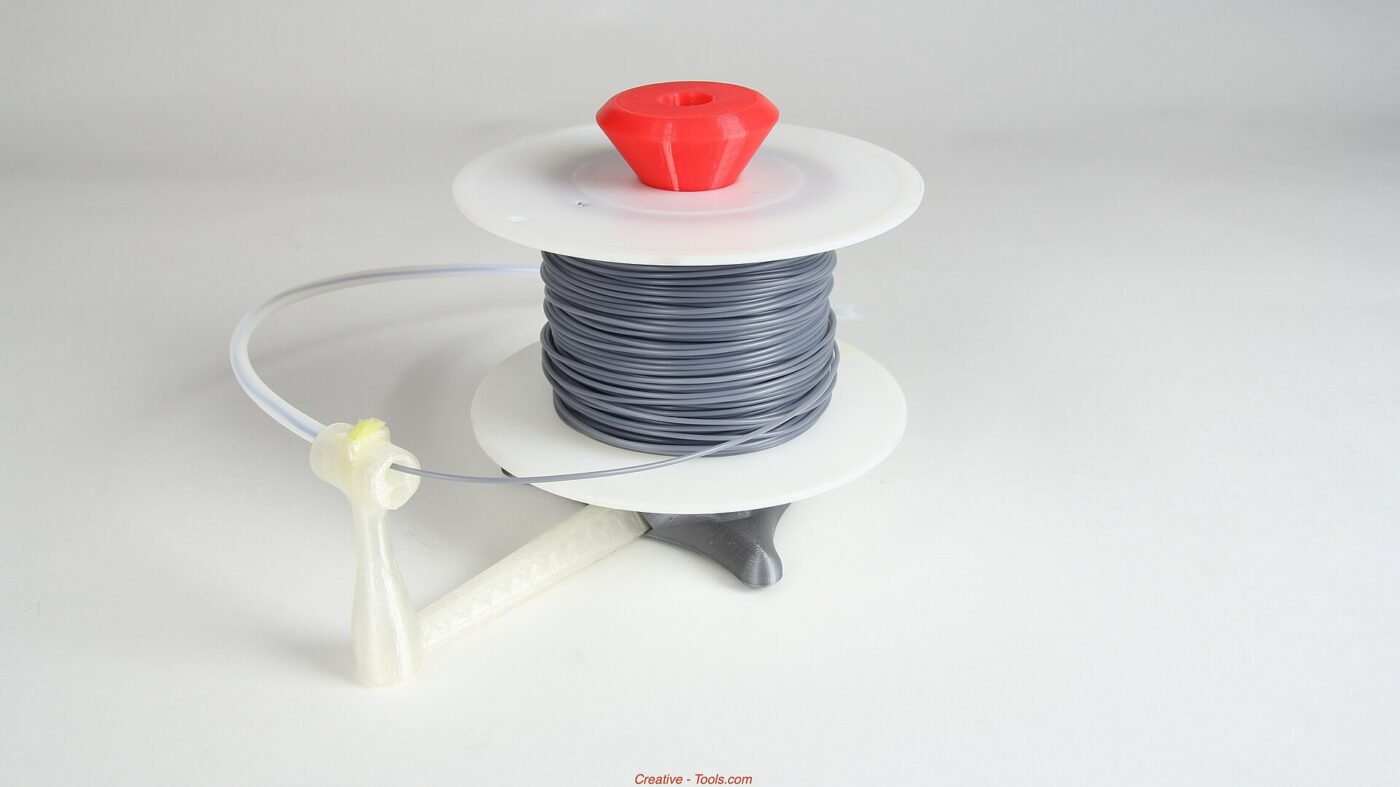
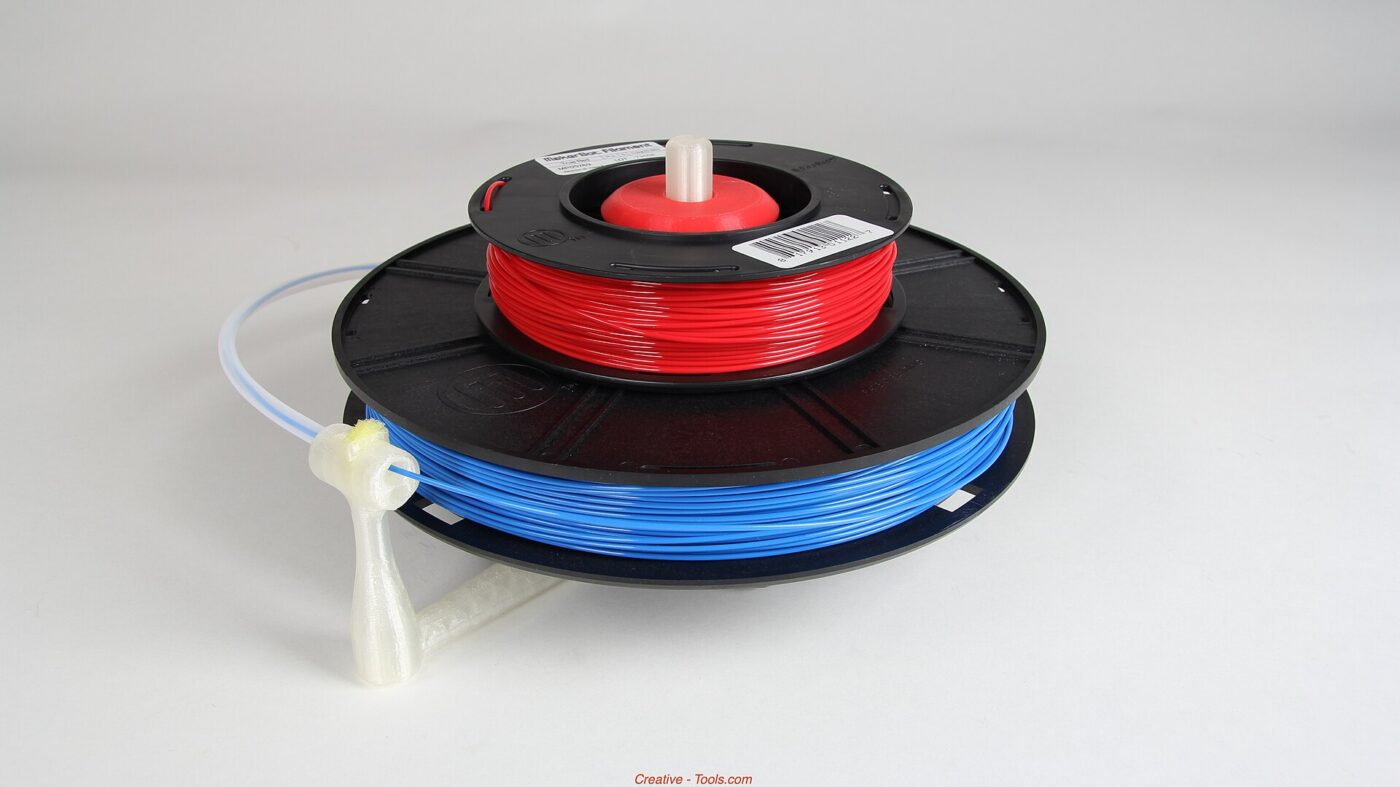
A refill is the coil without the spool. Bambu Lab sells PLA Basic in two forms on the same product page, listed as Refill and as Filament with spool, and states plainly that the refill needs to be used with a spool. The company sells that spool separately: the Bambu Reusable Spool was listed at $11.99 on September 24, 2026, weighs 250 grams, measures 200 by 200 by 67 mm and comes in a low-temperature version molded in ABS and a high-temperature version in ABS blended with polycarbonate.
Prusa Research went the same direction from the other end. Its October 31, 2025 announcement described a redesigned Prusament spool manufactured from recycled polycarbonate, rated to 100 degrees Celsius in the standard version and 150 degrees in the high-temperature version, with the refill sold to fit it. The company confirmed in an April 2, 2026 post that buyers can keep an empty spool and use it again with a Prusament refill.
The catch is fit. Prusa stated that old refills do not fit the new spools because they are wound on a paper core, and Bambu points buyers to its own instructions for swapping a refill onto the Bambu Reusable Spool rather than promising that any coil will seat. A refill is only cheap if you own the right carrier for it.
A refill is a coil plus a promise that you already own a spool that fits it.
The price gap, and when a reusable spool pays for itself
Bambu Lab’s US store, read on September 24, 2026, listed PLA Basic at a manufacturer suggested price of $15.99 for the 1 kg refill and $18.99 for the same 1 kg on a spool, with $12.47 per roll for mixed orders of 10 or more. That is a $3.00 gap per kilogram on our subtraction. Against an $11.99 reusable spool, our arithmetic puts the break-even at the fourth refill, and everything after that is saving.
Prusa announced the new refill at $27.49 on October 31, 2025, at 900 grams rather than a kilogram, and said it had lowered the price proportionally with the weight. Converting to dollars per kilogram is the single most useful habit to carry into filament shopping from 2026 onward: convert everything to dollars per kilogram before comparing, because the roll size is no longer a fixed 1 kg across brands.
Neither company has cut the price per kilogram of the plastic itself. The Bureau of Labor Statistics reported producer prices for plastic resins and materials up 6.6% in the 12 months to August 2026. A refill saves the cost of a molded spool, not the cost of the polymer.
| Format | What you get | Listed price | What to check |
|---|---|---|---|
| Refill, no spool | 1 kg coil, no spool included | $15.99 (Bambu PLA Basic) | That your spool accepts the core |
| Filament with spool | 1 kg on a molded spool | $18.99 (Bambu PLA Basic) | Whether the spool is reusable |
| Reusable spool | Empty carrier, 250 g | $11.99 (Bambu) | Low-temp or high-temp version |
| Refill, 900 g | 900 g coil for the new spool | $27.49 (Prusament) | Price per kilogram, not per roll |
The tag on the spool split into two camps

Filament is also becoming a data carrier. Bambu Lab states that all printing parameters for PLA Basic are embedded in RFID and read by its automatic material system, so the printer knows the material and color without being told. That convenience is tied to the company’s own filament and hardware.
On October 31, 2025 Prusa Research published OpenPrintTag, an open-source NFC standard for smart spools that it describes as free to use, free to extend and working across brands. The project site says tags are rewritable, carry all data locally so nothing depends on a cloud service, use a circular layout that can be read in any orientation, and can be stuck on a spool you already own and reflashed when it is empty. In the same announcement Prusa said it is already in discussion with several other major brands that are testing or have shown interest, but named none.
Prusa was explicit about the target. Its post criticized encrypted, digitally signed RFID tags that only the manufacturer can create, arguing that this forces the user to buy only the manufacturer’s products. We read that as the real contest of 2026: not whether spools get chips, but whether the chip is a convenience or a lock.
What the change costs you in practice
The first cost is compatibility homework. A refill has to match a spool by core diameter, core width and hub size, and an automatic feeder adds its own dimension limits. Bambu lists different filament compatibility for the low- and high-temperature versions of its spool, and Prusa’s redesign left its own older refills behind, so fit is a per-brand question rather than a given.
The second is shrinking roll sizes. Prusament’s move from 1,000 g to 900 g is a documented change of what a roll contains, announced alongside a new price. Nothing obliges other brands to follow, but it is now a number worth reading off the listing.
The third is storage. A bare coil is more exposed than a spooled roll, and both PLA and PETG take up moisture from the air; Bambu’s own product page tells buyers to dry filament before use and store it in a dry environment afterward. If you switch to refills, a sealed box with desiccant stops being optional kit. One upside: Bambu’s listing says PLA Basic has low indoor printing emissions and is “certified to UL GREENGUARD 2904”, which is a claim you can check on a listing rather than a marketing line.
Refills move cost out of packaging and into the buyer’s planning: fit, roll size and storage.
What to watch next
- Whether a second filament brand ships OpenPrintTag tags; Prusa’s announcement says talks with several other major brands are under way but names none.
- Whether the $3.00 refill discount at Bambu Lab holds once the reusable spool is widely owned.
- Whether more brands move off the 1 kg roll the way Prusament’s 900 g refill did, which changes every price comparison.
Where to start
Paid links: we earn a commission if you buy through the buttons below, at no extra cost to you. As an Amazon Associate I earn from qualifying purchases.
Filament packaging and storage types compared on the things that differ
| Product type | Good fit for | Where to look |
|---|---|---|
| Reusable filament spool | Fits repeat buying of one material | See listings on AmazonOpens Amazon search results, not one listing: check the model on the product page. |
| PLA filament refill without a spool | Fits a spool you already own | See listings on AmazonOpens Amazon search results, not one listing: check the model on the product page. |
| Filament storage box with desiccant | Fits humid storage | See listings on AmazonOpens Amazon search results, not one listing: check the model on the product page. |
Product types that fit the trend described above, not tested models. Check the exact listing before you buy. How we pick them.
Reusable filament spool
Where to look: Amazon
The carrier that makes refills work. Bambu sells low-temperature and high-temperature versions because the spool sits in the dryer or the heated chamber with the filament, so match the version to the materials you actually print.
- Bought once, used for years
- Removes spool cost from every roll
- Only pays off after several refills
- Temperature rating matters for some materials
PLA filament refill without a spool
Where to look: Amazon
The coil on its own. Worth buying only once you know your spool takes the core, and worth converting to dollars per kilogram first, because roll sizes are no longer uniform.
- Cheaper per roll than spooled
- Less plastic per purchase
- Needs a matching spool
- Core sizes vary between brands
Filament storage box with desiccant
Where to look: Amazon
A bare refill has no shell around it, so moisture control becomes part of the setup. Check the internal dimensions against the roll size you buy.
- Keeps a bare coil sealed
- Can feed while stored
- Takes bench space
- Desiccant needs recharging
More: Hobbies and Crafts trends and how the Trend Signal is scored.
Sources
- The OpenPrintTag Is Here: an open NFC tag standard for smart filament — Prusa Research
- Contest: Upcycling NEW Prusament Spools — Prusa Research
- OpenPrintTag.org: open NFC standard for 3D printing — Prusa Research
- PLA Basic filament product page — Bambu Lab US Store
- Bambu Reusable Spool product page — Bambu Lab US Store
- Producer Price Index news release, table 2 — U.S. Bureau of Labor Statistics
Questions readers ask
Is a filament refill cheaper than a normal spool?
At Bambu Lab, yes. Its US store listed 1 kg PLA Basic at $15.99 as a refill and $18.99 on a spool when we read it on September 24, 2026, a $3.00 gap. The reusable spool is a separate $11.99 purchase, so the saving starts once you have bought enough refills to cover it.
Can I use any brand’s refill on my spool?
Not automatically. Cores differ in diameter and width. Bambu tells buyers a refill has to be used with a spool and publishes its own swap instructions, and Prusa stated that older paper-core refills do not fit its redesigned spool, so fit has to be checked per brand.
What is OpenPrintTag?
It is an open-source NFC standard for filament spools published by Prusa Research on October 31, 2025. The project site describes it as free to use and extend, working across brands, readable offline without a cloud service, and rewritable so a tag can be reused on a new spool or refill.
Are filament prices falling?
The packaging is getting cheaper, the plastic is not. Bambu listed $12.47 per roll for mixed orders of 10 or more when we read its store on September 24, 2026, while the Bureau of Labor Statistics reported producer prices for plastic resins and materials up 6.6% over the 12 months to August 2026.