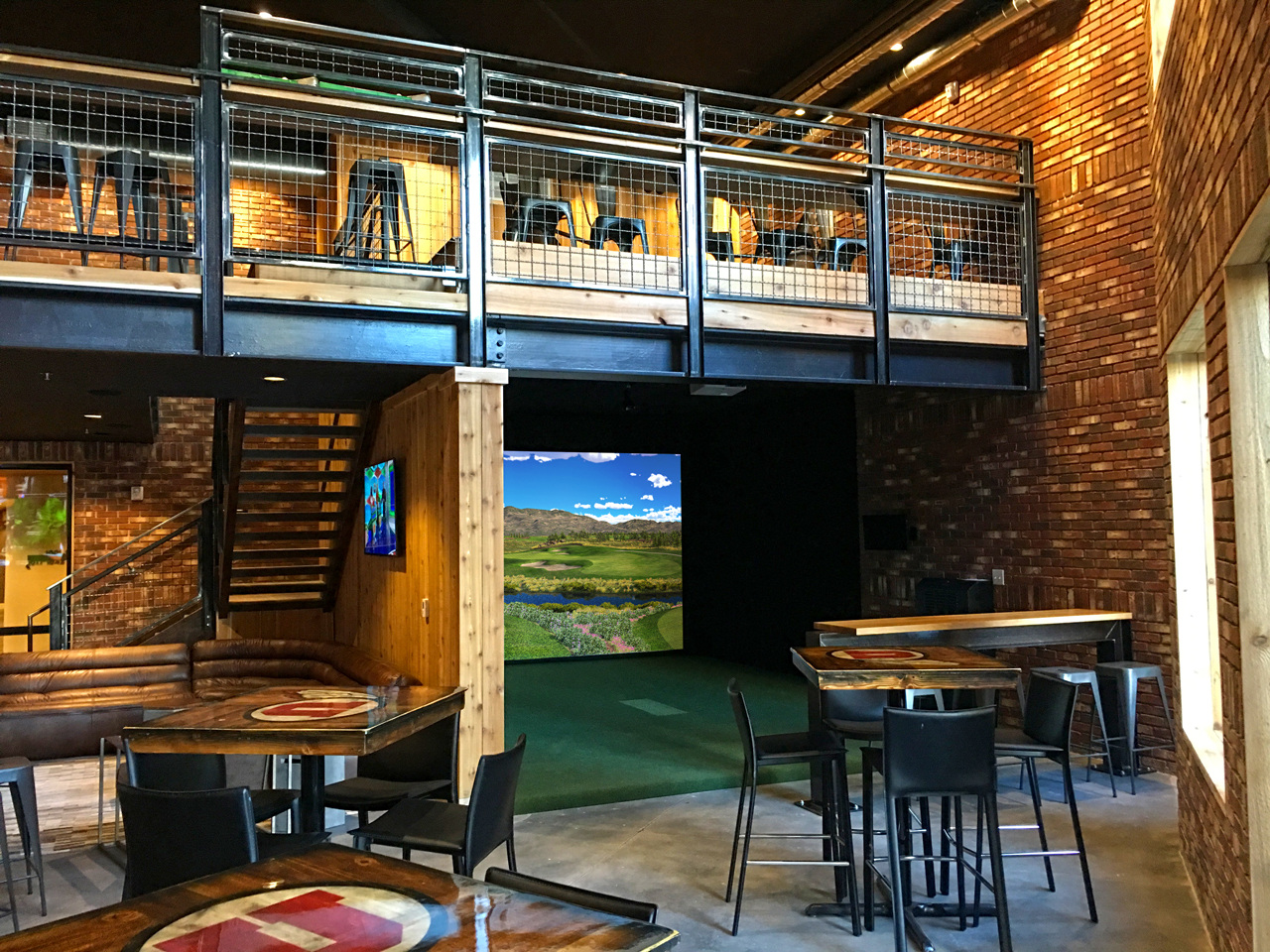
Golf’s growth after 2020 did not all happen on golf courses. The National Golf Foundation (NGF) counted a record 48.1 million Americans who played golf in 2025, and 19 million of them played only off the course: at driving ranges, indoor simulators and golf entertainment venues. Within that world, simulator and screen golf users rose from 3.8 million in 2015 to 8.1 million in 2024, according to an NGF white paper published in April 2025.
New hardware now reaches down to about $200. Shot Scope put a radar launch monitor on sale in March 2026 at a $199.99 list price, two months after Garmin announced a GPS handheld with a built-in launch monitor at $599.99, while Garmin’s camera-based simulator launched in November 2024 at $4,999.99. Here is what the data show, what each price tier measures, and how much room a setup takes.
Trend Signal
74/100 Strong momentum
- Emerging
- Rising
- Mainstream
- Peaking
- Cooling
Simulator users up 126% in five years as a $199.99 launch monitor arrives
The National Golf Foundation counted 8.1 million simulator and screen golf users in 2024, up from 3.6 million five years earlier, and a radar launch monitor went on sale at $199.99 in March 2026.
Our editorial reading of the cited data, not a forecast. How it is scored
By the numbers
- 8.1MU.S. golf simulator and screen golf users in 2024, up from 3.6M five years earlierNational Golf Foundation
- 19MAmericans who played only off-course golf in 2025 (on-course golfers: 29.1M)National Golf Foundation
- $199.99List price of Shot Scope’s LM1 radar launch monitor at its March 2026 launchShot Scope
- 6.5%Share of U.S. golf facilities with simulators installed, NGF survey of late 2024National Golf Foundation
Off-course golf became a second market
NGF’s industry figures split 2025’s record 48.1 million golfers into 29.1 million who played on a course and 19 million who took part only off the course. Women made up 43% of those off-course-only participants, well above their 28% share of on-course golfers. NGF also counted 21.2 million non-golfers who said they were very interested in playing on a course, up 37% since 2019, and credits off-course golf with part of that increase.
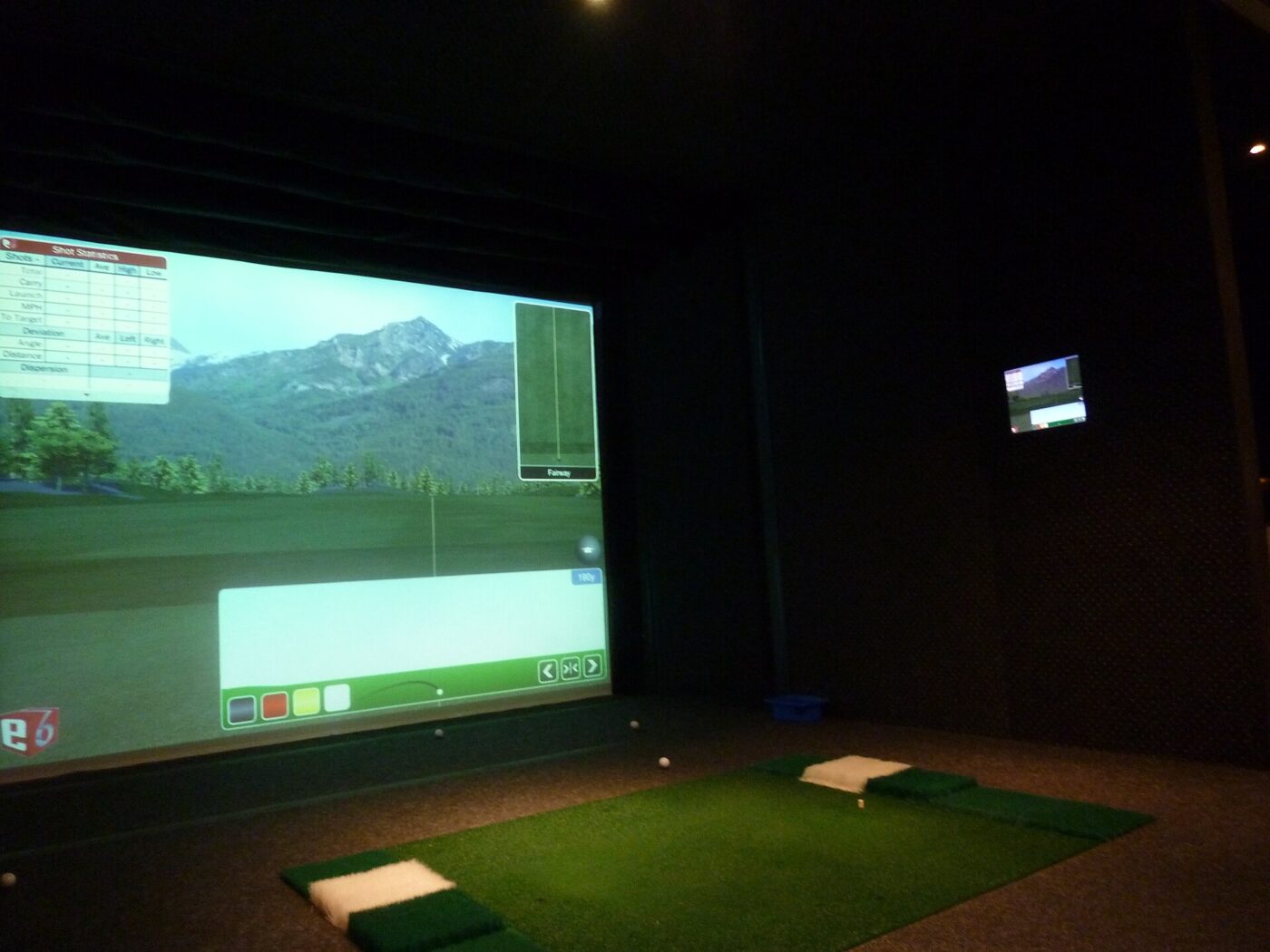
Simulators are the fastest-moving slice. NGF’s April 2025 white paper, The Golf Simulator Opportunity, puts simulator and screen golf users at 8.1 million in 2024, up 126% from 3.6 million five years earlier. Half of them, 51%, had not played on a course in the prior 12 months, up from 42% a decade earlier, so simulators are drawing people who are not traditional golfers.
Other surveys show golf growing overall. The National Sporting Goods Association, which uses a different method, counted 21.6 million golf participants in 2025, up 7.9% from 2024 and 30.2% since 2019, as reported by SGB Media.
By our math, more than a third of U.S. golfers in 2025 played only off the course, and simulators are pulling in non-golfers.
Launch monitors now come in three price tiers
A launch monitor measures the swing and the ball and feeds the numbers to an app or simulator software. At the bottom, Shot Scope’s LM1 went on sale on March 26, 2026 at a $199.99 list price with no subscription. It uses Doppler radar and lists five metrics: club speed, ball speed, smash factor, carry distance and total distance. Spin is not among them.
In the middle, Garmin’s Approach G82, announced January 20, 2026 at $599.99, combines a GPS course handheld with a radar launch monitor that reads ball speed, club speed, smash factor and tempo, plus putting metrics. Garmin lists aerial imagery and green contour data as Garmin Golf membership benefits.
At the high end, the Garmin Approach R50, announced November 12, 2024 at a suggested $4,999.99, uses three high-speed cameras to track more than 15 ball and club metrics, including measured spin rate and spin axis. It has a built-in simulator with more than 43,000 courses and works with third-party simulator software such as GSPro and Awesome Golf, but Garmin’s footnotes say its Home Tee Hero simulator and leaderboards require an active Garmin Golf membership.
| Device (announced) | List price | Sensor | What the maker lists |
|---|---|---|---|
| Shot Scope LM1 (March 2026) | $199.99 | Doppler radar | Five metrics; no spin listed; no subscription |
| Garmin Approach G82 (January 2026) | $599.99 | Radar in a GPS handheld | Ball and club speed, smash factor, tempo, putting |
| Garmin Approach R50 (November 2024) | $4,999.99 | Three high-speed cameras | 15+ metrics incl. measured spin; built-in simulator |
Golf facilities are adding bays too
The same NGF white paper, based on surveys of 354 golf facilities and 569 core golfers in November and December 2024, found simulators installed at 6.5% of U.S. golf facilities: 10.4% of private and 5.1% of public ones. Adoption was highest in the Midwest at 8.4% and lowest in the South at 4%, which NGF ties to shorter outdoor seasons. Another 13% of facilities said they definitely or probably planned to add simulators within one to two years.
Operators reported spending an average of $45,000 per simulator bay and charging about $55 per session. Users most often cited weather-independent play (59%), better practice (43%) and performance feedback (34%) as reasons to use simulators, and more than 20% of facilities owned at least one portable launch monitor.
How much room a setup takes

Space is the first barrier, even for golf businesses: 72% of facilities without simulators cited it, ahead of the 53% that cited the initial investment. NGF put the average installation at about 15 feet wide, 13 feet high and 21 feet deep, including the hitting area, though it notes that setups can be made to fit smaller spaces as long as there is room for a safe swing.
NGF also describes a cheaper, smaller format that closely resembles home setups: a hitting net with a separate screen such as a TV, tablet or phone. Radar units need room behind the ball, too; Shot Scope tells LM1 owners to place the unit about 5 feet behind the hitting position. Garmin pitches the R50 for garages and basements, connected to a monitor or projector.
- Ceiling: swing a driver slowly in the space before buying anything
- Depth: leave room for the ball flight into the net plus any radar unit behind you
- Width: allow side clearance so a mishit does not reach walls or windows
Who should buy now, and who should wait
If you want speed and distance numbers for range practice, the radar tier is now inexpensive and subscription-free at the entry level. If you want full simulated rounds in a garage, the spin measurement and course software of the camera tier matter, and so does the room: the camera-based setup is the one that justifies building a hitting bay.
If you are short on space, wait and rent first. NGF found operators charging about $55 per session, and a few sessions show whether you would use a home setup. Golf also has a retention problem: NGF’s April 2025 white paper says 16.2 million people tried traditional golf for the first time in the previous five years, while the net gain in on-course participation was 3.3 million. A home simulator is easiest to justify for players already committed to the game.
What to watch next
- NGF’s next participation estimate, for whether off-course-only golfers keep growing from 19 million.
- Whether launch monitors under $300 start listing measured spin, the feature that separates range tools from full simulators.
- Simulator adoption at golf facilities, as the 13% of operators with plans in NGF’s survey decide whether to build.
Where to start
Paid links: we earn a commission if you buy through the buttons below, at no extra cost to you. As an Amazon Associate I earn from qualifying purchases.
Home golf practice gear, by what it takes
| Product type | Good fit for | Where to look |
|---|---|---|
| Portable radar launch monitor | Fits range and speed practice | See listings on AmazonOpens Amazon search results, not one listing: check the model on the product page. |
| Golf hitting net | Fits a garage or basement bay | See listings on AmazonOpens Amazon search results, not one listing: check the model on the product page. |
| Golf hitting mat | Fits hitting off a hard floor | See listings on AmazonOpens Amazon search results, not one listing: check the model on the product page. |
Product types that fit the trend described above, not tested models. Check the exact listing before you buy. How we pick them.
Portable radar launch monitor
Where to look: Amazon
The cheapest tier gives speed and distance numbers for practice. Check the listed metrics: Shot Scope’s LM1, launched at $199.99 in March 2026, lists five, and spin is not one of them.
- A 2026 entry model launched near $200
- Useful indoors and outdoors
- Low-cost units may not measure spin
- Needs room behind the ball
Golf hitting net
Where to look: Amazon
NGF describes nets with a separate screen as the lower-cost setup closest to what golfers use at home. Measure the room first; NGF’s average facility bay is about 13 feet high.
- Makes indoor full swings possible
- Works with any launch monitor
- Needs height and depth
- Frames take floor space
Golf hitting mat
Where to look: Amazon
A mat completes a net setup in a garage or basement. Size it for both your stance and the ball position your launch monitor expects.
- Protects floors and clubs
- Portable between spaces
- Takes floor space
- Some will not hold a real tee
More: Sports and Recreation trends and how the Trend Signal is scored.
Sources
- Golf Industry Facts — National Golf Foundation
- The Golf Simulator Opportunity, 2025 Edition (NGF white paper, April 2025) — National Golf Foundation
- Shot Scope’s LM1 Launch Monitor Officially Launches — Shot Scope
- Introducing the Approach G82 — Garmin via PR Newswire
- Meet the Garmin Approach R50 — Garmin via PR Newswire
- Study: Pickleball Growth Slows as Skiing, Flag Football, and Pilates Step Up — SGB Media
Questions readers ask
How many people use golf simulators?
NGF counted 8.1 million U.S. simulator and screen golf users in 2024, up from 3.6 million five years earlier and 3.8 million in 2015. About half had not played on a course in the prior year.
How much space do you need for a golf simulator?
NGF put the average facility installation at about 15 feet wide, 13 feet high and 21 feet deep, including the hitting area, and notes that smaller setups are possible if there is room for a safe swing.
Do cheap golf launch monitors measure spin?
Not always. Shot Scope’s LM1, launched in March 2026 at a $199.99 list price, lists club speed, ball speed, smash factor, carry and total distance, but not spin. Garmin’s Approach R50, launched in November 2024 at a suggested $4,999.99, uses three cameras to measure spin rate and spin axis.
Do golf launch monitors need a subscription?
It depends on the model. The Shot Scope LM1 has no subscription. Garmin lists aerial imagery and green contours on the G82 as membership benefits, while the R50’s Home Tee Hero simulator and leaderboards require an active Garmin Golf membership.