If your barber or salon raised prices again in 2026, federal data backs up the feeling. By our calculation from published index levels, the consumer price index for haircuts and other personal care services rose 4.2% between August 2025 and August 2026 and 8.1% over two years, outpacing the 3.4% and 6.4% increases in overall prices over the same periods.
A haircut is a service priced around a licensed professional’s time, and service prices behave differently from product prices. Here is what the price trail shows, how grooming products compare, and when cutting at home actually saves money.
Trend Signal
58/100 Steady momentum
- Emerging
- Rising
- Mainstream
- Peaking
- Cooling
Service prices climbing faster than grooming products
The BLS index for haircuts and other personal care services rose 4.2% in the year to August 2026, against 3.4% for all items and 3.1% for hair, dental and shaving products.
Our editorial reading of the cited data, not a forecast. How it is scored
By the numbers
- +4.2%CPI for haircuts and other personal care services, Aug 2026 vs Aug 2025 (our calculation)BLS
- +6.4%All-items CPI, Aug 2026 vs Aug 2024, our calculation; haircut services rose 8.1% thenBLS
- +3.1%CPI, hair, dental, shaving, misc. personal care products, Aug 2026 vs Aug 2025, our calc.BLS
- $18.37Median hourly pay of US barbers in 2025BLS Occupational Outlook Handbook
What the price index shows
The BLS series for haircuts and other personal care services stood at 228.729 in August 2026, up from 219.407 a year earlier and 211.618 in August 2024. By our calculation, that is a 4.2% increase in the latest twelve months and 3.7% in the twelve months before, so this is a steady climb rather than a one-time jump. The series also covers other personal care services, not only haircuts.
The path was not smooth. The index dipped in spring 2026, from 225.949 in February to 223.706 in April, then set new highs from June onward. Monthly readings are noisy, and October 2025 is missing because of the federal funding lapse, but the two-year direction is clear.
Overall inflation ran slower. The all-items CPI rose 3.4% in the year to August 2026 and 2.9% in the year before. In both years the barber chair got more expensive faster than the average basket of goods and services.
| BLS CPI series (not seasonally adjusted) | Aug 2024 to Aug 2025 | Aug 2025 to Aug 2026 | Two years |
|---|---|---|---|
| Haircuts and other personal care services | +3.7% | +4.2% | +8.1% |
| All items | +2.9% | +3.4% | +6.4% |
| Hair, dental, shaving and misc. personal care products | +1.8% | +3.1% | +5.0% |
Why the chair keeps getting pricier
All states require barbers, hairstylists and cosmetologists to be licensed, which means finishing a state-approved program and passing an exam, according to the BLS Occupational Outlook Handbook. Median pay for barbers was $18.37 an hour, or $35,880 a year, in 2025. About 80% of barbers are self-employed, compared with 48% of hairstylists and cosmetologists, so many barbers set their own prices.
A growing workforce has not stopped prices from rising so far. BLS projects employment of barbers, hairstylists and cosmetologists to grow 7% over the 2025–35 decade, which it calls much faster than average, with about 80,300 openings a year.
Grooming product makers are raising prices too, just more slowly than the chair. Procter & Gamble’s grooming segment posted 2% higher pricing and a 1% volume decline for its fiscal year ended June 30, 2026, and described innovation-based pricing offset by lower volume in its latest quarter. Edgewell reported a 1.9% organic decline in wet shave sales for the same quarter while citing strong global grooming performance.
Licensed labor sets the price of a cut, and that cost has risen faster than inflation two years running.
Tools got cheaper relative to the chair
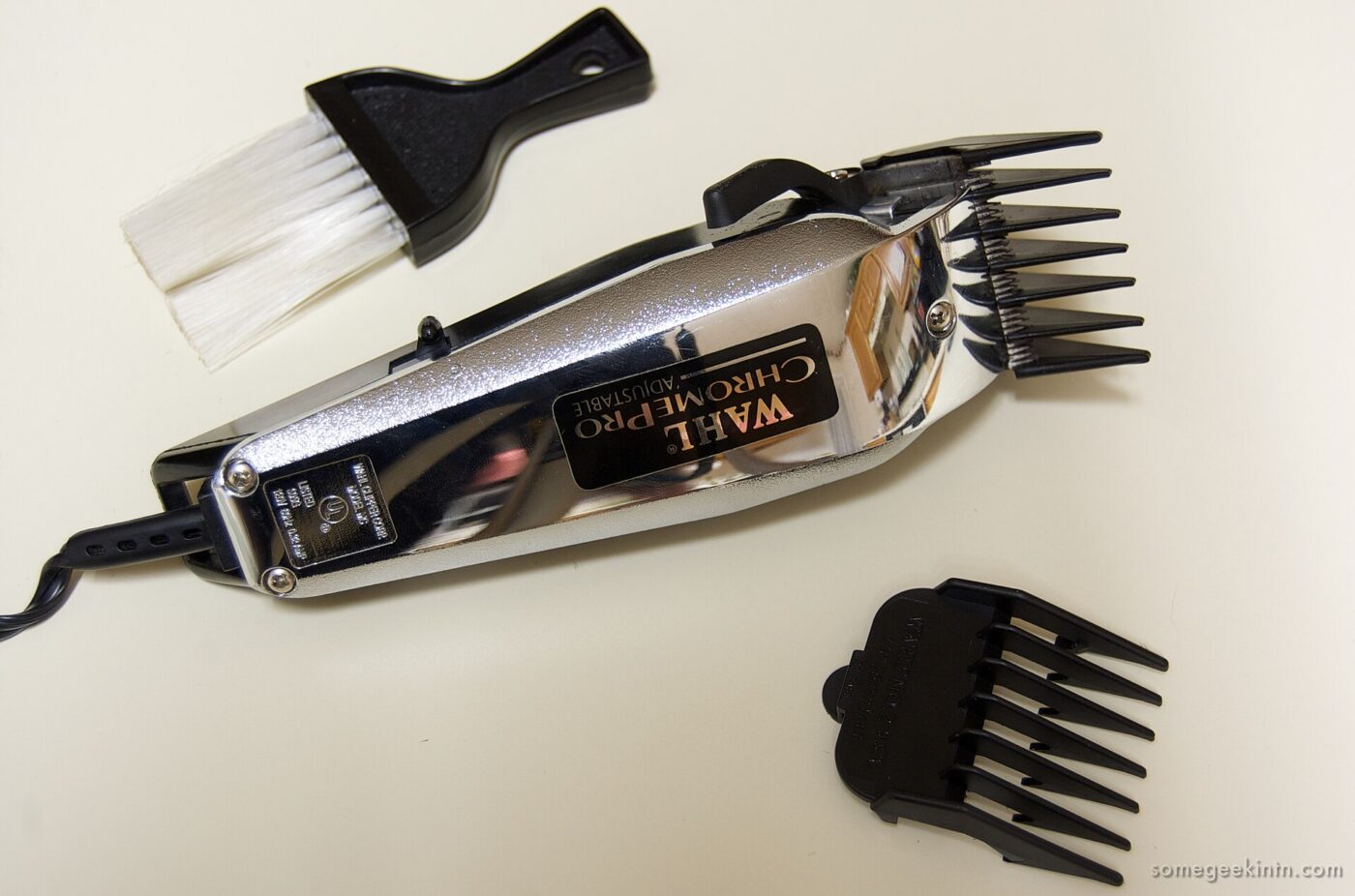
The BLS index for hair, dental, shaving and miscellaneous personal care products rose 3.1% in the year to August 2026 and 5.0% over two years, below both the haircut services index and overall inflation. It is a broad products index, not a clipper price series, so treat it as a rough proxy. It still points one way: the one-time cost of doing it yourself has risen more slowly than the recurring cost of paying someone.
The break-even math is simple to run for yourself. Divide the price of a clipper kit by what you pay per cut including tip; the result is the number of home cuts before the tool pays for itself, before counting your time or an occasional professional cleanup. Two years of above-inflation service prices shorten that number.
Quality and safety still vary. In June 2024 the CPSC announced a recall of about 50,000 StyleCraft Instinct cordless clippers, sold for about $250, because the lithium-ion battery could overheat; the company had six reports of overheating or fire and one minor burn. Price does not guarantee safety, so check recall notices for any cordless model you consider.
Who should cut at home and who should not
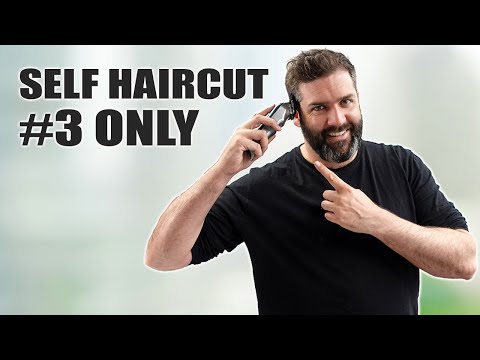
Home clippers fit short, uniform styles: buzz cuts, one-length clipper cuts, beard lines and neck cleanups between appointments. These are repeatable with guide combs and forgiving if you leave the hair a little long.
They fit less well for fades, textured scissor cuts or anything that needs the back of the head blended by eye. One middle path is stretching the time between professional cuts and handling neck and beard upkeep at home, which reduces paid visits without giving up the shape.
Who should wait: if your barber has held prices or you get complex cuts, the index does not change your math. Who should act: if you pay for frequent simple cuts, two years of above-inflation service prices make a clipper kit easier to justify.
Clippers pay back fastest on simple cuts you repeat every few weeks.
What to watch next
- The monthly BLS CPI release, for whether the haircut and personal care services index keeps outpacing all-items inflation after August 2026
- Recall notices on CPSC.gov for cordless clippers and trimmers with lithium-ion batteries
- Updated barber pay and job projections in the next BLS Occupational Outlook Handbook revision
Where to start
Paid links: we earn a commission if you buy through the buttons below, at no extra cost to you. As an Amazon Associate I earn from qualifying purchases.
Home grooming tools compared on the jobs they do
| Product type | Good fit for | Where to look |
|---|---|---|
| Cordless hair clipper kit with guide combs | Fits buzz and one-length cuts | See listings on AmazonOpens Amazon search results, not one listing: check the model on the product page. |
| Beard trimmer with length settings | Fits beard and neckline upkeep | See listings on AmazonOpens Amazon search results, not one listing: check the model on the product page. |
| Barber cape and neck duster set | Fits cleaner home cuts | See listings on AmazonOpens Amazon search results, not one listing: check the model on the product page. |
Product types that fit the trend described above, not tested models. Check the exact listing before you buy. How we pick them.
Cordless hair clipper kit with guide combs
Where to look: Amazon
The core tool for home cuts. Count the guide combs against the lengths you actually wear and check CPSC notices for the model.
- Guide combs make cuts repeatable
- Pays back fastest on frequent cuts
- Blending fades takes practice
- Cordless batteries need recall checks
Beard trimmer with length settings
Where to look: Amazon
The lowest-risk way to cut paid visits: keep the professional shape, handle the upkeep yourself.
- Handles beard lines and neck cleanups
- Stretches time between paid cuts
- Too small for full haircuts
- Short length range on some models
Barber cape and neck duster set
Where to look: Amazon
A small add-on that makes home cuts less messy. Check the closure so it seals at the neck.
- Keeps hair off clothes
- Low cost add-on
- Does not help the cut itself
- Another item to store
More: Beauty and Grooming trends and how the Trend Signal is scored.
Sources
- CPI: Haircuts and other personal care services, series CUUR0000SEGC01 — U.S. Bureau of Labor Statistics
- CPI: All items, series CUUR0000SA0 — U.S. Bureau of Labor Statistics
- CPI: Hair, dental, shaving, and miscellaneous personal care products, series CUUR0000SEGB01 — U.S. Bureau of Labor Statistics
- Barbers, Hairstylists, and Cosmetologists, Occupational Outlook Handbook — U.S. Bureau of Labor Statistics
- StyleCraft Recalls Instinct Cordless Hair Clippers Due to Fire and Burn Hazards — U.S. Consumer Product Safety Commission
- Procter & Gamble fiscal 2026 fourth-quarter results, Exhibit 99.1 — SEC EDGAR
- Edgewell Personal Care fiscal third-quarter 2026 results, Exhibit 99.1 — SEC EDGAR
Questions readers ask
Why are haircuts so expensive in 2026?
The BLS index for haircuts and other personal care services rose 4.2% in the year to August 2026 and 8.1% over two years, faster than overall inflation. Haircuts are priced around a licensed professional’s time, and all states require barbers to be licensed.
How much do barbers earn?
Median pay for barbers was $18.37 an hour, or $35,880 a year, in 2025, according to the BLS Occupational Outlook Handbook. About 80% of barbers are self-employed.
Are grooming products rising as fast as haircut prices?
No. The BLS index for hair, dental, shaving and miscellaneous personal care products rose 3.1% in the year to August 2026, against 4.2% for haircuts and other personal care services.
Do home hair clippers pay off?
It depends on what you pay per cut and how often you go. Divide the kit price by your per-cut cost including tip to get the break-even number of cuts; simple clipper styles reach it fastest.