Tape is the cheapest thing on a packing bench and the one most likely to be the reason a parcel arrives open. It is also the supply people buy by price per roll, on the assumption that tape is tape. The postal packaging standards disagree in some detail: they set a minimum width, a minimum paper weight, an overlap distance, a temperature range and a list of tapes that are not acceptable at all.
None of this is new in 2026, which is the point. The rules here have been stable and the prices have not, so the useful question is not what changed but what the standards say and which of the three common tape types fits the way you pack.
Trend Signal
42/100 Steady momentum
- Emerging
- Rising
- Mainstream
- Peaking
- Cooling
Unchanged rules, rising input prices, and one tape type that is not allowed
Postal packaging standards name cellophane and masking tape as unacceptable for closure and set minimums of 2-inch width, 60-pound basis weight kraft paper tape and a 3-inch overlap for gummed tape.
Our editorial reading of the cited data, not a forecast. How it is scored
By the numbers
- 2 inMinimum width postal standards say closure and reinforcement tapes should beUSPS Domestic Mail Manual
- 60 lbMinimum basis weight postal standards set for kraft paper tape on mailed boxesUSPS Domestic Mail Manual
- 3 inHow far gummed tape must extend onto the adjoining side of a boxUSPS Domestic Mail Manual
- 160°FUpper temperature at which box-closure adhesives must stay serviceableUSPS Domestic Mail Manual
What the postal standards say about tape

The packaging section of the Domestic Mail Manual is unusually specific. A strong packaging or paper tape may be used for closure or reinforcement of packages, and cellophane and masking tape are named as exceptions, which is the clearest instruction in the section. Paper tape must be at least 60-pound basis weight kraft, a number that separates real gummed tape from the thin brown rolls sold for household use.
Gummed tape has an application standard as well as a material one. The adhesives must be adequately activated before application and firmly applied with the tape extending at least 3 inches over the adjoining side of the box. That overlap is the part most people skip, and it is what turns a center seam strip into a closure that resists the flaps popping.
Two more lines cover width and direction. Except for pressure-sensitive filament tape, tapes used for closure and reinforcement should be at least 2 inches wide, and nonreinforced plastic tapes must be at least as strong in the cross direction as in the machine, or long, direction. That rules out tapes that split lengthwise when a corner catches.
Two inches wide, 60-pound kraft for paper tape, a 3-inch overlap for gummed tape, and never masking or cellophane.
The adhesive requirement nobody reads
The standards also set a temperature range. Adhesives used for closure on box flaps or on tapes must remain serviceable from minus 20 degrees to 160 degrees Fahrenheit. A trailer parked in the sun or a sorting facility in July sits inside that range, and cheap tape that lets go above a certain temperature is the usual explanation for a box that arrives with the flaps standing open.
Banding and staples get their own rules. Banding used for closure and reinforcement must encircle the length and girth of the package at least once; twine and cord should not be used, and loose strapping and metal strapping are not acceptable. Staples must sit within an inch and a quarter of the ends of the box and be spaced no more than five inches apart for easy and average loads or two and a half inches for difficult ones, with 3-inch reinforced tape filling wider gaps.
Pressure-sensitive versus water-activated
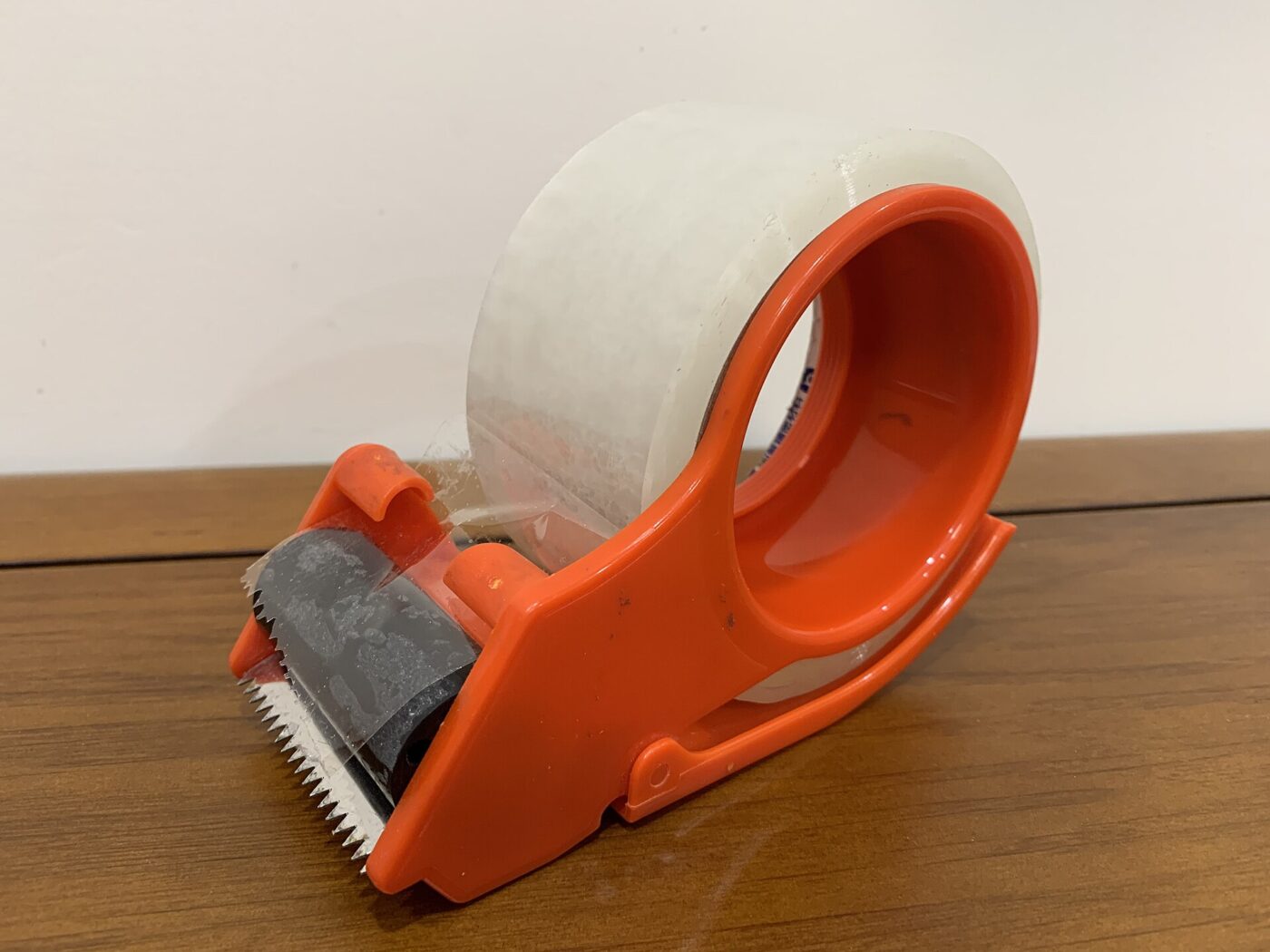
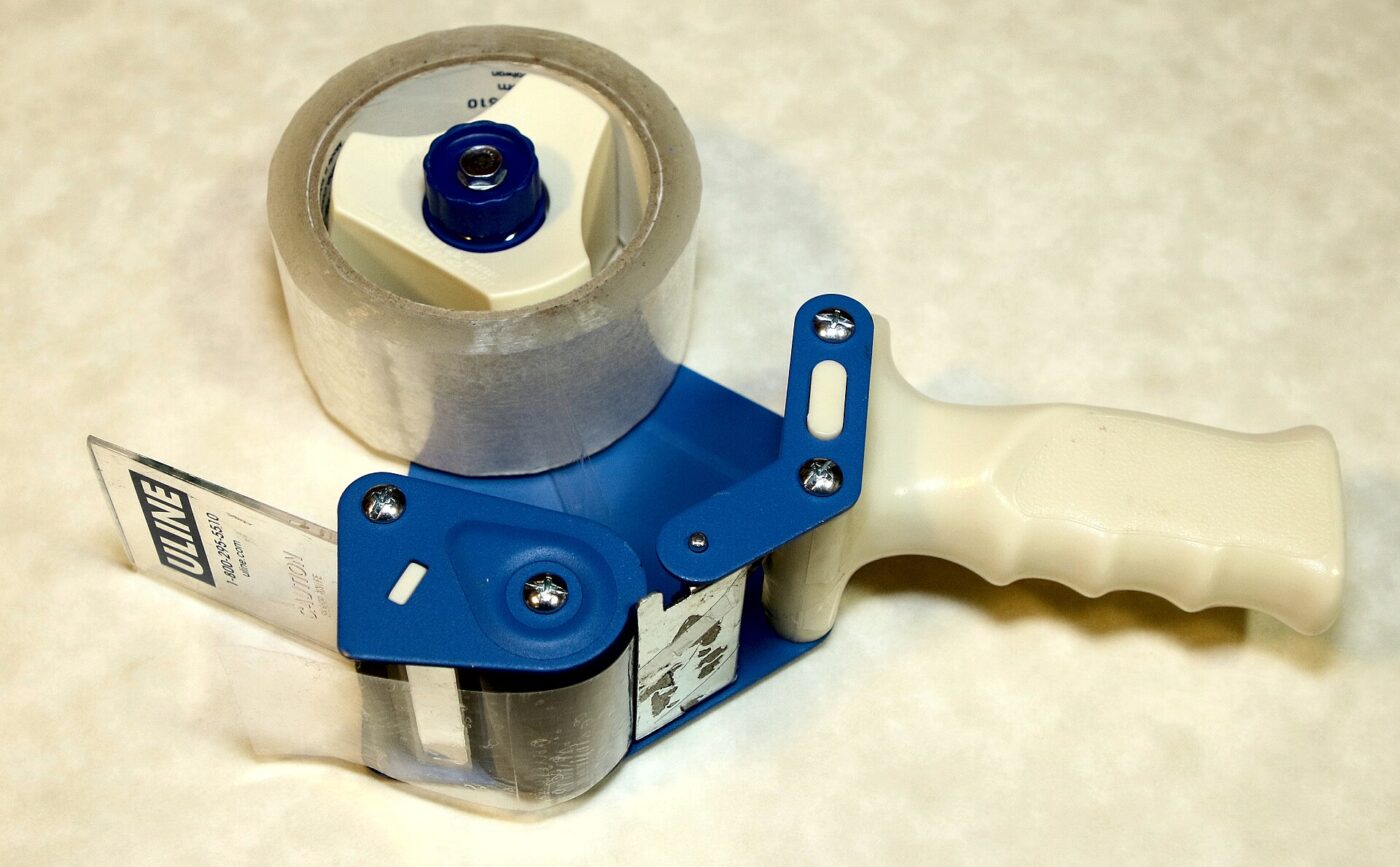
Pressure-sensitive tape is the clear plastic roll on a dispenser gun, and it is what most small sellers use. It is fast, it needs no water, and it works on a dusty or already-taped surface. Its weaknesses are the ones the standards hint at: it adheres to the surface rather than bonding into the board, it loses grip outside its rated temperature range, and the cheapest grades split along the roll.
Water-activated tape, the gummed kraft that needs a wet dispenser, bonds into the fibers of the corrugated rather than sitting on top of it. That is why a single center strip with the 3-inch overlap can close a box that would need several passes of plastic tape, and why tamper evidence is better: removing it takes the top layer of the board with it. The cost is a dispenser and a tape that does not stick to anything already taped.
Reinforced filament tape sits in a third place. The standards exempt it from the 2-inch minimum width because the strands carry the load rather than the width, which makes it the right choice for bundling and for reinforcing a heavy box rather than for sealing a light one.
| Tape type | Postal standard it must meet | Best suited to |
|---|---|---|
| Pressure-sensitive plastic | At least 2 inches wide; cross-direction strength at least equal to machine direction | High-volume light and medium parcels |
| Water-activated kraft | At least 60-pound basis weight; 3-inch overlap onto the adjoining side | Heavy boxes and tamper-evident closure |
| Pressure-sensitive filament | Exempt from the 2-inch minimum width | Bundling and reinforcing, not sealing |
| Masking or cellophane | Named as not acceptable for closure or reinforcement | Nothing that goes in the mail |
What tape costs are doing
Tape stock sits between two producer price indexes and both moved in 2026. The index for paper bag and coated and treated paper manufacturing rose 7.9% between August 2025 and August 2026, from 139.567 to 150.577. The index for plastics packaging film and sheet manufacturing rose 16.4% over the same 12 months, from 180.951 to 210.609.
Set against a producer price index for final demand that rose 5.4% for the 12 months ended August 2026, both packaging inputs outran the wider economy, and the plastics film side outran it by a lot. We read that as a reason to buy tape on stated thickness and adhesive grade rather than on price per roll, because the cheapest rolls are where a squeezed input cost shows up first.
The hedge is usage, not stockpiling. A roll that seals a box in one pass rather than three lasts three times as long, and a dispenser that pulls a clean length without a tangle does more for cost per box than a discount on a bulk pack of thin tape.
Which tape fits which bench
If you ship fewer than about twenty parcels a day of mostly light goods, pressure-sensitive tape on a hand dispenser is the sensible default. Buy a stated thickness rather than an unmarked roll, keep it indoors so the adhesive is not cold when you use it, and use the H-tape pattern: center seam plus both edge seams.
If you ship heavy boxes, reused boxes or anything where tamper evidence matters, water-activated tape earns the dispenser: a single strip with at least 3 inches onto each adjoining side, bonding into board that plastic tape struggles to hold. Keep a roll of filament tape for bundling, and throw out the masking tape.
What to watch next
- Revision dates on the Domestic Mail Manual packaging sections, which carry a bracketed date whenever a standard changes.
- The BLS producer price index for plastics packaging film and sheet manufacturing, which rose 16.4% in the year to August 2026 and feeds plastic tape stock.
- Whether paper-tape dispensers keep getting cheaper, since the dispenser rather than the tape is what keeps small benches on plastic.
Where to start
Paid links: we earn a commission if you buy through the buttons below, at no extra cost to you. As an Amazon Associate I earn from qualifying purchases.
Packing tape options compared on what actually differs
| Product type | Good fit for | Where to look |
|---|---|---|
| Pressure-sensitive packing tape rolls | Fits fast everyday sealing | See listings on AmazonOpens Amazon search results, not one listing: check the model on the product page. |
| Water-activated kraft tape | Fits heavy or reused boxes | See listings on AmazonOpens Amazon search results, not one listing: check the model on the product page. |
| Tape dispenser gun | Fits one-handed sealing at volume | See listings on AmazonOpens Amazon search results, not one listing: check the model on the product page. |
Product types that fit the trend described above, not tested models. Check the exact listing before you buy. How we pick them.
Pressure-sensitive packing tape rolls
Where to look: Amazon
The default for most benches. Postal standards call for at least 2 inches of width and cross-direction strength at least equal to the machine direction.
- No water or dispenser needed
- Sticks over existing tape
- Thin grades split lengthwise
- Grip falls off in cold and heat
Water-activated kraft tape
Where to look: Amazon
Gummed kraft is the one the standards describe in most detail: at least 60-pound basis weight, activated before application and extending 3 inches onto the adjoining side.
- Bonds into the board
- Tamper evident
- Needs a wet dispenser
- Will not stick over plastic tape
Tape dispenser gun
Where to look: Amazon
The dispenser does more for cost per box than a discount on tape. Match the roll width and core before ordering.
- Cuts cleanly and fast
- Cheap and repairable
- Blade dulls and needs replacing
- Only fits one roll width
More: Small Business and Side Hustles trends and how the Trend Signal is scored.
Sources
- Domestic Mail Manual 601: Mailability, packaging standards — US Postal Service
- Producer Price Indexes, August 2026 — US Bureau of Labor Statistics
- Producer Price Index by Industry: Paper Bag and Coated and Treated Paper Manufacturing — BLS via FRED
- Producer Price Index by Industry: Plastics Packaging Film and Sheet Manufacturing — BLS via FRED
Questions readers ask
Can I use masking tape or clear household tape on a package?
No. Postal packaging standards state that a strong packaging or paper tape may be used for closure or reinforcement, with cellophane and masking tape named as exceptions, so those two are not acceptable for sealing a mailed box.
How wide does packing tape need to be?
Except for pressure-sensitive filament tape, postal standards say tapes used for closure and reinforcement should be at least 2 inches wide. Filament tape is exempt because its strength comes from the strands rather than the width.
Is water-activated tape actually better?
It bonds into the corrugated fibers rather than sitting on the surface, which is why the standards allow a single strip provided it is properly activated and extends at least 3 inches onto the adjoining side. It needs a dispenser and will not stick over plastic tape.
Why does tape let go in summer?
Postal standards require adhesives used for closure on box flaps or on tapes to remain serviceable from minus 20 to 160 degrees Fahrenheit. Adhesives that fall outside that range lose grip in a hot trailer or a cold sorting facility.
Are tape prices rising?
Its inputs are. Between August 2025 and August 2026 the producer price index for paper bag and coated and treated paper manufacturing rose 7.9% and the index for plastics packaging film and sheet manufacturing rose 16.4%, against 5.4% for final demand.