For years, the reason rain beaded up on a good shell was fluorine chemistry: PFAS, the family of per- and polyfluoroalkyl substances, in the coatings that repel water. That era is ending by law. As of January 1, 2026, four states ban the sale of new clothing with intentionally added PFAS, and more deadlines are already scheduled.
That makes a PFAS-free rain jacket the default purchase rather than a niche one. This Buyer’s Brief covers what the laws actually require, the one label that still signals PFAS, what brands switched to, and the care habit that decides whether the new jackets keep you dry.
Trend Signal
66/100 Steady momentum
- Emerging
- Rising
- Mainstream
- Peaking
- Cooling
Sales bans in four states, with more dates already on the books
California and New York banned new apparel with intentionally added PFAS from January 1, 2025, Maine and Vermont followed on January 1, 2026, and Gore now sells a membrane and DWR it describes as made without intentionally added PFAS.
Our editorial reading of the cited data, not a forecast. How it is scored
By the numbers
- 4 statesStates banning sales of new clothing with added PFAS as of January 2026: CA, NY, ME, VTbluesign
- 50 ppmCalifornia organic fluorine limit for textiles from January 1, 2027, down from 100 ppmPillsbury
- 2028Year the severe-wet outdoor apparel exemption ends in California and New YorkMorgan Lewis
- 2029Year Maine requires a “Made with PFAS chemicals” label on severe-wet outdoor apparelMaine DEP
What the state laws actually ban
California’s AB 1817 prohibits making, distributing or selling new textile articles that contain regulated PFAS. That means PFAS intentionally added for a functional or technical effect, or PFAS present at or above a total organic fluorine threshold of 100 parts per million, a limit that drops to 50 ppm on January 1, 2027. “Textile articles” is broad: apparel, accessories, handbags, backpacks, bedding, towels and more. Manufacturers must give sellers signed certificates of compliance.
New York’s law covers apparel. Since January 1, 2025 it has banned the sale of apparel with intentionally added PFAS, meaning a chemical that serves an intended function in the product component, which Pillsbury reads as covering PFAS added for stain, grease or water resistance. The state DEC must set an enforceable numerical threshold by January 1, 2027. Both states exempt outdoor apparel for severe wet conditions until January 1, 2028.
Other states followed. Maine’s ban on textile articles with intentionally added PFAS, with some exceptions, took effect on January 1, 2026, and Vermont’s took effect the same day. Rhode Island and Washington follow in 2027, and Colorado and Connecticut move to full bans in 2028, according to trackers kept by the Green Science Policy Institute and bluesign. Abroad, France banned PFAS-containing consumer textiles and footwear from January 2026.
| State | What is covered | In effect |
|---|---|---|
| California | New textile articles with regulated PFAS | Jan 1, 2025 |
| New York | Apparel with intentionally added PFAS | Jan 1, 2025 |
| Maine | Textile articles, with exceptions | Jan 1, 2026 |
| Vermont | Textiles and clothing with intentionally added PFAS | Jan 1, 2026 |
| Rhode Island | Textiles | Jan 1, 2027 |
| Washington | Apparel | Jan 1, 2027 |
| Colorado and Connecticut | Full textile bans | 2028 |
The one label that still signals PFAS
The exemption matters because it is where PFAS can legally stay for now. California, New York and Colorado use similar definitions of outdoor apparel for severe wet conditions: extreme, extended-use products designed for outdoor sports experts, protecting against extended exposure to extreme rain or immersion in water or wet conditions like snow, and not marketed for general consumer use, as summarized by the law firm Morgan Lewis. Under that definition, a jacket marketed for general consumer use does not qualify.
In California and Colorado, since January 1, 2025, severe-wet gear that still contains PFAS must carry a disclosure reading “Made with PFAS chemicals.” Maine requires the same statement when its ban reaches that category on January 1, 2029. If you see that phrase on a technical shell, the maker is using the exemption; if you want to avoid PFAS, it is the one label to screen for.
Outside expedition gear, a new jacket sold in the four ban states should not contain intentionally added PFAS; expedition gear that still does must carry the disclosure in California and Colorado.
What replaced PFAS in the fabric
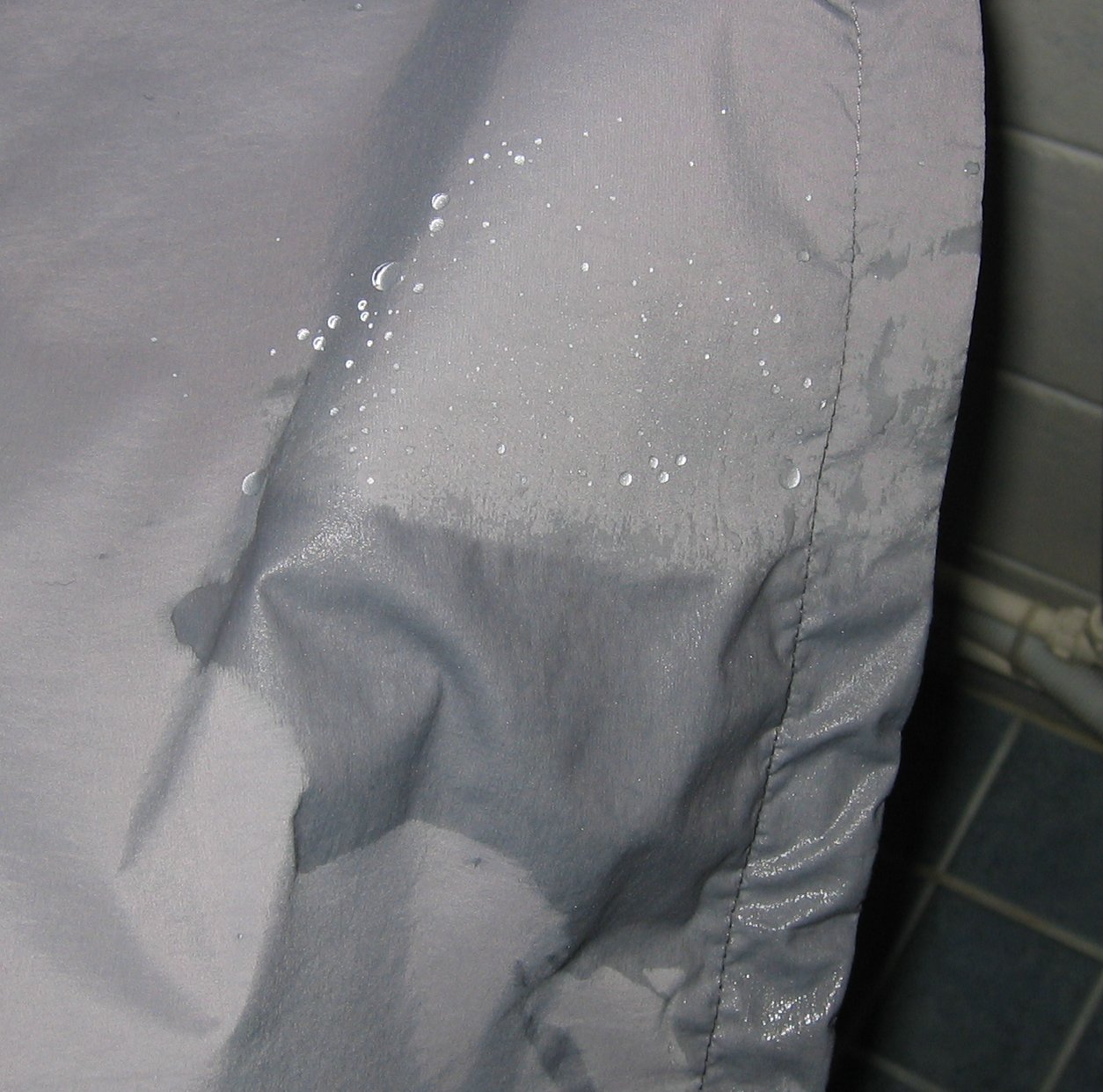
Gore now markets products with an ePE membrane, made of expanded polyethylene, which it labels “PFAS-free” with a footnote: made without intentionally added per- and polyfluorinated substances, and may contain trace amounts. Gore says the membrane is combined with textiles that can include recycled or undyed fabrics, depending on the laminate. It also sells what it calls a PFAS-free DWR treatment, with the same trace-amounts caveat.
Other brands moved their own lines. Seattle Met reported in March 2026 that Outdoor Research updated its rain jackets, gloves and ski bibs, and noted that other waterproof lines, such as Patagonia’s H2No and The North Face’s DryVent, had to change wherever they relied on PFAS. Outdoor Research’s newest Helium rain jacket, slated for spring 2026, uses Dermizax fabric from Toray and posted a 20,000 mm waterproof rating in the brand’s testing.
Underneath the brand names, bluesign lists the main PFAS-free repellent families: polyurethanes, polyacrylates, paraffin and plant-based waxes, and silicone-based finishes. It says some polyurethanes, with added crosslinkers, can hold strong spray-test ratings for well over 20 laundry cycles, and that waxes repel water well at first but are non-durable, becoming semi-durable only with a crosslinker.
The trade-off is more washing

The catch is oil. Gore says its PFAS-free DWR “requires more regular maintenance” because it is less resistant to oils, and it tells owners that washing its products regularly is essential to keep them performing. Its reactivation advice is simple: wash and dry the garment, then apply heat. When heat no longer restores beading, it recommends a spray-on or wash-in treatment.
Charlie Berg, a senior product manager at Outdoor Research, told Seattle Met that as dirt and oil come in contact with the new finishes, “they just don’t work as well,” and he conceded that “it is counterintuitive” to launder waterproof gear. The brand now puts “Wash Me” tags with QR-code care instructions on its waterproof items. His overall verdict on the new materials: “The good stuff that’s out there, it’s good.”
- Wash the shell with a cleaner made for technical fabrics when it looks dirty or stops beading
- Dry it and apply heat as the care label allows to reactivate the finish
- Use a PFAS-free spray-on or wash-in repellent only when heat no longer works
A PFAS-free shell that stops beading usually needs a wash and heat, not replacement.
Who should buy now, and who can wait
If your current jacket still beads water and keeps you dry, none of these laws requires you to replace it; they govern the sale of new products. When you do shop, the practical checks are the PFAS-free claim on the listing, the waterproof rating and whether the maker explains how to reactivate the finish.
We expect shoppers outside the ban states to see largely the same products; Morgan Lewis likewise wrote in 2024 that the size of the California and New York markets would likely shape national strategies. Be more careful with technical expedition shells: that is the one category where PFAS finishes can still be sold until January 1, 2028 in California and New York, and in California they must carry the disclosure.
For everyday rain, a PFAS-free shell plus a bottle of technical wash is the new baseline.
What to watch next
- California’s total organic fluorine limit for textiles drops from 100 ppm to 50 ppm on January 1, 2027
- New York’s DEC must set an enforceable numerical PFAS threshold for apparel by January 1, 2027
- The severe-wet exemption ends in California and New York on January 1, 2028, bringing technical shells sold there under the same bans
Where to start
Paid links: we earn a commission if you buy through the buttons below, at no extra cost to you. As an Amazon Associate I earn from qualifying purchases.
PFAS-free rainwear and care products compared
| Product type | Good fit for | Where to look |
|---|---|---|
| PFAS-free rain jacket | Fits everyday rain | See listings on AmazonOpens Amazon search results, not one listing: check the model on the product page. |
| Technical wash for waterproof clothing | Fits routine jacket care | See listings on AmazonOpens Amazon search results, not one listing: check the model on the product page. |
| PFAS-free water repellent spray | Fits restoring water beading | See listings on AmazonOpens Amazon search results, not one listing: check the model on the product page. |
Product types that fit the trend described above, not tested models. Check the exact listing before you buy. How we pick them.
PFAS-free rain jacket
Where to look: Amazon
For commuting and wet hikes, a PFAS-free shell is now the standard option. Compare waterproof ratings and care labels.
- Meets state PFAS rules
- Offered across major outdoor brands
- Finish needs more frequent care
- Waterproof ratings vary by fabric
Technical wash for waterproof clothing
Where to look: Amazon
Oil and dirt are what defeat PFAS-free finishes, so a wash made for technical fabrics is the maintenance step that matters most.
- Removes dirt and oils that stop beading
- Made for membrane fabrics
- Adds a recurring cost
- One more product to keep on hand
PFAS-free water repellent spray
Where to look: Amazon
For when washing and heat no longer bring back beading. Check the label for a PFAS-free formula.
- Revives beading when washing no longer helps
- Spray lets you target shoulders and cuffs
- Coverage can be uneven
- Some need heat to cure
More: Fashion and Apparel trends and how the Trend Signal is scored.
Sources
- New York and California’s Restrictions on PFAS in Apparel Take Effect — Pillsbury
- New York and California: Bans on PFAS in Textiles and Apparel Begin January 1, 2025 — Morgan Lewis
- PFAS in Products — Maine Department of Environmental Protection
- PFAS in Outdoor Gear — Green Science Policy Institute
- PFAS in Clothing: 2026 Bans, Health Risks, and Safer Alternatives — bluesign
- New Laws Changed Waterproofing for Jackets — Seattle Met
- Next-Gen GORE-TEX Products with an ePE Membrane — W. L. Gore & Associates
- Durable Water Repellent care — W. L. Gore & Associates
Questions readers ask
Is Gore-Tex PFAS-free now?
Gore sells products with an ePE membrane and a DWR treatment that it describes as PFAS-free, meaning made without intentionally added per- and polyfluorinated substances; it notes they may contain trace amounts. Check each product’s listing to confirm which membrane it uses.
Which states ban PFAS in clothing?
California and New York since January 1, 2025, and Maine and Vermont since January 1, 2026. Rhode Island and Washington follow in 2027, and Colorado and Connecticut move to full bans in 2028, according to the Green Science Policy Institute and bluesign.
What does Made with PFAS chemicals mean on a jacket?
California and Colorado require that statement on outdoor apparel for severe wet conditions that still contains PFAS, a category exempt from their bans until January 1, 2028, and Maine adds the same requirement in 2029. It tells you the product relies on that exemption.
Do PFAS-free jackets work as well?
They can be fully waterproof, but Gore says its PFAS-free DWR is less resistant to oils and needs more regular maintenance. Washing and then applying heat usually restores beading; if not, Gore suggests a spray-on or wash-in treatment.