Jeans have spent a decade being written off in favor of stretch and softness, so it is worth reading what the denim companies actually filed in 2026. Levi Strauss posted net revenues of $1.562 billion for the quarter ended May 31, 2026, up 8% as reported and 6% organic, and raised full-year guidance to 7.0% to 7.5% reported growth. Kontoor Brands, which owns Wrangler, reported $584 million in continuing-operations revenue for the quarter ended July 4, 2026, up 19%, with Wrangler itself up 2%.
Around them, general apparel is choppier. American Eagle Outfitters grew total revenue 8% in the quarter ended August 1, 2026, but that came from Aerie and OFFLINE, up 25%, while the American Eagle brand’s comparable sales fell 1%. The pattern that emerges is not denim beating athleisure. It is denim specialists with their own stores and sites outgrowing the mall brands that sell jeans among other things.
Trend Signal
68/100 Strong momentum
- Emerging
- Rising
- Mainstream
- Peaking
- Cooling
Denim specialists raised guidance while general apparel stayed choppy
Levi Strauss grew net revenues 8% in the quarter ended May 31, 2026 and raised its full-year outlook, Wrangler grew 2% in the quarter ended July 4, 2026, and American Eagle’s namesake brand posted a 1% comparable sales decline.
Our editorial reading of the cited data, not a forecast. How it is scored
By the numbers
- +8%Levi Strauss net revenue growth in the quarter ended May 31, 2026Levi Strauss
- 51%Share of Levi Strauss net revenues from direct-to-consumer in that quarterLevi Strauss
- +2%Wrangler revenue growth in the quarter ended July 4, 2026Kontoor Brands
- 1%American Eagle brand comparable sales in the quarter ended August 1, 2026American Eagle Outfitters
What the denim companies reported

Levi Strauss is the cleanest read because it is close to a pure denim business. In the quarter ended May 31, 2026 it grew net revenues 8% reported and 6% organic, with the Americas up 9% reported, Asia up 12% organic and Europe down 1% organic. Gross margin edged up 10 basis points to 62.7%, which the company attributed to lower product costs and pricing actions, and it raised full-year adjusted earnings guidance to $1.46 to $1.52 per share.
Kontoor is a mixed case. Total continuing-operations revenue rose 19% to $584 million in the quarter ended July 4, 2026, but most of that came from the Helly Hansen acquisition rather than jeans; Wrangler itself grew 2% to $469 million, with US revenue up 1% and international up 10%. Kontoor is also selling Lee, reported in discontinued operations at $159 million for the quarter, with the divestiture expected in the fourth quarter of 2026.
| Company and brand | Most recent quarter | Revenue change |
|---|---|---|
| Levi Strauss | Ended May 31, 2026 | +8% reported, +6% organic |
| Kontoor, Wrangler | Ended July 4, 2026 | +2% reported |
| American Eagle brand | Ended August 1, 2026 | –1% comparable sales |
| Aerie and OFFLINE | Ended August 1, 2026 | +25% revenue, +19% comparable sales |
Denim-led growth is real but concentrated in the companies that own their own distribution.
The growth is coming from their own stores and sites
The channel numbers are the most consistent part of the story. Levi’s direct-to-consumer revenues rose 11% reported and 8% organic, comparable sales in that channel grew 6%, e-commerce grew 19% reported, and direct-to-consumer reached 51% of total net revenues. The company describes its evolution into a direct-to-consumer-first denim lifestyle business as the reason for faster growth and higher profitability.
Kontoor shows the same direction at a smaller scale: direct-to-consumer revenue of $74 million in the quarter against $49 million a year earlier, though the Helly Hansen acquisition supplied most of that increase, with Wrangler direct-to-consumer up 9% in the United States and 31% internationally. Its chief executive described the quarter as diversified growth led by female, direct-to-consumer and international performance.
The reason this matters to a shopper is simple. When a brand sells most of its jeans itself, its promotional calendar is its own, and the deepest discounts move to its own site and outlet rather than to a department store clearance rack.
Where the counter-signal is
The strongest argument against a denim revival sits inside a denim retailer. At American Eagle Outfitters, total revenue grew 8% to $1.38 billion in the quarter ended August 1, 2026 and total comparable sales rose 6%, but the split was stark: Aerie and OFFLINE combined revenue up 25% with comparable sales up 19%, against a 1% comparable sales decline at the American Eagle brand. The company noted a fourth consecutive quarter of growth in men’s and said the women’s business needs greater consistency.
Levi is hedging too. Its Beyond Yoga business grew 16% in the quarter, faster than the group, which is the company buying exposure to the category jeans supposedly beat. Kontoor, meanwhile, is selling Lee and buying an outdoor brand.
Gross margins are also carrying one-time help. American Eagle reported a 48.7% gross margin, up 980 basis points, but noted a $179 million net benefit from refunds of IEEPA duties inside it, which drove 1,300 basis points of that expansion, and reported merchandise margins deleveraging 330 basis points. Kontoor had received $23 million of IEEPA refunds by mid-third quarter and assumes a 15% reciprocal rate for the second half of 2026, under the Section 301 tariffs that replaced Section 122 in July.
Denim is growing where it is sold by specialists; inside multi-category retailers, the other departments are winning.
What it means for the price of a pair
Apparel prices rose 3.6% in the 12 months to August 2026, with men’s and boys’ apparel up 3.7% and women’s and girls’ up 3.5%. Clothing store sales, which the Census Bureau reports and FRED carries, ran at $29.19 billion in August 2026 against $28.22 billion in August 2025, a gain of about 3.5% by our calculation, so the sales increase is close to the price increase. Unit volume is not what is growing.
On the cost side, the direction is turning. USDA projects the 2026/27 US upland cotton farm price at 73 cents per pound, up from 62.5 cents, and Levi credited part of its margin to lower product costs, a tailwind that is now fading. The IEEPA refunds that padded 2026 margins are one-time items by definition.
Put together, those point to firmer denim pricing rather than cheaper jeans, with the clearest discounts appearing on brand-owned sites and outlets rather than in third-party clearance.
Who should buy now and who should wait
If you buy jeans from a denim specialist, the case for buying during its own promotional events is stronger than it was, because that is where over half of the volume now goes and where the inventory is managed. Levi’s direct-to-consumer share of 51% is the number to keep in mind.
If you buy jeans as part of a general apparel haul, there is less reason to hurry. Multi-category retailers are leaning on other departments and are still working through IEEPA refund accounting, which makes their pricing noisier through the rest of 2026.
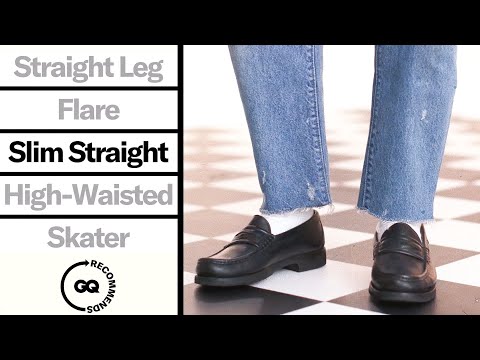
And if the fit you want is a specific silhouette rather than a brand, the widest choice is in the specialists’ own ranges, because that is where the assortment depth sits. Buy for rise and leg opening, which is where most disappointments come from, not for the wash on the product photo.
What to watch next
- Levi Strauss’s next quarterly report, after full-year guidance was raised to 7.0% to 7.5% reported net revenue growth.
- Whether Kontoor completes the Lee divestiture, which it expects in the fourth quarter of 2026.
- The gap between Aerie and the American Eagle brand at American Eagle Outfitters, at +19% and –1% comparable sales in the quarter ended August 1, 2026.
Where to start
Paid links: we earn a commission if you buy through the buttons below, at no extra cost to you. As an Amazon Associate I earn from qualifying purchases.
Jeans styles compared on the things that actually differ
| Product type | Good fit for | Where to look |
|---|---|---|
| Straight-leg jeans | Fits a classic straight silhouette | See listings on AmazonOpens Amazon search results, not one listing: check the model on the product page. |
| Wide-leg jeans | Fits a looser modern silhouette | See listings on AmazonOpens Amazon search results, not one listing: check the model on the product page. |
| Stretch tapered jeans | Fits people who want give in the fabric | See listings on AmazonOpens Amazon search results, not one listing: check the model on the product page. |
Product types that fit the trend described above, not tested models. Check the exact listing before you buy. How we pick them.
Straight-leg jeans
Where to look: Amazon
The silhouette denim specialists build their core ranges around, which is why the depth of sizing is best here. Compare the stated leg opening between brands rather than trusting the label, because the same word covers a wide range.
- Leg opening is usually listed
- Least dependent on stretch content
- Straight means different widths by brand
- Rigid denim needs a break-in period
Wide-leg jeans
Where to look: Amazon
The cut driving a lot of the assortment expansion at brand-owned stores. Rise and inseam do more to the finished look than the leg width does, so read both before choosing a size.
- Forgiving through hip and thigh
- Works over boots
- Inseam is critical to the look
- Harder to alter than a straight leg
Stretch tapered jeans
Where to look: Amazon
The hedge between denim and the softer categories brands are buying into, such as Levi’s Beyond Yoga business that grew 16% last quarter. Check the elastane percentage, since that number, not the style name, decides how much the pair moves.
- Comfort closest to a soft pant
- Consistent fit out of the box
- Stretch fibers relax with wear
- Recovery varies with blend
More: Fashion and Apparel trends and how the Trend Signal is scored.
Sources
- Levi Strauss second quarter 2026 results, quarter ended May 31, 2026 — SEC EDGAR
- Kontoor Brands second quarter 2026 results, quarter ended July 4, 2026 — SEC EDGAR
- American Eagle Outfitters second quarter results, quarter ended August 1, 2026 — SEC EDGAR
- Consumer Price Index August 2026, Table 2 — U.S. Bureau of Labor Statistics
- Advance Retail Sales: Clothing and Clothing Accessory Stores — FRED, Federal Reserve Bank of St. Louis
- Cotton and Wool Outlook July 2026, CWS-26g — USDA Economic Research Service
Questions readers ask
Are jeans selling well in 2026?
At the specialist brands, yes. Levi Strauss grew net revenues 8% in the quarter ended May 31, 2026 and raised its full-year outlook, and Kontoor’s Wrangler grew 2% in the quarter ended July 4, 2026. At American Eagle Outfitters, the namesake brand’s comparable sales fell 1% while Aerie and OFFLINE grew 25%.
Where are jeans mostly bought now?
Increasingly from the brands themselves. Levi Strauss reported direct-to-consumer at 51% of net revenues in the quarter ended May 31, 2026, with e-commerce up 19% reported. Kontoor reported direct-to-consumer revenue of $74 million in its quarter ended July 4, 2026, against $49 million a year earlier.
Will jeans get cheaper?
The cost signals point the other way. USDA projects the 2026/27 US upland cotton farm price at 73 cents per pound against 62.5 cents in 2025/26, Levi credited part of its margin to lower product costs that are now fading, and the IEEPA refunds that lifted 2026 margins are one-time items. Apparel prices were up 3.6% in the 12 months to August 2026.
Has athleisure stopped taking share from denim?
The filings do not support a clean win either way. Levi’s Beyond Yoga business grew 16% in the quarter ended May 31, 2026, faster than the group, and Aerie and OFFLINE at American Eagle grew 25% while the denim-led brand declined. Denim specialists are growing; the softer categories are growing too.