Apparel prices in the United States rose 3.6% in the 12 months to August 2026, against 0.2% in the 12 months to August 2025, and footwear as a whole matched it at 3.6%. Inside that average, one line went the other way. The Consumer Price Index for boys’ and girls’ footwear was 1.2% lower than a year earlier. Infants’ and toddlers’ apparel was 3.4% lower.
That is unusual enough to be worth explaining, because children’s shoes are the least discretionary purchase in the aisle. Feet grow whether or not the family budget agrees. Three things show up in the record: the IEEPA tariff regime that collapsed in February 2026, a promotional back-to-school season, and the plain fact that the kids’ index is small and moves hard in both directions.
Trend Signal
30/100 Weak momentum
- Emerging
- Rising
- Mainstream
- Peaking
- Cooling
The one footwear line still falling while the rest climbs
The CPI for boys’ and girls’ footwear was 1.2% lower in August 2026 than a year earlier, while men’s footwear rose 5.7% and apparel overall rose 3.6%.
Our editorial reading of the cited data, not a forecast. How it is scored
By the numbers
- 1.2%CPI for boys’ and girls’ footwear, 12 months to August 2026U.S. Bureau of Labor Statistics
- +5.7%CPI for men’s footwear over the same 12 monthsU.S. Bureau of Labor Statistics
- +0.9%CPI for boys’ and girls’ footwear in the 12 months to August 2025U.S. Bureau of Labor Statistics
- 7.1%Shoe Station Group comparable store sales, quarter ended August 1, 2026Shoe Station Group
What the children’s footwear index did
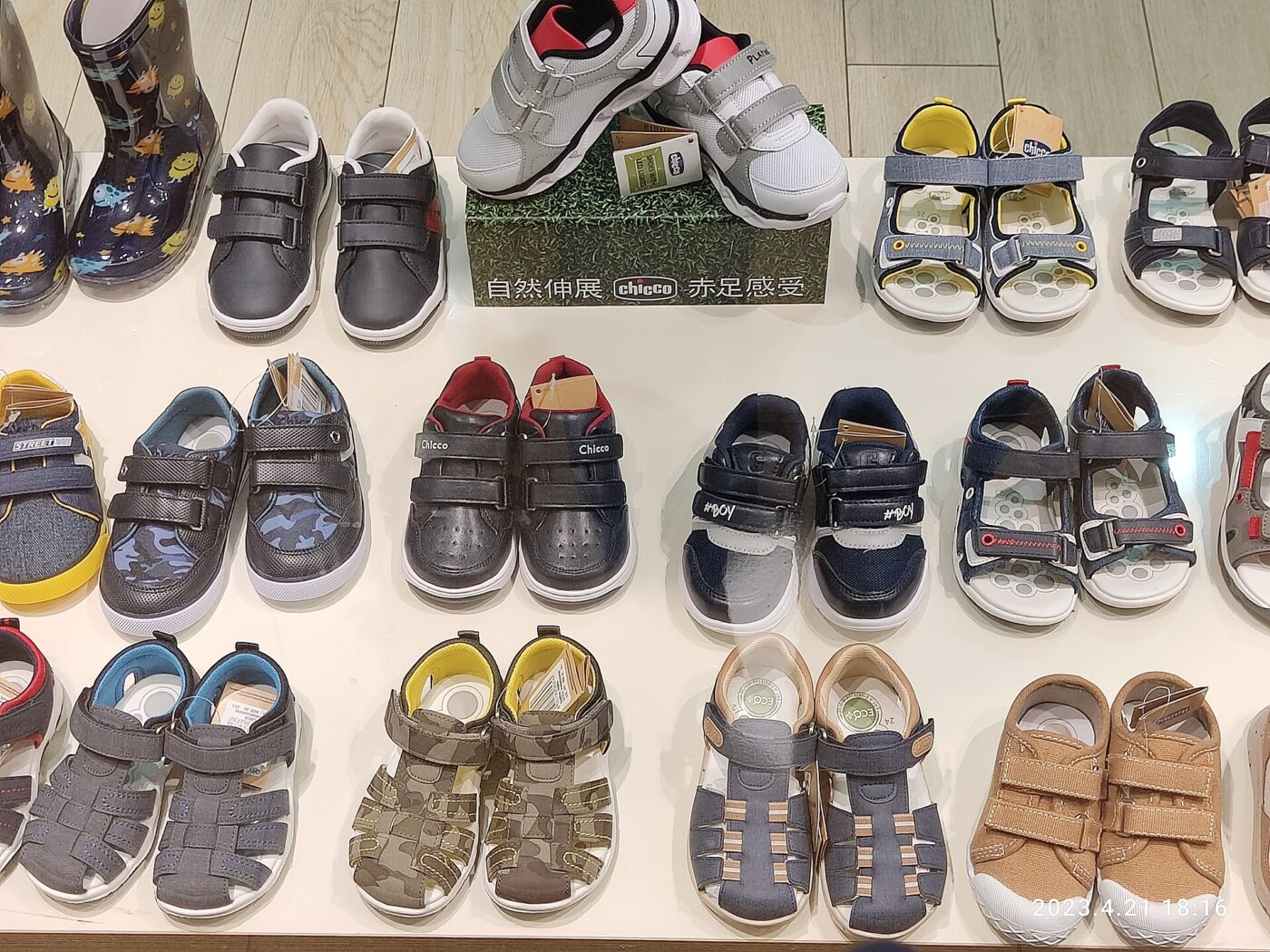
The BLS release for August 2026 puts boys’ and girls’ footwear 1.2% below its level of August 2025, and 1.7% lower than July 2026 on a seasonally adjusted basis. The comparable release a year earlier had the same index 0.9% higher than in August 2024. So the line did not drift down slowly; it turned over inside a single year while the categories around it accelerated.
The infants’ and toddlers’ apparel index tells the same story more sharply: 0.2% below a year earlier in August 2025, then 3.4% below a year earlier in August 2026. Both are small indexes with thin samples and heavy seasonality, which is why a single month is worth little and the two August readings together are worth more.
| CPI line | 12 months to Aug 2025 | 12 months to Aug 2026 |
|---|---|---|
| All apparel | +0.2% | +3.6% |
| Footwear, all | +1.4% | +3.6% |
| Men’s footwear | –0.2% | +5.7% |
| Women’s footwear | +2.8% | +4.3% |
| Boys’ and girls’ footwear | +0.9% | –1.2% |
| Infants’ and toddlers’ apparel | –0.2% | –3.4% |
Two August readings a year apart show a genuine turn, not a one-month wobble.
The adult aisle moved the opposite way
Footwear overall rose 3.6% over the same 12 months, and the whole of that came from adults. Men’s footwear rose 5.7% and women’s 4.3%. The footwear index as a whole, which FRED carries as the BLS series for footwear in the US city average, stood at 151.979 in August 2026 against 146.675 in August 2025 and 144.611 in August 2024.
We read the split as a mix of channel and design. Adult footwear has been pulled up by performance running and lifestyle models that carry more material and more marketing, while children’s shoes are bought on price, replaced on a schedule the child sets, and sold heavily through chains that compete on promotion. When costs fall, the kids’ end passes them through first.
The tariff reversal underneath the numbers
The cost side changed abruptly. Apparel and footwear importers spent most of 2025 paying tariffs imposed under the International Emergency Economic Powers Act. In its quarterly filing for the period ended May 31, 2026, Levi Strauss records that a Supreme Court ruling on February 20, 2026, in Learning Resources, Inc. v. Trump, invalidated those tariffs, that the company had paid roughly $80 million under them, and that US Customs and Border Protection released refund processing functionality in April 2026.
Superior Group of Companies puts a date on the stop: IEEPA tariffs stopped being collected on February 24, 2026. Kontoor Brands adds the sequel in its own filing: the government introduced tariffs under Section 122 of the Trade Act, those expired in July 2026, and Section 301 tariffs replaced them, while the Court of International Trade ruled in May 2026 that the Section 122 tariffs were also invalid, a decision under appeal.
Refunds are large enough to show up in results. American Eagle Outfitters recorded a $179 million IEEPA tariff refund benefit in the quarter ended August 1, 2026, and Boot Barn recognized $14.7 million of refunds in the quarter ended June 27, 2026. A landed cost that falls and then partly reverses is exactly the kind of shock that shows up first in the most price-sensitive part of a category.
Retailers are discounting into it
Shoe Station Group, which runs the Shoe Carnival and Shoe Station chains, reported net sales of $284.3 million for the quarter ended August 1, 2026, down from $306.4 million, with comparable store sales off 7.1%. Its interim chief executive described a footwear marketplace that became increasingly promotional as the quarter progressed.
Back-to-school, the season that sets the price of a child’s shoe for the year, improved but stayed negative: the company reported fiscal August net sales down 3.3% and comparable store sales down 2.7%. Its full-year outlook calls for net sales of $1.100 billion to $1.111 billion, a 2% to 3% decline. A chain guiding to lower sales while opening the school season is a chain using price.
A promotional family footwear chain is a price-index story before it is a retail story.
What this means for a school shoe budget

Treat the 1.2% decline as a window, not a trend line. The same index rose 0.9% in the previous 12 months, and the adult lines around it are climbing, which is what usually pulls the children’s line back up eventually. Buying the next size in the promotional stretch that follows back-to-school is the low-risk move; buying three sizes ahead is not, because fit changes with the foot, not only the length.
The counter-signal to keep in view is the tariff sequence. IEEPA duties are gone and being refunded, but Section 301 tariffs have replaced Section 122, and one court ruling in the other direction would put landed costs back up. Children’s footwear is largely imported, so the category tracks trade policy more closely than it tracks fashion.
What to watch next
- The boys’ and girls’ footwear line in the monthly BLS CPI release, which turned negative between August 2025 and August 2026.
- The appeal of the May 2026 Court of International Trade ruling on Section 122 tariffs, which company filings describe as pending.
- Shoe Station Group’s next quarterly report, after guidance for a 2% to 3% full-year sales decline.
Where to start
Paid links: we earn a commission if you buy through the buttons below, at no extra cost to you. As an Amazon Associate I earn from qualifying purchases.
Children’s footwear types compared on what actually differs
| Product type | Good fit for | Where to look |
|---|---|---|
| Kids athletic sneakers | Fits fast-growing feet on a budget | See listings on AmazonOpens Amazon search results, not one listing: check the model on the product page. |
| Kids rain boots | Fits wet-weather school runs | See listings on AmazonOpens Amazon search results, not one listing: check the model on the product page. |
| Child foot measuring gauge | Fits checking size before you buy | See listings on AmazonOpens Amazon search results, not one listing: check the model on the product page. |
Product types that fit the trend described above, not tested models. Check the exact listing before you buy. How we pick them.
Kids athletic sneakers
Where to look: Amazon
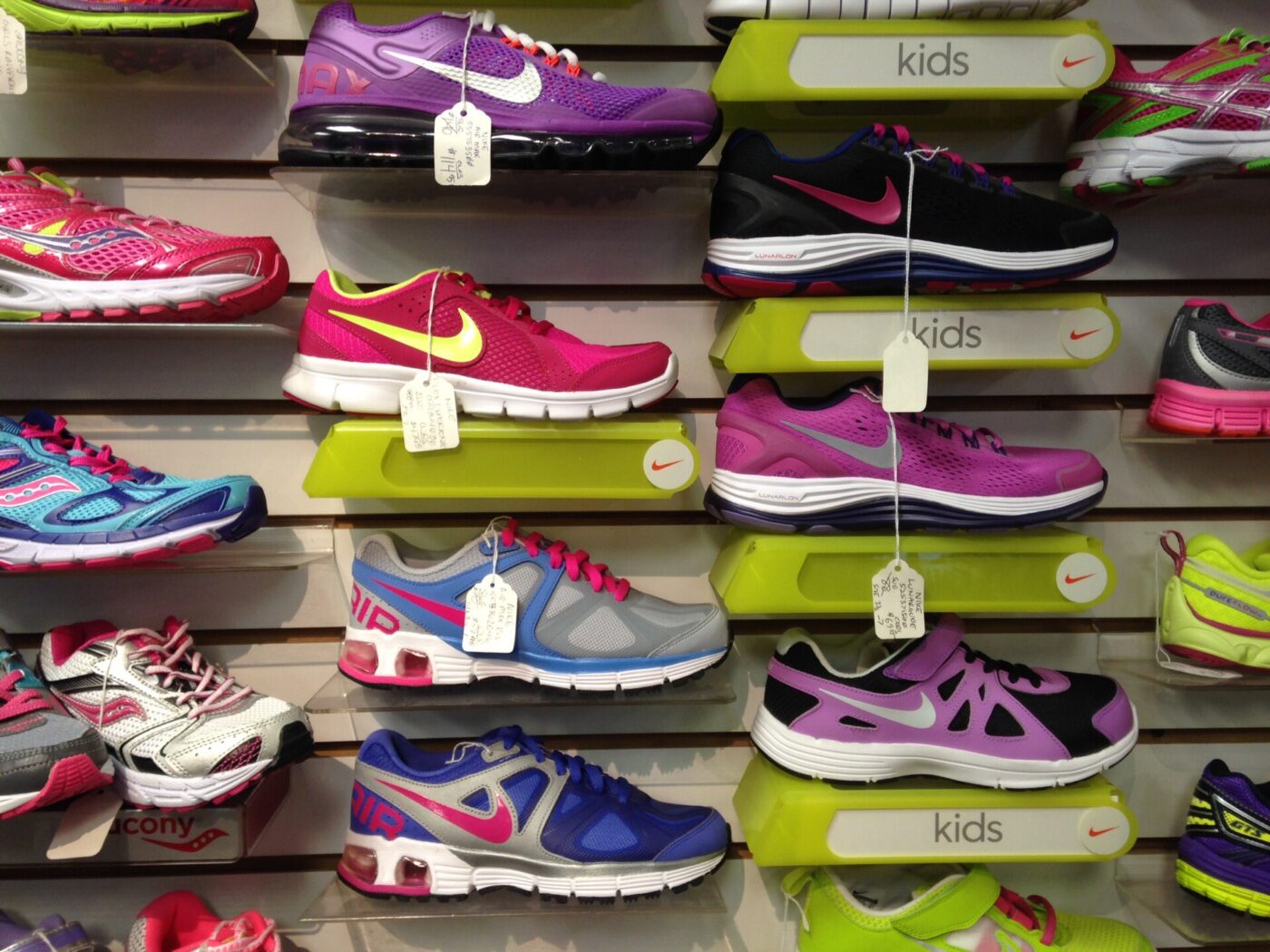
This is the part of the aisle where the price decline is showing up. The CPI for boys’ and girls’ footwear fell 1.2% in the 12 months to August 2026 while men’s rose 5.7%, and chains have been running promotions through the school season.
- Deepest discounting in the category
- Widest size runs
- Outgrown before worn out
- Sizing varies between makers
Kids rain boots
Where to look: Amazon
A seasonal buy that tends to be discounted out of season rather than in it. Because the fit tolerance is wider than a sneaker, this is the one children’s shoe where buying a size ahead is reasonably safe.
- Slips on without help
- Survives growth spurts with thick socks
- Seasonal stock runs out early
- Calf width is rarely listed
Child foot measuring gauge
Where to look: Amazon
Ordering children’s shoes online without a measurement is how a discount turns into a return. A gauge that reads width as well as length is the version worth having, because width is what a growing foot changes first.
- Removes one cause of returns
- Reusable across siblings
- Does not fix maker-to-maker variation
- One more thing to store
More: Fashion and Apparel trends and how the Trend Signal is scored.
Sources
- Consumer Price Index August 2026, Table 2 — U.S. Bureau of Labor Statistics
- Consumer Price Index August 2025 news release — U.S. Bureau of Labor Statistics
- CPI for All Urban Consumers: Footwear in U.S. City Average — FRED, Federal Reserve Bank of St. Louis
- Shoe Station Group second quarter results, quarter ended August 1, 2026 — SEC EDGAR
- Levi Strauss Form 10-Q for the quarter ended May 31, 2026 — SEC EDGAR
- Kontoor Brands Form 10-Q for the quarter ended July 4, 2026 — SEC EDGAR
Questions readers ask
Are kids shoes actually cheaper in 2026?
By the official measure, yes. The BLS Consumer Price Index for boys’ and girls’ footwear was 1.2% lower in August 2026 than in August 2025, and infants’ and toddlers’ apparel was 3.4% lower, while all apparel rose 3.6%.
Why did adult shoes get more expensive at the same time?
The BLS release for August 2026 shows men’s footwear up 5.7% and women’s up 4.3% over 12 months, against a 3.6% rise for footwear overall. The adult lines carry the increase; the children’s line does not.
Did tariffs come off shoes in 2026?
The IEEPA tariffs did. Levi Strauss records a Supreme Court ruling of February 20, 2026 invalidating them, Superior Group states collection stopped on February 24, 2026, and Kontoor describes Section 122 tariffs replacing them until July 2026, followed by Section 301 tariffs. Refunds are being processed through a Customs and Border Protection system released in April 2026.
When is the cheapest time to buy school shoes?
The data point to the markdown period after the back-to-school push rather than during it. Shoe Station Group described its quarter ended August 1, 2026 as increasingly promotional and still reported fiscal August comparable store sales down 2.7%, which is a chain discounting into weak demand.