The sneaker that sells has changed. Brands built on performance running shoes keep growing while lifestyle names such as Converse shrink, which we read as running shoes moving into the everyday footwear slot that lifestyle sneakers used to own. Hoka passed $2.5 billion in annual sales in the fiscal year ended March 2026, and On grew by more than a fifth in constant currency in the second quarter of 2026.
At the same time Nike, which describes itself as the world’s leading designer, marketer and distributor of athletic footwear, is resetting: revenue was flat in its fiscal year ended May 31, 2026, Converse shrank by almost a third, and the company is cutting the supply of some footwear while marking down inventory. This Trend Report reads the 2026 filings to show where the shift stands and what it means for price and timing if you are shopping for a pair.
Trend Signal
62/100 Steady momentum
- Emerging
- Rising
- Mainstream
- Peaking
- Cooling
Still growing, but Hoka growth has slowed by half
Hoka sales rose 15.9% in the fiscal year to March 2026 but 7.7% in the quarter to June 2026, while On grew 21.6% in constant currency in the June quarter and Nike’s fiscal 2026 revenue was flat.
Our editorial reading of the cited data, not a forecast. How it is scored
By the numbers
- $2.587BHoka net sales, fiscal year ended March 31, 2026, up 15.9%Deckers Brands
- +21.6%On net sales growth in constant currency, Q2 2026 vs Q2 2025On Holding
- 31%Converse revenue, Nike fiscal year ended May 31, 2026NIKE, Inc.
- +5.7%US men’s footwear CPI, August 2025 to August 2026BLS
The numbers behind the shift
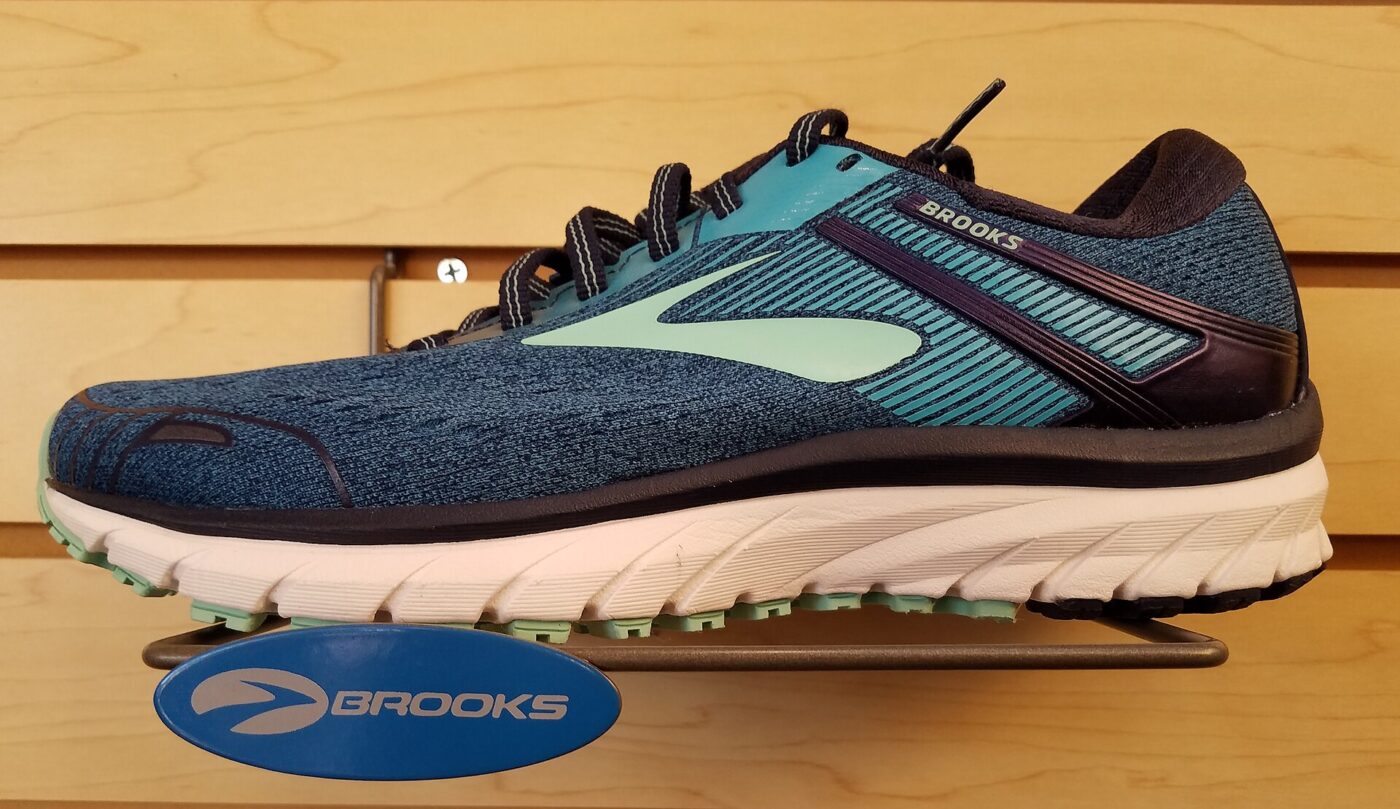
Deckers Brands, which owns Hoka and UGG, reported that Hoka net sales rose 15.9% to $2.587 billion in the fiscal year ended March 31, 2026, up from $2.233 billion. On, the Swiss running brand, reported second-quarter 2026 net sales of CHF 850.3 million, up 13.5% as reported and 21.6% in constant currency, and said its global brand awareness had climbed to 30%.
Nike’s results show the other side. Revenue for the fiscal year ended May 31, 2026 was $46.4 billion, flat as reported and down 2% on a currency-neutral basis. Nike Direct revenue fell 6%, Converse fell 31% to $1.2 billion, and Jordan Brand revenue slipped 3% to about $7.0 billion. North America was the bright spot, with Nike Brand footwear revenue there up 5% to $13.3 billion.
| Brand | Period | Sales | Change |
|---|---|---|---|
| Hoka | Fiscal year ended Mar 31, 2026 | $2.587B | +15.9% |
| Hoka | Quarter ended Jun 30, 2026 | $703.5M | +7.7% |
| On | Quarter ended Jun 30, 2026 | CHF 850.3M | +13.5% (+21.6% constant currency) |
| Nike, Inc. | Fiscal year ended May 31, 2026 | $46.4B | Flat |
| Converse | Fiscal year ended May 31, 2026 | $1.2B | −31% |
The growth sits with the running specialists; the incumbent is holding revenue flat while it resets.
What the running brands are selling

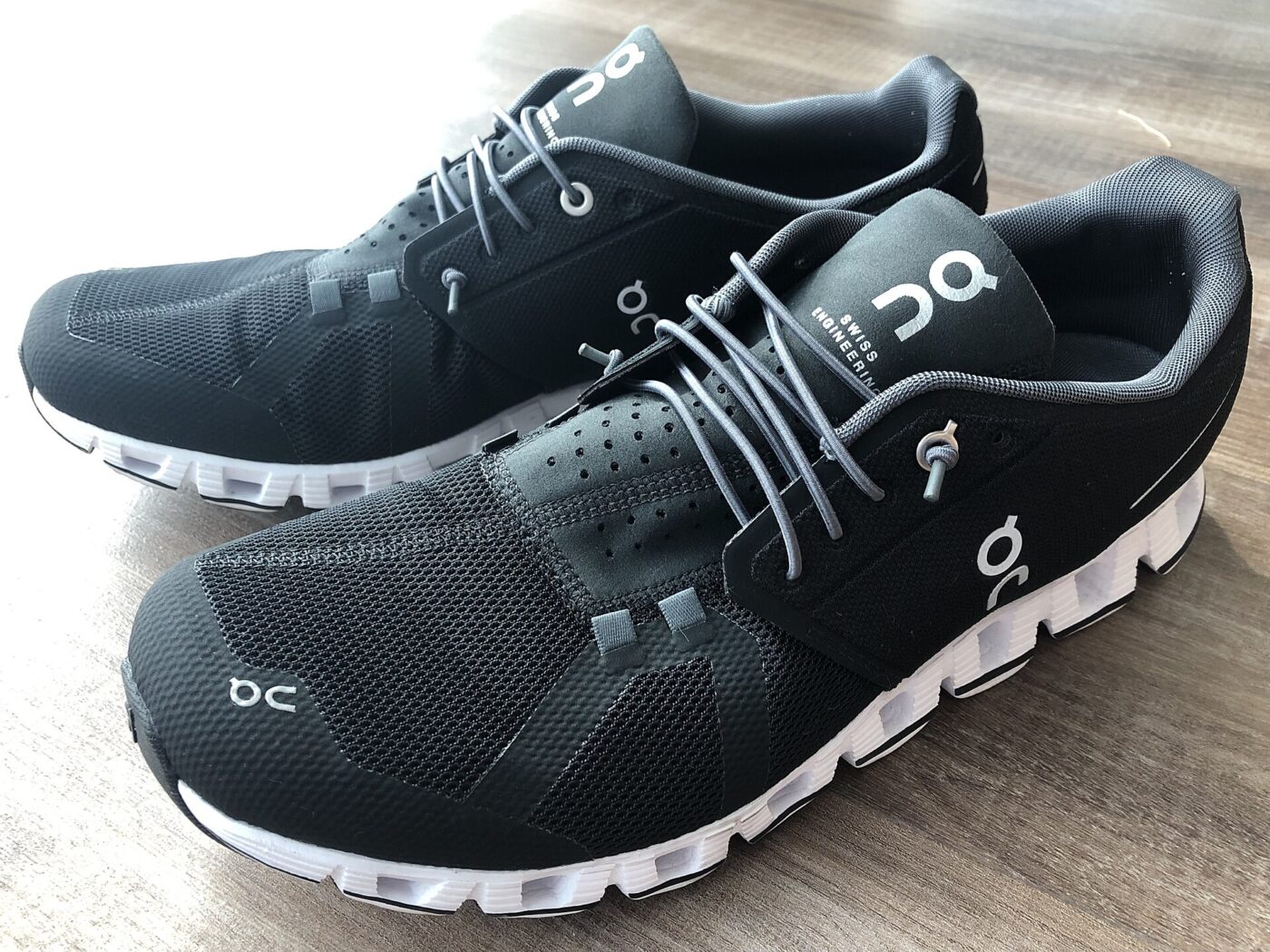
The running specialists are not only selling running shoes to runners. On says consumers under 34 now make up more than one-third of its customer base, and it singles out its Cloudtilt franchise as resonating with that group. Its apparel sales rose 47.7% as reported (56.2% in constant currency) to CHF 54.2 million in the second quarter, far faster than shoes at 10.9%, though from a much smaller base. We read that as a sign the brand is being bought as a wardrobe label, not only as training gear.
Innovation is still the pitch. At its first Running Summit, On showed products reaching stores in the second half of 2026 and beyond, including the Cloudboom Strike 2, already on sale, and a new superfoam it calls SURREAL. On says the first shoe to use it, the $160 Cloudsurfer 3, reaches specialist running stores on October 1, 2026, before a wider launch that includes On.com. Nike chief executive Elliott Hill said the company is “encouraged by progress in performance product,” and its annual report describes “reducing the supply of certain footwear products in the marketplace to rebalance the mix” of its footwear portfolio.
Deckers chief executive Stefano Caroti said Hoka’s “continued momentum” helped power a record fiscal 2026 and that the company’s focus on “brand building, product innovation and category leadership” continues to drive “full-price demand across an expanding global audience” for its brands. Both specialists lean on the same message: product innovation, sold at full price.
Growth is slowing at the leader
The trend is maturing. Hoka’s growth slowed from 15.9% for the fiscal year to March 2026 to 7.7% in the quarter ended June 30, 2026, when sales were $703.5 million. On July 23, 2026, Deckers said it still expects Hoka to grow by a low-double-digit percentage in the fiscal year that began April 1, 2026. Across all Deckers brands, domestic sales rose just 0.2% in the year to March 2026, a figure Deckers says was held back by phasing out Koolaburra as a standalone brand and selling Sanuk, while international sales rose 26.8%, so much of the new growth is coming from outside the US.
On shows the same geography. Its Americas net sales rose 4.5% as reported, or 13.0% in constant currency, in the second quarter, against 43.1% as reported in Asia-Pacific. The company said it is deliberately managing wholesale sell-in to protect full-price integrity, and its chief financial officer described a “heavily promotional environment” in some markets during the quarter.
Running brands are established in the US; the fastest growth has moved abroad.
Prices, promotions and tariffs
Men’s and women’s shoes have risen faster than apparel as a whole. The BLS footwear index rose 3.6% from August 2025 to August 2026, matching apparel, but men’s footwear was up 5.7% and women’s 4.3%. Tariffs are part of the backdrop: On said its gross margin reached 65.4% “even while fully absorbing higher U.S. import tariffs,” and Nike booked an expected $986 million recovery of IEEPA tariffs after the Supreme Court ruled on February 20, 2026 that those tariffs were unauthorized.
The two strategies point shoppers in different directions. Nike says it is liquidating inventory through increased markdowns on Nike Direct and higher discounts with wholesale partners, and expects to complete those actions by the end of December 2026. On, by contrast, says it does not compromise full-price integrity for volume. We read that as a clear pattern for the rest of 2026: markdowns are more likely on Nike and Converse than on the running specialists’ newest models.
Who should buy now, and who should wait
If you want a cushioned running shoe for daily wear, there is little in the filings to suggest that waiting brings the price down. The category leaders are protecting full price, and US shoe prices are higher than a year ago. Buy when your current pair is worn out, not in the hope of a broad discount.
If you are brand-flexible, Nike and Converse are where markdowns are most likely while Nike clears inventory through December 2026. And if you care about the newest foams, On says its Cloudsurfer 3 with SURREAL foam reaches specialist running stores on October 1, 2026, so it may be worth waiting to compare it with the current generation. More footwear coverage is in our fashion and apparel section.
What to watch next
- Deckers’ next quarterly results, for whether Hoka growth holds near the 7.7% of the June 2026 quarter or rebounds toward its full-year outlook
- Whether Nike completes its markdown and supply actions by the end of December 2026, as its annual report says it expects
- How widely On’s $160 Cloudsurfer 3 with the new SURREAL foam is stocked after it reaches specialist running stores on October 1, 2026, ahead of a wider launch
Where to start
Paid links: we earn a commission if you buy through the buttons below, at no extra cost to you. As an Amazon Associate I earn from qualifying purchases.
Everyday running-shoe types compared
| Product type | Good fit for | Where to look |
|---|---|---|
| Max-cushion running shoes | Fits all-day standing and walking | See listings on AmazonOpens Amazon search results, not one listing: check the model on the product page. |
| Lightweight daily running shoes | Fits easy runs and daily wear | See listings on AmazonOpens Amazon search results, not one listing: check the model on the product page. |
| Cushioned recovery slides | Fits after runs and around the house | See listings on AmazonOpens Amazon search results, not one listing: check the model on the product page. |
Product types that fit the trend described above, not tested models. Check the exact listing before you buy. How we pick them.
Max-cushion running shoes
Where to look: Amazon
The type most people mean by an everyday running shoe. Check stack height and weight, and whether a wide width is available.
- Soft underfoot for long days
- Widely offered by running brands
- Tall stacks can feel less stable
- Bulkier look
Lightweight daily running shoes
Where to look: Amazon
A lower, lighter option if you also run. Check the heel-to-toe drop against what you wear now.
- Lighter and lower than max-cushion models
- Works for easy runs and errands
- Less cushioning for long standing days
- Outsole coverage varies by model
Cushioned recovery slides
Where to look: Amazon
Running brands also sell thick-soled slides for after runs and indoor wear. Check the size guidance before ordering.
- Slip on and off
- Easy to rinse clean
- Little support for long walks
- Often whole sizes only
More: Fashion and Apparel trends and how the Trend Signal is scored.
Sources
- Deckers Brands Reports Fourth Quarter and Full Fiscal Year 2026 Financial Results — SEC filing
- Deckers Brands first-quarter results, July 23, 2026 — SEC filing
- On Reports Results for the Second Quarter 2026 — SEC filing
- NIKE, Inc. Reports Fiscal 2026 Fourth Quarter and Full Year Results — SEC filing
- NIKE, Inc. Annual Report on Form 10-K, fiscal 2026 — SEC filing
- Consumer Price Index, August 2026, Table 2 — U.S. Bureau of Labor Statistics
- CPI for All Urban Consumers: Footwear (CUSR0000SEAE) — FRED, Federal Reserve Bank of St. Louis
- On Unveils the Cloudsurfer 3, with Surreal Superfoam and CloudTec Phase, September 15, 2026 — On
Questions readers ask
Why is Hoka so popular?
The filings do not measure motives, but they measure demand: Hoka sales rose 15.9% to $2.587 billion in the fiscal year ended March 31, 2026, and Deckers says its focus on brand building, product innovation and category leadership drives full-price demand across its brands.
Is Nike losing sales in 2026?
Nike’s revenue was flat at $46.4 billion for its fiscal year ended May 31, 2026, and down 2% on a currency-neutral basis. Converse fell 31%, while Nike Brand footwear in North America rose 5%.
Are running shoes getting more expensive?
BLS data show men’s footwear prices up 5.7% and women’s up 4.3% from August 2025 to August 2026. On and Hoka emphasize full-price selling, while Nike says it is using markdowns to clear inventory through December 2026.
Is On growing faster than Hoka?
In the quarter ended June 30, 2026, yes. On’s net sales grew 13.5% as reported and 21.6% in constant currency, while Hoka’s grew 7.7%.