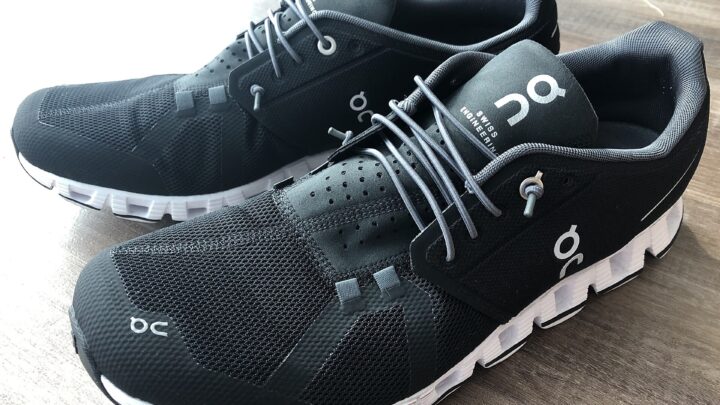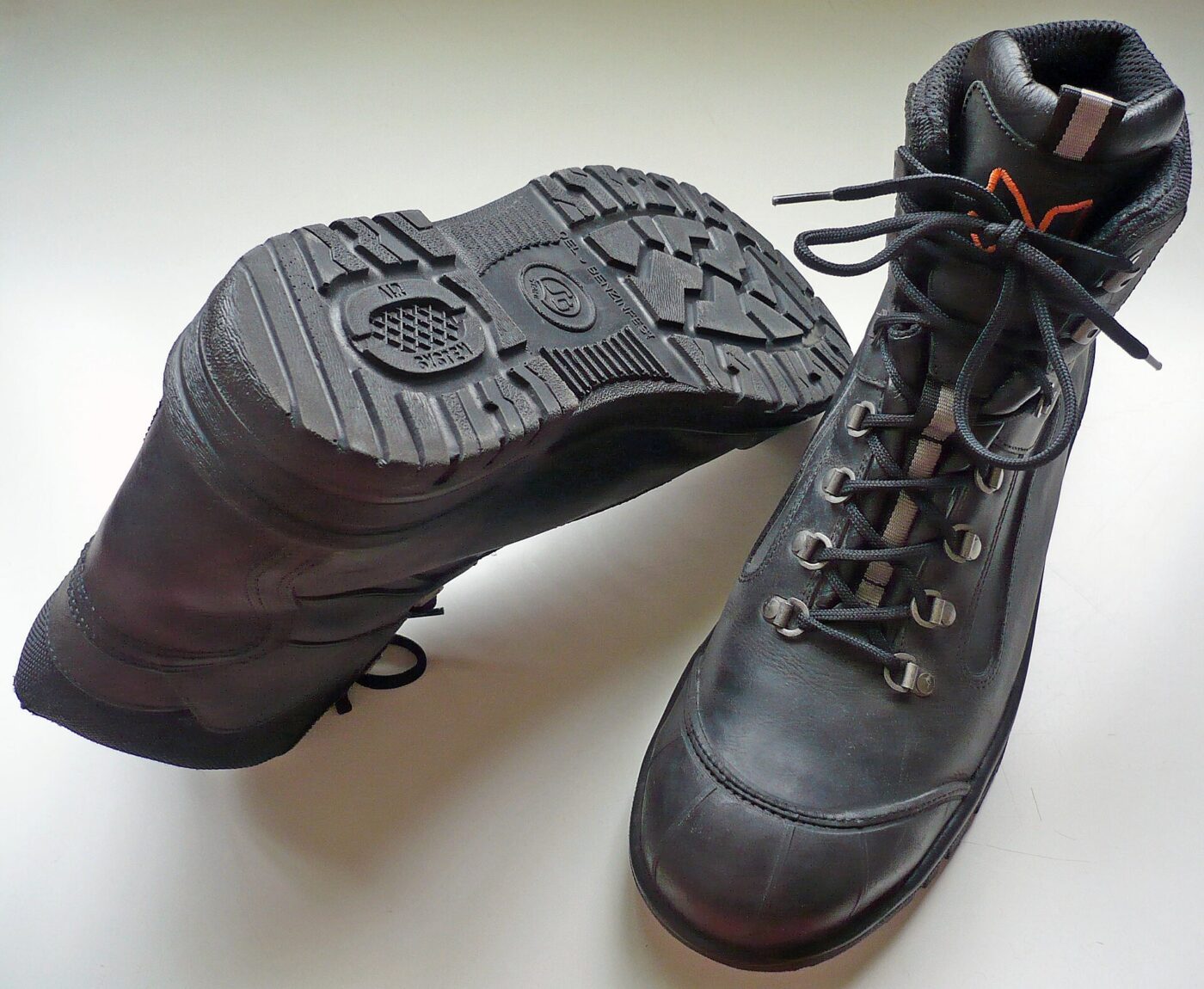
Pick up a work boot in 2026 and the label inside is likely to read ASTM F2413-24. The number is not marketing copy. It points at a specification from ASTM International that sets minimum design, performance, testing and classification requirements for footwear worn against workplace hazards, and the 2024 edition is the current one, last updated on July 3, 2024. It follows F2413-18, the edition before it.
The buying question is narrower than the standard itself. Which protections do you actually need, has anyone measured the traction claim on the box, and does the marking still apply once you change something on the boot? Those answers sit in the specification, in a testing organization’s summary of the 2024 revision, and in one federal rule that has not been refreshed in two decades.
Trend Signal
54/100 Steady momentum
- Emerging
- Rising
- Mainstream
- Peaking
- Cooling
A settled standard with one real change in 2024
ASTM last updated its protective toe cap footwear specification, F2413, on July 3, 2024, and the revision folded slip resistance into the specification through the SR and SRO designations.
Our editorial reading of the cited data, not a forecast. How it is scored
By the numbers
- F2413-24Current ASTM protective toe cap footwear specification, last updated July 3, 2024ASTM International
- 2005Edition of ASTM F2412 and F2413 that 29 CFR 1910.136 still namesOffice of the Federal Register
- 0.40Minimum coefficient for an SR slip resistance marking on dry and wet quarry tileSATRA Bulletin
- 5.7%Rise in the CPI for men’s footwear in the 12 months to August 2026U.S. Bureau of Labor Statistics
What the marking inside the boot means
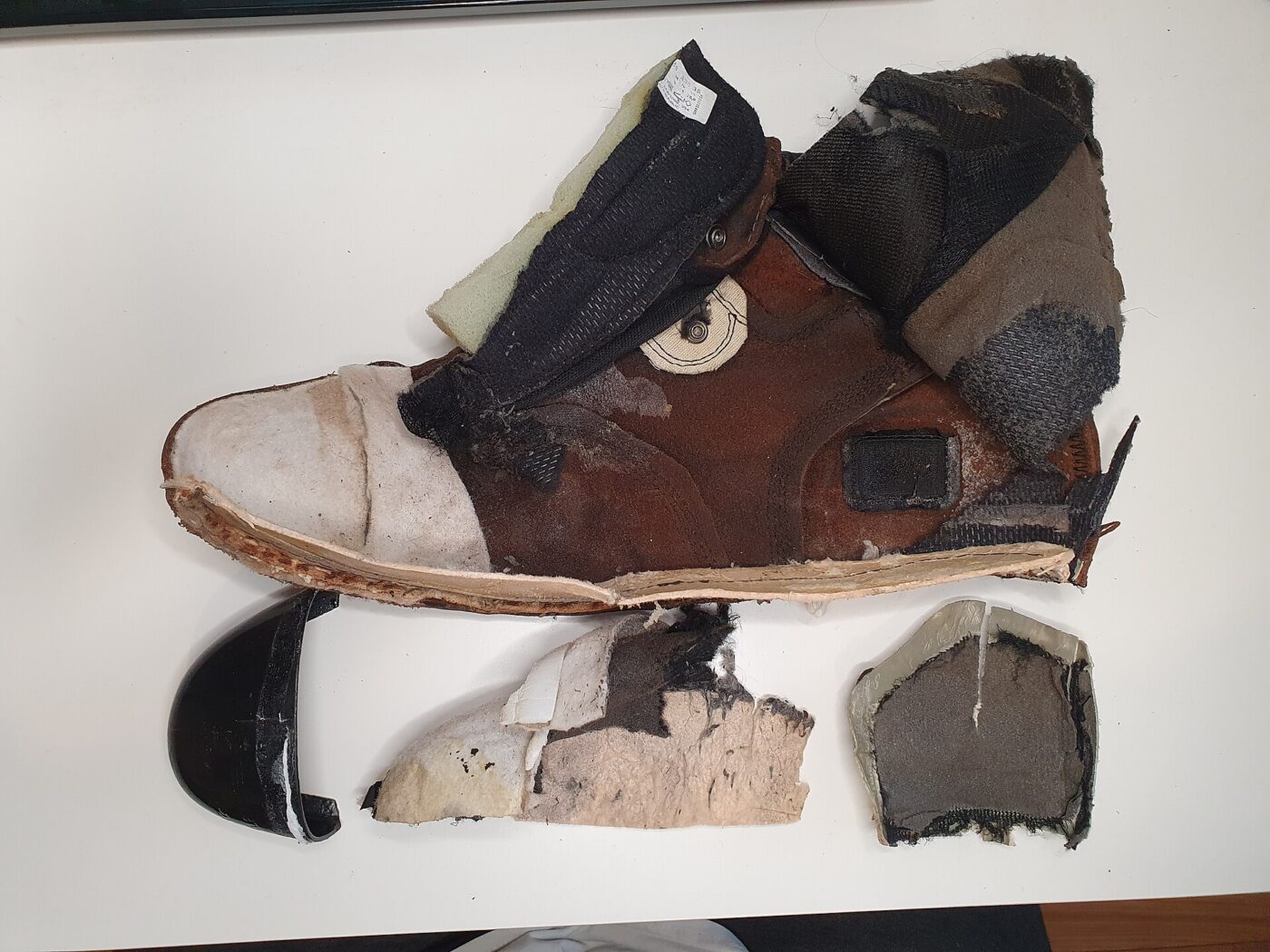
ASTM F2413-24 is a specification, not a test method; the tests sit in a companion standard, ASTM F2412. Its abstract lists the hazards in scope: impact and compression resistance at the toe, metatarsal protection, conductive properties, electric shock resistance, static dissipative properties, puncture resistance, chain saw cut resistance and dielectric insulation.
That list is a menu, not a bundle. SATRA, the footwear testing organization, states that under the revised standards only the toe cap impact and compression tests are mandatory; the rest are claims a maker chooses to have verified. A boot carrying the designation has a protective toe cap tested to the specification. Everything else depends on which classes the label names.
So read a box in that order: the designation first, then the protections listed under it. The edition year alone tells you nothing about which hazards are covered.
| Protection in the ASTM F2413-24 scope | What it addresses |
|---|---|
| Impact and compression at the toe | The only tests SATRA describes as mandatory under the specification |
| Metatarsal protection | The top of the foot behind the toe cap |
| Conductive and static dissipative properties | Static electricity in the work area |
| Electric shock resistance and dielectric insulation | Contact with live circuits |
| Puncture resistance | Objects piercing the sole |
| Chain saw cut resistance | Saw contact |
| Slip resistance, added in the 2024 revision | Carried by the SR and SRO designations |
The designation confirms a tested safety toe cap; every other protection has to be spelled out separately.
Why the federal rule still names a 2005 standard
OSHA’s foot protection rule, 29 CFR 1910.136, requires protective footwear wherever there is a danger of foot injuries from falling or rolling objects, from objects piercing the sole, or from an electrical hazard that other measures have not removed. Its criteria paragraph then lists the consensus standards footwear must comply with: ASTM F-2412-2005 and ASTM F-2413-2005, or ANSI Z41-1999, or ANSI Z41-1991.
Those editions are two decades old. The rule bridges the gap with a second paragraph: footwear the employer demonstrates is at least as effective as footwear built to one of the listed standards is deemed to comply. That clause is what lets a boot marked F2413-24 satisfy a rule written around F2413-05.
For someone buying their own boots, a site policy may still be worded around an older edition. The rule lets an employer accept footwear it demonstrates is at least as effective, but that demonstration is the employer’s to make, so ask rather than assume. A policy that names a class, such as electrical hazard, is the thing to match, because a newer edition does not add that protection on its own.
Slip resistance finally has a number

The substantive change in the 2024 revision is that slip resistance moved inside the specification instead of floating beside it as a sales claim. SATRA’s October 2024 bulletin describes F2413-24, together with the metatarsal standard F2892-24, as now including specific reference to slip resistance, with SR and SRO designations to be included on product labels.
The thresholds come from ASTM F3445-21, the standard specification for performance requirements when evaluating slip resistance of protective (safety) footwear using the ASTM F2913 whole shoe test method. SATRA sets out two levels: SR calls for a coefficient of at least 0.40 on dry and wet quarry tile, and SRO adds an oily wet clay quarry tile condition at a minimum of 0.33. Testing runs in heel and forepart modes across three half pairs.
The catch is that slip testing stays voluntary. A boot can meet F2413-24 at the toe cap and say nothing about traction. If your floor is wet or greasy, SRO is the designation to look for, and a blank space where a slip marking would be means nobody measured that outsole against this specification.
SR and SRO are the only traction claims tied to a published threshold; the rest is description.
What work footwear costs in 2026
The Consumer Price Index for men’s footwear stood 5.7% above its year-earlier level in August 2026, against 3.6% for all footwear and 3.6% for apparel overall. In August 2025 the same index was running 0.2% below its own year-earlier level, so the move is new rather than a long climb.
Volume has held up at the specialist end. Boot Barn reported net sales of $593.5 million for the quarter ended June 27, 2026, up 17.7%, with same-store sales up 4.7% and 566 stores open after 27 openings. The same release recognized $14.7 million of tariff refunds in cost of goods sold, part of the refunds that followed the Supreme Court’s ruling of February 20, 2026 that the International Emergency Economic Powers Act does not authorize tariffs. Section 232 and Section 301 duties rest on different statutes and are still collected, so the duty load on imported footwear moved in both directions during 2026.
Prices are rising in men’s footwear while volume at boot specialists keeps growing.
The changes that void the marking
ASTM attaches a blunt warning to F2413-24: any changes to the original components of safety toe footwear, such as replacing or adding after-market footbeds or inserts, or resoling the footwear, could cause failure to meet the standard and render the ASTM marking invalid.
That matters because swapping the stock insole is the first thing many people do with a new work boot, and resoling is the normal way to extend the life of a welted pair. Neither is unsafe in itself, but a certification is written against the boot as it was built. If you need a different footbed, the cleaner route is a boot that fits without one. The same caution applies to buying used, since a secondhand pair with an intact label may already have been resoled.
What to watch next
- Whether OSHA updates the standards named in 29 CFR 1910.136, which still list the 2005 ASTM editions and two ANSI Z41 editions.
- How fast SR and SRO markings spread across mainstream work boot lines now that ASTM F3445 gives them a threshold.
- The CPI for men’s footwear in the monthly BLS release, up 5.7% in the 12 months to August 2026.
Where to start
Paid links: we earn a commission if you buy through the buttons below, at no extra cost to you. As an Amazon Associate I earn from qualifying purchases.
Work footwear types compared on the protections that differ
| Product type | Good fit for | Where to look |
|---|---|---|
| Composite-toe work boot | Fits non-metallic toe requirements | See listings on AmazonOpens Amazon search results, not one listing: check the model on the product page. |
| Work boot with metatarsal guard | Fits heavy drop and roll hazards | See listings on AmazonOpens Amazon search results, not one listing: check the model on the product page. |
| Slip-resistant work shoe | Fits wet and oily floors | See listings on AmazonOpens Amazon search results, not one listing: check the model on the product page. |
Product types that fit the trend described above, not tested models. Check the exact listing before you buy. How we pick them.
Composite-toe work boot
Where to look: Amazon
A composite cap is the non-metallic route when a site rules out steel. Toe cap impact and compression are the mandatory tests in ASTM F2413-24, so treat every other line on the label as a separate claim.
- Non-metallic toe cap
- Same mandatory toe cap tests as steel
- Other protection classes vary by model
- Label has to be read line by line
Work boot with metatarsal guard
Where to look: Amazon
Metatarsal protection is one of the classes ASTM F2413-24 covers, and the one people skip until something heavy lands behind the toe box. Check that the label names it; a tall boot does not imply it.
- Covers the instep above the toe cap
- Named as a class in the specification
- Bulkier over the top of the foot
- Unnecessary for most indoor work
Slip-resistant work shoe
Where to look: Amazon
Since the 2024 revision, SR means at least 0.40 on dry and wet quarry tile and SRO adds an oily wet clay quarry tile condition at 0.33. If a boot carries neither designation, no one has measured that outsole against this specification.
- SR and SRO now sit inside the specification
- SRO adds an oily wet condition
- Slip testing remains voluntary
- An unmarked outsole says nothing about traction
More: Fashion and Apparel trends and how the Trend Signal is scored.
Sources
- F2413-24 Standard Specification for Performance Requirements for Protective (Safety) Toe Cap Footwear — ASTM International
- F3445-21 Standard Specification for Performance Requirements when Evaluating Slip Resistance of Protective (Safety) Footwear using ASTM F2913 Whole Shoe Test Method — ASTM International
- Updates to US slip resistance standards — SATRA Bulletin, October 2024
- 29 CFR 1910.136 Foot protection — Electronic Code of Federal Regulations
- Consumer Price Index August 2026, Table 2 — U.S. Bureau of Labor Statistics
- Boot Barn Holdings first quarter results, quarter ended June 27, 2026 — SEC EDGAR
Questions readers ask
Does OSHA require ASTM F2413-24 boots?
No. 29 CFR 1910.136 lists ASTM F-2412-2005 and ASTM F-2413-2005 along with ANSI Z41-1999 and ANSI Z41-1991, and it also deems compliant any footwear the employer demonstrates is at least as effective. A boot marked F2413-24 clears that bar, and so does one marked F2413-18.
What do SR and SRO mean on a work boot?
They are slip resistance designations added to the protective footwear specification in the 2024 revision. SATRA describes SR as a minimum coefficient of 0.40 on dry and wet quarry tile and SRO as adding an oily wet clay quarry tile condition at a minimum of 0.33, using the ASTM F2913 whole shoe method behind ASTM F3445.
Will changing the insole void the safety marking?
It can. ASTM states that changes to the original components of safety toe footwear, such as replacing or adding after-market footbeds or inserts, or resoling, could cause failure to meet the standard and render the ASTM marking invalid.
Are work boots getting more expensive?
In men’s footwear, yes. BLS put that index 5.7% above its year-earlier level in August 2026, against 3.6% for all footwear. Boot Barn grew net sales 17.7% to $593.5 million in the quarter ended June 27, 2026.