Scrubs are the least glamorous garment in apparel and one of the few with a guaranteed replacement cycle. They are also, right now, one of the clearest examples of a channel shift you can read straight out of two sets of quarterly numbers. In the quarter ended June 30, 2026, FIGS, which sells scrubs directly to clinicians online, grew net revenues 28.8% to $196.6 million. In the same quarter, Superior Group of Companies, whose Healthcare Apparel segment sells through laundries, dealers, distributors and retailers, reported $27.2 million, down from $28.3 million.
Both companies make scrubs. Both faced the same IEEPA reversal and the same cotton and polyester costs. What separates them is who places the order: the hospital supply chain, or the nurse. The filings show the second group winning, and they show why the first group is not disappearing either.
Trend Signal
76/100 Strong momentum
- Emerging
- Rising
- Mainstream
- Peaking
- Cooling
Direct-to-consumer scrubs keep taking share from the dealer channel
FIGS grew net revenues 28.8% in the quarter ended June 30, 2026, while Superior Group’s Healthcare Apparel segment, which sells through laundries, dealers and distributors, fell 3.6% in the same quarter.
Our editorial reading of the cited data, not a forecast. How it is scored
By the numbers
- 28.8%FIGS net revenue growth in the quarter ended June 30, 2026FIGS
- $631.1MFIGS net revenues for full-year 2025, up 13.6% on 2024FIGS
- 3.6%Superior Group Healthcare Apparel segment sales, quarter ended June 30, 2026Superior Group of Companies
- 2.2M jobsPrivate healthcare and social assistance jobs BLS projects added over 2025–35U.S. Bureau of Labor Statistics
Two scrubs businesses, two directions
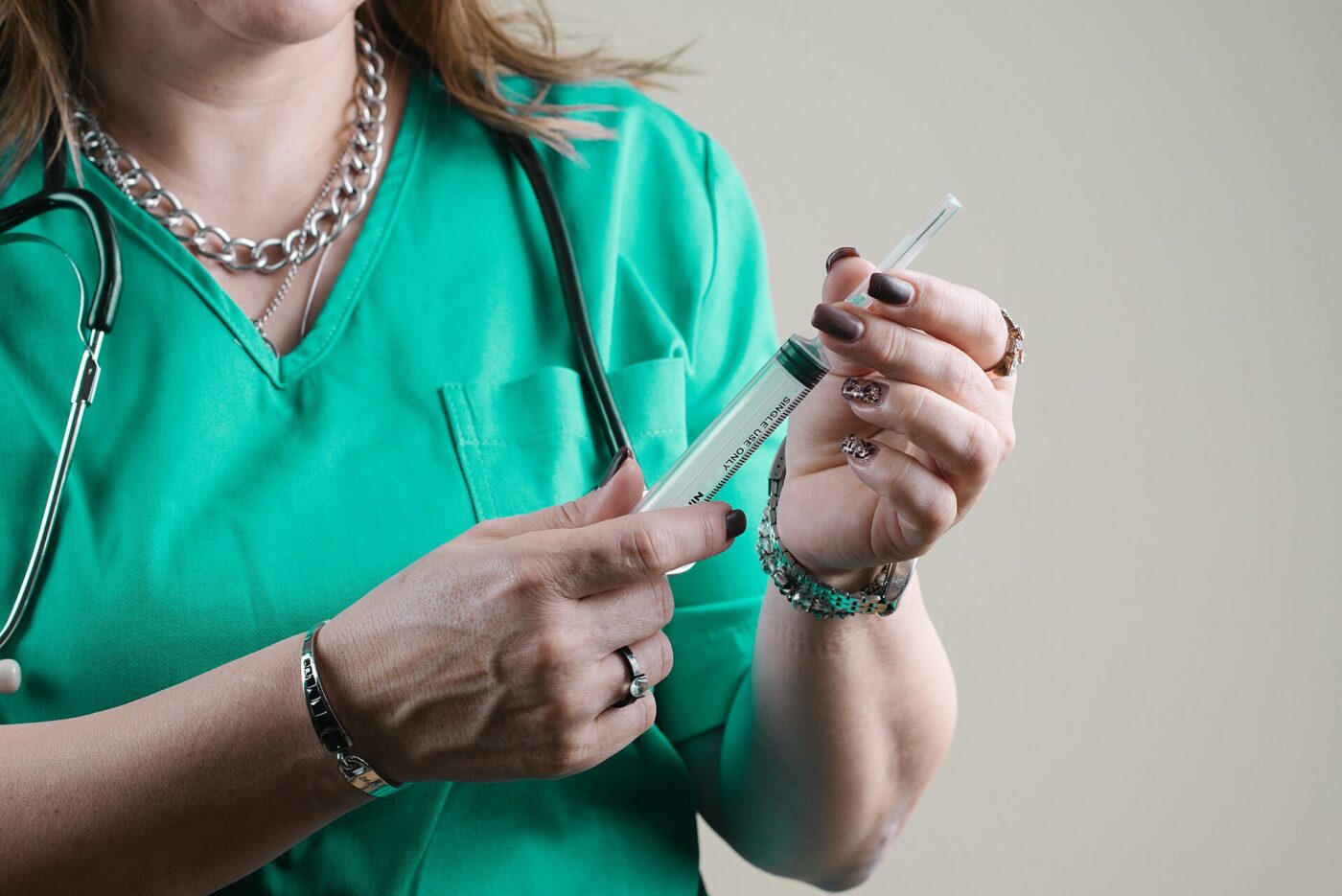
FIGS sells scrubwear and a growing set of adjacent products straight to clinicians. Its quarter ended June 30, 2026 produced $196.6 million in net revenues, up 28.8%, split into $161.2 million of scrubwear, up 26.5%, and $35.4 million of non-scrubwear, up 40.3%. US revenues rose 22.2% and international rose 67.0%. Active customers reached 3.1 million, up 13.2%, with average order value at $127, up 8.5%. The company raised its full-year outlook to about 20% net revenue growth.
Superior Group of Companies runs the other model. Its Healthcare Apparel segment sells brands including Wink and Fashion Seal Healthcare, plus a Carhartt Medical license, to healthcare laundries, dealers, distributors and retailers. That segment booked $27.2 million in the quarter ended June 30, 2026 against $28.3 million a year earlier, and $55.8 million for the half against $55.5 million. Segment gross margin fell to $9.0 million from $10.0 million, and the company recorded a $2.6 million trade name impairment in the segment.
| Scrubs business | Quarter ended June 2026 | Change from a year earlier |
|---|---|---|
| FIGS, direct to consumer | $196.6M total; $161.2M scrubwear | +28.8% total; +26.5% scrubwear |
| Superior Group, Healthcare Apparel | $27.2M | –3.6% |
| FIGS non-scrubwear | $35.4M | +40.3% |
| FIGS international | $37.9M | +67.0% |
Same garment, opposite trajectories, and the difference is the buyer rather than the product.
The customer changed before the product did
The traditional route for a set of scrubs ran through an institution: a laundry service, a uniform dealer, a distributor with a catalog, sometimes a hospital allowance. That channel still exists, and Superior Group’s half-year revenue of $55.8 million against $55.5 million a year earlier shows it is roughly flat rather than collapsing. What it is not doing is growing.
The direct route sells to the individual, and the individual buys more often and buys more categories. FIGS reported net revenue per active customer of $229, up 10.1%, and its non-scrubwear line grew 40.3% against 26.5% for scrubwear in the June 2026 quarter. That is what a wardrobe relationship looks like rather than a uniform order.
The full-year picture backs it up. FIGS finished 2025 with $631.1 million in net revenues, up 13.6%, and a fourth quarter up 33.0%. Its Q2 2026 release described a third straight quarter of growth above 25%, and its chief executive called the performance broad based across categories, geographies and channels.
What the job projections say about demand
The customer base is set to grow. In its employment projections released on August 27, 2026, BLS expects private healthcare and social assistance to add more than 2.2 million jobs over 2025–35, a 9.5% increase and about 37.0% of all new jobs projected over the period. Healthcare support occupations are projected to grow 13.3%, and services for the elderly and people with disabilities alone to add 625,400 jobs.
Those are people who wear a uniform to work and replace it on a schedule. It also matters where they work: growth in home-based care means more clinicians who are not attached to a hospital laundry contract and therefore buy their own clothes. That is the customer the direct channel is built for.
The fastest-growing part of healthcare employment is also the part least likely to be issued a uniform.
Tariff refunds are flattering the margins
Read gross margins in this category carefully in 2026. FIGS reported a gross margin of 75.2% in the quarter ended June 30, 2026, up 820 basis points, and attributed 780 of those basis points to IEEPA tariff refunds, with the rest from pricing and efficiency. Strip the refund out and the improvement is small.
The same event runs through the other side of the aisle. Superior Group states that the Supreme Court ruled in February 2026 that IEEPA does not authorize the President to impose tariffs, that collection stopped on February 24, 2026, and that the government later created a system for processing refunds of certain entries. It also notes that the Haiti HOPE and HELP trade agreements, which expired on September 30, 2025, were retroactively extended in February 2026 until December 2026, with a $2.3 million duties receivable recorded mostly in the Healthcare Apparel segment.
For a shopper, the consequence is that scrub prices in 2026 reflect a duty regime in flux rather than a settled cost base. Promotions that look generous may be funded by a refund that does not repeat.
What to check before you order a set
Fit systems differ more than fabric does. Direct brands sell matched tops and pants in named fits with defined inseams, which is why average order value sits around a full outfit rather than a single piece. Dealer brands are often sized to institutional specifications and bought one garment at a time. Neither is better; they fail in different ways, and returns are the cost of guessing.
Two practical checks. First, confirm whether a listing is a set or a single garment, because the price gap between the two is where most complaints start. Second, check the stated inseam and whether the style is offered in more than one length, since hemming a technical fabric is not always straightforward.
If your employer specifies a color or a style code, that specification usually comes from the dealer channel, and matching it from a direct brand is not guaranteed. Check the requirement before the color chart.
What to watch next
- FIGS’s next quarterly report, after guidance for about 20% net revenue growth for full-year 2026.
- Superior Group’s Healthcare Apparel segment, flat over the first half of 2026 and carrying a $2.6 million trade name impairment.
- Whether the Haiti HOPE and HELP trade preferences run past December 2026, which Superior Group flags as a cost risk.
Where to start
Paid links: we earn a commission if you buy through the buttons below, at no extra cost to you. As an Amazon Associate I earn from qualifying purchases.
Scrubs and healthcare apparel types compared on what differs
| Product type | Good fit for | Where to look |
|---|---|---|
| Jogger-style scrub set | Fits long shifts and pocket load | See listings on AmazonOpens Amazon search results, not one listing: check the model on the product page. |
| Men’s scrub top and pants set | Fits a set-based wardrobe | See listings on AmazonOpens Amazon search results, not one listing: check the model on the product page. |
| Lab coat | Fits a layer over the uniform | See listings on AmazonOpens Amazon search results, not one listing: check the model on the product page. |
Product types that fit the trend described above, not tested models. Check the exact listing before you buy. How we pick them.
Jogger-style scrub set
Where to look: Amazon
The format that direct brands built their growth on, which is why average order value at FIGS sits at $127 rather than the price of one garment. Check the inseam and the pocket count on the listing, because those are the two things people replace sets over.
- Sold as a matched set
- Pocket layouts are usually listed
- Inseam options vary by brand
- Style codes may not match an employer spec
Men’s scrub top and pants set
Where to look: Amazon
Buying top and pants together removes the color mismatch that happens when pieces come from different production runs. Confirm the listing really is a set, since single garments are often priced to look like one.
- Consistent color between top and pants
- Simpler to reorder
- Set pricing hides the per-piece cost
- Color matching across brands is unreliable
Lab coat
Where to look: Amazon
The layer most likely to be dictated by an employer rather than chosen. Superior Group sells lab coats through laundries and distributors, so if your workplace has a contract, check the specification before buying an alternative.
- Independent of scrub color rules
- Fabric and length are usually specified
- Length affects movement
- Institutional specs can be strict
More: Fashion and Apparel trends and how the Trend Signal is scored.
Sources
- FIGS second quarter 2026 results, quarter ended June 30, 2026 — SEC EDGAR
- FIGS fourth quarter and full year 2025 results — SEC EDGAR
- Superior Group of Companies Form 10-Q for the quarter ended June 30, 2026 — SEC EDGAR
- Employment Projections 2025–35 news release — U.S. Bureau of Labor Statistics
- Advance Retail Sales: Clothing and Clothing Accessory Stores — FRED, Federal Reserve Bank of St. Louis
Questions readers ask
Is the scrubs market growing?
Unevenly. FIGS, which sells direct to clinicians, grew net revenues 28.8% in the quarter ended June 30, 2026 and 13.6% across full-year 2025. Superior Group’s Healthcare Apparel segment, which sells through laundries, dealers and distributors, fell 3.6% in the same quarter and was roughly flat over the first half of 2026.
Why are scrub margins so high in 2026?
Partly because of IEEPA tariff refunds. FIGS reported a 75.2% gross margin in the quarter ended June 30, 2026, up 820 basis points, and attributed 780 basis points of that to IEEPA tariff refunds following the February 2026 Supreme Court ruling that invalidated those tariffs.
Will demand for scrubs keep rising?
The employment side points that way. BLS projections released on August 27, 2026 have private healthcare and social assistance adding more than 2.2 million jobs over 2025–35, a 9.5% rise and about 37.0% of all new jobs, with healthcare support occupations up 13.3%.
Should I buy scrubs as a set or piece by piece?
Sets reduce color mismatch between top and pants and are how direct brands are merchandised; FIGS reported an average order value of $127 in the quarter ended June 30, 2026, which is set-sized. Buy single pieces when an employer specifies a color or style code, since those specifications usually come through the dealer channel.