The supply list arrives in July, the same 20 lines appear on it every August, and the only question a parent can actually control is when to buy. Federal price data answers that better than any circular does. The Bureau of Labor Statistics tracks a consumer price index for stationery, stationery supplies and gift wrap, and it has a shape: it climbs through the spring, then falls hard into late summer as retailers cut the loss leaders.
The 2026 season fits that pattern. Prices are up over the year, but by less than inflation overall, and the biggest retailer in the category spent July advertising price cuts rather than increases. One corner of the aisle moves to its own rules, and it is the one with the longest history: the wood-cased pencil, covered by a U.S. antidumping duty order that has been in place since 1994.
Trend Signal
52/100 Steady momentum
- Emerging
- Rising
- Mainstream
- Peaking
- Cooling
Mild inflation, a deep seasonal dip and one duty that has not moved since 1994
The CPI index for stationery and stationery supplies rose 2.9% in the 12 months to August 2026, against 3.4% for all items, and the same index fell about 5.5% between April and August 2026 as back-to-school discounting arrived.
Our editorial reading of the cited data, not a forecast. How it is scored
By the numbers
- 2.9%Rise in the CPI for stationery and stationery supplies in the 12 months to August 2026U.S. Bureau of Labor Statistics
- $146.45Average planned school supply spending per K-12 household in the 2026 NRF surveyNational Retail Federation
- $43.3BTotal planned K-12 back-to-school spending in 2026, a record in NRF surveysNational Retail Federation
- 114.90%China-wide antidumping rate on cased pencils, unchanged in the 2024-2025 reviewU.S. Department of Commerce
What the official price data actually says
The closest federal measure of a supply list is the CPI item called stationery, stationery supplies and gift wrap. In the August 2026 report it was 2.9% higher than in August 2025, while the all-items index rose 3.4%. The narrower item for educational books and supplies rose 1.1% over the same 12 months, and college textbooks fell 1.1%.
The longer run is less comfortable. The unadjusted stationery index stood at 149.5 in August 2019 and 202.2 in August 2026, a rise of about 35% in seven years on our arithmetic from the published series. Almost all of that came in two jumps: August 2021 to August 2022 (+9.3%) and the year before it (+9.9%). Since then the annual increases have been 5.5%, 5.0%, 1.1% and 2.9%.
Two caveats matter before anyone treats the index as a supply list. It bundles gift wrap and greeting cards with notebooks and pens, and it excludes the two biggest lines in a modern backpack, which are the backpack itself and anything with a battery. It measures what shoppers pay across that mix, not the price of a single notebook.
| August | Stationery CPI index | Change from prior August |
|---|---|---|
| 2019 | 149.5 | – |
| 2020 | 146.1 | –2.2% |
| 2021 | 160.6 | +9.9% |
| 2022 | 175.5 | +9.3% |
| 2023 | 185.2 | +5.5% |
| 2024 | 194.4 | +5.0% |
| 2025 | 196.6 | +1.1% |
| 2026 | 202.2 | +2.9% |
The August dip is the real shopping calendar
The same series shows a pattern that repeats every year. Reading the monthly values ourselves, in 2026 the index peaked at 213.9 in April, slid to 204.7 in July and reached 202.2 in August, a fall of about 5.5% from the spring high. In 2025 it went from 208.2 in April to 196.6 in August. In 2024, from 202.6 in March to 194.4 in August.
Then it climbs back. The index was 196.6 in August 2025 and 208.0 by December 2025, and 208.6 by January 2026. In price terms, the box of pencils a parent buys in February is being bought at the top of the curve, and the one bought in the last week of August is close to the bottom.
That argues for a simple habit rather than a strategy: buy the consumables for the whole year during the August and early-September window, including the mid-year replacements, and treat a February restock as the expensive exception. The spring-to-August fall shows up in every year of the series we checked, back to 2016, but it is a seasonal average for a mixed basket, not a guarantee for any single item.
On the federal index, late August is the cheapest point of the year for stationery and the spring is the most expensive.
Retailers are fighting over the cheap end
The discounting is deliberate. On July 15, 2026 Walmart said it had its lowest prices since 2019 on the 14 most popular school supplies, with select items starting at $0.25 and more than 1,300 additional rollbacks compared with the prior season. Supply-list staples are a traffic driver, and the retailer that owns the list often owns the rest of the cart.
Shoppers are not spending less overall. The National Retail Federation, in a release dated July 14, 2026 covering a survey of 7,677 consumers fielded July 1 to July 8, put planned K-12 back-to-school spending at a record $43.3 billion, an average of $863.86 per household. Within that, supplies are the small line: $146.45 per household against $293.11 for electronics and $250.29 for clothing and accessories.
We read the gap as the whole story of the aisle. Record season totals are being set by laptops, phones and shoes, while pencils, folders and glue are priced to get people in the door. The supply list itself is one of the few parts of back-to-school inflation a household can actually time.
Why the pencil aisle has its own economics
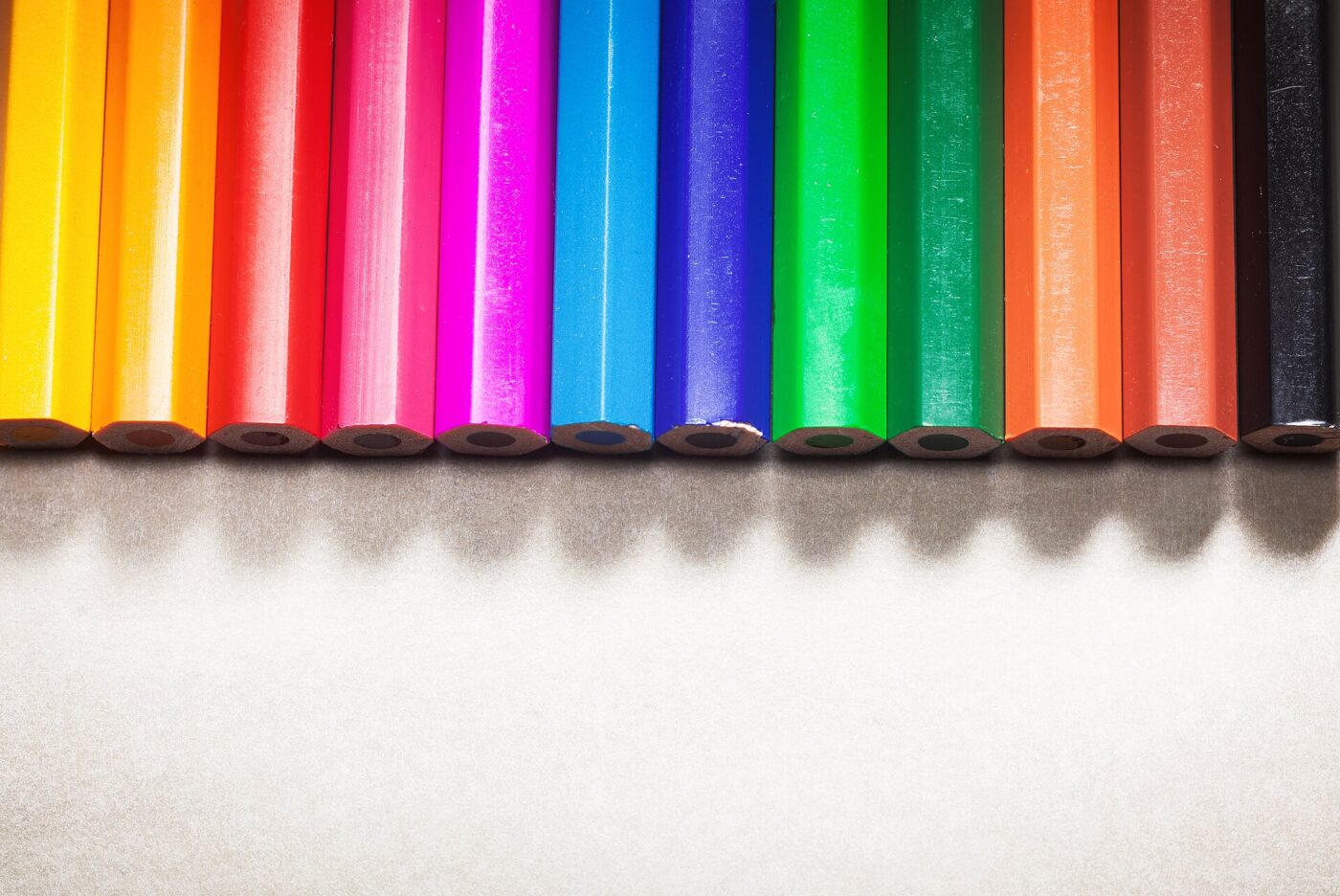
Wood-cased pencils sit under a U.S. antidumping duty order on certain cased pencils from China that dates to December 28, 1994. Commerce and the International Trade Commission continued the order on March 14, 2023, and the China-wide rate is 114.90%. It is an antidumping duty administered by Commerce under the Tariff Act of 1930 rather than an emergency tariff, which is a different legal track from the trade measures fought over in 2025 and 2026.
The most recent review kept it there. In preliminary results published on September 10, 2026, covering entries from December 1, 2024 through November 30, 2025, Commerce found that no company under review had filed the separate-rate paperwork, so four companies stay inside the China-wide entity at 114.90%. Commerce says the entity rate is not subject to change in this review, and final results are due within 120 days of the notice.
The scope matters for shoppers. The order covers pencils with cores encased in wood or man-made materials, sharpened or unsharpened, tipped or untipped, under tariff subheading 9609.10.00. It specifically excludes mechanical pencils, cosmetic pencils, pens and non-cased crayons. That is why the wood pencil and the mechanical pencil on the same shelf can move on different price paths, and why the country of origin printed on the box is worth a glance.
What to buy now and what can wait
For consumables the answer is volume and timing: pencils, paper, folders and glue in the late-August window, in the counts a classroom actually burns through, rather than in single packs bought in March at the top of the index. Checking the count per box beats checking the headline price, because pack sizes move more quietly than prices do.
For anything durable, the calendar matters less. Binders, scissors, rulers and pencil cases survive several years, so the useful question is replacement rather than price. If a classroom does not allow hand-cranked sharpeners, pre-sharpened pencils or mechanical pencils save the argument at home.
What to watch next
- The monthly CPI release from the Bureau of Labor Statistics, for whether the stationery index keeps climbing back toward its spring peak after the August low.
- Commerce’s final results in the cased pencil review, due within 120 days of the September 10, 2026 preliminary notice.
- Retailer announcements before the next back-to-school season, for whether the price-cut messaging of July 2026 repeats.
Where to start
Paid links: we earn a commission if you buy through the buttons below, at no extra cost to you. As an Amazon Associate I earn from qualifying purchases.
Supply list staples and what actually differs between them
| Product type | Good fit for | Where to look |
|---|---|---|
| Pre-sharpened wood-cased pencils in bulk | Fits the standard supply list | See listings on AmazonOpens Amazon search results, not one listing: check the model on the product page. |
| Composition notebooks multipack | Fits a bulk mid-year restock | See listings on AmazonOpens Amazon search results, not one listing: check the model on the product page. |
| Mechanical pencils with lead refills | Fits sharpener-free classrooms | See listings on AmazonOpens Amazon search results, not one listing: check the model on the product page. |
Product types that fit the trend described above, not tested models. Check the exact listing before you buy. How we pick them.
Pre-sharpened wood-cased pencils in bulk
Where to look: Amazon
The default line on almost every list. Buying by the 96 or 150 in the August window is where the seasonal dip in the CPI actually shows up in a receipt.
- Cheapest per unit in bulk
- Accepted by every classroom
- Needs a sharpener
- Carries the antidumping duty if made in China
Mechanical pencils with lead refills
Where to look: Amazon
Mechanical pencils sit outside the scope of the antidumping order on cased pencils, and they skip the sharpener queue. Check the supply list before switching a younger child over.
- No sharpener needed
- Outside the cased pencil duty order
- Lead refills are a recurring cost
- Some teachers do not allow them
More: Education and Learning trends and how the Trend Signal is scored.
Sources
- Consumer Price Index, Table 2, detailed expenditure categories, August 2026 — U.S. Bureau of Labor Statistics
- CPI series CUUR0000SS33032, stationery, stationery supplies, gift wrap — U.S. Bureau of Labor Statistics
- Majority of Back-to-School Shoppers Get a Head Start on the Season — National Retail Federation
- Walmart Back-to-School Reset with Unmatched Value, Convenience and Style — Walmart
- Certain Cased Pencils From China: Preliminary Results of Antidumping Duty Administrative Review, 2024-2025 — Federal Register via GovInfo
Questions readers ask
Are school supplies more expensive in 2026?
Modestly. The CPI index for stationery, stationery supplies and gift wrap was 2.9% higher in August 2026 than in August 2025, while the all-items index rose 3.4%. The narrower educational books and supplies index rose 1.1% over the same period.
When is the cheapest time to buy school supplies?
The federal price index for stationery falls into late summer every year. In 2026 it went from 213.9 in April to 202.2 in August, about 5.5% lower, and in 2025 it fell from 208.2 in April to 196.6 in August before climbing back to 208.0 by December.
Why are pencils treated differently from other supplies?
Cased pencils from China have been subject to a U.S. antidumping duty order since December 28, 1994, continued on March 14, 2023. The order runs under the Tariff Act of 1930, the China-wide rate is 114.90%, and Commerce left it unchanged in preliminary results published on September 10, 2026. Mechanical pencils, pens and non-cased crayons are excluded from that order.
How much do families plan to spend on supplies?
The National Retail Federation, in a July 14, 2026 release on a survey of 7,677 consumers fielded July 1 to July 8, found K-12 households planning $146.45 on school supplies out of an $863.86 average total, with $293.11 of that going to electronics. Total planned K-12 spending reached a record $43.3 billion.