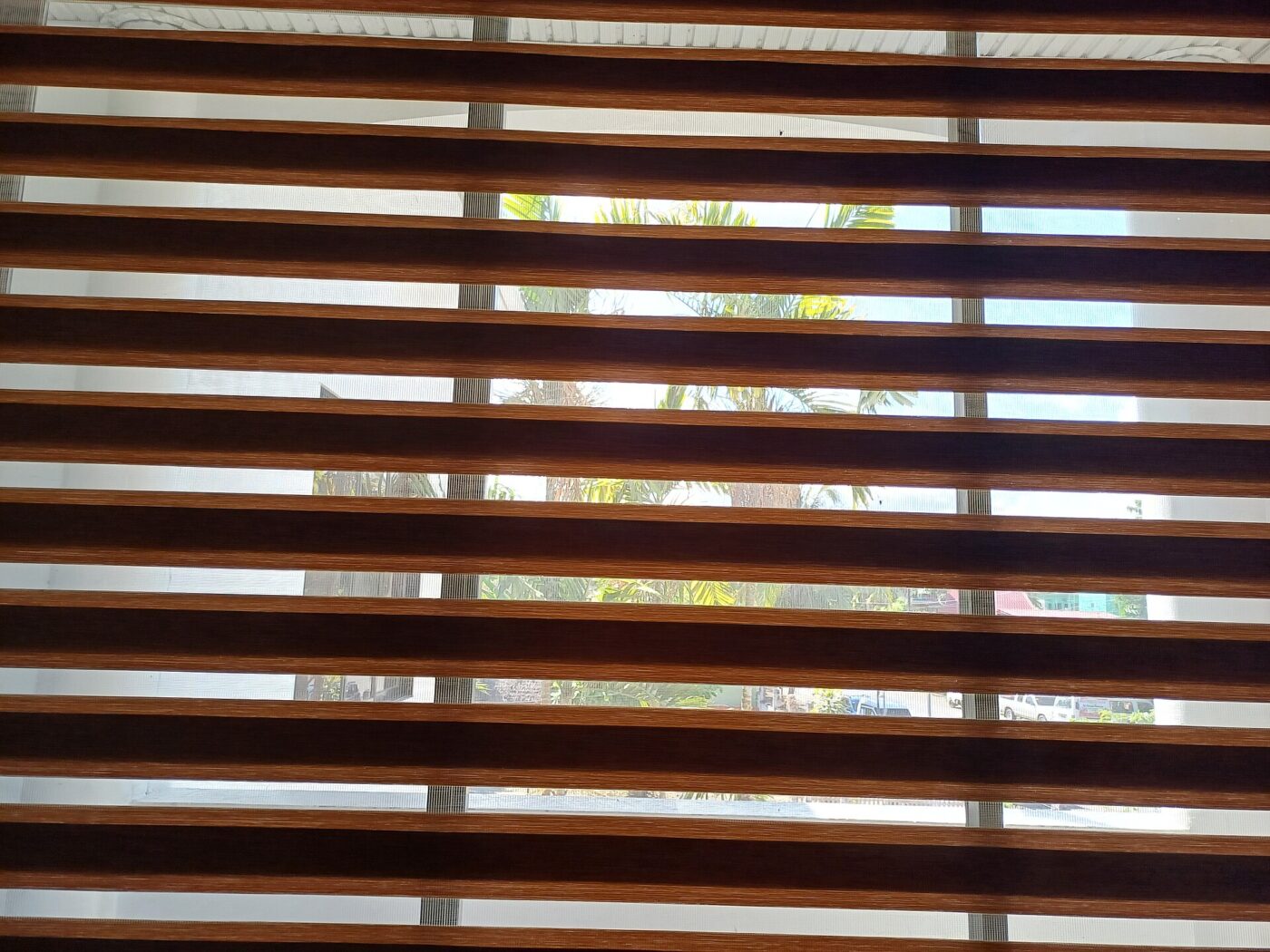
Walk the window covering aisle and the cords are mostly gone. That is not a design fashion; it is the result of a federal hazard determination and an industry standard that arrived within eighteen months of each other. Once the lift cord goes, a shade is raised either by hand or by a motor, and the motor option stopped being exotic at about the same moment.
The second change is quieter. On November 20, 2025 the Connectivity Standards Alliance published Matter 1.5, which introduced a unified closures model covering window shades, drapes, awnings, gates and garage doors. That decides whether a motorized shade is a smart home device or a device with its own app.
Trend Signal
52/100 Steady momentum
- Emerging
- Rising
- Mainstream
- Peaking
- Cooling
Cordless is the default; standardized motor control is only arriving
CPSC put hazardous window covering cords on the substantial product hazard list effective December 28, 2022, and the Connectivity Standards Alliance added a unified closures model covering shades, drapes, awnings, gates and garage doors to Matter on November 20, 2025.
Our editorial reading of the cited data, not a forecast. How it is scored
By the numbers
- 100Fatalities among 209 reported window covering cord incidents, children eight and underCPSC via Federal Register
- Dec 28, 2022Date hazardous window covering cords joined the CPSC substantial product hazard listCPSC via Federal Register
- Nov 20, 2025Date the Connectivity Standards Alliance published Matter 1.5 with a closures modelConnectivity Standards Alliance
- $199.95US launch price of the Eve MotionBlinds retrofit motor kit for roller blinds, June 2024Eve Systems
Why cords disappeared from the shelf
The Consumer Product Safety Commission published a rule on November 28, 2022 adding window covering cords to the substantial product hazard list, effective December 28, 2022. Under it, an operating cord is deemed hazardous when it is accessible and longer than eight inches in any position, and an inner cord when it is accessible and can form a loop large enough for a child to put a head through. Stock products must meet the operating cord, inner cord and labeling requirements; custom products are covered for inner cords and labeling.
The evidence behind the rule is specific. CPSC documented 209 incidents between January 2009 and December 2021 involving children eight years and younger, of which 100 were fatal, with further hospitalizations that included quadriplegia and permanent brain damage. The agency’s consumer guidance is unambiguous: the safest option when young children are present is to go cordless, and it warns that this kind of strangulation is often silent.
A second rule did not survive. CPSC also issued a mandatory safety standard for operating cords on custom window coverings, and on September 12, 2023 the U.S. Court of Appeals for the D.C. Circuit ruled unanimously for the Window Covering Manufacturers Association, vacating that rule and remanding the matter to the agency. The voluntary industry standard now carries most of the weight: ANSI and WCMA A100.1-2022 took effect on June 1, 2024, with compliance expected from that date.
Cordless became the default through a hazard listing and an industry standard, not through a single ban.
What Matter 1.5 changed
Matter 1.5, published on November 20, 2025, introduced what the Connectivity Standards Alliance describes as a unified approach to closures, built from a simplified modular cluster design and covering window shades, drapes, awnings, gates and garage doors. The same release added camera support over WebRTC, soil sensors and new energy features.
For a shopper, the closures work standardizes the commands rather than the hardware. A shade that implements it can be opened, closed and positioned by any Matter controller, which in practice means the Apple, Google, Amazon and Samsung apps you already use, without the maker writing four integrations or selling you a bridge.
The caveat is timing. A specification release is the starting gun for certification, not the finish line, and the population of Matter-native closures at retail is still thin next to the population of motorized shades that talk over a proprietary radio to a vendor hub. Treat a Matter badge on a shade in 2026 as a genuine advantage and a scarce one.
Retrofit motor or a whole new shade
The cheapest way into motorization is usually not a new shade. Retrofit motors drop into the roller tube of a shade you already own, so you keep the fabric, the brackets and the measurements. Eve launched exactly this pair in the US in June 2024: a MotionBlinds upgrade kit for roller blinds at $199.95, alongside a made-to-measure Eve Blinds Collection starting around $330, both using Matter and Thread and working with Apple Home, Alexa and Google.
The trade-offs are physical rather than digital. A retrofit motor has to match the inside diameter of your roller tube and be rated to lift the weight of your fabric, and it usually adds a battery tube or a visible lead. A purpose-built motorized shade hides that and can be ordered in the exact width, which matters because roller shades are unforgiving about an inch.
Power is the decision most people get wrong. Battery motors are the only option at a window with no outlet, and they recharge on a cycle that depends on how often and how heavy the shade moves; some accept a solar strip. A hardwired motor never needs charging, and needs an electrician or a visible cable.
| Option | What it suits | What to check |
|---|---|---|
| Retrofit motor in an existing roller | Keeping fabric you already chose | Tube inside diameter and the weight it can lift |
| Battery-powered motorized shade | Windows with no outlet nearby | Runtime between charges and whether a solar strip is offered |
| Hardwired motorized shade | New build and renovation work | Who runs the cable, and the cost of that visit |
What to measure before you order
Window coverings are among the few smart home products that cannot be returned casually, because a made-to-measure shade is cut for your opening. Measure the width at three heights and take the narrowest for an inside mount, and check the depth of the recess against the bracket and motor projection, which is larger than for a manual shade.
Check the safety side even if there are no children in the house today. A cordless product removes the hazard class the CPSC rule is aimed at, and a motorized shade with a hand chain retained for emergencies reintroduces part of it. If a retailer is clearing older corded stock, the hazard listing is the reason to look closely at what that clearance contains.
- Inside width at three heights, and the depth of the recess.
- Roller tube inside diameter, if you are retrofitting a motor.
- Matter support, and whether the radio is Thread or Wi-Fi.
- Battery runtime, charge port position, and whether a solar strip exists.
- Whether any cord or chain remains accessible on the finished product.
Who should buy now and who should wait
Buy now if the reason is safety or a specific practical problem: a nursery with corded coverings, a skylight nobody can reach, a west-facing room that overheats every afternoon. The CPSC guidance on going cordless does not depend on any of the standards work, and a retrofit motor on an existing roller is a contained project.
Wait if the reason is ecosystem tidiness. Matter closures are new, certified products are still arriving, and the difference between buying in 2026 and buying later is likely to be the size of the choice rather than whether it works at all. And if the house has a lot of windows, price the whole project before the first one, because motorization is charged per window.
What to watch next
- How many Matter-certified closures products appear at retail, which is the gap between the November 2025 specification and a real choice.
- Whether CPSC restarts rulemaking on operating cords for custom window coverings after the 2023 vacatur.
- Whether retrofit motor kits spread below the $199.95 that Eve launched at in the US.
Where to start
Paid links: we earn a commission if you buy through the buttons below, at no extra cost to you. As an Amazon Associate I earn from qualifying purchases.
Ways into motorized shades compared on what differs
| Product type | Good fit for | Where to look |
|---|---|---|
| Retrofit motor kit for roller shades | Fits shades you already own | See listings on AmazonOpens Amazon search results, not one listing: check the model on the product page. |
| Cordless blackout roller shade | Fits a child-safe swap with no motor | See listings on AmazonOpens Amazon search results, not one listing: check the model on the product page. |
| Battery-powered motorized blind | Fits windows with no outlet | See listings on AmazonOpens Amazon search results, not one listing: check the model on the product page. |
Product types that fit the trend described above, not tested models. Check the exact listing before you buy. How we pick them.
Retrofit motor kit for roller shades
Where to look: Amazon
The contained way to motorize a window without reordering anything. The two specifications that decide fit are the inside diameter of the tube and the weight the motor can lift.
- Keeps the fabric and brackets
- Cheaper than replacing the shade
- Must match the roller tube diameter
- Battery tube or cable is visible
Cordless blackout roller shade
Where to look: Amazon
Not every answer here is a smart one. If the goal is removing the hazard the CPSC rule describes, a plain cordless shade does that on its own and costs least.
- No accessible operating cord
- Nothing to charge or update
- No scheduling or remote control
- Still needs someone at the window
Battery-powered motorized blind
Where to look: Amazon
The usual choice in an existing house, because running power to a window head is the expensive part. Check the stated runtime against how often you will move it.
- No electrician needed
- Can often take a solar strip
- Recharging on a cycle
- Heavier fabrics drain it faster
More: Smart Home trends and how the Trend Signal is scored.
Sources
- Substantial Product Hazard List: Window Covering Cords, final rule — Federal Register
- Window Covering Cords — U.S. Consumer Product Safety Commission
- U.S. CPSC Custom Window Covering Rule Vacated — Bureau Veritas Consumer Products Services
- WCMA Standards — Window Covering Manufacturers Association
- Matter 1.5 Introduces Cameras, Closures, and Enhanced Energy Management Capabilities — Connectivity Standards Alliance
- Eve Blinds Collection and Eve MotionBlinds Upgrade Kit with Matter — Eve Systems
Questions readers ask
Are corded window blinds banned in the US?
Not banned outright. CPSC added hazardous window covering cords to the substantial product hazard list effective December 28, 2022, and the industry standard ANSI and WCMA A100.1-2022 took effect on June 1, 2024. A separate mandatory federal standard for operating cords on custom window coverings was vacated by the D.C. Circuit on September 12, 2023.
What did Matter 1.5 add for blinds and shades?
A unified closures model built on a simplified modular cluster design, covering window shades, drapes, awnings, gates and garage doors. The Connectivity Standards Alliance published the release on November 20, 2025, alongside camera support, soil sensors and new energy features.
Can I motorize blinds I already own?
Often, if they are rollers. Retrofit motors drop into the existing tube, and Eve launched a MotionBlinds upgrade kit for roller blinds in the US at $199.95 in June 2024, using Matter and Thread. The fit depends on the inside diameter of your tube and the weight of the fabric.
Do smart shades need their own hub?
It depends on the radio. Matter over Thread needs a Thread border router in the house, which is often already built into a speaker or TV device you own. Products that are not Matter generally need the maker’s own bridge, which is the arrangement the closures work in Matter 1.5 is designed to make unnecessary.