For most of the flat-panel era, a television was the one household purchase that got cheaper while you waited. The official price index made that concrete: the Bureau of Labor Statistics measured televisions falling 10.1% in the 12 months to August 2023 and 5.6% in each of the following two Augusts. Anyone who deferred a purchase was usually rewarded.
The 12 months to August 2026 broke the pattern. Televisions fell just 1.0%, and the seasonally adjusted index rose in three consecutive months into August. That is a small move in absolute terms and a large one in direction, and it lands in a summer when import duties were being refunded rather than added. Here is the trail, and what it changes for a buyer.
Trend Signal
58/100 Steady momentum
- Emerging
- Rising
- Mainstream
- Peaking
- Cooling
Two decades of falling TV prices flattened out in 2026
The BLS consumer price index for televisions fell 10.1% in the 12 months to August 2023 and only 1.0% in the 12 months to August 2026, and the seasonally adjusted index rose in each of the three months to August 2026.
Our editorial reading of the cited data, not a forecast. How it is scored
By the numbers
- 1.0%Decline in the CPI for televisions in the 12 months to August 2026U.S. Bureau of Labor Statistics
- 10.1%Decline in the CPI for televisions in the 12 months to August 2023U.S. Bureau of Labor Statistics
- $166BIEEPA tariffs assessed from February 3, 2025 to February 24, 2026, later ruled unlawfulU.S. Customs and Border Protection
- $34MIEEPA tariff refunds in Best Buy’s quarter ended August 1, 2026Best Buy via SEC
Four Augusts of television prices
The cleanest way to see the change is to line up the same month across four years. The CPI for televisions measures quality-adjusted prices, so it captures the fact that a set at a given price keeps getting bigger and better specified. A shrinking decline means that effect has weakened.
The category also takes up less of the basket than it did. Televisions carried a relative importance of 0.133 in the August 2023 release and 0.107 in the August 2026 release, each measured as of the preceding July. Households are not spending a rising share on sets even while the screens grow.
| 12 months ending | Change in the CPI for televisions |
|---|---|
| August 2023 | –10.1% |
| August 2024 | –5.6% |
| August 2025 | –5.6% |
| August 2026 | –1.0% |
The annual decline is now a rounding error next to where it was three years earlier.
Three monthly increases in a row
The annual figure hides the turn. On a seasonally adjusted basis, the televisions index rose 0.1% from May to June 2026, 1.7% from June to July and 1.4% from July to August. Three consecutive increases is not a long run, but for a category that spent years grinding downward it is a break in habit.
Neighboring lines moved differently, which argues against a measurement quirk. Audio equipment fell 2.0% over the 12 months to August 2026 and 1.3% in the single month to August, while the wider video and audio products group rose 1.9% over the year. The all-items index rose 3.4% over the same 12 months.
So televisions are not simply tracking general inflation. They stopped falling while a closely related category kept falling, which points at something specific to sets rather than at the broad price level.
What happened on the cost side
Import duties are the obvious suspect, and the timeline complicates the story. According to a U.S. Customs and Border Protection notice published on July 8, 2026, the Supreme Court ruled on February 20, 2026 in Learning Resources, Inc. v. Trump (No. 24-1287) that tariffs imposed under the International Emergency Economic Powers Act since February 3, 2025 were unlawful. CBP puts the total assessed under them from February 3, 2025 to February 24, 2026 at an estimated $166 billion across more than 53 million entry summaries.
Refunds are being processed through a new tool called the Consolidated Administration and Processing of Entries, and CBP states that other duties, including antidumping and countervailing remedies and Section 232 tariffs, are retained and collected as usual. So one layer of cost came off imports during 2026 while others stayed on.
That makes the summer increases in the televisions index harder to blame on duties alone. Component costs and product mix are the other candidates, and a consumer price index that adjusts for quality will register a stalled decline when the specification improvements slow down.
The IEEPA layer was struck down mid-year, and set prices still stopped falling.
What retailers are seeing
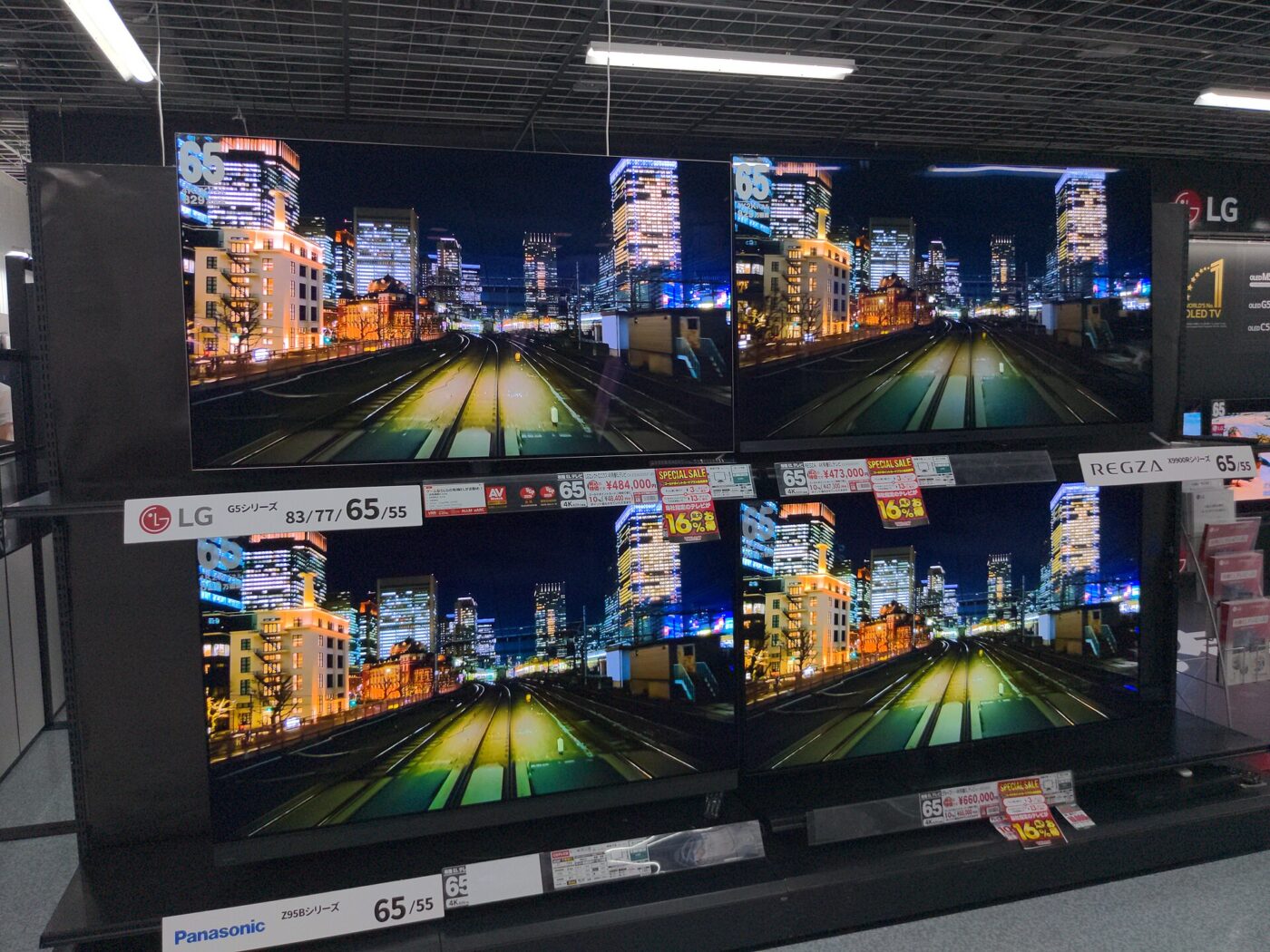
Best Buy reported its quarter ended August 1, 2026 on August 27, 2026. Domestic comparable sales rose 4.5%, and the company named computing, home theater and a group of emerging categories among the largest drivers, while the traditional gaming category declined. Its domestic gross profit rate improved to 24.0% from 23.4%, helped by IEEPA tariff refunds of approximately $34 million.
Industry forecasts point the same way on price. The Consumer Technology Association said on January 4, 2026 that U.S. consumer technology revenue should reach $565 billion in 2026, up 3.7%, with hardware revenue up 3.4% and unit shipments up just 0.7%. Circana forecast on January 6, 2026 that U.S. consumer technology sales would reach $112 billion in 2026, up 0.2%, with average prices climbing roughly 3%.
Revenue rising faster than units is the shape of a market where prices are firming. That is the opposite of the ultra-large TV picture Circana described in June 2024, when unit sales of 75-inch-and-larger sets rose 21% in the first quarter while revenue rose only 4% under markdowns.
Buy now or wait
The old default was to wait, because waiting paid. On the most recent 12-month figure it pays about 1%, which is inside the range of a single promotional week. That flips the calculation toward buying when a set you want is discounted rather than holding out for the category to drift down.
There is still a seasonal pattern worth using. Retail discounting concentrates in the fourth quarter and around large sporting events, and the seasonally adjusted index exists precisely because those swings are predictable. Waiting for an event is different from waiting for the trend.
If your current set works, none of this is urgent. The case for replacing now is strongest where you want a much larger screen, since that is where the discounting of recent years has been heaviest and where the unit growth has been concentrated.
What to watch next
- The televisions line in the monthly BLS consumer price index, for whether the seasonally adjusted increases continue past August 2026.
- Best Buy’s next quarterly release, for whether IEEPA refunds keep flattering gross margin and whether home theater comparable sales hold up.
- Whether Circana’s forecast of roughly 3% higher average consumer technology prices in 2026 shows up in advertised TV prices in the fourth quarter.
Where to start
Paid links: we earn a commission if you buy through the buttons below, at no extra cost to you. As an Amazon Associate I earn from qualifying purchases.
Where the money goes if TV prices have stopped falling
| Product type | Good fit for | Where to look |
|---|---|---|
| 75-inch and larger 4K TV | Fits a screen-size upgrade | See listings on AmazonOpens Amazon search results, not one listing: check the model on the product page. |
| 4K streaming player | Fits a set you already own | See listings on AmazonOpens Amazon search results, not one listing: check the model on the product page. |
| Swivel TV stand for large screens | Fits a rearranged room | See listings on AmazonOpens Amazon search results, not one listing: check the model on the product page. |
Product types that fit the trend described above, not tested models. Check the exact listing before you buy. How we pick them.
75-inch and larger 4K TV
Where to look: Amazon
Circana measured the 75-inch-and-larger segment growing units far faster than revenue in early 2024, which is the signature of markdowns. That is the part of the aisle where waiting for a promotion still pays.
- Where discounting has been heaviest
- Unit growth is concentrated here
- Delivery and mounting add cost
- Room distance limits the benefit
4K streaming player
Where to look: Amazon
If the picture is fine and the built-in apps are slow, a separate player is the small purchase that defers the large one. Check the formats your streaming services actually deliver.
- Refreshes an older TV cheaply
- Avoids a full replacement
- Does not improve the panel
- Another remote to manage
Swivel TV stand for large screens
Where to look: Amazon
A swivel base is the usual answer when a bigger screen faces the wrong way. Check the maximum screen size and the base weight before assuming a larger set will fit.
- Alternative to drilling the wall
- Turns the screen toward seating
- Takes floor depth
- Weight limits are strict
More: Gaming and Entertainment trends and how the Trend Signal is scored.
Sources
- Consumer Price Index, Table 2, August 2026 — U.S. Bureau of Labor Statistics
- Consumer Price Index news release, August 2025 — U.S. Bureau of Labor Statistics
- Consumer Price Index news release, August 2024 — U.S. Bureau of Labor Statistics
- Consumer Price Index news release, August 2023 — U.S. Bureau of Labor Statistics
- Court-Ordered Refunds Under the International Emergency Economic Powers Act Worksheet — U.S. Customs and Border Protection via GovInfo
- Best Buy Reports Second Quarter Results — Best Buy via SEC
- U.S. Consumer Tech Revenue to Hit $565 Billion in 2026 — Consumer Technology Association
- U.S. Consumer Technology Sales Forecast to Reach $112 Billion in 2026 — Circana
- New Circana Research Highlights Surge in Ultra-Large TV Purchases — Circana
Questions readers ask
Are TV prices going up in 2026?
The official index says they have stopped falling and have risen month to month. The BLS consumer price index for televisions fell 1.0% in the 12 months to August 2026, against a 10.1% fall in the 12 months to August 2023, and the seasonally adjusted index rose 0.1%, 1.7% and 1.4% in the three months to August 2026.
Did tariffs make TVs more expensive?
The IEEPA layer was removed during 2026. CBP states that the Supreme Court ruled on February 20, 2026 that tariffs imposed under IEEPA were unlawful, and puts the total assessed from February 3, 2025 to February 24, 2026 at an estimated $166 billion. Other duties, including Section 232 tariffs and antidumping remedies, are still collected.
Is it still worth waiting for a sale to buy a TV?
Waiting for a promotion is different from waiting for the trend. The 12-month decline is now about 1%, so the category drift is small, while retail discounting still concentrates in the fourth quarter and around major sporting events.
Are big TVs still getting cheaper than smaller ones?
That is where discounting has been heaviest. Circana reported in June 2024 that unit sales of 75-inch-and-larger TVs rose 21% year over year in the first quarter of 2024 while revenue rose only 4%, which it attributed to ongoing markdowns.