For most of its history the 27-inch 5K monitor was a premium Mac accessory, and Apple’s $1,599 Studio Display was the reference point. By the fall of 2026 the shelf looks different: ASUS launched a 5K model at $799 in November 2024, BenQ launched a Mac-focused 5K monitor at $999 in March 2026, and LG took 5K to 165Hz with a gaming model in April.
Apple’s own refresh in March 2026 kept the $1,599 price, left the standard model at 60Hz and added a $3,299 XDR model above it. The result is a wider price ladder than 5K has had, and a real choice for buyers weighing 4K against 5K at 27 inches.
Trend Signal
60/100 Steady momentum
- Emerging
- Rising
- Mainstream
- Peaking
- Cooling
More makers and faster panels, same $1,599 Apple benchmark
Apple kept its refreshed Studio Display at $1,599 in March 2026, the same month BenQ launched a $999 5K model, and LG opened pre-orders for a 165Hz 5K monitor at $1,199.99 in April 2026; ASUS launched a 5K model at a $799 list price in November 2024.
Our editorial reading of the cited data, not a forecast. How it is scored
By the numbers
- $799ASUS list price for its 27-inch 5K ProArt PA27JCV at launch, November 2024ASUS
- $1,599Starting price of Apple’s refreshed Studio Display, announced March 3, 2026Apple
- 218 ppiPixel density of 27-inch 5K (5120 by 2880) panels from Apple and ASUSApple
- 165Hz5K refresh rate of LG’s 27GM950B, pre-ordered from April 7, 2026 at $1,199.99LG
Why 5K at 27 inches is mostly a Mac question
The case for 5K is pixel density. Apple’s Studio Display and ASUS’s ProArt PA27JCV both put 5120 by 2880 pixels on a 27-inch panel, 218 pixels per inch, and BenQ markets its MA270S as matching the native pixel density of macOS. A 4K panel of the same size carries fewer pixels per inch, which matters most to people who spend the day reading and writing text.
BenQ, for one, pitches the MA270S at Mac users who want Apple-ecosystem integration at a lower price than Apple’s own display, down to an iKeyboard Control feature for adjusting the monitor from a MacBook keyboard. On Windows, a sharper panel still helps, but the case is weaker and 4K models are the cheaper, more common choice.
The 2026 price ladder
Six products show the range for 27-inch 5K and 32-inch 6K monitors in the fall of 2026. The figures below are the makers’ launch or list prices, not street prices.
At the bottom, ASUS launched the PA27JCV at a $799 list price in November 2024, with 96 watts of USB-C charging and color specs aimed at editors: 99 percent of DCI-P3 and a Delta E under 2. BenQ’s MA270S, at $999, adds Thunderbolt 4 with 96 watts of charging, two HDMI 2.1 ports, a KVM switch for running two computers from one keyboard and mouse, and a height-adjustable stand in the box.
At 32 inches, the ASUS PA32QCV keeps the same 218 pixels per inch with a 6016 by 3384 panel for $1,299, a larger canvas at the same sharpness for less than Apple charges for its 27-inch display.
| Monitor | Resolution and refresh | Launch or list price | Available from |
|---|---|---|---|
| ASUS ProArt PA27JCV (27-inch) | 5120 x 2880, 60Hz | $799 | November 2024 |
| BenQ MA270S (27-inch) | 5120 x 2880, 70Hz | $999 | March 2026 |
| LG UltraGear evo 27GM950B (27-inch) | 5120 x 2880 at 165Hz; 330Hz at QHD | $1,199.99 | Pre-orders April 7, 2026 |
| ASUS ProArt PA32QCV (32-inch) | 6016 x 3384, 60Hz | $1,299 | Late August 2025 |
| Apple Studio Display (27-inch) | 5120 x 2880, 60Hz | $1,599 | March 11, 2026 |
| Apple Studio Display XDR (27-inch) | 5120 x 2880, 120Hz, mini-LED | $3,299 | March 11, 2026 |
A 27-inch 5K monitor no longer needs a $1,599 budget; ASUS launched one at a $799 list price in late 2024.
What Apple’s refresh changed, and what it kept
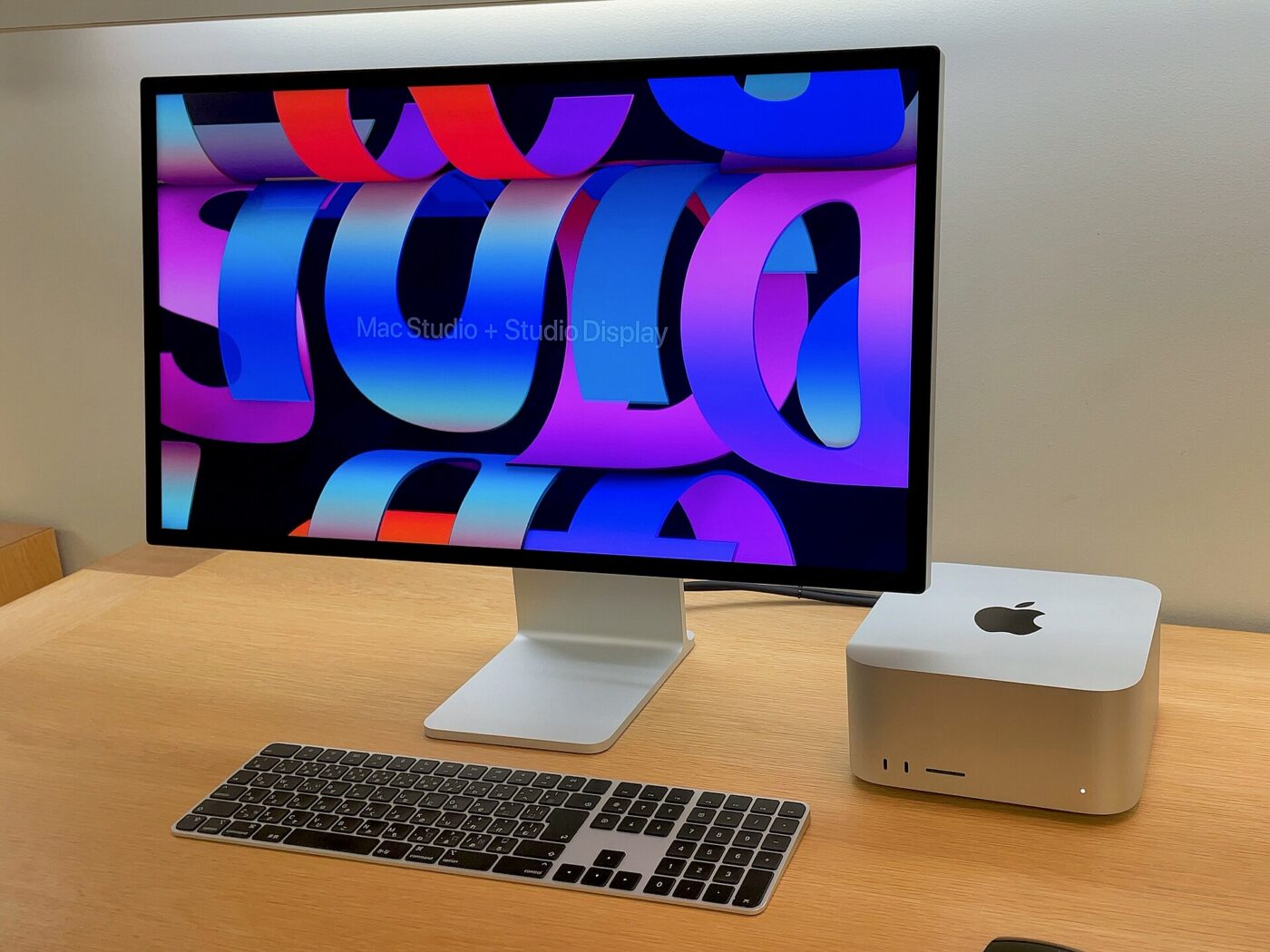
Apple’s March 3, 2026 update kept the Studio Display’s 5K panel, 600 nits and $1,599 starting price from the 2022 original, and the standard model runs at 60Hz. The changes were around the panel: a 12MP Center Stage camera with Desk View, two Thunderbolt 5 ports plus two USB-C ports, and 96 watts of laptop charging. Nano-texture glass and a tilt- and height-adjustable stand are extra-cost options.
Above it, the new Studio Display XDR replaced the Pro Display XDR with a 27-inch 5K mini-LED panel, 2,304 local dimming zones, 1,000 nits in SDR and 2,000 nits peak in HDR, and a 120Hz refresh rate with Adaptive Sync, starting at $3,299. Apple is not chasing the low end; high refresh and HDR sit at more than twice its base price.
That leaves room underneath, and third-party models compete on what the standard Studio Display does not include at $1,599: height adjustment, HDMI inputs for a second computer and KVM switching.
5K reaches high refresh rates
The bigger shift may be refresh rate. LG’s UltraGear evo 27GM950B, which opened for pre-orders on April 7, 2026 at $1,199.99, runs 5K at 165Hz or switches to 330Hz at QHD, with 2,304 local dimming zones and up to 1,250 nits. It connects over DisplayPort 2.1, HDMI 2.1 and USB-C with 90 watts of charging.
It is sold as a gaming monitor, but it matters to office buyers because it shows 27-inch 5K panels moving past the 60Hz class that defined the category, and Apple’s XDR model runs at 120Hz. Driving 5K at high refresh needs a recent computer and the right port: Apple lists 5K at 120Hz among the display configurations for its M5, M5 Pro and M5 Max MacBook Pro.
We read these launches as the start of the path 4K took: a premium resolution that spreads across price tiers as more panels ship. The evidence so far is launches and list prices rather than sales figures, which is why we score the trend as early in its rise.
Who should buy 5K now, and who should stay with 4K
Buy 5K if you use a Mac for text-heavy work most of the day and your budget reaches $800 to $1,000; the ASUS and BenQ models bring the density that used to require $1,599. Buy Apple’s Studio Display if you value its built-in camera, audio and Thunderbolt 5 connection enough to pay the difference.
Stay with 4K if you mainly use Windows, if you play games on a graphics card not bought with 5K in mind, or if a larger screen matters more to you than sharpness. Before buying any 5K monitor, check that your computer supports 5K output on the port you plan to use, and at what refresh rate.
What to watch next
- Street prices for the $999 and $1,199.99 5K models launched in 2026, for the first discounts
- More 27-inch 5K monitors above 60Hz from brands beyond LG
- Whether Apple adds a higher refresh rate to the standard Studio Display at its next update
Where to start
Paid links: we earn a commission if you buy through the buttons below, at no extra cost to you. As an Amazon Associate I earn from qualifying purchases.
High-resolution monitor types compared
| Product type | Good fit for | Where to look |
|---|---|---|
| 27-inch 5K monitor | Fits Mac users who read all day | See listings on AmazonOpens Amazon search results, not one listing: check the model on the product page. |
| 32-inch 6K monitor | Fits larger canvases at the same sharpness | See listings on AmazonOpens Amazon search results, not one listing: check the model on the product page. |
| 27-inch 4K USB-C monitor | Fits tighter budgets and Windows setups | See listings on AmazonOpens Amazon search results, not one listing: check the model on the product page. |
Product types that fit the trend described above, not tested models. Check the exact listing before you buy. How we pick them.
27-inch 5K monitor
Where to look: Amazon
The sharpness Apple sells at $1,599, from third-party makers for less. Compare charging wattage, stand adjustment and inputs.
- 218 pixels per inch at 27 inches
- Launch list prices from $799
- Most run at 60 to 70Hz
- Needs a computer that outputs 5K
32-inch 6K monitor
Where to look: Amazon
For editors and designers who want more screen without losing sharpness.
- Same 218 ppi on a 32-inch panel
- Room for two documents side by side
- Costs more than most 27-inch 5K models
- Fewer models to choose from
27-inch 4K USB-C monitor
Where to look: Amazon
Still the practical default for Windows users and anyone who does not read text on screen all day.
- Wide choice and lower prices
- Easy to drive from most laptops
- Fewer pixels per inch at 27 inches
- Mac text is less crisp than on 5K
More: Work and Office trends and how the Trend Signal is scored.
Sources
- Apple unveils new Studio Display and all-new Studio Display XDR — Apple Newsroom
- Apple unveils all-new Mac Studio and Studio Display (March 2022) — Apple Newsroom
- Studio Display Technical Specifications — Apple
- Buy Studio Display — Apple
- MacBook Pro Technical Specifications — Apple
- ASUS Announces Early-November Availability of ProArt Display 5K PA27JCV — ASUS
- ASUS Announces Late-August Availability of ProArt Display 6K PA32QCV — ASUS
- BenQ MA270S 5K Mac monitor: Studio Display alternative at $999 — RedShark News
- LG Kicks Off Pre-Orders for UltraGear evo GX9 and GM9 Gaming Monitors — LG Newsroom
- 27 Inch UltraGear evo Gaming Monitor 27GM950B-B — LG
Questions readers ask
Is a 5K monitor worth it over 4K?
It depends on the computer and the work. A 27-inch 5K panel has 218 pixels per inch, the density of Apple’s Studio Display, and BenQ markets its 5K model as matching the native pixel density of macOS. Mac users who read text all day gain the most, and ASUS launched a 5K model at a $799 list price in November 2024.
What do Studio Display alternatives cost?
Among the models covered here, ASUS launched its 27-inch 5K ProArt PA27JCV at a $799 list price in November 2024, BenQ launched the MA270S at $999 in March 2026, and LG opened pre-orders for its 165Hz 5K 27GM950B at $1,199.99 in April 2026. Apple’s Studio Display starts at $1,599.
Did Apple lower the price of the Studio Display in 2026?
No. The refreshed Studio Display announced March 3, 2026 starts at $1,599 with a tilt-adjustable stand and adds a 12MP camera and Thunderbolt 5 ports. The new Studio Display XDR starts at $3,299.
Are there 5K monitors faster than 60Hz?
Yes. Apple’s Studio Display XDR runs at 120Hz, and LG’s UltraGear evo 27GM950B runs 5K at 165Hz or QHD at 330Hz.