Aging in place used to mean a hospital-style grab bar bolted next to the tub after something went wrong. Surveys of remodelers and designers from 2025 and 2026 point to a different pattern: homeowners asking for curbless showers, grab bars and higher toilets as part of planned bathroom projects, and designers specifying them as finishes rather than medical equipment.
The pull is demographic. The U.S. population age 65 and older reached 61.2 million in 2024, and federal survey data show that many homes were not built for a wheelchair or a cane. The less obvious part is the bottleneck: the share of remodelers taking aging-in-place work has slipped even as requests climb. Here is what the numbers show and what to do about it.
Trend Signal
58/100 Steady momentum
- Emerging
- Rising
- Mainstream
- Peaking
- Cooling
Requests keep rising while the share of remodelers doing the work hit a low
In NAHB’s first-quarter 2025 survey, 73% of remodelers said aging-in-place requests had risen over five years, yet only 56% took on such projects, the lowest share since NAHB began asking in 2004.
Our editorial reading of the cited data, not a forecast. How it is scored
By the numbers
- 73%Remodelers saying aging-in-place requests rose over the past five yearsNAHB
- 87%Remodelers citing grab bars, the most common aging-in-place job, Q1 2025 surveyNAHB Eye on Housing
- 56%Remodelers doing aging-in-place projects in Q1 2025, the lowest share since 2004NAHB Eye on Housing
- 61.2MU.S. residents age 65 and older in 2024, up 3.1% from 2023U.S. Census Bureau
Who is driving the demand
The Census Bureau reported in June 2025 that the population age 65 and older rose 3.1% to 61.2 million in 2024, while the number of children fell 0.2% to 73.1 million. Between 2020 and 2024 the older population grew 13.0%, and older adults now outnumber children in 11 states and in nearly half of U.S. counties.
Their homes were mostly designed for someone younger. HUD’s analysis of the 2019 American Housing Survey, which included a housing accessibility module, found that 19% of U.S. households, or 23.1 million, include someone with accessibility needs, and 13% include someone who uses a mobility device such as a cane, crutches or a wheelchair. Only 44% of homes had both a full bathroom and a bedroom on the entry level.
Safety is the other driver. The CDC says more than one in four adults 65 and older fall each year, and that falling once doubles the chance of falling again. That is why the most requested changes cluster in the bathroom, as the next section shows.
More older households, in housing that mostly was not built for them, keep aging-in-place requests coming.
What remodelers actually install

NAHB has asked remodelers about aging-in-place work periodically since 2004 as part of its Remodeling Market Index survey. Asked which projects they had completed in the preceding 12 months, remodelers in the first-quarter 2025 round named grab bars most often, at 87%, followed by curbless showers at 78%, higher toilets at 71% and wider doorways at 52%.
Three of the four top jobs are in the bathroom, and two of them, a curbless shower and wider doorways, involve tile, drains or framing that are hard to undo. Grab bars and higher toilets are smaller jobs, but a grab bar only helps if it is anchored to something that can hold a person’s weight.
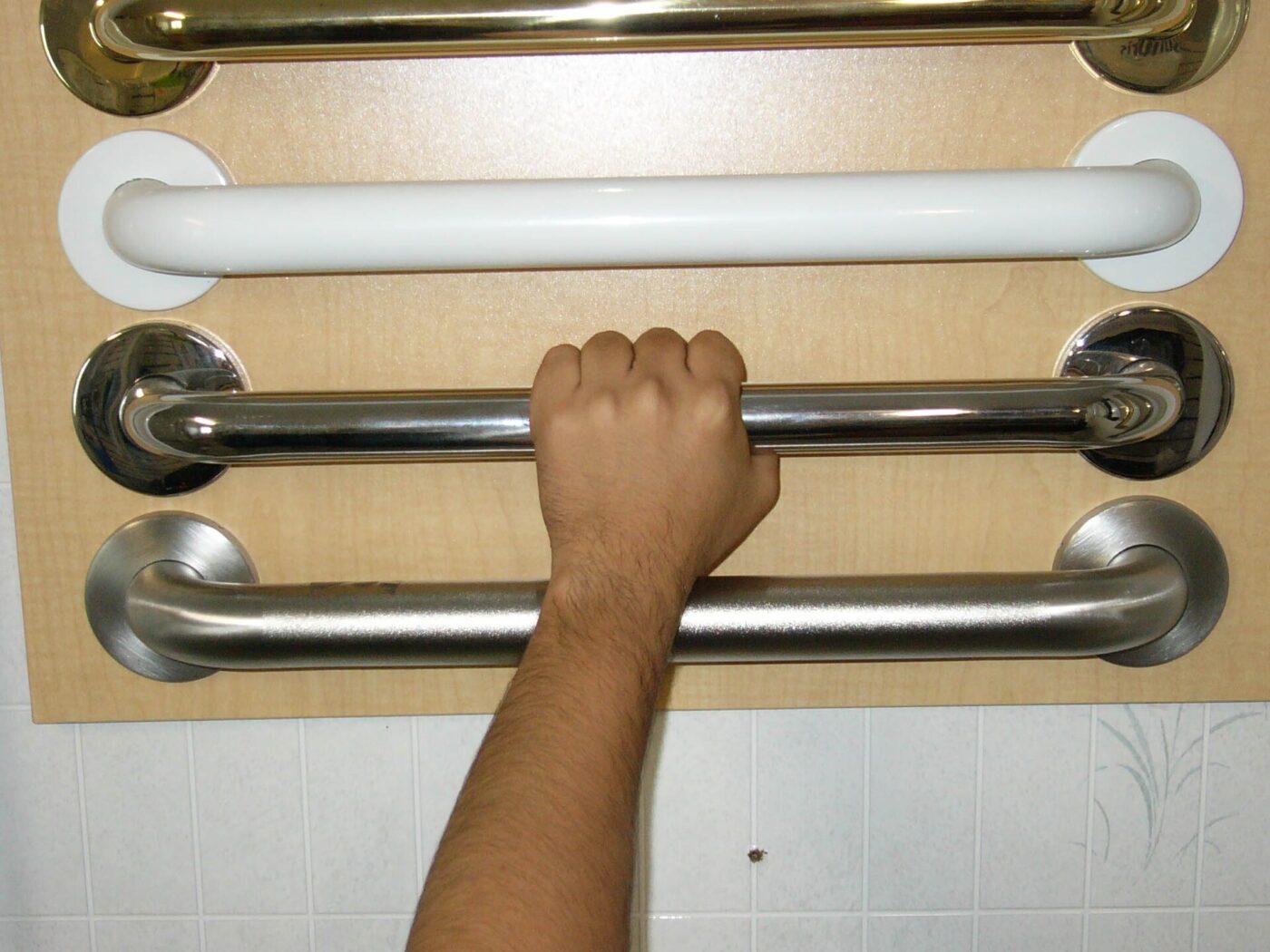
The federal accessibility standard for public buildings gives a useful benchmark, even though it does not govern private homes. Under the 2010 ADA Standards, grab bars are 1.25 to 2 inches in diameter, mounted 33 to 36 inches above the floor, and must withstand a 250-pound load. The same standards put accessible toilet seats at 17 to 19 inches high and call for a hand-held shower hose at least 59 inches long.
| Aging-in-place project | Remodelers reporting it | Where the work happens |
|---|---|---|
| Grab bars | 87% | Bathroom walls |
| Curbless shower | 78% | Shower floor and drain |
| Higher toilet | 71% | Toilet fixture |
| Wider doorways | 52% | Door frames |
From hospital look to design feature
Designers describe the change in style terms. In the National Kitchen & Bath Association’s 2026 Bath Trends report, released in November 2025 and based on a survey of 688 NKBA members, 32% agreed that aging in place is now a mainstream trend and 48% said it is on its way to becoming one.
The report’s wording is the signal. It describes grab bars, curbless showers, shower benches, barrier-free shower entries and wider doors as subtle safety features that make a primary bath look more luxurious. We read that as the end of a separate medical aisle for these items: the pitch now is that safety hardware should match the faucet.
NAHB’s February 2026 outlook points the same way. It projects residential remodeling to grow 3% in 2026 in inflation-adjusted terms and lists aging in place among the structural tailwinds behind that growth, alongside an aging housing stock and owners who stay put rather than give up low mortgage rates.
The counter-signal: fewer remodelers take the work
Demand and supply are moving in different directions. In NAHB’s first-quarter 2025 survey, only 56% of professional remodelers said they undertake aging-in-place projects, the lowest share since 2004. Yet 73% said requests had risen over the past five years, a figure that has held between 72% and 77% since the series began.
Homeowners also tend to put the work off. HUD’s 2019 survey analysis found that just 1% of owner households without an entry-level bedroom or full bathroom planned to add both within two years. Among the 23.1 million households with accessibility needs, 40%, or 9.2 million, had to climb stairs to get into the home and had no ramp or lift.
We read that as a scheduling problem: with fewer remodelers offering the work, a curbless shower is easier to plan before it is urgent than after a fall or a hospital stay.
What you can do now, and what needs a pro
Smaller changes suit a careful DIYer or a handyman: a screw-mounted grab bar anchored into studs or blocking, a hand-held shower on a slide bar, a raised toilet seat or a taller toilet, and better lighting on the path to the bathroom. Suction-cup handles are sold widely; the 250-pound force that the ADA standard sets for public grab bars is a useful benchmark when reading the rating of any bar you plan to lean on.
Curbless showers and wider doorways are structural jobs. A roll-in shower that meets the ADA benchmark keeps the threshold to half an inch or less, which can mean reworking the floor slope and the drain. Those projects are where the shortage of remodelers doing aging-in-place work shows up, so get quotes early and ask each contractor how many curbless showers they have built.
What to watch next
- NAHB’s next Remodeling Market Index round with aging-in-place questions, for whether the 56% share of remodelers doing the work recovers.
- The Census Bureau’s annual population estimates by age, released each June, for the pace of growth in the 65-and-older group.
- NKBA’s next annual bath trends report (the 2026 edition came out in November 2025), for whether more members call aging in place mainstream.
Where to start
Paid links: we earn a commission if you buy through the buttons below, at no extra cost to you. As an Amazon Associate I earn from qualifying purchases.
Aging-in-place bathroom upgrades you can buy online
| Product type | Good fit for | Where to look |
|---|---|---|
| Stainless steel grab bar, screw-mounted | Fits a stud-anchored bathroom upgrade | See listings on AmazonOpens Amazon search results, not one listing: check the model on the product page. |
| Hand-held shower head with slide bar | Fits a shower without remodeling | See listings on AmazonOpens Amazon search results, not one listing: check the model on the product page. |
| Raised toilet seat with handles | Fits a quick toilet-height fix | See listings on AmazonOpens Amazon search results, not one listing: check the model on the product page. |
Product types that fit the trend described above, not tested models. Check the exact listing before you buy. How we pick them.
Stainless steel grab bar, screw-mounted
Where to look: Amazon
The most common aging-in-place job in NAHB’s survey. Mount it where the user actually reaches; without another guide, the ADA benchmark of 33 to 36 inches above the floor is a sensible starting point.
- Permanent support where you need it
- Sold in bathroom finishes
- Needs studs, blocking or rated anchors
- Drilling tile takes care
Hand-held shower head with slide bar
Where to look: Amazon
A hand-held shower lets someone wash while seated on a bench or chair. The ADA benchmark calls for a hose at least 59 inches long, a useful minimum at home too.
- Lets someone shower seated
- Swaps onto an existing shower arm
- Slide bar is not built to hold weight
- Short hoses limit reach
Raised toilet seat with handles
Where to look: Amazon
Higher toilets are the third most common aging-in-place job. A raised seat can bring a standard toilet closer to the 17-to-19-inch seat height in the ADA standard without replacing it.
- No plumbing work
- Removable for other users
- Must match the bowl shape
- Adds seams that need cleaning
More: Aging and Accessibility trends and how the Trend Signal is scored.
Sources
- NAHB Expects Remodeling Growth in 2026 and Beyond — National Association of Home Builders
- Aging-in-Place Remodeling Work Fell While Familiarity and Receptiveness Remain High — NAHB Eye on Housing
- NKBA and KBIS Release Annual 2026 Bath Trends Report — National Kitchen & Bath Association
- Accessibility in Housing: Findings from the 2019 American Housing Survey — HUD Office of Policy Development and Research
- Older Adults Outnumber Children in 11 States and Nearly Half of U.S. Counties — U.S. Census Bureau
- ADA Accessibility Standards, sections 604, 608 and 609 — U.S. Access Board
- Facts About Older Adult Falls — Centers for Disease Control and Prevention
Questions readers ask
What are the most common aging-in-place home modifications?
In NAHB’s first-quarter 2025 remodeler survey, grab bars were the most common aging-in-place job (87% of remodelers), followed by curbless showers (78%), higher toilets (71%) and wider doorways (52%).
Is aging in place a growing trend?
Demand is. 73% of remodelers told NAHB that aging-in-place requests rose over the past five years, and in NKBA’s 2026 Bath Trends survey 32% of members said it is already mainstream while 48% said it is becoming so. But only 56% of remodelers did the work in early 2025, the lowest share NAHB has recorded since 2004.
How high should a grab bar be?
The 2010 ADA Standards, which apply to public buildings rather than private homes, place grab bars 33 to 36 inches above the floor, 1.25 to 2 inches in diameter and strong enough for a 250-pound load. In a private home, position also depends on where the user actually reaches.
How many homes are ready for aging in place?
Not many by federal measures. HUD’s analysis of the 2019 American Housing Survey found that 44% of homes had both a full bathroom and a bedroom on the entry level, and 9.2 million households with accessibility needs had to climb stairs to get in, with no ramp or lift.