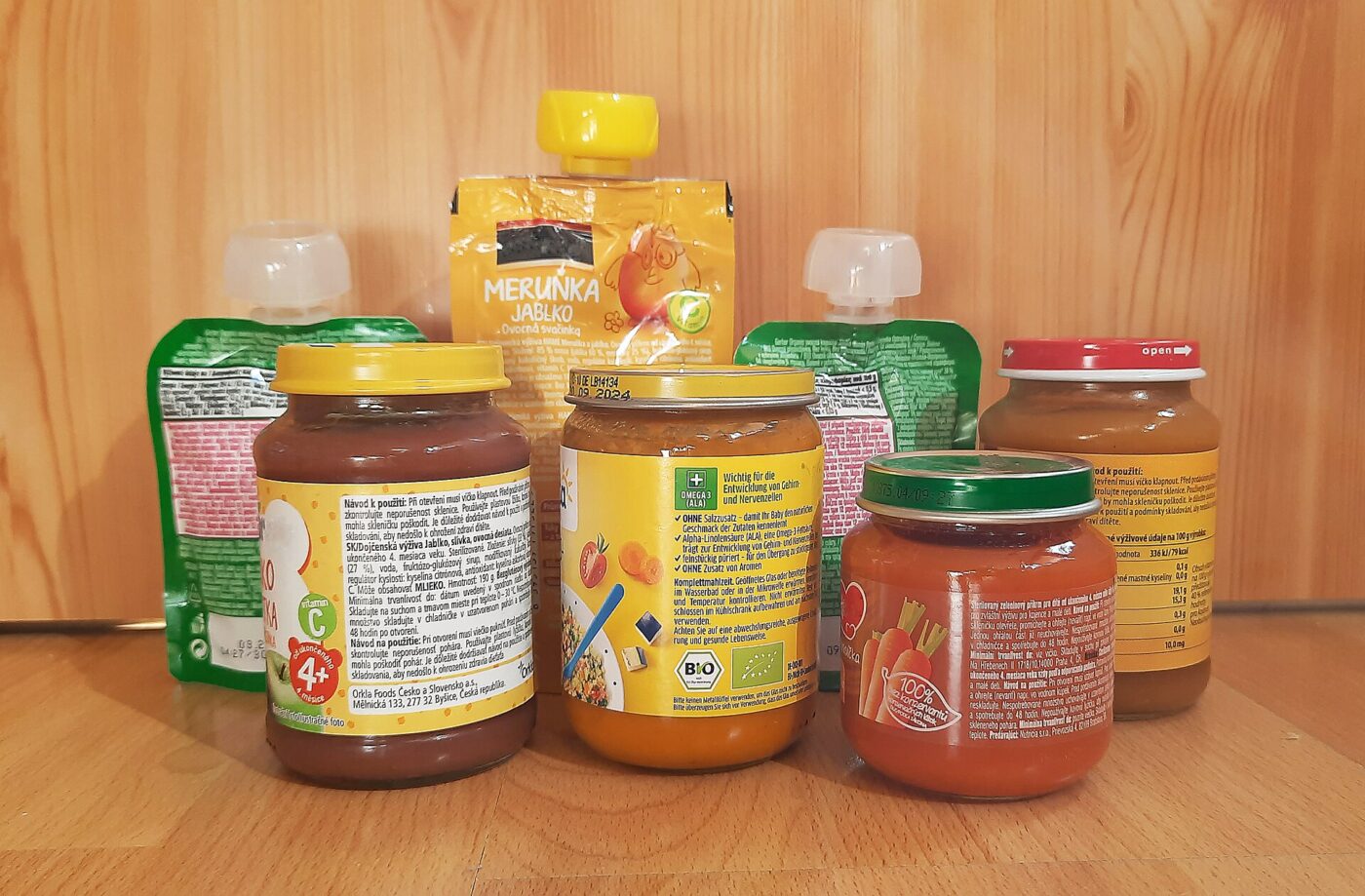
Scan the back of a baby food pouch or jar sold in California and you may find a QR code with a line of text: “For information about toxic element testing on this product, scan the QR code.” That label is the visible end of a real change in how baby food is sold in the U.S. Makers now publish batch-level results for heavy metals that used to stay inside their quality labs.
Two rules drive it: a California law whose disclosure requirement took effect on January 1, 2025, and FDA lead limits finalized the same month. Here is what the numbers on those pages mean, what they leave out, and how to use them when you shop.
Trend Signal
58/100 Steady momentum
- Emerging
- Rising
- Mainstream
- Peaking
- Cooling
Test-result disclosure is now the law in California
California has required baby food makers to post test results for four toxic elements since January 1, 2025, and the FDA finalized lead action levels for baby foods the same month.
Our editorial reading of the cited data, not a forecast. How it is scored
By the numbers
- Jan. 1, 2025Date California began requiring baby food makers to post metal test results onlineCalifornia Legislature (AB 899)
- 4Toxic elements California requires tested monthly: arsenic, cadmium, lead, mercuryCalifornia Legislature (AB 899)
- 10 ppbFDA lead action level for most packaged baby foods, final guidance of January 2025U.S. Food and Drug Administration
- 20 ppbFDA lead action level for single-ingredient root vegetables and dry infant cerealsU.S. Food and Drug Administration
What changed on January 1, 2025
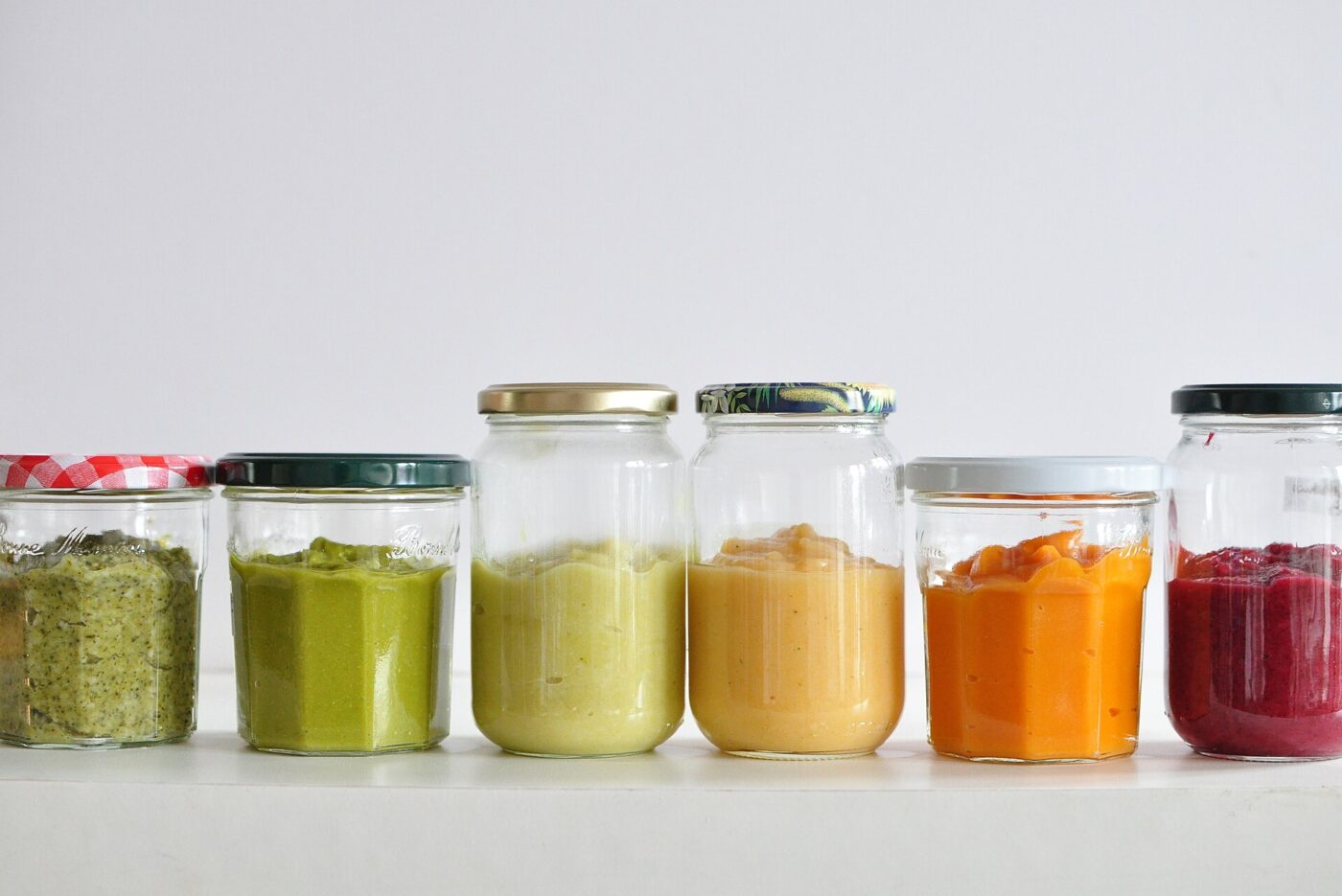
California’s AB 899, approved by the governor on October 10, 2023, set two deadlines. From January 1, 2024, manufacturers had to test a representative sample of each production aggregate of their final baby food product at a proficient laboratory, at least once a month, for four toxic elements: arsenic, cadmium, lead and mercury. From January 1, 2025, baby food sold, manufactured, delivered, held or offered for sale in California must come with public disclosure: the name and level of each toxic element in each production aggregate, posted on the manufacturer’s website.
The QR code comes from the same law. If a product is tested for an element that has an FDA action level, regulatory limit or tolerance, the label must carry a QR code linking to the results and the statement quoted above. Manufacturers must also provide test results to the state health department on request.
The law defines baby food as food in jars, pouches, tubs and boxes represented as being for babies and young children under 2, and it explicitly excludes infant formula. Brands post the results on their public websites, so shoppers outside California can often use the same data, as Beech-Nut’s lookup tool shows.
California’s law turned heavy metal testing into a public, batch-level record for baby food sold there.
The federal lead limits behind the QR code
In January 2025 the FDA issued final guidance setting action levels for lead in processed food intended for babies and young children under 2. The level is 10 parts per billion (ppb) for fruits, vegetables other than single-ingredient root vegetables, mixtures including grain- and meat-based mixtures, yogurts, custards and puddings, and single-ingredient meats. It is 20 ppb for single-ingredient root vegetables and 20 ppb for dry infant cereals. The guidance covers packaged foods in jars, pouches, tubs and boxes.
The FDA says these levels are achievable by industry when control measures are taken to minimize lead, and it ties them to its Closer to Zero program, which aims to decrease toxic elements in foods over time. The program page shows lead guidance for baby foods as final since January 2025, after a draft in January 2023.
Arsenic and cadmium lag behind. For both, the Closer to Zero page lists 2025 as the target to develop action levels and issue draft guidance for foods for babies and young children, with final guidance one year after the draft, and it shows no final baby food action level for either. That is why brand results pages can show a reference level for lead but only a note such as “no current regulatory limit” for the other elements.
Lead is the one element of the four with a final FDA action level for baby foods under Closer to Zero.
How to read a brand’s results

Beech-Nut’s lookup is a useful example of the format. Shoppers select a flavor and enter the best-by date, with no lot code required, and results are available for single products made on or after January 1, 2025. The page reports lead, cadmium, total arsenic and mercury in parts per billion.
Next to each result, Beech-Nut shows a reference: lead at 20 ppb or below for 100% root vegetable purees and 10 ppb or below for all other purees, in line with the FDA levels, and “no current regulatory limit” for cadmium, arsenic and mercury. The company’s plain-language gloss on the unit: a 20 ppb lead result means that for every billion molecules of food, 20 molecules of lead were detected.
Read a result as a batch record, not a brand rating. A single number describes the batch tied to that best-by date. For lead, compare it with the FDA level for that food category; for arsenic, cadmium and mercury, there is no Closer to Zero benchmark yet, so the number is information rather than a pass or fail.
What the disclosures do not cover
Infant formula is outside both rules. AB 899 excludes it from the definition of baby food, and the FDA’s lead guidance covers processed foods such as purees and dry infant cereals. The FDA tests formula separately under its Operation Stork Speed initiative and on April 29, 2026 published results for 312 samples across 16 brands. It found the majority had undetectable or very low levels of contaminants; for lead, 95% of samples contained less than 0.5 ppb.
Disclosure is also tied to where a product is sold. The testing and QR code requirements apply to baby food for sale or distribution in California. A brand that does not sell there has no state obligation under this law to post results, although it may choose to.
Homemade purees carry no test report at all. Making food at home gives you control over ingredients and variety, but it does not come with the batch data a packaged product sold in California now has.
Use the results for packaged baby food; formula and homemade food follow different paths.
What this means when you shop
The shift is from trust to lookup. Before 2025, parents mostly had company assurances; for baby food sold in California they now have batch numbers they can check against a federal benchmark for lead.
For families who make some food at home, basic tools help with batching, portioning and storage, which is where the shortlist below fits. The label change does not make homemade food better or worse; it makes packaged food easier to check.
- Scan the QR code or open the brand’s testing page, with the best-by date or lot code ready.
- For lead, compare the result with the FDA level for that food type: 10 ppb for most purees, 20 ppb for single-ingredient root vegetables and dry infant cereals.
- Treat arsenic, cadmium and mercury results as information until the FDA issues Closer to Zero action levels for them.
- If a brand has no results page, ask whether it sells in California and why it does not publish.
What to watch next
- FDA draft action levels for arsenic and cadmium in baby foods, which the Closer to Zero page targeted for 2025
- Whether more states adopt California-style testing disclosure for baby food
- Further FDA testing results for infant formula under Operation Stork Speed
Where to start
Paid links: we earn a commission if you buy through the buttons below, at no extra cost to you. As an Amazon Associate I earn from qualifying purchases.
Tools for families making some baby food at home
| Product type | Good fit for | Where to look |
|---|---|---|
| Baby food maker with steamer and blender | Fits families making purees in batches | See listings on AmazonOpens Amazon search results, not one listing: check the model on the product page. |
| Silicone baby food freezer tray with lid | Fits portioning and freezing | See listings on AmazonOpens Amazon search results, not one listing: check the model on the product page. |
| Reusable baby food pouches | Fits pouch-style feeding at home | See listings on AmazonOpens Amazon search results, not one listing: check the model on the product page. |
Product types that fit the trend described above, not tested models. Check the exact listing before you buy. How we pick them.
Baby food maker with steamer and blender
Where to look: Amazon
For families who make purees weekly. Size the bowl to how much you cook at once.
- Steams and blends in one bowl
- Fewer tools to wash
- Takes counter space
- Batch size limited by the bowl
Silicone baby food freezer tray with lid
Where to look: Amazon
For freezing single portions of homemade food. Label trays with the date you made them.
- Portions pop out cleanly
- Lids allow stacking
- Uses freezer space
- Silicone can hold odors
Reusable baby food pouches
Where to look: Amazon
For toddlers used to store-bought pouches. Pick openings wide enough to scrub.
- Refillable
- Less single-use packaging
- Need thorough cleaning
- Spouts wear over time
More: Baby and Parenting trends and how the Trend Signal is scored.
Sources
- AB-899 Food safety: baby food: toxic elements — California Legislative Information
- Guidance for Industry: Action Levels for Lead in Processed Food Intended for Babies and Young Children — U.S. Food and Drug Administration
- Closer to Zero: Reducing Childhood Exposure to Contaminants from Foods — U.S. Food and Drug Administration
- Product testing results — Beech-Nut
- FDA’s Infant Formula Product Testing Results — U.S. Food and Drug Administration
Questions readers ask
What does the QR code on baby food mean?
Under California’s AB 899, baby food tested for an element with an FDA limit must carry a QR code that links to the maker’s test results, plus a statement telling shoppers to scan it for toxic element testing information.
What is the FDA limit for lead in baby food?
The FDA’s January 2025 final guidance sets 10 ppb for most packaged baby foods and 20 ppb for single-ingredient root vegetables and dry infant cereals.
Is there an FDA limit for arsenic or cadmium in baby food?
Not a final one under Closer to Zero. The FDA’s program page lists 2025 as the target for draft arsenic and cadmium action levels for baby foods and shows no final levels.
Do these rules cover infant formula?
No. AB 899 excludes infant formula, and the FDA’s lead guidance covers processed baby foods. The FDA tests formula separately and published results for 312 samples on April 29, 2026.